Nissan Murano Years to Avoid: Your Guide to Reliability
When considering a used Nissan Murano, it’s crucial to know which model years have a history of significant reliability issues, particularly concerning their Continuously Variable Transmissions (CVT). Specific years from the first and second generations (roughly 2003-2014) are often cited for major transmission and engine problems, which can lead to expensive repairs. Understanding these problematic years can save buyers substantial money and headaches.
🎯 Key Takeaways


- Avoid 2003-2007 and 2011-2014 Murano models.
- CVT transmission failure is the most common issue.
- Always get a thorough pre-purchase inspection.
- Newer models (2015+) generally show better reliability.
- Budget for potential expensive CVT replacements.
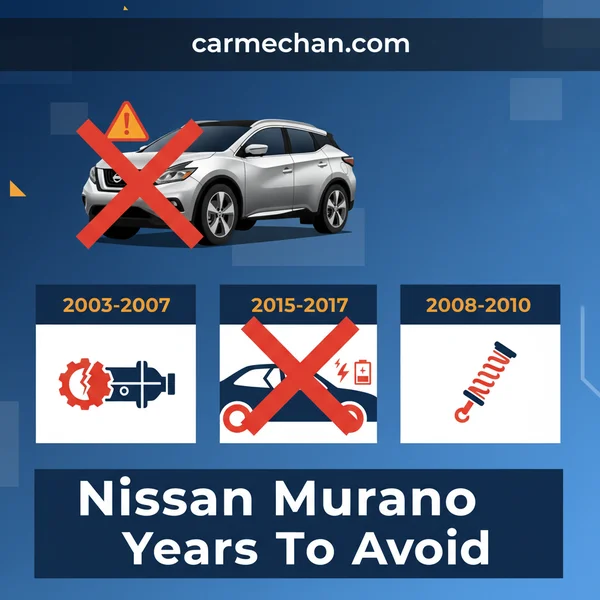
If you’re considering a used Murano Model History and Specifications”>Nissan Murano, understanding which model years carry significant reliability risks is crucial. To avoid costly repairs and unexpected headaches, prioritize steering clear of models from its first generation (2003-2007) and specific years within the second generation (2009-2014). These periods are particularly notorious for their Continuously Variable Transmission (CVT) failures and other substantial mechanical problems.
Knowing these problematic years and their associated issues isn’t just about avoiding a bad deal; it’s about making a smart investment. Your goal is a vehicle that offers dependable service, not one that frequently drains your bank account with trips to the mechanic. This guide will pinpoint the Murano years you should approach with extreme caution and detail the specific problems to watch out for.
Identifying the Most Problematic Nissan Murano Years


The Murano’s Riskiest Model Years
While the Nissan Murano often appeals with its distinctive styling and comfortable ride, certain model years have unfortunately earned a reputation for significant mechanical flaws. Your primary focus for avoidance should be:
- First Generation (2003-2007): These early models are widely cited for serious and expensive transmission issues, specifically involving the CVT. Other component failures also plague this generation.
- Early Second Generation (2009-2010): The CVT continued to be a major Achilles’ heel here, with many owners reporting premature failures. Some engine issues also began to surface.
- Later Second Generation (2011-2014): Unfortunately, the transmission problems persisted and, for many, worsened. This period is arguably the peak of CVT-related complaints for the Murano, often leading to very expensive repairs or vehicle abandonment.
These specific year ranges represent periods where the frequency and severity of reported issues, particularly regarding the transmission, are highest. Nissan’s implementation of the CVT during these times proved to be a critical weakness.
Deep Dive into Common Reliability Issues: CVT, Engine, and More


The Infamous CVT Failures
The Continuously Variable Transmission (CVT) is the single most common and costly point of failure across the Murano’s problematic years. It’s a complex component designed for smooth, efficient power delivery, but its execution in many Muranos led to widespread reliability concerns.
- Model Years Affected: Predominantly 2003-2014, with the second generation (2009-2014) often experiencing the highest incidence of failure.
- Symptoms of Failure:
- Shuddering or jerking during acceleration.
- Lack of power, especially uphill or when accelerating from a stop.
- Whining, grinding, or loud humming noises coming from the transmission area.
- RPMs revving high without corresponding increase in speed.
- Slipping or delayed engagement when shifting into drive or reverse.
- Complete loss of propulsion, leaving you stranded.
- Typical Failure Points: Overheating is a primary culprit, leading to internal belt and pulley wear. The torque converter also frequently fails, as do internal valve bodies and pressure sensors. Lack of adequate cooling and fluid maintenance exacerbate these issues.
- Estimated Repair Costs: A full CVT replacement is rarely cheap. You can expect to pay anywhere from $3,500 to over $5,000 for parts and labor. In many cases, this repair cost can exceed the resale value of the older Murano models, making it an uneconomical fix.
- Impact and Severity: A failing CVT is a severe problem. It not only compromises the vehicle’s drivability but can also create dangerous situations due to sudden loss of power on highways or during critical maneuvers. It often leads to the car becoming a total loss for its owner.
Engine and Other Mechanical Woes
While the CVT is the headline issue, certain Murano years also contend with other significant mechanical problems, particularly involving the engine and associated systems.
- Excessive Oil Consumption (primarily 2009-2010, some 2011-2014): Some Murano models equipped with the VQ35DE engine have reported consuming oil at an alarming rate. This isn’t just an inconvenience; low oil levels can lead to premature engine wear, reduced performance, and even catastrophic engine failure if not constantly monitored and topped off. Symptoms include blue smoke from the exhaust, reduced oil levels between changes, and sometimes a check engine light. Repairing the root cause, such as worn piston rings, can be a labor-intensive and expensive endeavor, often costing $1,000 or more.
- Power Steering Leaks and Failures (2003-2007): The first-generation Murano is known for common power steering pump leaks and hose failures. Symptoms include whining noises when turning the wheel, stiff steering, and visible fluid leaks under the vehicle. Repairing a leaking power steering pump or hoses can range from $500 to $1,000, depending on the extent of the damage and parts needed.
- Alternator Failures (2003-2007): Early Murano models frequently experienced premature alternator failures. A failing alternator can lead to battery drain, dimming lights, and eventually a non-starting vehicle, leaving you stranded. Replacement costs typically fall in the range of $500 to $800.
These issues, combined with the prevalent CVT problems, paint a picture of significant potential repair expenses and diminished reliability for Murano models from these specific years.
Understanding the Cost and Severity of Murano’s Major Faults
When considering a used Nissan Murano, particularly those from the problematic years, it’s crucial to understand not just that issues exist, but what they cost to fix. The price tag for major repairs can quickly outweigh any initial savings on the purchase price.
The CVT Catastrophe: Repair vs. Replacement Costs
The Continuously Variable Transmission (CVT) is the Murano’s Achilles’ heel, especially in models from 2003-2014. A failing CVT can manifest as jerking, slipping, loss of power, or even complete failure. Repairing a CVT is rarely a straightforward fix; often, it requires a complete replacement. A new or remanufactured CVT can easily cost anywhere from $3,500 to $6,000 or more, including labor. This significant expense alone can make a “cheap” Murano from these years a very expensive gamble. It’s not uncommon for the repair cost to exceed the vehicle’s market value, leading many owners to simply scrap their car.
Other Common Issues: Suspension and Electrical Woes
Beyond the notorious CVT, other areas of concern in older Murano models can also lead to hefty bills:
- Suspension Components: Worn control arms, struts, and bushings are common, leading to poor handling, noise, and uneven tire wear. Replacing these components can range from $500 to $1,500 per axle, depending on the parts and labor involved.
- Power Steering Pump Failure: This can cause difficulty steering and noise, with replacement costs typically falling between $400 and $800.
- Electrical Gremlins: Owners have reported issues with sensors, wiring harnesses, and dashboard electronics. While some electrical issues can be minor, diagnosing and repairing intermittent problems can be time-consuming and costly, potentially running into hundreds or even thousands of dollars for complex fixes.
Understanding these potential costs upfront helps you gauge the true value and risk of any used Murano you might consider.
Tips for Buying a Used Murano: What to Look For and Safer Years
If a Murano is still on your radar, arming yourself with knowledge and a keen eye can significantly improve your chances of finding a reliable model. Due diligence is your best friend when navigating the used car market.
Pre-Purchase Inspection Essentials
Never buy a used Murano without a thorough pre-purchase inspection (PPI) by an independent, trusted mechanic. This is non-negotiable, especially for models from the problematic years. A good PPI should include:
- Transmission Scan: The mechanic should connect to the car’s computer to check for any stored transmission error codes, even if the “Check Engine” light isn’t on. They should also assess the CVT fluid’s condition and color (burnt smell or dark color is a red flag).
- Test Drive: Pay close attention during the test drive. Listen for unusual noises, feel for jerking or slipping during acceleration, and ensure smooth power delivery. Any hesitation or high RPMs without corresponding speed increase could indicate CVT issues.
- Suspension Check: Have the mechanic inspect all suspension components for wear, leaks, or damage.
- Fluid Checks: Verify oil, coolant, and brake fluid levels and condition.
- Electrical Scan: Check for any fault codes across all systems.
A comprehensive PPI can reveal hidden issues that could save you thousands down the line.
Identifying the More Reliable Generations
While no used car is without risk, focusing on specific Murano generations can reduce your exposure to common reliability pitfalls. Generally, the third-generation Murano (2015-present) has shown marked improvements in CVT reliability compared to its predecessors. Nissan implemented significant refinements to the CVT in these later models, and while no CVT is entirely immune to issues, they are statistically more robust.
If a third-gen model is out of your budget, and you’re considering the second generation (2009-2014), lean towards the very last years of that generation (e.g., 2013-2014) as some minor improvements were incrementally introduced. However, even these still carry a higher CVT risk than the third generation. Always prioritize vehicles with detailed service records, especially those showing regular CVT fluid changes at recommended intervals.
Conclusion
The Nissan Murano offers appealing style and comfort, but its reliability history, particularly regarding its Continuously Variable Transmission, necessitates careful consideration for used buyers. The years 2003-2014 stand out as those to approach with extreme caution due to persistent and costly CVT failures. While later models, especially from 2015 onwards, show improved reliability, the importance of a thorough pre-purchase inspection remains paramount for any used vehicle.
Before making a decision, research specific model years, understand potential repair costs, and always invest in a professional mechanic’s assessment. By being informed and vigilant, you can navigate the used Murano market wisely and make a choice that truly suits your needs and budget.
❓ Frequently Asked Questions
Which specific Murano generations and model years should I be most cautious about, and why?
The first generation (2003-2007) and parts of the second generation (particularly 2011-2014) are the primary concern due to widespread reports of premature CVT failure. These transmissions were known to overheat, judder, and eventually fail, leading to costly replacements.
What are the common symptoms of a failing CVT in a Nissan Murano, and how can I detect them?
Symptoms often include shuddering, jerking, hesitation during acceleration, unusual whining noises, or a complete loss of power. A test drive should reveal these issues, and a mechanic can often detect early warning signs during an inspection.
Beyond the CVT, are there other significant mechanical or electrical problems to watch out for in specific Murano years?
While the CVT is dominant, some model years have also reported issues like premature suspension component wear, power steering leaks, and occasional electrical gremlins, particularly in the infotainment system or sensors. These are typically less severe than CVT failures but still contribute to maintenance costs.
If I find a Murano from a ‘problematic’ year at a good price, what steps can I take to mitigate the risk?
Even with a good price, a thorough pre-purchase inspection by an independent mechanic specializing in Nissans is non-negotiable, specifically asking them to assess the CVT’s health. Reviewing detailed service records for regular transmission fluid changes (which Nissan often listed as ‘sealed for life’ but is crucial) is also vital.
Are there any Nissan Murano years that are generally considered reliable or safer choices?
The third-generation Murano, starting from the 2015 model year, is generally considered a safer bet, as Nissan implemented improvements to the CVT and other components. While no vehicle is perfect, these later models tend to have fewer widespread, catastrophic issues reported.
How does regular maintenance, especially transmission fluid changes, impact the lifespan of a Murano’s CVT?
Regular and early transmission fluid changes, often more frequently than Nissan’s original recommendations (if any were given, as some were labeled ‘sealed for life’), are crucial for extending CVT life. Fresh fluid helps dissipate heat and lubricates components, directly addressing common failure modes, though it cannot prevent all issues in inherently flawed designs.