GMC Acadia Years to Avoid: Reliability Issues & Best Alternatives
Last Updated on September 1, 2026 by Ryan
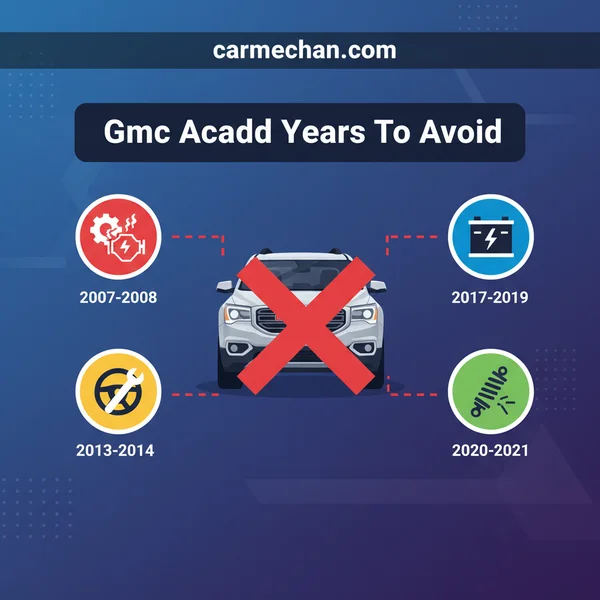
When considering a used GMC Acadia, it’s crucial to know that first-generation models (2007-2016) are notorious for significant mechanical issues, particularly between 2007 and 2013. These years frequently experience widespread problems with transmissions, timing chains, and power steering, leading to costly repairs and frustration for owners.
🎯 Key Takeaways


- Avoid GMC Acadia models from 2007 to 2013 due to major issues.
- Watch for transmission, timing chain, and power steering failures.
- Prioritize pre-purchase inspections, especially for early models.
- Consider second-generation Acadias (2017+) for improved reliability.
- Research alternatives like Highlander or Pilot for better long-term value.
If you’re in the market for a used GMC Acadia, pay extremely close attention to the model years you consider. The first generation of the Acadia, particularly model years 2007 through 2012, have historically demonstrated significant, widespread mechanical and reliability issues that can lead to costly repairs and considerable frustration for owners. Your ability to identify and avoid these specific problematic years can save you thousands of dollars and countless headaches.
Understanding which years to steer clear of isn’t just about avoiding a lemon; it’s about protecting your investment and ensuring your vehicle reliably transports your family. The pervasive issues found in these early Acadia models are often high-impact, affecting major components like the transmission, engine, and power steering, making them far more than minor annoyances. This guide will pinpoint those critical years and detail the severe problems associated with them, equipping you with the knowledge to make an informed decision.
Identifying Problematic GMC Acadia Model Years
When searching for a used GMC Acadia, certain model years stand out due to a high prevalence of serious mechanical issues. Our advice is direct: exercise extreme caution or outright avoid the earliest production years, as they present the highest risk of significant component failure.
The Troubling Early Generations (2007-2010)
The first few years of the GMC Acadia’s production are undoubtedly the most problematic. These models faced a high incidence of major component failures, leading to extensive complaints from owners and costly out-of-pocket repairs. The issues are well-documented across owner forums and NHTSA complaint databases, highlighting a consistent pattern of severe reliability concerns.
- 2007-2008 Acadia: These are arguably the worst years. Owners frequently reported widespread transmission failures, premature timing chain stretch, and numerous power steering system malfunctions. Expect high repair costs.
- 2009-2010 Acadia: While showing minor improvements, these years still carried over many of the same critical flaws. Transmission issues remained prevalent, as did timing chain problems and power steering pump failures. These vehicles represent a significant gamble.
The collective evidence strongly suggests that buying an Acadia from this period carries a high risk of encountering major mechanical breakdowns requiring expensive fixes, often dwarfing the vehicle’s market value.
Persistent Issues in Later First-Gen Models (2011-2012)
Despite some design tweaks, the 2011 and 2012 Acadia models continued to grapple with several of the core reliability problems found in their predecessors. While the rate of some failures might have slightly decreased, these vehicles are far from trouble-free and still warrant caution.
- 2011-2012 Acadia: Transmission problems, though perhaps less frequent than 2007-2008, were still a major concern. Timing chain wear remained an issue for the 3.6L V6 engine, potentially leading to costly engine work. Power steering pump and hose leaks also continued to be reported.
These years illustrate a slow improvement trend, but not enough to confidently recommend them for long-term reliability. Many critical, expensive-to-fix problems persisted, indicating that the underlying design flaws were not fully resolved.
Common Mechanical Failures and Their Impact on Owners
The reliability issues in the problematic Acadia years are not minor quirks; they involve core mechanical systems that are expensive and difficult to repair. Understanding these specific failures will help you grasp the potential financial burden and operational impact.
The Notorious Transmission Troubles
Perhaps the most infamous problem plaguing the 2007-2012 GMC Acadia models is the widespread failure of the 6T75 automatic transmission. This issue is not isolated; it’s a systemic flaw that significantly impacts the vehicle’s driveability and longevity.
- Symptoms: Owners commonly report hard shifts, slipping gears, delayed engagement into drive or reverse, a complete loss of power, or the transmission simply refusing to shift. A “Service Stabilitrak” warning message often accompanies transmission issues.
- Root Causes: The primary culprit is often premature wear or failure of the 3-5-R wave plate within the transmission, leading to internal damage. Solenoid failures and valve body issues also contribute to erratic operation.
- Impact and Cost: This is a major repair, frequently costing between $3,000 to $5,000+ for a rebuild or replacement transmission. The prevalence and cost of this failure make affected years highly undesirable for budget-conscious buyers. Many owners faced these expenses with vehicles having relatively low mileage.
Critical Engine Timing Chain Issues
The 3.6-liter V6 engine, found in the Acadia models from 2007-2012, is prone to premature timing chain stretch or failure. This is a severe engine problem that can lead to significant internal damage if not addressed promptly.
- Symptoms: Common indicators include the “Check Engine” light illuminating, especially with P0008, P0016, P0017, P0018, P0019 diagnostic trouble codes (DTCs) related to camshaft/crankshaft correlation. You might also hear a distinct rattling noise from the engine upon startup or acceleration, indicating slack in the chain. Reduced engine performance and misfires can also occur.
- Root Causes: The timing chains themselves were often made from materials that stretched prematurely, exacerbated by oil degradation and extended oil change intervals. This causes the camshafts to become out of sync with the crankshaft.
- Impact and Cost: Repairing a stretched timing chain assembly is incredibly labor-intensive, requiring the engine to be partially disassembled. Costs typically range from $2,000 to $4,000 or more, depending on the extent of the damage. Ignoring the problem can lead to catastrophic engine failure, such as bent valves, transforming a costly repair into an even costlier engine replacement.
Essential Pre-Purchase Checks for Used Acadia Models
If you’re still considering a used GMC Acadia, especially one from the potentially problematic years, due diligence is non-negotiable. A thorough inspection can help uncover lurking issues and save you from costly surprises down the road. Don’t rely solely on a clean CarFax; hands-on examination and professional assessment are key.

Prioritize Engine & Transmission Health
The powertrain is often where the most significant Acadia issues reside. Pay close attention to how the engine sounds and how the transmission behaves. A pre-purchase inspection by a trusted mechanic, ideally one familiar with GM vehicles, is highly recommended.
- Engine Inspection: Listen for any unusual rattling, ticking, or knocking noises, particularly from the 3.6L V6 engine, which can indicate timing chain wear. Check for oil leaks around the engine block and under the vehicle. Ensure the oil looks clean and is at the correct level.
- Transmission Performance: During a test drive, observe the transmission carefully. Look for hesitant shifts, clunking sounds, or any slipping between gears. A common complaint in earlier models was rough or delayed shifts, especially from first to second gear.
- Fluid Checks: Inspect transmission fluid (if accessible) for color and smell. Burnt-smelling or dark, gritty fluid is a red flag.
Scrutinize Electrical and HVAC Systems
Beyond the major mechanical components, the Acadia has also seen its share of electrical and HVAC glitches. These might not be as expensive as an engine or transmission overhaul, but they can be frustrating and diminish your ownership experience.
- HVAC Functionality: Test both heating and air conditioning thoroughly. Ensure all vents blow air consistently and that the temperature controls work on all settings. Uneven airflow or strange smells could point to blower motor resistor or evaporator issues.
- Electrical Components: Check all power windows, door locks, mirrors, and the infotainment system. Confirm that all lights (interior and exterior) are working. Test the cruise control and ensure all dashboard warning lights illuminate upon start-up and then turn off.
- Steering and Suspension: Listen for any clunking or grinding noises when turning or going over bumps, which could indicate power steering pump issues or worn suspension components, both common in certain Acadia generations.
Recommended Acadia Years and Reliable SUV Alternatives
While some Acadia years are best avoided, GMC has made strides in improving its flagship crossover. For those still set on an Acadia, or for buyers seeking similar vehicles, there are better options available. Knowing which years improved and what alternatives offer superior reliability can guide your decision.
The Improved Third-Generation Acadia (2017-Present)
GMC introduced a significantly redesigned Acadia for the 2017 model year, marking a turning point for the vehicle’s reliability and overall appeal. This generation moved to a lighter, more compact platform, shedding considerable weight and improving fuel efficiency and handling.
- Better Reliability Scores: The 2017 and newer Acadia models generally receive much better reliability ratings from consumer reports and automotive experts. They addressed many of the powertrain and electrical gremlins that plagued previous generations.
- Modern Features: You’ll find updated infotainment systems, more advanced safety features, and a more refined interior design in these later models. Look for models with the available 3.6L V6 or the more fuel-efficient 2.0L turbo engine, both paired with a newer 9-speed automatic transmission.
- Smaller Footprint: While still a capable family SUV, the third-generation Acadia is slightly smaller than its predecessors, offering more maneuverability for city driving while still providing ample interior space.
Trustworthy Alternatives to Consider
If the potential risks of even a newer Acadia make you hesitant, or if you simply want a proven track record of reliability, several other mid-size SUVs stand out. These alternatives offer comparable space, features, and often, better long-term ownership costs.
- Honda Pilot: Renowned for its strong reliability, spacious interior, comfortable ride, and excellent resale value. The Pilot offers a robust V6 engine and is a top choice for families.
- Toyota Highlander: Consistently ranks at the top for reliability, safety, and fuel efficiency (especially the hybrid models). The Highlander provides a smooth ride, a well-built interior, and a strong reputation for durability.
- Mazda CX-9: For those who prioritize driving dynamics and a premium feel, the CX-9 is an excellent alternative. It offers a stylish interior, engaging handling, and good reliability scores, though its third-row space is slightly less generous than its rivals.
- Kia Sorento/Hyundai Santa Fe: These Korean counterparts have made huge strides in quality and reliability. They offer excellent warranty coverage, feature-rich interiors, and competitive pricing, making them strong value propositions.
Conclusion
Navigating the used SUV market can be tricky, especially when models like the GMC Acadia have a mixed reliability history. While the first- and second-generation Acadias (2007-2016) are generally recognized for widespread issues, particularly with their powertrains and electrical systems, the redesigned 2017 and newer models represent a significant improvement.
Before committing to any used Acadia, prioritize a comprehensive pre-purchase inspection by a reputable mechanic. Alternatively, consider exploring highly-rated alternatives like the Honda Pilot, Toyota Highlander, or Mazda CX-9, which offer a more consistent track record of reliability and owner satisfaction. By staying informed and doing your homework, you can confidently choose a family SUV that will serve you well for years to come.
❓ Frequently Asked Questions
Which specific GMC Acadia model years should I definitively avoid and why?
You should definitively avoid GMC Acadia model years from 2007 through 2013, with particular caution for 2008-2010. These years are plagued by notorious issues including premature transmission failure, faulty power steering pumps, and problematic timing chains, leading to very costly and frequent repairs.
What are the most common and expensive repairs for problematic Acadia years?
The most common and expensive repairs involve the transmission, often requiring a complete replacement costing thousands of dollars. Other major expenses include timing chain replacements due to excessive wear and failed power steering pump and rack assemblies, which are also significant repair costs.
How can I identify potential issues when test driving an older Acadia?
During a test drive, pay close attention to the transmission for harsh shifting, slipping, or delayed engagement. Listen for unusual noises (whining, rattling) that could indicate power steering or timing chain problems. Also, check for warning lights on the dash and ensure all electrical components function correctly.
Are second-generation Acadia models (2017+) more reliable?
Yes, the second-generation Acadia, introduced in 2017, generally offers significantly improved reliability compared to its predecessors. While no vehicle is perfect, these models have fewer widespread catastrophic issues and often receive better consumer reliability ratings.
What are some reliable alternatives to the GMC Acadia in the mid-size SUV segment?
For strong reliability, consider alternatives such as the Toyota Highlander, Honda Pilot, Mazda CX-9, or Kia Telluride/Hyundai Palisade. These models consistently rank higher in reliability studies and often come with lower long-term ownership costs due to fewer major mechanical issues.
Does a comprehensive service history negate the risks of buying an ‘avoid’ year Acadia?
While a comprehensive service history is always beneficial, it doesn’t entirely negate the inherent design flaws of the ‘avoid’ years. Even with meticulous maintenance, components like the transmission or timing chain in 2007-2013 models are prone to failure due to their original design, so proceed with extreme caution.