Kia Soul Years to Avoid: Engine & Transmission Issues Explained
Last Updated on September 1, 2026 by Ryan
The 2012-2016 Kia Soul models are often cited as years to avoid due to significant engine failure risks, particularly related to the 2.0L Nu engine and connecting rod bearing issues. Additionally, some 2017-2019 models have reported transmission problems, making pre-purchase vigilance essential for these years too.
🎯 Key Takeaways


- Prioritize avoiding 2012-2016 Kia Soul models due to engine risks.
- Be cautious of 2017-2019 Souls for potential transmission issues.
- Always check service records and recall history before buying.
- Invest in a professional pre-purchase inspection for any used Soul.
- Focus on 2010-2011 and 2020+ models for potentially better reliability.
If you’re considering a used Kia Soul, understand that certain model years carry significant reliability risks, primarily stemming from severe engine and transmission defects. Specifically, the 2012 through 2016 Kia Soul models are notorious for catastrophic engine failures. While slightly improved, the 2017, 2018, and 2019 models still pose engine concerns and introduce prevalent transmission issues. Knowing these problematic years and their specific mechanical faults is crucial; it helps you avoid a vehicle that could quickly become a costly, unreliable burden.
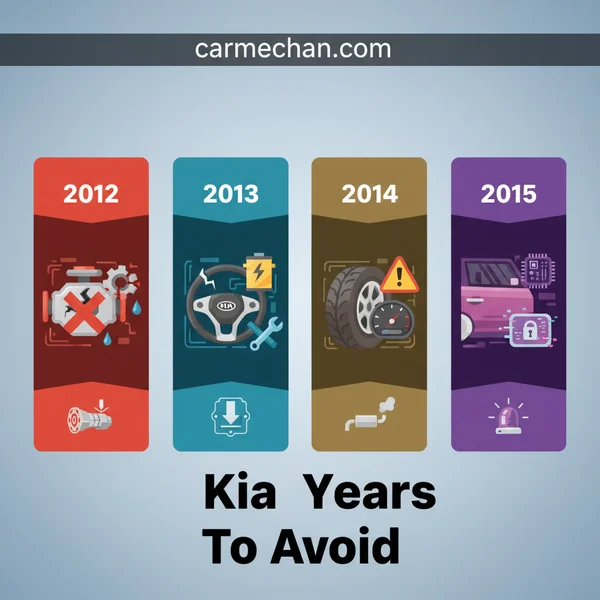
Ignoring these known issues can lead to thousands of dollars in unexpected repair bills, substantial downtime, and even potential safety hazards if your engine or transmission fails unexpectedly on the road. This guide focuses on identifying these high-risk years and detailing the common, expensive problems you absolutely need to be aware of before making a purchase.
Identifying Problematic Kia Soul Model Years


The Troubling 2012-2016 Era: Engine Catastrophe
The Kia Soul model years from 2012 to 2016 are widely recognized as the most problematic. These vehicles were equipped with Kia’s 1.6-liter and 2.0-liter GDI (Gasoline Direct Injection) engines, which suffer from a severe design flaw: premature connecting rod bearing wear. This isn’t a minor issue; it’s a fundamental defect that often leads to total engine failure.

📤 Share
💾 Download
- Primary Issue: Connecting rod bearing failure, leading to engine knocking and eventual seizure.
- Impact: Sudden loss of power, engine seizing while driving, requiring complete engine replacement.
- Repair Cost: Engine replacement can range from $4,000 to over $7,000, often exceeding the vehicle’s market value.
- Recalls: While Kia issued recalls (like the 20TA22 recall related to GDI engine issues), many owners report failures even after recall-related software updates or inspections, or find their vehicle wasn’t covered.
If you’re looking at a Kia Soul from this period, proceed with extreme caution. The risk of major engine trouble is simply too high for many buyers.
Persistent Issues in 2017-2019: Engine and Transmission Woes
While the risk of catastrophic engine seizure in the 2017-2019 models might be slightly lower than in earlier years, engine reliability remains a concern. These years saw continued reports of excessive oil consumption, engine knocking, and check engine lights related to engine performance. More significantly, the introduction of the Intelligent Variable Transmission (IVT), Kia’s version of a continuously variable transmission (CVT), in some 2017-2019 models brought a new wave of serious complaints.
- Engine Issues: Persistent excessive oil consumption, engine knocking, carbon buildup on intake valves, and occasional engine stalls.
- Transmission Issues: The IVT in these years is prone to failure, characterized by slipping, jerking, hesitation during acceleration, and complete loss of forward power.
- Impact: Costly transmission replacement, typically $3,000-$5,000, or ongoing engine repair expenses.
- Commonality: The 2017 model year, in particular, has one of the highest numbers of overall owner complaints for the Kia Soul across various platforms.
These later second-generation models present a double-edged sword: you might avoid the most severe engine catastrophe of earlier years, but you face new and expensive transmission vulnerabilities.
Common Engine and Transmission Issues to Watch For

Catastrophic Engine Failures: Rod Bearings and Beyond
The core engine problem in the 2012-2016 Kia Soul models centers on the connecting rod bearings. These small, crucial components are designed to reduce friction between the connecting rod and the crankshaft. In these specific Kia engines, they are prone to premature wear and failure. As the bearings wear, they shed metallic debris into the engine’s oil system, further contaminating and damaging other components. You will typically hear a loud, distinct knocking sound from the engine compartment as this problem progresses. Ignoring this knocking eventually leads to the engine seizing, rendering the vehicle completely inoperable.
Beyond the rod bearing issue, many Kia Soul owners, particularly those with 2017-2019 models, also report excessive oil consumption. This isn’t a leak; the engine burns oil internally. You’ll find yourself needing to add a quart or more of oil between regular oil changes. If left unaddressed, low oil levels can accelerate wear on engine components and lead to further damage, or even catastrophic failure. Carbon buildup on the direct injection system is another common engine issue, causing rough idling and reduced performance.
Understanding CVT Transmission Problems
For Kia Soul models from 2017 to 2019 equipped with the Intelligent Variable Transmission (IVT), common issues revolve around the transmission’s internal components. Unlike traditional automatic transmissions, CVTs use a belt and pulley system to provide a continuous range of gear ratios. When this system begins to fail, the symptoms are unmistakable and concerning. You might experience a noticeable hesitation or “rubber band” effect during acceleration, where the engine revs but the car doesn’t speed up accordingly. Jerking, shuddering, or slipping sensations while driving are also common indicators of a failing IVT.
These issues stem from internal wear of the belt, pulleys, or other critical components, often exacerbated by fluid degradation or inadequate cooling. If you hear whining or grinding noises coming from the transmission, it’s a strong sign of internal damage. Ultimately, a failing IVT can lead to a complete loss of power, leaving you stranded. Repairing these transmissions is complex and expensive, usually requiring a full replacement of the entire unit rather than a simple component repair.
Reliability Trends Across Kia Soul Generations
Understanding how Kia Soul’s reliability has evolved through its generations can offer valuable context beyond just individual model years. It’s not just about avoiding certain engines; it’s about seeing the bigger picture of improvement and ongoing challenges.

First Generation (2010-2013) & Early Challenges
The first-generation Kia Soul, which spanned from 2010 to 2013, laid the groundwork for the car’s quirky appeal. However, these early models are largely responsible for the initial reputation of engine issues. The 2.0L Theta II engine, notorious across several Kia/Hyundai models, saw reports of rod bearing failure and excessive oil consumption. Even the 1.6L GDI engine, while generally more robust, wasn’t entirely immune to problems like carbon buildup or occasional failure in some early iterations. Transmission issues, while less widespread than engine troubles, were still noted by some owners, particularly concerning longevity and smooth operation. For these reasons, many experts and long-term owners recommend approaching this generation with significant caution, emphasizing the importance of detailed service history and a rigorous pre-purchase inspection.
Second (2014-2019) & Third (2020-Present) Generation Improvements
Kia made significant strides in the second generation (2014-2019) to address earlier criticisms. The introduction of the 2.0L Nu engine aimed for better reliability, and indeed, major engine failures became less frequent. However, concerns regarding oil consumption and potential engine issues, though diminished, still lingered for some owners. The 1.6L GDI also saw improvements but remained susceptible to carbon buildup, a common issue for direct-injection engines. The second generation also introduced the 1.6L T-GDI turbo engine in later years (2017-2019), which generally proved more robust regarding catastrophic failures, though turbocharger longevity and specific maintenance for direct injection became new considerations.
The third generation (2020-present) marks a notable leap forward. Kia opted for the 2.0L MPI (Multi-Point Injection) engine, known for its simplicity and less susceptibility to carbon buildup compared to GDI engines, thus enhancing long-term reliability. Paired with Kia’s Intelligent Variable Transmission (IVT), designed for smoother operation and improved durability over traditional CVTs, this generation appears to be the most reliable yet. While it’s still relatively new, early data and owner feedback suggest these models are a safer bet, demonstrating Kia’s commitment to improving the Soul’s overall dependability.
Smart Buying Strategies for a Used Kia Soul
Finding a reliable used Kia Soul is absolutely achievable, especially if you know what to look for and what questions to ask. Being proactive in your search can save you from potential headaches down the road.
Key Inspection Areas for Peace of Mind
When you’re eyeing a used Kia Soul, a thorough inspection is your best friend. Start by listening to the engine during a cold start; any knocking, ticking, or excessive rattling can be a serious red flag, particularly for the 2.0L GDI engines from earlier generations. Check the oil dipstick for the correct level and color – sludgy or very dark oil can indicate poor maintenance. During a test drive, pay close attention to the transmission. Automatic transmissions should shift smoothly without hesitation or harsh jerks. For models with an IVT or CVT, look out for any shuddering, slipping, or a feeling of disconnect between engine speed and road speed. Test the brakes for any grinding or pulling, and listen for unusual noises from the suspension over bumps. Always check for illuminated warning lights on the dashboard; a “Check Engine” light, for instance, should prompt immediate investigation.
Decoding Maintenance Records and Service History
A vehicle’s maintenance records are like its medical history and can tell you a lot about its past life. Always request a full service history for any used Kia Soul you’re considering. Look for evidence of consistent oil changes, especially important for GDI engines to mitigate carbon buildup. Ensure that all manufacturer recalls, particularly those related to engine software updates or component replacements, have been addressed. These records can also reveal if major services, like transmission fluid changes or spark plug replacements, were performed on schedule. Be wary of incomplete or missing records, as this often suggests deferred maintenance. If the seller can’t provide detailed records, it’s a strong indicator to proceed with extreme caution. The ultimate step? Budget for and insist on a pre-purchase inspection (PPI) by an independent, trusted mechanic. They can spot issues a casual inspection might miss and provide an unbiased assessment of the vehicle’s true condition.
Conclusion
Navigating the world of used Kia Souls doesn’t have to be a minefield. While the first-generation (2010-2013) and certain early second-generation (2014-2016) models with specific engine types faced significant reliability challenges, particularly concerning engine failure and oil consumption, Kia has demonstrably improved. The third generation (2020-present) stands out as a more reliable choice, boasting a more robust engine and improved transmission technology.
Your best bet is to prioritize newer models, ideally those from 2020 onwards, and always, without exception, demand a comprehensive service history. The most crucial step? Invest in a thorough pre-purchase inspection by a qualified mechanic. With careful research and due diligence, you can confidently find a reliable used Kia Soul and enjoy its unique style and practicality for years to come.
❓ Frequently Asked Questions
What are the specific engine problems in 2012-2016 Kia Souls?
These years commonly experience connecting rod bearing failure, leading to severe engine knocking and eventual seizure, often due to a manufacturing defect that affects oil flow. This issue can result in costly engine replacement if not addressed under recall or warranty.
Have there been recalls for the Kia Soul’s engine or transmission issues?
Yes, certain model years, especially within the 2012-2016 range, have been subject to recalls related to engine manufacturing defects and fire risks. Always check the VIN for open recalls and ensure all necessary repairs have been performed before purchase.
What transmission issues might affect Kia Souls, especially 2017-2019 models?
Some owners have reported issues with the automatic transmission, including rough shifting, delays in engagement, and premature failure, particularly in models equipped with the 6-speed automatic. These problems, while not as prevalent as the engine issues, can still lead to expensive repairs.
How does the Kia Soul’s reliability compare to other compact SUVs?
While specific years of the Soul have notable reliability concerns, newer generations (2020+) generally fare better and can be competitive with other compact SUVs. However, they often fall behind top-tier competitors like Honda HR-V or Toyota C-HR in long-term reliability ratings.
What should I look for during a test drive of a used Kia Soul?
Listen carefully for engine knocking, especially when accelerating or at idle; check for smooth transmission shifts without hesitation or lurching; ensure all dashboard warning lights are off after starting; and test all electrical components for proper function.
Are there any non-powertrain issues common to Kia Soul models?
Aside from major engine/transmission issues, some owners report minor electrical glitches (e.g., infotainment, power windows), interior trim durability concerns, and occasional issues with HVAC systems across various model years, though these are generally less severe and easier to fix.