Hyundai Santa Fe Adaptive Cruise Control: Mastered & Optimized
Modern highway travel in the 2026 Hyundai Santa Fe is transformed by an intelligent suite of driver-assist technologies. For many owners, the intersection of convenience and technology raises a critical question: how do you distinguish between the seamless automation of Smart Cruise Control and the necessity of constant driver vigilance? This guide provides the expert information needed to operate your SCC safely, effectively, and with full confidence in all driving conditions.
Understanding Your Hyundai Santa Fe Adaptive Cruise Control System


Modern Hyundai SUVs rely on a complex fusion of hardware and software to manage speed and distance. Understanding how this system interprets the road is the first step toward mastering it.
📤 Share Image
How Smart Cruise Control Monitors Traffic
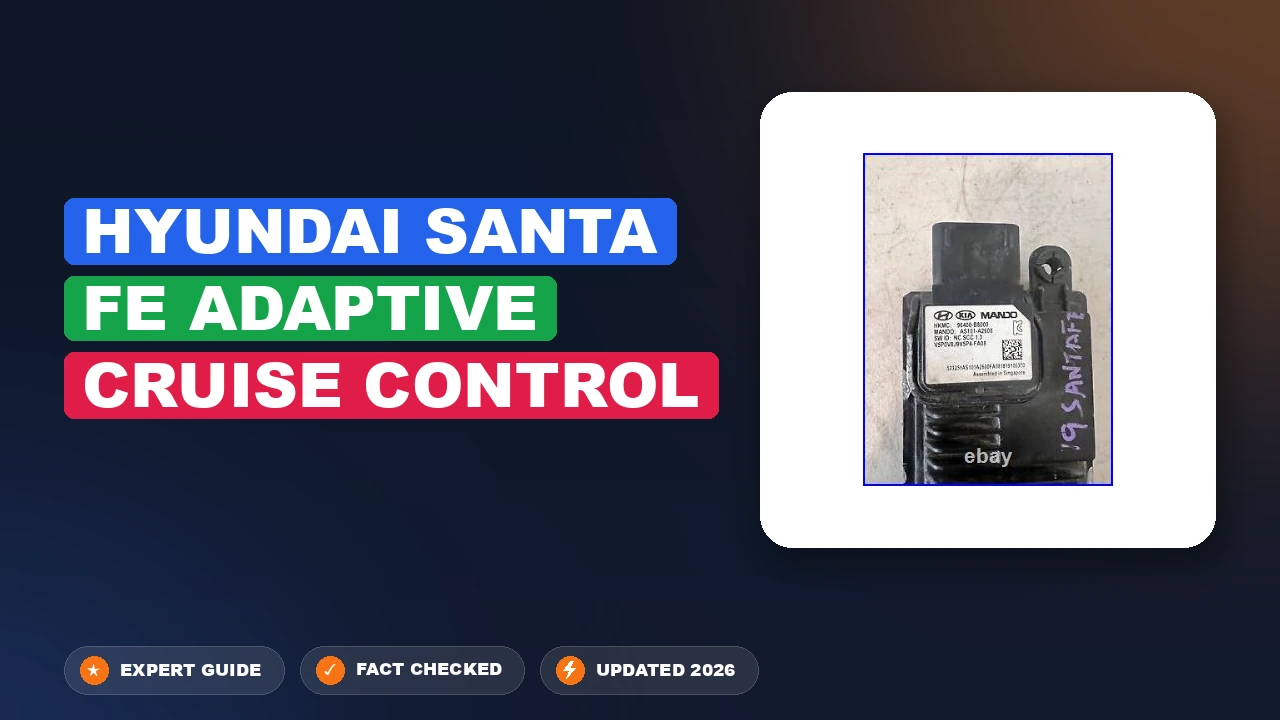
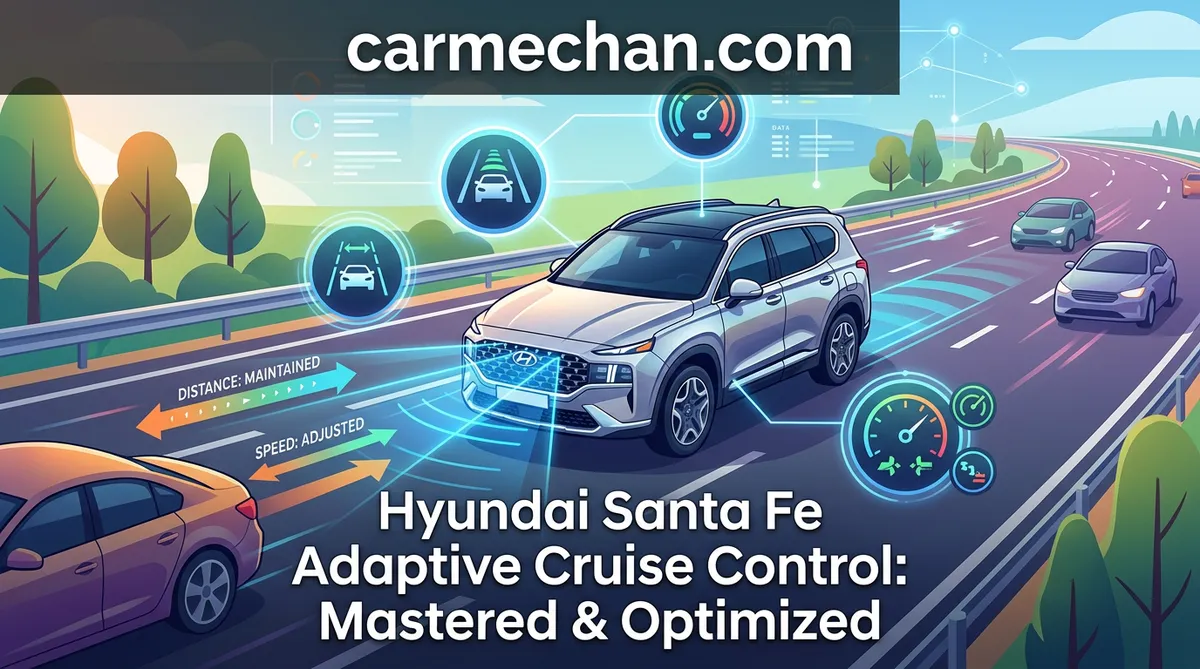
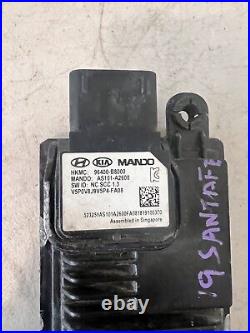
At the heart of the Hyundai Santa Fe adaptive cruise control is the Front Radar Sensor, usually located within the front grille or emblem area. This component emits radio waves that bounce off vehicles ahead, calculating the distance and relative speed of the lead car. Simultaneously, the Front-View Camera, mounted behind the windshield, identifies lane markings and objects. This dual-input architecture ensures the vehicle maintains a safe buffer while assisting in keeping the Santa Fe centered in its lane.

Key Distinctions from Standard Cruise Control
Standard cruise control simply maintains a set velocity, forcing the driver to disengage the system whenever traffic slows. In contrast, Smart Cruise Control (SCC) is dynamic. It automatically modulates the throttle and engages the hydraulic brakes to maintain a preset following gap. It is vital to note that while the system can operate at speeds from 0 to 120+ mph, it is an assistant, not an autonomous driving system. It is designed to reduce driver fatigue on monotonous stretches of road, not to replace the driver’s decision-making capabilities.
By The Numbers
MPH Operational Range
Following Distance Tiers
How to Operate Hyundai Santa Fe Adaptive Cruise Control Settings


📋
Step-by-Step Guide


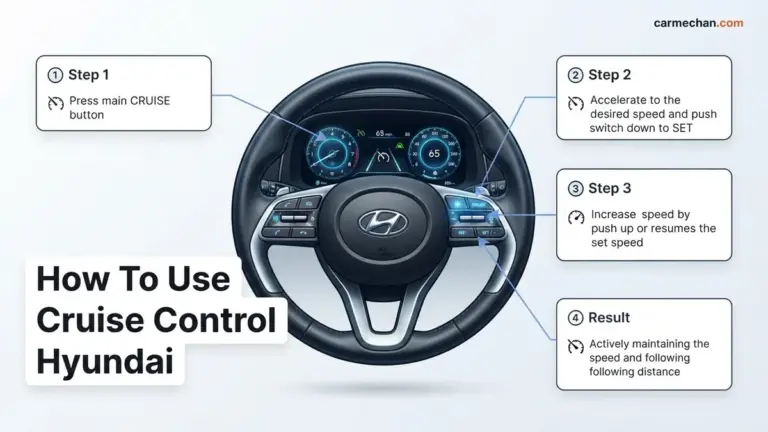
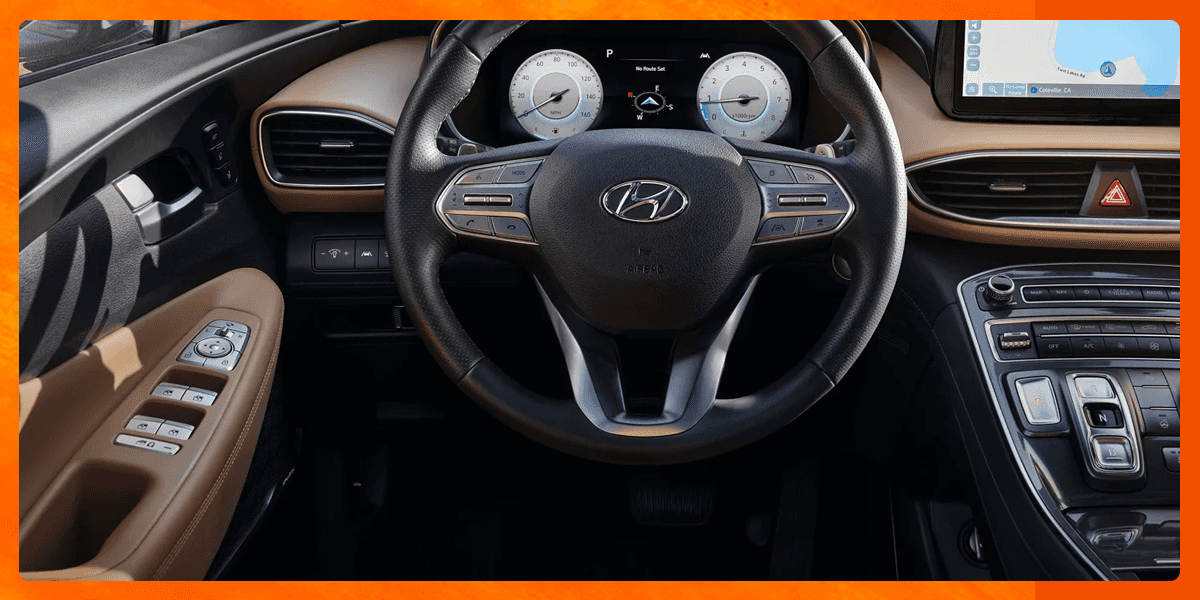
Press the ‘Cruise’ button on your steering wheel. Once the ‘CRUISE’ icon appears in the instrument cluster, accelerate to your desired speed and push the toggle switch down toward the ‘SET’ position. The system will now hold that speed.
Use the vehicle-distance button on the steering wheel to cycle through the 3 to 4 distance segments. During light rain or reduced visibility, increase the distance segments to ensure a wider safety margin between you and the lead vehicle.
In stop-and-go conditions, if the lead vehicle stops, your Santa Fe will automatically brake to a full halt. To resume after a brief pause, tap the accelerator or flick the ‘RES+’ switch. While this feature is highly effective, the driver remains responsible for vehicle control at all times.
Essential Safety Guidelines for Hyundai SCC Systems
Expert operation requires a clear understanding of environmental limitations. The system relies on radar and camera data that, while advanced, is subject to physical interference.
- Radar Congestion and Sensor Blockage: The front radar sensor can be obscured by heavy snow, thick ice, or mud. If the sensor is blocked, the system will disable, and an alert will appear on your dashboard. Always ensure the front grille badge area is free of heavy buildup.
- Limitations in Urban Environments: The system is optimized for highway driving. In complex city environments—such as areas with many pedestrians, bicyclists, or stationary construction equipment—the system may exhibit erratic behavior or fail to detect objects that a human driver would immediately identify.
- Highway Driving Assist (HDA) Integration: When coupled with HDA, the system provides an even higher level of convenience by keeping the vehicle centered. However, HDA still requires the driver’s hands to be on the wheel. It is not a substitute for active steering control.
- Forward Collision-Avoidance Assist (FCA): Always remember that SCC is separate from the emergency braking systems. FCA serves as a last-resort safety net, while SCC is the active speed-management tool. Never rely on SCC to perform emergency braking maneuvers.
Changing lanes while the system is active can confuse the sensor’s target lock. Always be prepared to provide manual steering input immediately upon initiating a lane change, as the system may momentarily accelerate toward a slower vehicle in the new lane.
Troubleshooting Common Hyundai Santa Fe Adaptive Cruise Control Problems and Fixes
Occasional system disengagement is normal and usually a protective measure. Knowing how to interpret these signs is the mark of an experienced driver.
Resolving Sensor Blockage Alerts
If you receive a sensor warning, pull over safely and visually inspect the front grille. During a winter storm, a layer of ice can form over the radar sensor even if the rest of the car looks clear. Use a soft, lint-free cloth or a gentle ice scraper to clear the sensor area. Avoid using harsh chemicals that could damage the sensor’s protective coating.
Why System Disengagement Occurs
Beyond sensor obstruction, the system may disengage if the Electronic Stability Control (ESC) detects wheel slip or loss of traction. Furthermore, if you take evasive steering action, the system will automatically hand control back to you. Recognizing that this disengagement is a safety feature is essential; it is designed to prevent the car from fighting your manual inputs in an emergency.
If the system consistently shows ‘Service Required’ warnings after you have cleared the sensors, do not ignore them. This likely indicates an alignment issue with the radar or a software conflict that requires a professional diagnostic tool at a trusted service center.
Expert Summary and Final Recommendations
The Hyundai Santa Fe adaptive cruise control is an industry-leading tool for enhancing comfort during long-distance driving. However, its effectiveness is intrinsically linked to the driver’s professional approach to safety. Remember that the system acts as a high-quality co-pilot that still requires a captain at the helm.
To ensure maximum reliability, prioritize these three habits: treat SCC as a convenience feature that requires active monitoring, keep your sensor areas clean to prevent performance degradation, and always revert to manual braking when traffic becomes unpredictable or enters stop-and-go urban cycles.
For detailed information specific to your exact model year and trim level, always consult your owner’s manual. Maintaining your vehicle’s technology with the same diligence as its mechanical components will ensure you enjoy a reliable, stress-free driving experience for years to come.
Hyundai Santa Fe Adaptive Cruise Control: Frequently Asked Questions
Does my Santa Fe come to a full stop in traffic?
Yes, if your Santa Fe is equipped with Smart Cruise Control with Stop & Go, the system can bring the vehicle to a complete halt behind a lead vehicle. If the vehicle remains stopped for more than a few seconds, you may need to tap the accelerator or toggle the resume button on the steering wheel to begin moving again.
Why does the system accelerate slowly after stopping?
The system is programmed to prioritize safety and passenger comfort over aggressive acceleration. By modulating the throttle gradually, the vehicle reduces the risk of ‘jerky’ starts in stop-and-go traffic. This controlled acceleration is a professional design choice to ensure fuel efficiency and prevent the transmission from shifting harshly during low-speed recovery maneuvers.
Can the system detect pedestrians?
While the Adaptive Cruise Control is primarily designed to track vehicles, it is often paired with Forward Collision-Avoidance Assist (FCA) which is specifically calibrated to detect pedestrians, cyclists, and vehicles. However, never rely on cruise control as an automated braking tool for pedestrians; it is a supplementary driver-assist system meant to mitigate, not eliminate, collision risks.
How do I know if my sensors are dirty?
The vehicle’s dashboard will typically display a warning notification stating ‘Check Driver Assistance Systems’ or ‘Sensor Obstructed’ if the radar or camera has become blocked by dirt, mud, or heavy snow. If you see this, stop the vehicle safely and clear the front grille area of any physical debris before attempting to re-engage the system for reliable performance.
Is it safe to use this system in heavy rain?
It is generally recommended to exercise extreme caution or deactivate the system in heavy rain, snow, or fog. Severe weather can interfere with the radar signal’s ability to maintain a consistent distance, potentially leading to abrupt disengagements or delayed reactions. Always prioritize professional judgment over automated systems when road conditions are compromised by visibility or traction issues.