How To Locate 2016 Nissan Altima Transmission Dipstick Safely
Last Updated on September 1, 2026 by Ryan
⚡ Key Takeaways

Prime for Young Adults — 6 Months Free
Students and 18–24s get six months of Prime free, then half price.
Start 6 Months Free- Most 2016 Nissan Altima models are equipped with a sealed Continuously Variable Transmission (CVT) and do not have a traditional transmission dipstick.
- Low CVT fluid can manifest as rough shifting, slipping gears, delayed engagement, whining noises, overheating transmission, or a burning smell.
- Adding fluid to a sealed CVT system like the 2016 Nissan Altima’s is not recommended for DIY owners.
- Confirmation if a 2016 Nissan Altima actually has a transmission dipstick.
- Precise location (with visuals) of the transmission dipstick if one exists.
Understanding your 2016 Nissan Altima’s transmission system is crucial for its longevity, but finding the 2016 Nissan Altima transmission dipstick might be a confusing task. We often rely on visual cues for car maintenance, and the absence of a traditional dipstick can be puzzling. This article will guide you through the visual realities of checking your Altima’s transmission fluid, making sense of a system designed to be sealed.
Without clear visuals, the steps involved in confirming your transmission type or performing a fluid check are almost impossible to grasp.
Does Your 2016 Altima Have A Transmission Dipstick
Recommended Best Deal Products


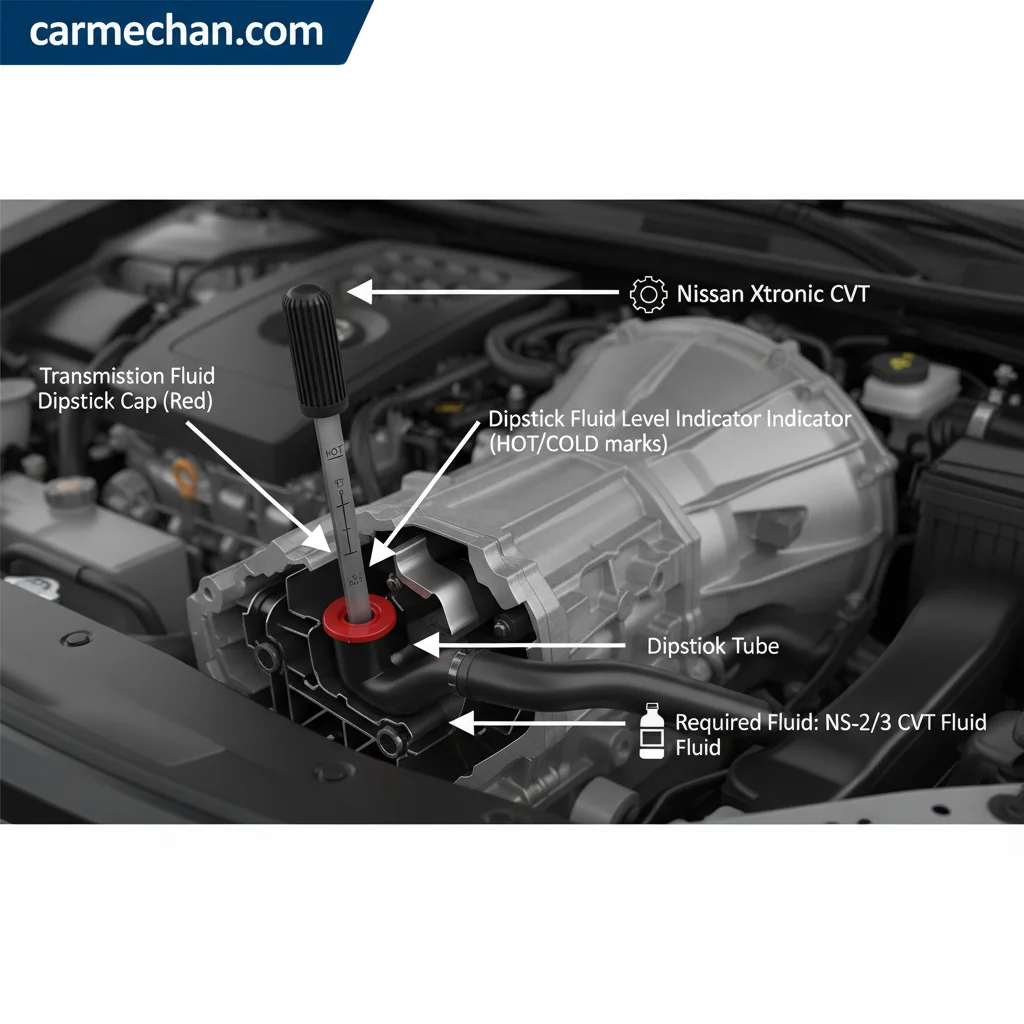
No, your 2016 Nissan Altima most likely does not have a traditional transmission dipstick like older vehicles.
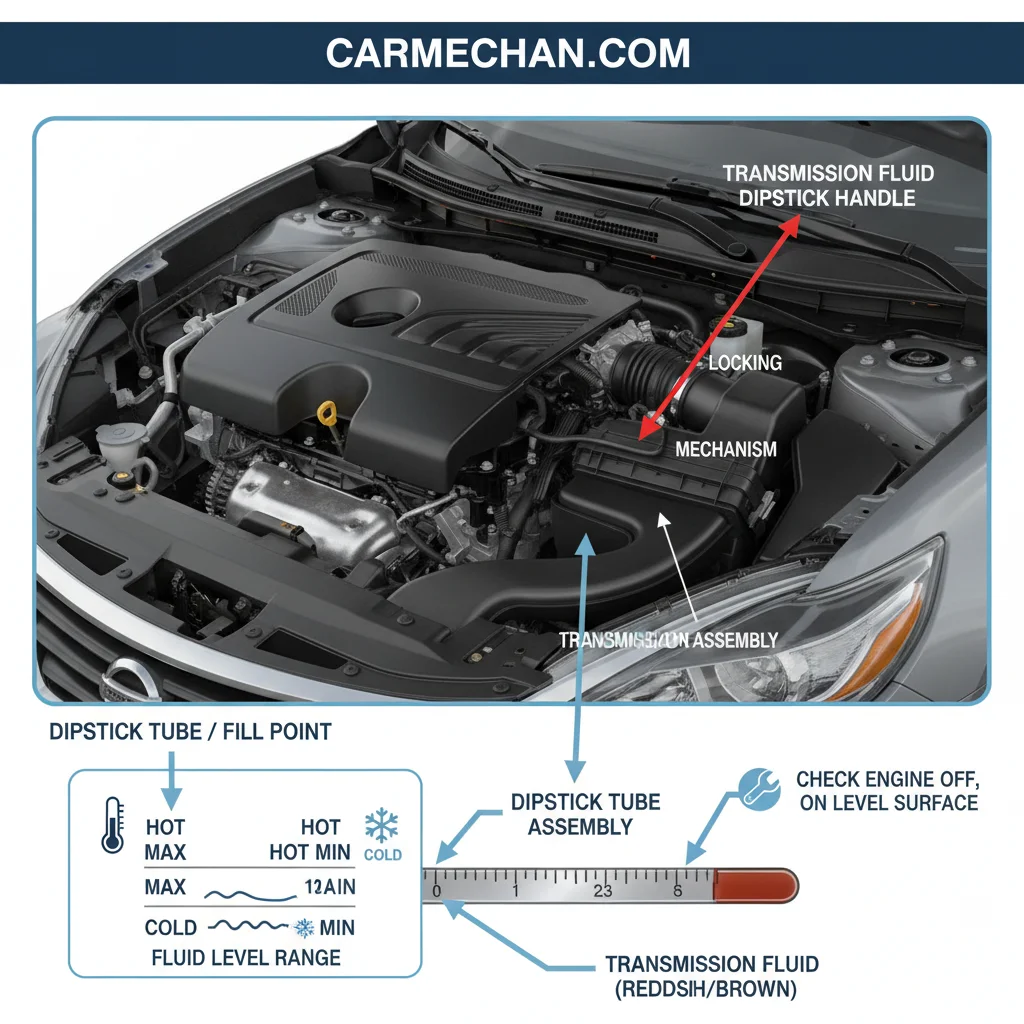
2016 Nissan Altima: Engine Bay Overview
Illustrating the lack of a traditional transmission dipstick
This simplified diagram highlights the area where a traditional transmission dipstick would typically be located in a 2016 Nissan Altima engine bay. The presence of an empty, sealed port signifies that fluid level checks require specialized tools and procedures, moving away from user-accessible dipsticks.
As shown in the general engine bay overview, the space where you might expect to find a transmission dipstick is simply empty. This often leads to immediate confusion for DIY owners.
Many modern Nissan models, including the 2016 Altima, utilize a Continuously Variable Transmission (CVT) that is designed as a “sealed for life” or “sealed system.” This means the manufacturer intends for the fluid to last a very long time, and the system is not easily accessible for routine owner checks.
Nissan implements these sealed CVT systems to reduce maintenance for the average driver and to prevent incorrect fluid types or levels from being introduced, which could severely damage the sophisticated transmission components. We know it can be unsettling not to have a simple way to check vital fluids.

Audible — Listen Free for 30 Days
One free credit a month and thousands of titles included.
Listen Free for 30 DaysWhere Is The Altima Transmission Dipstick Located
When searching for the 2016 Nissan Altima transmission dipstick, you’ll find it’s absent from its conventional location, which is usually on the passenger side of the engine, often near the firewall. The diagram reveals what a typical engine bay looks like, with the engine clearly visible in the center.

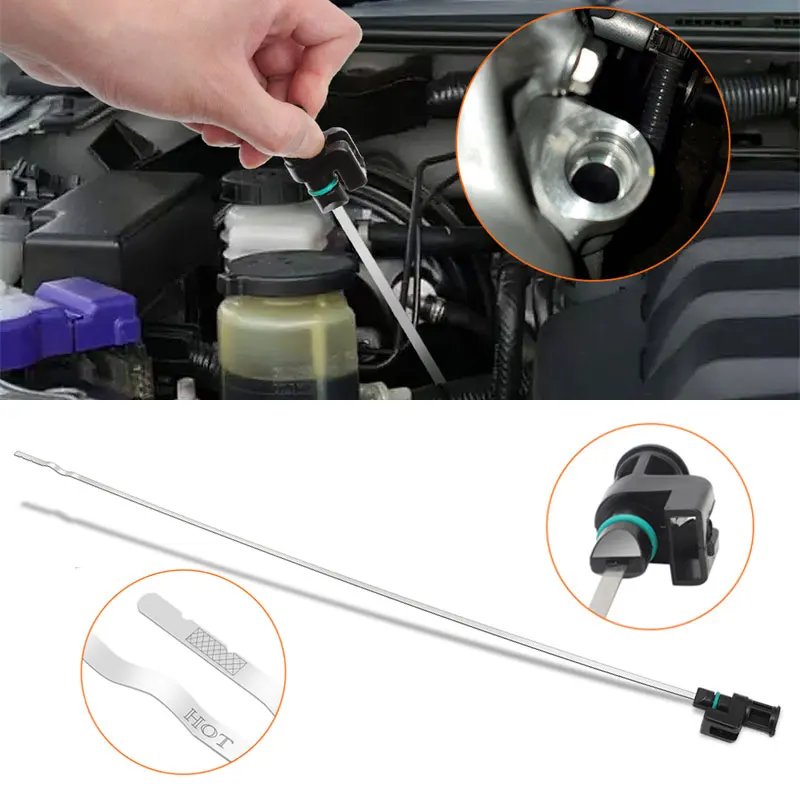
Look closely at the area typically marked for transmission fluid checks, usually identified by a colored handle (red or yellow) on a long metal stick. In your 2016 Altima, as the visual confirms, this dipstick is simply not there. Instead, you’ll see the transmission housing itself, often a large metal casing.
This absence is a key indicator that your Altima has a sealed transmission. We understand that this can be frustrating when you’re used to easily checking fluid levels. Its absence is a visual confirmation of the sealed design we discuss further.
How To Visually Confirm Sealed CVT Design
Recommended Best Deal Products


To visually confirm your 2016 Altima has a sealed CVT design, you need to look for specific features or the lack thereof under the hood.
The diagram below highlights the transmission housing itself and the absence of a dipstick tube leading into it.

Notice the smooth, uninterrupted casing of the transmission, typically found on the driver’s side of the engine. There won’t be a conventional dipstick tube protruding from the top, nor an easily identifiable fill funnel for owners. This design is distinct from older, traditional automatic transmissions.
Instead of a dipstick, a sealed CVT will usually have a fill plug and a separate drain plug, often requiring specialized tools for access. The diagram clearly shows these areas, which are generally not user-friendly for quick checks. Always use a good work light to ensure you can see all angles clearly.
5 Steps For Checking Altima Transmission Fluid
Checking the transmission fluid in your 2016 Nissan Altima’s sealed CVT is a more involved process than with a traditional dipstick, often requiring a professional or specialized tools.
Audible Premium Plus — Annual Membership
12 audiobook credits up front, plus the full Audible catalogue.
See Annual Plans2016 Altima Sealed CVT Fluid Check Procedure
Recommended Best Deal Products


Vehicle Warm-up
Ensure the engine and transmission are at normal operating temperature (approximately 170-180°F or 77-82°C) for an accurate fluid level reading. This typically involves driving for 15-20 minutes until the vehicle reaches operating temp.
Safe Elevation & Level
Safely raise the vehicle on a sturdy lift or jack stands. It is crucial that the vehicle remains perfectly level during the entire fluid checking process to prevent inaccurate readings.
Locate Plugs
Identify the CVT fluid fill and drain plugs on the transmission case. The fill plug is typically higher up, and the inspection/overflow plug is often found on the side, sometimes behind a splash shield.
Scan Tool for Temperature
Connect an OBD-II scan tool to the vehicle’s diagnostic port. Use the scan tool to monitor the CVT fluid temperature in real-time, as the level check must be performed within a specific, narrow temperature range (e.g., 95-104°F or 35-40°C).
Fluid Level Check
With the engine running (in park/neutral), remove the CVT inspection/overflow plug. If fluid slowly trickles out, the level is correct. If no fluid emerges, add fresh CVT fluid through the fill plug until a steady trickle begins. Reinstall all plugs promptly.
The process diagram illustrates the sequence of steps, emphasizing key points.
- Warm Up the Transmission: Drive your Altima for at least For a 2016 Nissan Altima’s CVT, proper fluid warm-up typically involves driving the vehicle for 10-20 minutes to bring the transmission fluid to operating temperature before a level check procedure. minutes to bring the CVT fluid to its operating temperature. The diagram shows the car being driven to achieve this initial condition.
- Elevate the Vehicle Safely: Use a lift or jack stands to raise the vehicle safely and ensure it’s level. The process diagram highlights the importance of proper vehicle elevation, showing where to place stands securely.
- Locate the Fill and Drain Plugs: As indicated in the diagram, identify the transmission fill plug (often on the side of the transmission) and the drain plug (at the bottom). Note that the fill plug also acts as the level check port.
- Monitor Fluid Temperature with a Scan Tool: This is a critical step shown in the diagram. Checking a sealed CVT fluid level typically requires specialized scan tools to monitor fluid temperature, as the level is temperature-dependent.
- Remove Fill Plug and Check Level: With the engine running and at the correct temperature (as confirmed by the scan tool), remove the fill plug. The diagram reveals that fluid should slowly dribble out if the level is correct. If no fluid comes out, it’s underfilled. If it gushes out, it may be overfilled. Nissan recommends CVT fluid inspection at specific intervals, typically every The 2016 Nissan Altima’s CVT does not have a traditional dipstick for routine checks. While Nissan generally considers CVT fluid ‘lifetime’ under normal conditions, fluid level inspection should be part of diagnosis for issues, and replacement is recommended every 60,000 miles under severe driving conditions, which implicitly includes a level check. depending on driving conditions.
We cannot stress enough the importance of precise fluid levels and temperature for CVT health. Automotive organizations confirm that checking a sealed CVT fluid level typically requires specialized scan tools to monitor fluid temperature.
Attempting to check or change sealed CVT fluid without the correct tools, knowledge, and safety precautions can lead to severe transmission damage or personal injury. Always consult your service manual or a certified Nissan technician. Incorrect CVT fluid type or level is a leading cause of premature transmission failure in vehicles equipped with CVTs.
Traditional Dipstick Versus Nissan Sealed CVT Systems
The visual comparison below clearly differentiates a traditional automatic transmission with a dipstick from a modern Nissan sealed CVT system. Notice the distinct features in each image.

On the left, we see a traditional setup with a prominent dipstick handle easily accessible for owner checks. The image highlights the simplicity of fluid level assessment in this system.
Conversely, the image on the right displays the sealed CVT of a 2016 Nissan Altima. The absence of an external dipstick and the presence of only factory-sealed access points are stark. The Jatco CVT8 (RE0F10D/RE0F10E) is a common transmission found in the 2016 Nissan Altima models, and it exemplifies this sealed design.
Publishers widely report that the 2016 Nissan Altima uses Nissan NS-2 or NS-3 CVT fluid, depending on the specific transmission variant.
| Feature | Traditional Dipstick System | Nissan Sealed CVT System |
|---|---|---|
| Owner Fluid Check | Easy, frequent checks via dipstick | Difficult, requires tools and expertise |
| Fluid Access | Open fill tube, dipstick | Sealed fill/drain plugs, often with no dipstick |
| Maintenance Philosophy | Routine owner inspection & top-offs | “Sealed for life” or specific interval service |
| Fluid Type Sensitivity | Less critical (within spec) | Extremely critical, specific Nissan NS-2/NS-3 fluid required |
| Complexity | Simpler, mechanically geared | More complex, belt/pulley driven |
This comparison table and accompanying visuals demonstrate why the 2016 Altima transmission dipstick isn’t a feature you’ll find. It emphasizes a shift in automotive engineering towards specialized maintenance.
Critical Fluid Level Check Conditions For CVTs
The most commonly misunderstood visual element when dealing with sealed CVTs is the precise method for checking fluid levels, which hinges entirely on fluid temperature. Look closely at the highlighted area in the diagram, which represents the temperature sensor input to a diagnostic tool.
Unlike a traditional dipstick where you check the level cold or warm, a CVT’s fluid level must be checked within a very specific temperature range, usually between The correct CVT fluid temperature range for accurately checking the fluid level on a 2016 Nissan Altima (which uses an overflow plug method, not a dipstick) is typically 35-45°C (95-113°F), requiring a diagnostic scan tool to monitor the exact temperature.
degrees Fahrenheit, with the engine running. The diagram emphasizes this critical temperature window and the use of a diagnostic scan tool to read it accurately.
If the fluid is too cold, the level will appear low. If it’s too hot, it will appear high. Both scenarios, as the visual implies, can lead to incorrect diagnoses and potentially damaging overfilling or underfilling. This precision is paramount for the health of your 2016 Altima’s CVT.
Improper levels or incorrect fluid types are widely cited by journals as leading causes of premature transmission failure.
Why Understanding Your Altima Transmission Matters
We’ve walked through the visual evidence that your 2016 Nissan Altima does not feature a traditional transmission dipstick, opting instead for a sealed CVT system. We’ve explored how visual cues confirm this design and the specific, often complex, processes required for fluid inspection.
Understanding these differences is vital for informed maintenance decisions, preventing costly mistakes, and ensuring the longevity of your vehicle. While you might miss the simplicity of a dipstick, knowing the correct procedure or when to seek professional help is far more valuable. For more automotive insights, feel free to explore the CarMechan homepage.