How Much to Register a Car in CT? Fees & Taxes Guide
Last Updated on September 1, 2026 by Ryan
The cost to register a car in CT involves several mandatory fees and taxes, which can vary significantly. Expect to pay for the registration itself, title, and license plates. Additionally, Connecticut sales tax applies to most vehicle purchases or transfers, greatly impacting the total initial expense.

Prime for Young Adults — 6 Months Free
Students and 18–24s get six months of Prime free, then half price.
Start 6 Months Free🎯 Key Takeaways
Recommended Best Deal Products

- Understand CT’s base registration fees, title, and plate costs.
- Factor in 6.35% CT sales tax on vehicle purchases.
- Emissions testing is required; budget for its separate fee.
- Costs vary by vehicle type, weight, and registration period.
- Check the official CT DMV fee schedule for current rates.
Navigating the costs associated with registering a vehicle in Connecticut can feel like a puzzle, but it doesn’t have to be. For most standard passenger cars, you can expect to pay around $80 to $160 for the annual (or biennial) registration fee, a $25 title fee, and about $5 for new license plates. However, the most significant cost often comes from the 6.35% Connecticut sales tax applied to your vehicle’s purchase price.
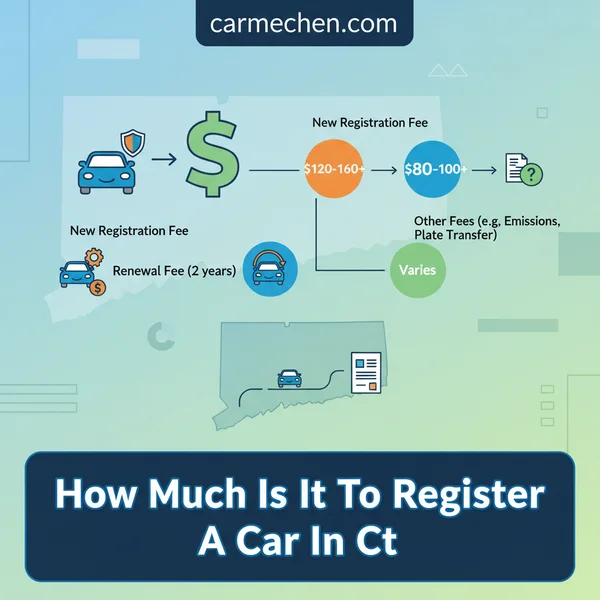
Understanding these distinct charges upfront is crucial for budgeting correctly, whether you’re buying a new car, a used one from a dealer, or a private sale. This guide breaks down exactly what you’ll pay the CT Department of Motor Vehicles (DMV) to get your vehicle legally on the road, ensuring there are no surprises.
Understanding CT Car Registration Fees: The Core Costs
When you register your vehicle in Connecticut, several mandatory fees form the baseline cost. These are separate from any sales tax and cover the administrative aspects of getting your car recognized by the state.

Standard Registration Fee: Your Annual Cost
The primary registration fee is what you’ll pay to keep your vehicle registered for either one or two years. Most passenger vehicles fall into a straightforward category:
- Standard Passenger Vehicle: $80 for a one-year registration or $160 for a two-year registration. This is the most common fee you’ll encounter.
- Vehicle Type and Weight Variations: The fee can differ for motorcycles, commercial vehicles, electric vehicles, and specific heavy-duty trucks, which are often priced by weight. For instance, new electric vehicles may have different initial registration structures.
- Registration Term: While many vehicles qualify for a two-year registration, some older vehicles or specific types might be limited to annual renewals.
It’s always best to check the official CT DMV website for the most current and specific fee schedule based on your exact vehicle type and weight.
Title Application and License Plate Fees
Beyond the periodic registration fee, you’ll also encounter one-time charges for your vehicle’s title and license plates when you first register or transfer ownership.
- Certificate of Title Fee: This is a one-time fee of $25. Every vehicle operating on public roads in Connecticut must have a valid Certificate of Title, proving ownership. You pay this when you first title the vehicle in your name in CT.
- New License Plate Fee: If you’re getting new standard passenger plates, there’s a $5 charge. This is a one-time cost upon initial issuance.
- Plate Transfer Fee: If you’re transferring plates from a previously owned vehicle to your new one, the fee is also $5. This is a common practice to save on new plate costs.
- Specialty Plates: Keep in mind that customized or specialty plates, such as those supporting a cause or featuring specific designs, will incur additional fees beyond the standard $5.
These title and plate fees are typically paid upfront when you complete your initial registration transaction at the DMV.
Everything You Need to Know About CT Car Registration Costs
Navigating the costs associated with registering a vehicle in Connecticut can seem like a puzzle, with various fees and taxes contributing to the total. This comprehensive guide is designed to break down each component of the cost, from sales tax to registration fees and emissions testing, providing you with a clear, step-by-step understanding. By following these instructions carefully, you’ll be well-prepared for your CT Department of Motor Vehicles (DMV) visit or online transaction, ensuring a smooth and efficient registration process without any unexpected financial surprises.

Audible — Listen Free for 30 Days
One free credit a month and thousands of titles included.
Listen Free for 30 DaysStep 1: Identify Your Vehicle Type & Source of Purchase
What you need: Your vehicle’s make, model, year, and the location of purchase (dealer or private seller).
Instructions: The first step in determining your registration costs is understanding the specifics of your vehicle and how you acquired it. Was it purchased new or used? Did you buy it from a licensed Connecticut dealer, an out-of-state dealer, or a private individual? This information is crucial because it directly impacts how sales tax is assessed and what documentation you’ll need. For instance, purchasing from a CT dealer typically means they handle the sales tax and initial registration paperwork for you, while private sales require you to handle it yourself and might involve a different sales tax calculation basis (e.g., NADA value vs. sale price).
Pro Tip: Keep all original purchase documents, including the bill of sale or manufacturer’s certificate of origin (MCO), readily accessible. These will be essential for calculating costs and proving ownership.
Step 2: Calculate Connecticut Sales Tax (6.35%)
What you need: The vehicle’s purchase price and any trade-in value (if applicable).
Instructions: Connecticut imposes a 6.35% sales tax on most motor vehicle purchases. If you bought your car from a dealer, they usually collect this at the time of sale. For private sales, you will pay this tax directly to the DMV when you register the vehicle. The tax is calculated on the net sales price (purchase price minus any trade-in allowance). If the vehicle was purchased from a private party at a price significantly below its fair market value, the DMV reserves the right to assess sales tax based on the National Automobile Dealers Association (NADA) official used car guide value, rather than the stated purchase price. Always be prepared for this possibility if your private sale price is unusually low.
Pro Tip: If you’re trading in a vehicle, ensure the trade-in allowance is clearly stated on your bill of sale. This amount reduces your taxable basis, saving you money on sales tax. Keep documentation for any vehicles sold privately to ensure you don’t overpay sales tax if you move to a new state and bring the car back to CT later.
Step 3: Determine Your Initial Registration Fee (2 Years)
What you need: Your vehicle’s type (passenger car, light truck, motorcycle, commercial vehicle) and, for trucks, its Gross Vehicle Weight Rating (GVWR).
Instructions: The standard initial registration fee in Connecticut covers a two-year period. For most passenger vehicles, this fee is currently $120. However, the cost varies for other vehicle types. Motorcycles have a different rate (e.g., $84 for two years), and commercial vehicles or heavier trucks have fees based on their GVWR, which can range significantly higher. These fees are subject to change, so it’s always best to verify the current rates directly on the official CT DMV website. This is the primary recurring cost associated with keeping your vehicle legally on the road.
Pro Tip: Before your registration appointment, visit the CT DMV fee schedule page online to confirm the exact fee for your specific vehicle type. This ensures you have the correct amount of funds ready and helps avoid any last-minute surprises.
Audible Premium Plus — Annual Membership
12 audiobook credits up front, plus the full Audible catalogue.
See Annual PlansStep 4: Factor in New Plate and Title Fees
What you need: Knowledge of whether you require new license plates or are transferring existing CT plates, and proof of vehicle ownership (original title or MCO).
Instructions: When registering a car in Connecticut, you’ll incur a one-time title fee, currently $25, which pays for the official document proving your ownership. Additionally, if you are obtaining new standard license plates, there is a $5 plate fee. If you choose specialty or vanity plates, these will have higher associated fees (e.g., $10 for a vanity plate). If you are transferring valid license plates from a vehicle you previously owned in CT to your new vehicle, you can save the $5 new plate fee, and often a smaller transfer fee of $10 may apply. Ensure your old plates are clean, undamaged, and meet all DMV requirements for transferability, and that the vehicle class is the same.
Pro Tip: If you are planning to transfer plates, bring your old plates with you to the DMV. Also, ensure the previous vehicle’s registration is officially canceled (if you no longer own it) to avoid potential property tax issues on a car you no longer possess.
Step 5: Account for Emissions Testing Costs (If Applicable)
What you need: Your vehicle’s model year and odometer reading.
Instructions: Most gasoline-powered vehicles model year 1996 and newer, as well as diesel vehicles model year 2007 and newer, registered in Connecticut are required to undergo an emissions test every two years. The cost for this test is currently $20. For newly registered vehicles, this test must often be completed before the registration can be finalized. For renewals, you typically have 30 days after your registration expires to complete the test. Certain vehicles, such as electric vehicles, historical vehicles over 25 years old, or vehicles under a certain mileage threshold (check current exemptions), may be exempt from emissions testing.
Pro Tip: Don’t wait until the last minute to get your emissions test. Failed tests require repairs and retesting, which can delay your registration and potentially lead to fines if you drive with an expired registration. Check your vehicle’s emissions readiness using an OBD-II scanner if you have one, especially if your check engine light was recently on.
Step 6: Consider Potential Local Property Taxes
What you need: Your residential municipality’s name and address.
Instructions: While not a fee paid directly to the DMV, it’s crucial to factor in annual motor vehicle property taxes, which are assessed by your local Connecticut municipality. After you register your vehicle with the state DMV, the DMV automatically notifies your town or city of residence. The town then assesses the vehicle’s value (typically 70% of the NADA clean retail value) and bills you annually. These taxes are due to your town, not the state. The tax rate (mill rate) varies significantly from town to town, so this cost can range from a few hundred to over a thousand dollars per year, depending on your vehicle’s value and your town’s tax rate.
Pro Tip: Research your town’s current mill rate online or contact their assessor’s office to get an estimate of your annual property tax bill. This is an ongoing cost that begins once your vehicle is registered in CT, so it’s important to budget for it separately from DMV fees.
Step 7: Gather All Required Documentation & Prepare Payment
What you need: Valid CT driver’s license or state ID, proof of CT auto insurance, original vehicle title or MCO, bill of sale, Q-1 form (for private sales), emissions test report (if applicable), and your chosen payment method.
Instructions: Before heading to the DMV or completing an online registration, ensure you have all necessary paperwork organized. This includes your valid Connecticut driver’s license or state ID, proof of current Connecticut automobile insurance (physical card or electronic proof), the original vehicle title (or Manufacturer’s Certificate of Origin for new vehicles), and the bill of sale. For private sales, you’ll also need a completed CT DMV Form Q-1, “Sales Tax Motor Vehicle.” If your vehicle required an emissions test, bring the official emissions test report. Prepare your payment method; the DMV typically accepts cash, checks, money orders, and major credit/debit cards at most locations.
Pro Tip: Create a physical folder or digital checklist for all your documents. Double-check the CT DMV website for a comprehensive list of required documents specific to your situation (e.g., out-of-state vehicle, leased vehicle, gift transfer) to avoid needing a second trip.
Step 8: Complete Your Registration at the DMV or Authorized Agent
What you need: All prepared documents and funds from Step 7.
Instructions: With all your documents and funds ready, you can now complete the registration process. You can do this by visiting a CT DMV office, a select AAA office (for members), or in some cases, via mail or online for renewals. For initial registrations or title transfers, an in-person visit is usually required. Be prepared for potential wait times at the DMV, although making an appointment online can significantly reduce this. At the counter, a DMV representative will review your documents, calculate your final fees (including sales tax if applicable), collect payment, and issue your registration certificate and new plates (if needed). You will receive a temporary registration that you can print if registering online.
Pro Tip: Utilize the CT DMV’s online appointment system (if available for your transaction type) to save significant time. Arrive early for your appointment with all paperwork in hand, and be ready to answer any questions about your vehicle or its purchase. Take a deep breath and be patient, as the process can sometimes take a while.
✅ Final Checklist
- Sales tax calculated correctly based on purchase price or NADA value.
- Initial two-year registration fee accounted for.
- Plate ($5) and title ($25) fees included in your budget.
- Emissions test completed and passed (if required for your vehicle).
- All required personal and vehicle ownership documents are organized and ready.
Important Notes:
- Safety Considerations: Never drive an unregistered vehicle or a vehicle with expired plates. Always ensure you have valid insurance coverage before driving any vehicle in Connecticut.
- When to Seek Professional Help: If you have a complex situation (e.g., inherited vehicle, vehicle from a salvage auction, out-of-state title issues), it’s best to contact the CT DMV directly or consult with a reputable car dealer for guidance. They often have experience with unique registration scenarios.
- Estimated Time and Cost Range: The actual DMV appointment can take anywhere from 30 minutes to 2 hours, depending on wait times and the complexity of your transaction. Preparation time can vary from a few hours to a couple of days. For a typical passenger car (private sale) requiring new plates and a title, the initial registration costs (excluding property tax) usually fall in the range of $500 – $1,000+, largely driven by the vehicle’s purchase price for sales tax calculation. This includes approximately $120 for registration, $25 for title, $5 for plates, $20 for emissions, and 6.35% sales tax on the vehicle’s value.
Connecticut Sales Tax on Vehicles: Calculation & Impact
For most vehicle purchases or transfers, the Connecticut sales tax represents a significant portion of your total registration cost. Understanding how it’s calculated and when it’s due is essential.

Understanding the 6.35% CT Sales Tax
Connecticut imposes a state sales tax on most retail purchases, and vehicles are no exception. This tax applies to both new and used vehicles bought or transferred within the state.
- Sales Tax Rate: The standard Connecticut sales tax rate on vehicles is 6.35%. There are no local sales taxes on vehicles in CT, so this rate is consistent statewide.
- When is it Paid?:
- Dealership Purchases: If you buy a vehicle from a licensed dealer (new or used), the dealership will typically collect the sales tax from you at the time of purchase and remit it directly to the state on your behalf.
- Private Sales: When purchasing a vehicle from a private party, you are responsible for paying the sales tax directly to the Connecticut DMV when you register the vehicle in your name. You’ll need to declare the purchase price, and the DMV will assess the tax.
It’s important to remember that this tax is mandatory and will be collected before your vehicle registration can be finalized, especially for private sales.
Calculating Your Sales Tax Burden
The calculation for Connecticut sales tax on vehicles is straightforward: it’s a percentage of the vehicle’s purchase price. This can quickly add up, making it a critical component of your total vehicle cost.
- The Formula: Simply multiply your vehicle’s purchase price by the sales tax rate.
Purchase Price × 0.0635 = CT Sales Tax Due - Practical Example: If you purchase a car for $20,000, your sales tax calculation would be:
$20,000 × 0.0635 = $1,270.00 - Impact of Trade-Ins: When purchasing from a dealership, the value of a trade-in vehicle typically reduces the taxable amount of your new purchase. For example, if you buy a $25,000 car and trade in a vehicle worth $5,000, you would only pay sales tax on the remaining $20,000. For private sales, the tax is generally based on the declared selling price.
Always factor in this sales tax amount when considering the total cost of your vehicle, as it often significantly exceeds the combined registration, title, and plate fees.
Factors Influencing Your Total CT Car Registration Cost
While the state registration fee is a fixed amount for most passenger vehicles, several other elements can significantly impact the overall cost of owning and legally operating your car in Connecticut. Understanding these can help you budget more accurately.
Vehicle Type and Weight
The type and weight of your vehicle play a crucial role in determining its registration fees. Generally, heavier vehicles and those used for commercial purposes incur higher fees due to increased road wear and tear. This isn’t just about the initial registration but often impacts subsequent renewals as well.
- Standard Passenger Vehicles: Most cars, SUVs, and light trucks fall into a similar fee structure, primarily based on their classification as “passenger” vehicles.
- Heavier Vehicles: If you own a larger SUV, a heavy-duty pickup truck, or any vehicle classified as commercial, expect to pay more. For instance, a vehicle weighing over a certain threshold will have a proportionally higher registration cost than a compact sedan. The DMV categorizes vehicles by gross vehicle weight rating (GVWR), and fees escalate with each weight tier.
- Motorcycles and Trailers: These also have their own specific, typically lower, fee structures, distinct from standard passenger cars.
- Electric Vehicles: While many states offer incentives or fee reductions, some, including Connecticut, may impose a slightly higher registration fee for EVs to offset lost gas tax revenue. It’s a modest increase, but worth noting.
Age and Value of Your Vehicle (Property Tax Impact)
Perhaps the most significant variable in your total cost of ownership is the annual property tax assessed by your local municipality. While not a DMV registration fee, it’s a mandatory cost tied directly to vehicle ownership in Connecticut.
- Local Property Tax: Unlike the flat state registration fee, vehicle property tax is calculated by your city or town based on the assessed value of your car and the local mill rate. The assessed value is typically 70% of the vehicle’s clean retail value as of October 1st each year.
- Fluctuating Value: As your car ages, its market value generally decreases, which in turn can lower your annual property tax bill over time. However, newer or high-value vehicles will incur significantly higher property taxes.
- Payment Schedule: Property taxes are usually billed annually or semi-annually by your town’s tax collector, separate from your DMV registration. You generally cannot renew your registration if you have outstanding property tax obligations on any vehicle registered in your name.
- Practical Tip: To estimate your property tax, check your town’s assessor’s website or contact them directly. Many towns have online databases where you can look up vehicles by VIN or owner name to see their assessed value and the applicable mill rate. This is critical for budgeting, as it can easily exceed the state registration fee.
Emissions Testing & Other Mandatory Considerations
Beyond the base fees and property taxes, there are a few other mandatory costs and potential pitfalls to keep in mind that contribute to the overall expense of keeping your car legally registered in Connecticut.
The Mandatory Emissions Test
Connecticut mandates regular emissions testing to ensure vehicles meet environmental standards. This is a non-negotiable step for most cars before they can be registered or have their registration renewed.
- Frequency: Most vehicles are required to undergo an emissions test every two years. New vehicles are typically exempt from the first few tests (often for the first four years from the model year, or until they are four years old).
- The Cost: The current fee for an emissions test in Connecticut is $20. This fee is paid directly at the authorized testing station. It’s a relatively small but essential part of the overall cost.
- What Happens If You Fail: If your vehicle fails the emissions test, you will need to get the necessary repairs done and then have it retested. You cannot renew your registration until your vehicle passes the emissions inspection. There are some waivers for repair costs, but generally, you’re responsible for getting the car to pass.
- Where to Test: Tests are conducted at numerous authorized emissions testing stations across the state, making it convenient to find a location near you.
Potential Late Fees and Penalties
Ignoring renewal deadlines can quickly inflate your registration costs. The Connecticut DMV has clear penalties for late renewals, making timely action financially advantageous.
- Late Renewal Fees: If you fail to renew your registration by its expiration date, you will incur a late fee. This is a flat penalty added to your regular renewal fee. For a standard passenger vehicle, the late fee is currently $10.
- Driving Unregistered: Driving a vehicle with an expired registration is illegal and can lead to significant fines. Additionally, if you are stopped, you could face penalties for other related offenses, such as not having valid insurance, as an expired registration often triggers insurance policy issues.
- Insurance Implications: Many insurance companies require a vehicle to be legally registered to maintain active coverage. An expired registration could complicate insurance claims or even lead to policy cancellation.
- Practical Advice: The DMV sends out renewal notices, but it’s ultimately your responsibility to track your registration’s expiration date. Utilizing online renewal options or setting calendar reminders can help you avoid these easily preventable extra costs and legal headaches.
Wrapping Up Your CT Car Registration Costs
Navigating the costs associated with registering a car in Connecticut involves more than just a single fee to the DMV. You’ll encounter a primary registration fee, potential sales tax if you’re buying new or used from a dealership, an emissions test fee every two years, and the often substantial annual local property tax. These components combine to form your true cost of legal vehicle ownership.
To ensure a smooth and cost-effective process, always verify current fees on the official CT DMV website and contact your local town’s tax assessor for accurate property tax estimates. By understanding these different financial obligations, you can budget effectively and drive confidently, knowing you’ve covered all your bases.
❓ Frequently Asked Questions
Can the cost to register a car in CT be estimated without visiting the DMV?
Yes, you can estimate the cost by knowing your vehicle type, weight, and purchase price. The CT DMV website provides detailed fee schedules for registration, title, and plates, which can be combined with the 6.35% sales tax rate to get a solid estimate.
What exact fees make up the total car registration cost in CT?
The total cost comprises several fees: the base registration fee (which can be for 1 or 2 years and varies by vehicle type/weight), the certificate of title fee, and license plate fees (new plates or transfer). Additionally, 6.35% sales tax on the vehicle’s purchase price significantly contributes to the initial cost.
How does Connecticut calculate sales tax on a vehicle for registration purposes?
Connecticut calculates 6.35% sales tax on the vehicle’s purchase price, even if it’s a private sale. If the purchase price seems unusually low, the DMV might tax it based on its current market value, not just the sale price declared.
Are there any discounts or exemptions for CT car registration fees?
Some specific vehicle types, like certain hybrid or electric vehicles, may qualify for reduced registration fees or sales tax exemptions. Additionally, vehicles registered to certain non-profit organizations or disabled veterans might have special rates, so it’s best to check the latest DMV guidelines.
What is the typical registration period in CT and does it affect the cost?
Connecticut typically offers 2-year registration periods for passenger vehicles, which means you pay the registration fee covering both years upfront. A shorter 1-year registration period might be available for certain vehicle types or circumstances, resulting in half the 2-year fee.
Besides the DMV fees, what other mandatory costs should I budget for when registering a car in CT?
Beyond the DMV’s registration, title, and sales tax fees, you must budget for a mandatory emissions test fee, which is required every two years for most vehicles and is paid directly to the testing station, not the DMV. Depending on the purchase, temporary registration plates might also have a small fee.