How Long Does Car Paint Take To Dry Real Expert Guide 2026
Last Updated on September 1, 2026 by Ryan
Car paint drying times vary significantly, but generally range from ‘dry to touch’ in 30 minutes to 2 hours, ‘dry to recoat’ in 1-24 hours, and ‘fully cured’ in 30 to 90 days. Understanding the distinction between these stages and the factors influencing them is crucial for a successful finish.
The question of how long does car paint take to dry involves understanding various stages and factors. Car paint drying is not a singular event; it progresses through distinct phases, from being dry to the touch to achieving full chemical cure. This guide for 2026 will detail the typical timelines for different paint types and crucial environmental factors influencing these processes.
Optimizing drying conditions can significantly impact the durability and finish quality of your automotive paint job.
Car paint drying times vary significantly, but generally range from ‘dry to touch’ in 30 minutes to 2 hours, ‘dry to recoat’ in 1-24 hours, and ‘fully cured’ in 30 to 90 days. Understanding the distinction between these stages and the factors influencing them is crucial for a successful finish.
- Drying and curing are distinct processes.
- Temperature, humidity impact drying speed.
- Paint type dictates specific dry times.
- Proper ventilation accelerates drying safely.
- Patience is key for a durable paint finish.
Key Takeaways


- Drying and curing are distinct processes.
- Temperature, humidity impact drying speed.
- Paint type dictates specific dry times.
- Proper ventilation accelerates drying safely.
- Patience is key for a durable paint finish.
Drying Time Versus Curing Time for Car Paint


The automotive painting process involves distinct phases of drying and curing, each with unique implications for the paint’s integrity. Drying primarily refers to the evaporation of solvents from the paint film, making it solid enough to handle. Curing, however, is a more complex chemical reaction where the paint hardens and achieves its maximum durability and protective properties.

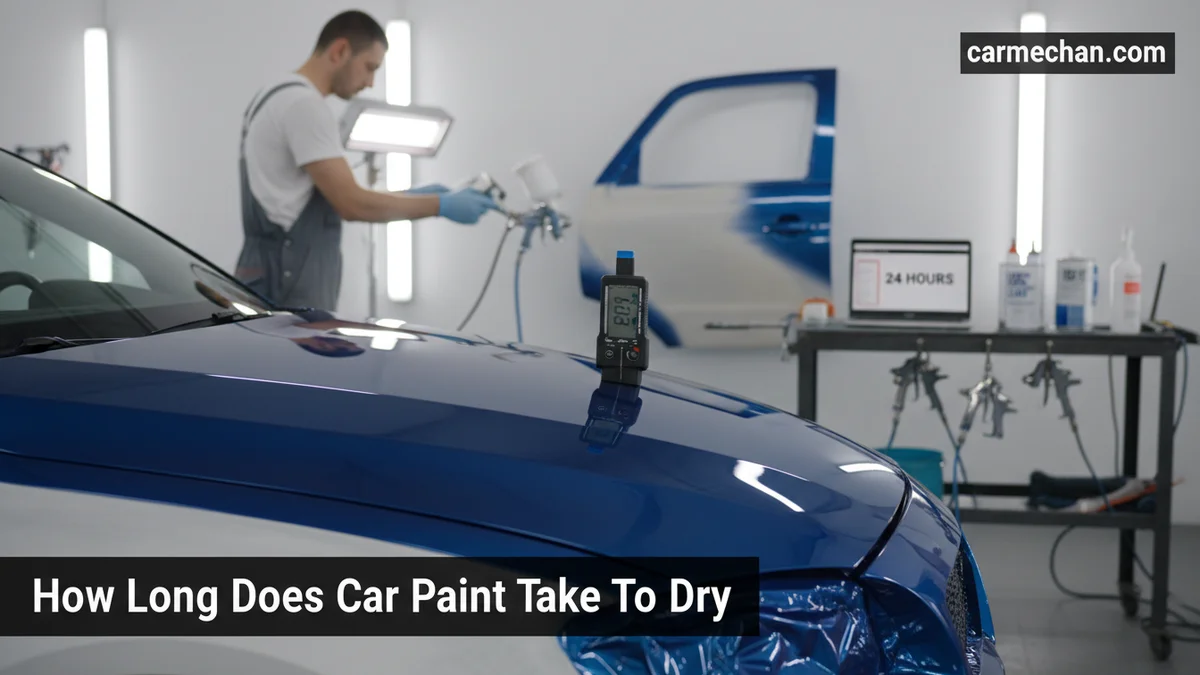
Dry to Touch Explained
Dry to touch indicates the point at which the paint surface is no longer tacky and will not transfer paint if lightly touched. This stage typically occurs relatively quickly, often within 30 minutes to 2 hours for most automotive paints, depending on the specific formulation and environmental conditions.
While it feels dry, the paint is still very fragile and susceptible to damage.
Recoat Readiness Defined
Recoat readiness refers to the window during which another layer of paint can be applied without compromising adhesion or causing defects like lifting. This stage is crucial for multi-coat applications. For many car paints, the recoat window can range from 1 to 24 hours. Adhering to the manufacturer’s recommended recoat times is vital for a strong, cohesive finish.
Full Cure Milestones
Full cure signifies that the paint has achieved its maximum hardness, chemical resistance, and gloss. This is a chemical process (polymerization) that continues long after the paint feels dry. Full cure typically takes significantly longer, ranging from 30 to 90 days. During this period, the paint is still hardening and developing its final characteristics.
Understanding this distinction is paramount for proper post-paint care and ensuring the longevity of your finish .
These timelines are not static; various factors significantly influence how quickly paint progresses through these stages.
7 Key Factors Affecting Car Paint Drying Speed


Many variables collectively determine how quickly car paint dries and fully cures. Mastering these elements can lead to a more efficient painting process and a superior final product.
Temperature Influence
Temperature plays a critical role in paint drying. Higher temperatures generally accelerate solvent evaporation and chemical reactions, leading to faster drying and curing. However, excessively high temperatures can cause the paint to dry too quickly on the surface, trapping solvents underneath and leading to defects.
The optimal temperature range for most car paints is generally between 65-75°F (18-24°C) .
Humidity Impact
Humidity directly affects how quickly paint solvents evaporate. High humidity slows down evaporation, extending drying times and potentially leading to issues like blushing or hazing, especially with solvent-based paints. Low humidity, conversely, can cause paint to dry too fast, potentially leading to poor flow and adhesion.
A recommended humidity level for painting is typically between 50-60% .
Ventilation Control
Adequate ventilation is essential for removing evaporated solvents from the painting environment. Without proper airflow, these solvents can linger, increasing humidity and slowing down the drying process. Good ventilation also helps prevent the buildup of hazardous fumes and dust particles from settling on the wet paint.
Using exhaust fans and air movers is key to maintaining a clean and efficient drying space.
Paint Thickness Matters
The thickness of the applied paint film significantly impacts drying time. Thicker coats contain more solvent that needs to evaporate, taking considerably longer to dry and cure. Applying multiple thin, even coats, rather than one heavy coat, allows each layer to flash off and dry more efficiently, preventing issues like runs or trapped solvents.
This approach ensures a more durable and uniform finish.
Chemical Composition Role
The specific chemical composition of the paint directly dictates its drying and curing mechanisms. For instance, single-stage enamels often air-dry and cure through oxidation, which can be slower. Urethane paints, however, rely on catalysts for chemical cross-linking, providing a faster and harder cure. Water-based paints utilize water evaporation, which is affected differently by temperature and humidity than solvent evaporation .
Surface Preparation Importance
Proper surface preparation ensures optimal adhesion and contributes to efficient drying. A clean, properly sanded, and degreased surface allows the paint to adhere uniformly and spread evenly. Contaminants like grease or silicone can create barriers, leading to uneven drying, poor adhesion, or defects like fisheyes. Ensuring the surface is properly prepared creates a solid foundation for the new paint layer.
Application Method Effects
The application method, whether spray gun, aerosol, or brush, impacts paint thickness and uniformity. Spray gun applications, when done correctly, produce fine, even coats that dry efficiently. Improper gun settings or technique can lead to heavy, uneven application, significantly extending drying times and increasing the risk of drips or runs.
Understanding the specific application requirements for your chosen paint is crucial.
Beyond environmental conditions, the very type of paint used plays a dominant role in its drying characteristics.
How Long Do 4 Main Car Paint Types Fully Dry
Different formulations of automotive paint demand varying drying and curing schedules. Knowing these specifics helps in planning your project and achieving the best results.
Primer Drying Expectations
Primer typically dries to touch within 30 minutes to 2 hours, making it ready for sanding or subsequent coats. The recoat window for primer is usually between 1 to 4 hours. Full cure for primer can take 12 to 24 hours, depending on the product and environmental conditions.
It is essential to ensure the primer is fully dry before sanding to avoid gumming up sandpaper and ensure proper adhesion of subsequent layers .
Basecoat Drying Needs
Basecoats, which provide color but no gloss, dry quickly by design. They are usually dry to touch within 15 to 30 minutes. The critical stage for a basecoat is the ‘flash-off’ time between coats, typically 5 to 15 minutes, allowing solvents to evaporate before the next coat is applied.
A basecoat is usually ready for clear coat application within 30 minutes to 1 hour after the final basecoat layer .
Clear Coat Drying Periods
Clear coat, which provides gloss and protection, has more extended drying and curing times due to its thickness and chemical composition. It’s often dry to touch in 2 to 4 hours. The recoat window, if applying multiple clear coats, can range from 1 to 24 hours.
Full cure for clear coats is a lengthy process, often taking 60 to 90 days. This extended curing period allows the clear coat to achieve maximum hardness and scratch resistance .
Single Stage Paint Timelines
Single-stage paints combine color and gloss in one product, often used for classic car restorations or simpler repairs. These typically dry to touch in 4 to 8 hours. The recoat window for single-stage paint can be quite broad, from 6 to 24 hours, depending on the type (e.g., acrylic enamel, urethane).
Full cure for single-stage urethanes typically ranges from 30 to 60 days, during which time the paint achieves its final hardness and durability .
Knowing these timelines is essential, but understanding how to manage and even accelerate them can make a significant difference in project efficiency.
How to Speed up Car Paint Drying Safely
While patience is paramount, several strategies can safely optimize and even accelerate car paint drying without compromising the finish. These methods focus on controlling the environment and perfecting application techniques.
Environmental Control Methods
Controlling temperature and humidity is crucial for faster drying. Using a dedicated paint booth or a well-ventilated area with controlled heating can significantly reduce drying times. Infrared (IR) lamps can accelerate the chemical curing process from the inside out, often used in professional shops .
Portable heaters can raise ambient temperature, while dehumidifiers can lower humidity levels. Always ensure proper ventilation when using these tools to exhaust solvent fumes safely .
Proper Application Techniques
Applying paint in thin, even coats is one of the most effective ways to promote faster drying. Each thin coat allows solvents to evaporate more quickly than a thick, heavy layer. Over-applying paint not only slows drying but also increases the risk of sags, runs, and solvent pop.
Maintaining the correct spray gun distance, pressure, and overlap ensures uniform coverage and efficient flash-off times between coats.
Post Paint Care Best Practices
After initial application, minimizing dust and airborne contaminants in the drying environment is vital. Keep the area clean and avoid activities that stir up dust. Gentle air movement from fans can aid solvent evaporation, but direct, high-velocity airflow can cause surface dry and wrinkling. Allowing adequate airflow around the vehicle helps dissipate heat and moisture effectively without causing issues.
Common Drying Issues Fixes
Addressing common drying issues promptly can save your finish. Blushing, a milky white haze, often results from high humidity or rapid solvent evaporation, trapping moisture. Increasing temperature and improving ventilation can help. Fisheyes, small craters in the paint, usually indicate surface contamination; proper surface prep is key to prevention.
Runs and sags are from applying too much paint too quickly; light sanding and reapplication may be necessary. Slow drying can often be resolved by increasing temperature or reducing humidity.
Once your paint has sufficiently dried and cured, knowing when it’s safe to engage in post-painting activities is the next crucial step.
When to Perform Post Paint Activities Safely
After the final coat, resist the urge to immediately engage in post-painting tasks; adhering to recommended waiting periods ensures paint durability and a lasting finish. Rushing these steps can compromise the integrity of your new paint job.
Sanding Readiness Indicators
Sanding newly painted surfaces, whether for leveling or defect removal, should only occur once the paint is sufficiently hard. For clear coats, this typically means waiting 24 to 48 hours. The paint must be hard enough to produce dry sanding dust without gumming up the sandpaper.
Premature sanding can scuff the soft paint or pull it from the surface .
Buffing Polishing Schedules
Buffing and polishing remove minor imperfections and enhance gloss, but they generate heat and pressure. It is generally recommended to wait at least 7 to 30 days after the final clear coat before buffing or polishing. This waiting period allows the clear coat to achieve significant hardness, reducing the risk of swirl marks, hazing, or even burning through the paint.
Some professionals wait even longer for optimal results.
Washing Waxing Intervals
The delicate nature of freshly painted surfaces requires careful consideration for washing and waxing. Avoid washing your car for at least 30 days after a new paint job. This gives the paint ample time to outgas and begin its curing process without water or detergents interfering.
Waxing should be postponed for an even longer period, typically 90 days, to allow for full chemical cure. Waxes and sealants can trap solvents, hindering the curing process .
Driving Considerations
While a car can often be driven once the paint is dry to touch and stable enough not to pick up dust (typically 24 hours), caution is advised. Avoid long highway trips, excessive exposure to direct sunlight, or harsh weather conditions for the first week.
Road debris, bug splatters, or bird droppings can etch into the still-soft paint. If driving is necessary, wash off contaminants gently and promptly without scrubbing. For maximum durability, treat the paint with care for the entire curing period .
Adhering to these guidelines helps preserve your finish. Many common questions arise during this process, and we address them next.
Car Paint Drying FAQs
How Long Is Car Paint Fully Cured?
Car paint is typically fully cured in 30 to 90 days, depending on the paint type, environmental conditions, and activators used. Full cure means the paint has reached its maximum hardness and chemical resistance.
When Can I Wash My Car After a New Paint Job?
It is generally recommended to wait at least 30 days before washing your car after a new paint job. This allows the paint to properly outgas and begin the curing process without interference from water or detergents.
Can Humidity Affect Car Paint Drying?
Yes, humidity significantly affects car paint drying. High humidity slows down solvent evaporation, extending drying times and potentially causing issues like blushing or hazing. Optimal humidity is usually 50-60%.
How Can I Make My Car Paint Dry Faster?
You can make car paint dry faster by controlling environmental factors like increasing temperature, lowering humidity, and ensuring excellent ventilation. Applying thin, even coats and using infrared lamps also accelerates drying.
Is Wet Sanding Advisable on Newly Painted Car Surfaces?
Wet sanding on newly painted surfaces should only be performed after the paint has fully hardened, typically 24-48 hours for clear coats. Premature sanding can damage the soft paint and lead to an undesirable finish.
Final Thoughts on Car Paint Drying
Understanding how long does car paint take to dry is foundational for achieving a professional and durable finish. The distinction between dry-to-touch, recoat time, and full cure is not just technical jargon; it represents critical stages in the paint’s development. By carefully managing environmental factors, adhering to manufacturer guidelines, and practicing patience, you can significantly enhance the outcome of your automotive painting projects in 2026.
Prioritizing careful application and proper post-paint care will protect your investment and ensure your vehicle looks its best for years to come.