How to Disable CarPlay on iPhone Permanently or Temporarily in 2026
Last Updated on September 1, 2026 by Ryan
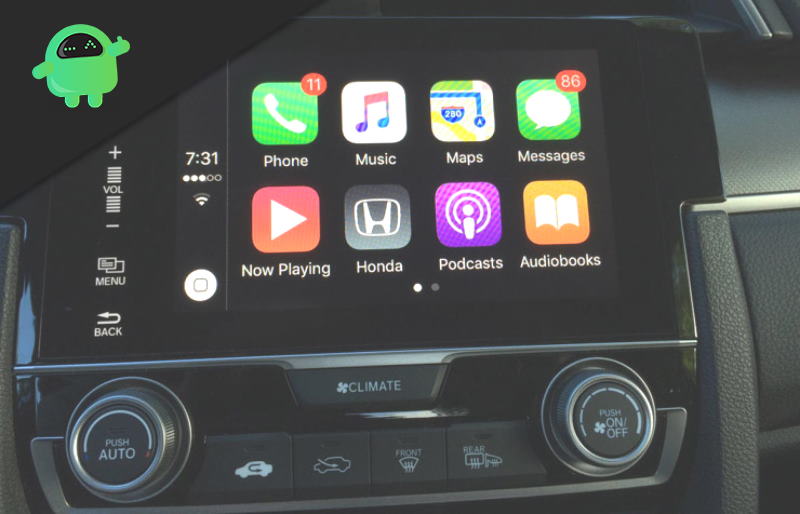
Disabling CarPlay on your iPhone is straightforward and can be done in several ways, primarily through your iPhone’s General settings or Screen Time restrictions. You can choose to forget specific cars, turn off CarPlay entirely, or restrict its access for a more controlled driving experience.
Managing CarPlay? If you’re upgrading your setup, these are top-rated options:


As an Amazon Associate we earn from qualifying purchases.
🎯 Key Takeaways


- Disable CarPlay via iPhone’s General settings.
- Forget specific cars to prevent auto-connection.
- Use Screen Time to block CarPlay app access.
- Re-enable CarPlay easily if you change your mind.
- Manage privacy by controlling car device connections.
You want to prevent your iPhone from automatically connecting to CarPlay, or even entirely disable the feature on your device. The most effective ways to do this involve either blocking the CarPlay app via Screen Time restrictions for a permanent, global disable, or “forgetting” specific cars through your iPhone’s CarPlay settings for a more targeted approach. These methods give you precise control over when and how your iPhone interacts with your car’s infotainment system, ensuring CarPlay only activates when you intend it to.
Understanding these disabling options is crucial for managing your iPhone’s connectivity, especially if you use multiple vehicles, want to conserve battery, or simply prefer not to use CarPlay in certain situations. You can choose a method that suits your needs, whether it’s a temporary block for a single journey or a complete disable that prevents any CarPlay connections until you decide to re-enable it.
Understanding CarPlay Disabling Methods on iPhone


![CONMDEX Android Auto USB Cable [3ft, 2-Pack] 10Gbps, 3A Fast Charging |…](https://m.media-amazon.com/images/I/41vy0X7qsdL._SS500_.jpg)
Effectively disabling CarPlay on your iPhone gives you control, whether you want to stop it connecting automatically or prevent its use entirely. There are distinct approaches, each with different implications for how permanent and widespread the disablement is. Knowing these options allows you to choose the right strategy for your specific needs.
Blocking CarPlay Permanently with Screen Time Restrictions
This method offers the most comprehensive way to disable CarPlay functionality directly on your iPhone. By using Screen Time’s content and privacy restrictions, you can prevent the CarPlay application from ever launching, regardless of the car you connect to. It effectively makes your iPhone “blind” to CarPlay-compatible systems.
To completely block CarPlay:
- Go to your iPhone’s Settings app.
- Scroll down and tap on Screen Time.
- If Screen Time is not already set up, you may need to enable it first. If it is set up, tap Content & Privacy Restrictions.
- If prompted, enter your Screen Time passcode. This is crucial for making changes.
- Ensure the toggle for Content & Privacy Restrictions at the top is turned On.
- Scroll down and tap on Allowed Apps.
- In the list of apps, find CarPlay.
- Toggle the switch next to CarPlay to the Off position (it will turn grey).
Once you toggle CarPlay off here, the CarPlay icon will disappear from your iPhone’s interface, and your device will no longer initiate or respond to CarPlay connection requests, even when connected via USB to a compatible car. This is a global disablement affecting all vehicles. To re-enable CarPlay, simply follow these steps again and toggle the CarPlay switch back to the On position.
Temporary Disabling via Bluetooth or Wi-Fi
For a quick, temporary stop to CarPlay connections, especially wireless ones, you can simply manage your iPhone’s connectivity settings. This doesn’t disable the CarPlay functionality itself, but rather prevents the necessary communication channels for it to activate.
If you want to prevent wireless CarPlay from connecting:
- Swipe down from the top-right corner of your screen (or up from the bottom on older iPhones) to open Control Center.
- Tap the Bluetooth icon to turn it off (it will turn grey).
- Optionally, tap the Wi-Fi icon to turn it off as well, especially if your car uses Wi-Fi for CarPlay.
With Bluetooth and/or Wi-Fi off, your iPhone cannot establish the wireless connection required for CarPlay. However, be aware that if you connect your iPhone via a USB cable to a CarPlay-compatible car, CarPlay might still initiate a wired connection. This method is best for short-term prevention and is easily reversible by simply turning Bluetooth and Wi-Fi back on. It doesn’t affect the CarPlay app’s availability.
Everything You Need to Know About Disabling CarPlay on iPhone


Welcome to your comprehensive guide on how to disable CarPlay on your iPhone. While CarPlay offers incredible convenience by integrating your iPhone’s core features directly into your car’s infotainment system, there are times when you might prefer it to be inactive. Whether you’re looking to reduce screen time behind the wheel, prevent automatic connections, save battery life, or troubleshoot a persistent issue, this guide will walk you through the precise steps to regain control. Follow these detailed instructions to ensure CarPlay is disabled effectively and without fuss.

Step 1: Understanding Your Options and Initial Preparation
What you need: Your unlocked iPhone (running iOS 13 or newer is recommended for optimal setting access).
Instructions: Before diving into the settings, it’s helpful to understand that disabling CarPlay primarily involves adjusting specific restrictions within your iPhone’s Screen Time settings. This method offers a robust way to prevent CarPlay from launching automatically. Alternatively, you can “forget” a specific car connection, but the Screen Time method provides a more global disable. Ensure your iPhone has sufficient battery and is updated to a recent iOS version, as menu layouts can vary slightly between major updates. Take a moment to familiarize yourself with the iPhone’s Settings app icon, which typically looks like a set of gray gears.
Pro Tip: Knowing your iOS version (Settings > General > About > iOS Version) can sometimes help when troubleshooting if menu options seem different from this guide. For permanent disabling, the Screen Time method is superior to merely forgetting a car.
Step 2: Accessing Your iPhone’s Settings Application
What you need: Your unlocked iPhone with a charged battery.
Instructions: The journey to disabling CarPlay begins in the central hub of your iPhone: the Settings app. Locate the ‘Settings’ icon on your Home screen or within your App Library. It’s identifiable by its distinct gray background with a set of interlocking gears. Tap this icon once to open the main Settings menu. This action will present you with a long list of configuration options for every aspect of your device. We will be navigating through this list to find the specific area that controls app and content restrictions.
Pro Tip: If you’re having trouble finding the Settings app, swipe down from the middle of your Home screen to bring up Search, then type “Settings” into the search bar. This quickly locates the app for you.
Step 3: Navigating to the Screen Time Section
What you need: Your iPhone with the ‘Settings’ app open.
Instructions: Once inside the ‘Settings’ menu, scroll down the list of options until you find ‘Screen Time’. This option is typically situated below ‘Notifications’ and ‘Sounds & Haptics’, often accompanied by a purple hourglass icon. Screen Time is Apple’s feature designed to help you understand and manage your device usage, but it also houses critical controls for app and content restrictions, including CarPlay. Tap on ‘Screen Time’ to proceed. If you have not set up Screen Time before, you may be prompted to do so, or simply tap ‘Turn On Screen Time’.
Pro Tip: If Screen Time is already active and protected by a passcode, you will need to enter your Screen Time Passcode at this point. Ensure you have it handy, as it is crucial for accessing and modifying the restrictions.
Step 4: Enabling and Accessing Content & Privacy Restrictions
What you need: Your iPhone within the ‘Screen Time’ menu.
Instructions: Inside the ‘Screen Time’ menu, scroll down further until you locate the option titled ‘Content & Privacy Restrictions’. This is the gateway to controlling what apps and content are allowed on your device. Tap on ‘Content & Privacy Restrictions’. If this feature is currently turned off, you will see a toggle switch at the top labeled ‘Content & Privacy Restrictions’. Tap this toggle to switch it to the ‘On’ (green) position. If prompted, you will need to enter your Screen Time Passcode again to gain access and make changes within this section.
Pro Tip: This section is incredibly powerful for controlling various aspects of your iPhone’s functionality. Familiarize yourself with it, but be careful not to accidentally disable other features you rely on while you are here.
Step 5: Locating and Disabling CarPlay within Allowed Apps
What you need: Your iPhone inside the ‘Content & Privacy Restrictions’ menu, with the feature enabled.
Instructions: Now that you’re in ‘Content & Privacy Restrictions’, scroll down to the section labeled ‘Allowed Apps’. Tap on this option. You will see a list of pre-installed apps and system features, each with a toggle switch next to it. Scan this list until you find ‘CarPlay’. The toggle next to CarPlay will likely be in the ‘On’ (green) position. To disable CarPlay, simply tap this toggle switch to move it to the ‘Off’ (gray) position. Once the toggle is gray, CarPlay is officially restricted from launching and functioning on your iPhone.
Pro Tip: Confirm the toggle is indeed gray. If you find CarPlay is not listed, it might be under a slightly different name on older iOS versions, or your Content & Privacy Restrictions might not be fully enabled yet. Double-check Step 4.
Step 6: Verifying That CarPlay Has Been Disabled
What you need: Your iPhone and, ideally, your car equipped with CarPlay functionality.
Instructions: After toggling off CarPlay, it’s crucial to verify that the change has taken effect. Exit the Settings app and then try connecting your iPhone to your car’s USB port or initiating a wireless CarPlay connection as you normally would. Observe whether the CarPlay interface launches on your car’s display. It should not. Additionally, you can go to your iPhone’s ‘Settings’ > ‘General’ > ‘CarPlay’. You should see that previously connected cars are either gone, or the option to connect new cars is grayed out or entirely restricted, indicating the system-wide disablement is active.
Pro Tip: Sometimes, a quick restart of your iPhone and your car’s infotainment system can help solidify and confirm the changes, especially if you experience any lingering auto-connection attempts immediately after disabling.
Step 7: (Optional) Forgetting Specific Cars as an Alternative or Complement
What you need: Your iPhone with its Settings app accessible.
Instructions: If for some reason the Screen Time method isn’t suitable, or if you want to selectively disable CarPlay for only one specific vehicle while allowing it for others, you can “forget” a car. Go to ‘Settings’ > ‘General’ > ‘CarPlay’. In this menu, you will see a list of cars your iPhone has previously connected to via CarPlay. Tap on the name of the car you wish to disconnect from, then select ‘Forget This Car’. Confirm your choice when prompted. This will remove the pairing between your iPhone and that specific vehicle, preventing automatic CarPlay activation for that car.
Pro Tip: This method is less comprehensive than the Screen Time restriction but can be very useful for troubleshooting individual car connection issues or when you share a car and don’t want your CarPlay launching when someone else is driving.
Step 8: Reversing the Changes (Enabling CarPlay Again)
What you need: Your iPhone and the Screen Time Passcode (if applicable).
Instructions: Should you ever wish to re-enable CarPlay on your iPhone, the process is straightforward and simply involves reversing the steps taken previously. Navigate back to ‘Settings’ > ‘Screen Time’ > ‘Content & Privacy Restrictions’ > ‘Allowed Apps’. You may need to enter your Screen Time Passcode again. Once in the ‘Allowed Apps’ list, locate ‘CarPlay’ and tap its toggle switch to move it back to the ‘On’ (green) position. CarPlay functionality will then be restored, and your iPhone will once again attempt to connect to compatible vehicles.
Pro Tip: If you previously used the “Forget This Car” option (Step 7), you might need to re-establish the connection with your car by plugging it in via USB or initiating the wireless pairing process again, even after re-enabling CarPlay in Screen Time.
✅ Final Checklist
-
The CarPlay interface no longer appears on your car’s infotainment screen when connected.
-
The ‘CarPlay’ option within ‘Settings > General’ on your iPhone either shows no connected cars or the “Add Available Cars” option is restricted.
-
Your iPhone does not automatically attempt to connect to CarPlay when plugged into or in proximity of a compatible vehicle.
-
You can successfully navigate back to ‘Settings > Screen Time > Content & Privacy Restrictions > Allowed Apps’ and verify CarPlay’s toggle is in the ‘Off’ position.
Important Notes:
- Screen Time Passcode: Remember your Screen Time Passcode. If you forget it, you may need to erase your iPhone and restore it from a backup to regain access to these critical settings.
- Driving Safety: Disabling CarPlay can help reduce distractions. However, always prioritize safe driving practices, regardless of your iPhone’s connection status.
- Car System: In rare cases, a car’s infotainment system might need to be restarted or reset after disabling CarPlay on your iPhone to fully stop connection attempts. Refer to your car’s manual for specific instructions.
- Estimated Time and Cost: This process typically takes between 5-10 minutes. There is absolutely no cost involved in disabling CarPlay on your iPhone.
Managing Automatic CarPlay Connections and Device Settings
Sometimes, you don’t want to disable CarPlay entirely, but rather stop your iPhone from automatically connecting to specific cars. This is particularly useful if you frequently use rental cars, different family vehicles, or have sold a car and want to remove its pairing. Your iPhone allows you to manage these individual car connections directly.
Forgetting a Car to Prevent Automatic Connection
The “Forget This Car” feature is perfect for situations where you want your iPhone to stop recognizing and automatically connecting to a particular vehicle. This doesn’t disable CarPlay globally on your iPhone; it just resets the pairing for that specific car, forcing a manual setup if you ever wish to use it again.
To make your iPhone forget a specific car:
- Open the Settings app on your iPhone.
- Tap on General.
- Scroll down and tap CarPlay.
- You will see a list of cars that your iPhone has previously connected to. Find the specific car you want to forget and tap on its name.
- On the next screen, tap Forget This Car.
- A confirmation prompt will appear. Tap Forget again to confirm your decision.
Once you’ve forgotten a car, your iPhone will no longer attempt to connect to it automatically. If you later wish to use CarPlay with that vehicle, you’ll need to set it up again as if it were a new connection, which typically involves plugging in a USB cable or initiating the pairing process from the car’s infotainment system. This method is ideal for preventing unwanted connections without affecting your ability to use CarPlay in other vehicles.
Preventing USB-Only CarPlay Connections
Even if you disable wireless connectivity or forget a car, a physical USB connection can sometimes still trigger CarPlay. For a more robust prevention of USB-initiated CarPlay, you have a couple of options, depending on how permanent you want the disablement to be.
If you want to prevent CarPlay from activating solely via USB:
- Use Screen Time Restrictions: As detailed previously, toggling off CarPlay in Settings> Screen Time> Content & Privacy Restrictions> Allowed Apps is the most complete solution. This prevents CarPlay from launching under any circumstances, including USB connections.
- Toggle “Allow CarPlay While Locked”: For a less drastic measure, you can restrict when CarPlay activates. Go to Settings> General> CarPlay, tap on the name of the car you want to manage, and toggle Allow CarPlay While Locked to the Off position. With this off, CarPlay will only activate if your iPhone is unlocked when connected via USB, or if you manually tap the CarPlay notification.
- Use a Charge-Only USB Cable: If you frequently connect your iPhone via USB for charging but want to avoid CarPlay, consider using a USB cable that is designed for charging only and does not transmit data. These cables physically lack the data lines needed for CarPlay communication.
These strategies offer layered control over USB CarPlay connections. While the Screen Time method is the most definitive, managing “Allow CarPlay While Locked” provides a useful compromise for keeping CarPlay accessible but not automatically active when your phone is locked.
<h2>Implications of Disabling CarPlay for In-Car Connectivity</h2>

<p>Choosing to disable CarPlay doesn't mean you're cutting off all smart features in your vehicle. Instead, it redefines how your iPhone interacts with your car's infotainment system. Understanding these implications helps you manage expectations and optimize your driving experience without CarPlay's direct interface.</p>
<h3>Alternative Navigation and Media Options</h3>
<p>Once CarPlay is out of the picture, your car's default systems take center stage. For navigation, you'll typically revert to one of these options:</p>
<ul>
<li><strong>Car's Built-in Navigation:</strong> Many modern vehicles come with their own integrated GPS systems. These can be perfectly functional, though they might not offer the real-time traffic updates or seamless search capabilities found in apps like Apple Maps or Google Maps.</li>
<li><strong>Smartphone-Only Navigation:</strong> You can still use your iPhone for navigation, displaying directions directly on its screen. This often requires a secure phone mount for safe viewing and audio prompts will come from your phone speakers or be routed via Bluetooth.</li>
</ul>
<p>Similarly, for media, the transition is straightforward:</p>
<ul>
<li><strong>Bluetooth Audio:</strong> Your iPhone can stream music, podcasts, or audiobooks to your car speakers via Bluetooth, just as it would with any other Bluetooth device. This is a very common and reliable method.</li>
<li><strong>Car's Media Player:</strong> You can utilize your car's native radio, CD player, or USB media inputs if your vehicle has them. This gives you direct control over your car's audio sources.</li>
</ul>
<p>The key takeaway here is that you're not losing access to these functions; you're simply changing the interface through which you interact with them.</p>
<h3>Impact on Hands-Free Communication</h3>
<p>One of CarPlay's main benefits is hands-free communication. When you disable it, you won't lose this vital safety feature, but the mechanism for handling calls and messages shifts:</p>
<ul>
<li><strong>Bluetooth Hands-Free Calling:</strong> As long as your iPhone is paired with your car via Bluetooth, you'll still be able to make and receive calls using your car's built-in microphone and speakers. This functionality is separate from CarPlay and remains active.</li>
<li><strong>Siri Integration:</strong> While CarPlay's integrated Siri voice commands will no longer be available, you can still invoke Siri directly from your iPhone (e.g., "Hey Siri") or through your car's Bluetooth system if it supports voice pass-through. This allows you to send messages, make calls, or control music using voice commands.</li>
</ul>
<p>Essentially, disabling CarPlay frees your car to use its own native Bluetooth and infotainment features for communication, which for many drivers, provides all the necessary connectivity without the CarPlay overlay.</p>
<h2>Troubleshooting Common Issues After Disabling CarPlay</h2>
<p>Even after taking steps to disable CarPlay, you might encounter situations where it seems to persist or where other expected functionalities don't quite work as anticipated. These are usually minor hiccups with simple solutions.</p>
<h3>CarPlay Still Activating or Reconnecting</h3>
<p>Sometimes, despite your efforts, CarPlay might seem to pop back up or try to connect. This can be frustrating, but here's why it might be happening and what to check:</p>
<ul>
<li><strong>Car's Settings:</strong> Your car's infotainment system might have its own specific CarPlay settings. Some vehicles allow you to disable CarPlay from the car's menu, or at least prevent it from auto-launching. Check your car's owner's manual for specific instructions on managing smartphone projection settings.</li>
<li><strong>Forget This Car:</strong> On your iPhone, if you've only disabled CarPlay in the "Screen Time > Content & Privacy Restrictions > Allowed Apps" menu, your iPhone still "remembers" the car. Go to <em>Settings > General > CarPlay</em>, select your car, and tap "<strong>Forget This Car</strong>". This severs the connection entirely, preventing auto-launch in most cases.</li>
<li><strong>Persistent USB Connection:</strong> If you're physically connecting your iPhone via USB, some cars are programmed to automatically launch CarPlay. If you want to avoid CarPlay completely, rely on wireless Bluetooth for audio and charging via a separate USB port if available, or a car charger.</li>
</ul>
<p>Remember that some cars are very eager to connect to CarPlay. A combination of iPhone and car-specific settings usually resolves persistent connection issues.</p>
<h3>Loss of Other iPhone-Car Interactions</h3>
<p>Disabling CarPlay shouldn't interfere with basic Bluetooth functionality like hands-free calling or audio streaming. However, if you find these features are also not working, consider these steps:</p>
<ul>
<li><strong>Re-pair Bluetooth:</strong> Sometimes, clearing the existing Bluetooth pairing and re-pairing your iPhone with your car can resolve connectivity glitches. <em>Forget the car in your iPhone's Bluetooth settings</em> and <em>delete your iPhone from your car's known devices</em> before starting fresh.</li>
<li><strong>Check iPhone Settings:</strong> Ensure Bluetooth is enabled and that "Show Notifications" and "Sync Contacts" are allowed for your car in your iPhone's Bluetooth settings (tap the "i" next to your car's name).</li>
<li><strong>Update Car Firmware:</strong> In rare cases, outdated car infotainment software can cause unexpected behavior. Check with your dealership or owner's manual for information on firmware updates for your vehicle.</li>
</ul>
<p>Most issues stem from conflicting settings or a need to refresh the connection. A methodical approach to troubleshooting usually brings everything back online.</p>
<h2>Conclusion</h2>
<p>Disabling CarPlay on your iPhone offers a straightforward path to regaining control over your in-car experience, whether you prefer your car's native system or simply want to minimize distractions. You have the flexibility to make this change temporarily for a specific drive or more permanently if it doesn't suit your routine. While it alters how your iPhone connects to your vehicle, essential functions like hands-free calling and Bluetooth audio streaming remain readily available through alternative means.</p>
<p>Experiment with the different methods mentioned to find the perfect balance that enhances your focus on the road. Don't hesitate to adjust your settings until your driving environment feels just right for you. Your journey, your control!</p>
❓ Frequently Asked Questions
What are the primary reasons someone might want to disable CarPlay on their iPhone?
Users often disable CarPlay for privacy concerns, to prevent automatic connections to rental cars, to save battery, or simply to prefer using their car’s native infotainment system without iPhone integration.
📤 Share
💾 Download
Can I disable CarPlay without completely turning off Bluetooth and Wi-Fi on my iPhone?
Absolutely. You can disable CarPlay specifically through your iPhone’s General settings by ‘forgetting’ a car, or by using Screen Time restrictions, which leaves Bluetooth and Wi-Fi active for other uses.
What’s the difference between ‘forgetting’ a car and restricting CarPlay via Screen Time?
Forgetting a car in CarPlay settings prevents your iPhone from automatically connecting to that specific vehicle, whereas restricting CarPlay via Screen Time globally blocks the CarPlay app on your iPhone, preventing any car from initiating a connection.
If I disable CarPlay on my iPhone, can I still use my car’s navigation or music systems?
Yes, disabling CarPlay only prevents your iPhone from taking over the car’s display. You can still use the car’s built-in navigation, radio, or connect your iPhone via Bluetooth for audio playback without CarPlay.
Will disabling CarPlay on my iPhone remove any data or settings stored in my car’s system?
No, disabling CarPlay on your iPhone only affects its connection to the car. Any data or settings stored directly within your car’s infotainment system related to your vehicle will remain untouched.
Are there any alternative methods to temporarily prevent CarPlay from launching without going through deep settings?
Yes, you can simply not plug in your iPhone to a wired CarPlay port, or temporarily turn off Bluetooth and Wi-Fi from the Control Center before entering your vehicle to prevent wireless CarPlay from activating automatically.
How to Disable CarPlay on iOS 17 & iOS 18 (Step-by-Step)
Method 1 — Forget a Specific Car (iOS 17 & 18)
This is the most targeted option. Use this when you want to stop CarPlay connecting to one car but keep it enabled for others.
- Open the Settings app on your iPhone.
- Tap General.
- Tap CarPlay. (On iOS 17+, this remains under General — it did not move.)
- Tap on the car name you want to remove from the list.
- Tap “Forget This Car” and confirm.
Your iPhone will no longer auto-connect to that vehicle. The car’s head unit may still show CarPlay as available — that is normal. The block is on the iPhone side.
Method 2 — Disable CarPlay Entirely via Screen Time (iOS 17 & 18)
This is the most permanent method and the one Apple recommends for parental controls or fleet management. It prevents CarPlay from appearing as an option on any connected vehicle.
- Open Settings → Screen Time.
- Tap Content & Privacy Restrictions. Enable it if not already on.
- Tap Allowed Apps.
- Toggle CarPlay to OFF (gray).
- Exit Settings. CarPlay is now fully disabled system-wide.
Method 3 — Disable Automatic CarPlay Connection (iOS 17+)
If you want CarPlay to be available but not connect automatically every time you plug in or enter Bluetooth range:
- Go to Settings → General → CarPlay.
- Select your car from the list.
- Toggle off “Allow CarPlay While Locked” if you see it.
- For wireless CarPlay: go to Settings → Bluetooth, find your car, tap the ⓘ icon, and toggle off “Connect Automatically”.
How to Re-Enable CarPlay (iOS 17 & 18)
Changed your mind? Re-enabling CarPlay is just as simple — depending on which method you used to disable it.
If You Used “Forget This Car”
- Connect your iPhone to the car via USB cable (or enable Bluetooth and go into range for wireless CarPlay).
- Your car’s display will prompt you to set up CarPlay — tap Allow on both the car screen and your iPhone.
- CarPlay will reconnect and the car will be re-added under Settings → General → CarPlay.
If You Used Screen Time to Block CarPlay
- Go to Settings → Screen Time → Content & Privacy Restrictions.
- Enter your Screen Time passcode when prompted.
- Tap Allowed Apps.
- Toggle CarPlay back to ON (green).
- Reconnect to your vehicle — CarPlay will work immediately.
iOS 18: Driving Focus & CarPlay Interaction
iOS 18 introduced tighter integration between Focus modes and CarPlay. If you have a Driving Focus set up, you can now configure it so CarPlay launches automatically when Driving Focus activates — or stays off entirely. To manage this:
- Go to Settings → Focus → Driving.
- Tap Customize Focus.
- Under Connected to CarPlay, choose whether Driving Focus turns on automatically when CarPlay connects, or not.
This is separate from the enable/disable settings above — it controls behavior when CarPlay is enabled, not whether CarPlay itself is accessible.