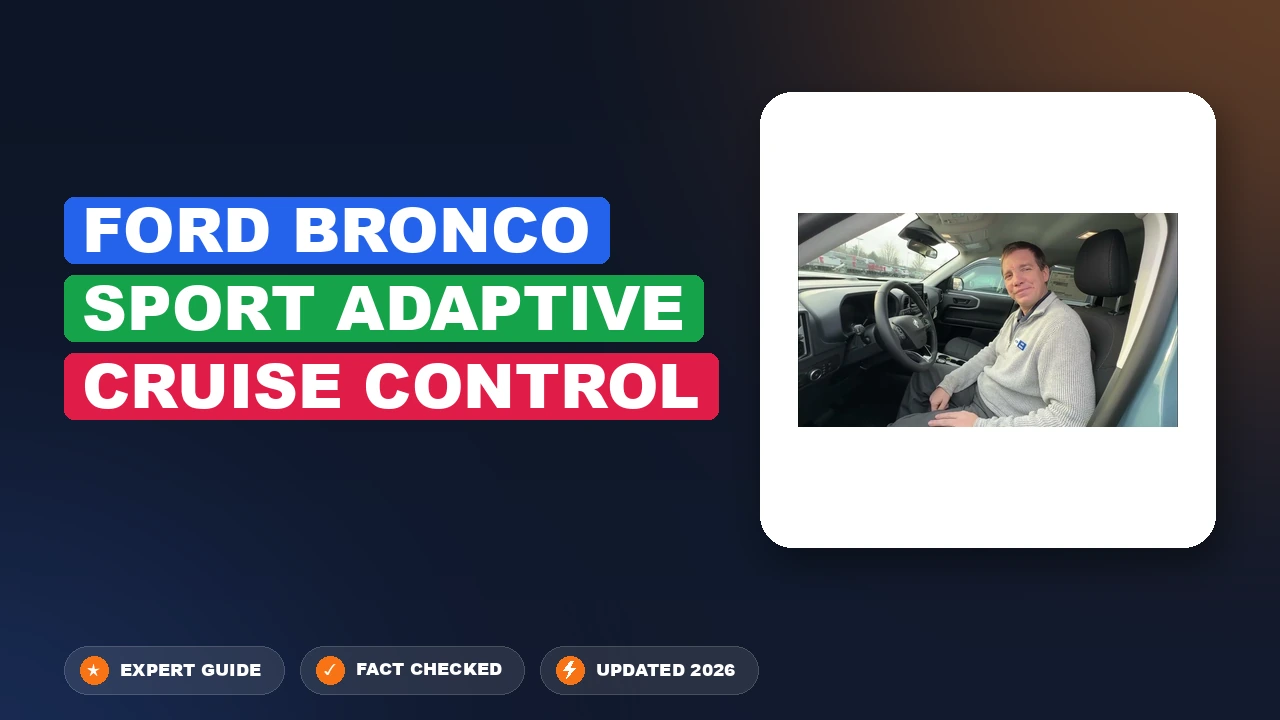
Ford Bronco Sport Adaptive Cruise Control Demystified
Modern driving is evolving, and your Ford Bronco Sport is equipped with technology designed to make highway travel more comfortable and predictable. However, drivers often misunderstand the scope of semi-autonomous features, leading to over-reliance and potential safety risks. In this guide, we demystify the Ford Bronco Sport Adaptive Cruise Control, teaching you how to use it reliably while understanding its essential physical limits.


Technical Fundamentals of Ford Bronco Sport Adaptive Cruise Control
The Ford Bronco Sport Adaptive Cruise Control system is a sophisticated integration of hardware and software designed to modulate your speed based on traffic flow. Unlike traditional cruise control, which maintains a static speed regardless of obstacles, this system acts as an “intelligent follower,” constantly scanning the environment to maintain a safe gap.

📤 Share Image

The Radar and Camera Sensor Array
The “eyes” of the system consist of a forward-facing radar sensor located in the lower front grille and a windshield-mounted camera. Think of the radar as a long-range scanner that pulses signals to determine the exact distance and relative speed of the vehicle ahead. Simultaneously, the camera recognizes lane markings and identifies objects that the radar might overlook, such as heavy rain or metallic debris. This dual-input approach provides a redundant verification process, ensuring the system maintains a high level of reliability even in varying light conditions.

Powertrain Coordination and Braking
The system operates through the vehicle’s Powertrain Control Module (PCM), which communicates instantly with the Ford Co-Pilot360 suite. When the radar detects a slower vehicle, the PCM adjusts the throttle or applies mechanical braking to modulate speed. It is crucial to understand that this is a convenience feature; the PCM is limited in its braking force and reaction time compared to a human driver. It is designed to assist in highway cruising rather than sudden emergency maneuvering, reinforcing the fact that the driver remains the ultimate authority behind the wheel.
How to Operate Your Ford Bronco Sport Adaptive Cruise Control
Mastering the steering wheel controls allows for a seamless transition between manual and assisted driving. The interface is designed for intuitive use, provided you understand the hierarchy of the buttons on the left spoke of your steering wheel.
📋
Step-by-Step Guide
Press the ‘Cruise’ button on the steering wheel to toggle the system into standby mode. Once you reach your desired speed, press ‘SET+’ to activate it. You will see an icon appear on your instrument cluster confirming that the system is active.
Use the dedicated distance buttons (indicated by vehicle silhouettes) to increase or decrease your preferred follow distance. You can typically toggle between four distinct intervals based on your comfort level and traffic density.
Using Stop-and-Go in Heavy Traffic
The ‘Stop-and-Go’ functionality is a game-changer for commuters. If traffic slows to a halt, the vehicle will brake to a complete stop. However, if the car is stationary for more than a few seconds, the system will enter a ‘standby’ state. You must manually tap the accelerator or press the ‘RES’ (Resume) button on your steering wheel to initiate movement again. Always keep your feet ready to transition to the brake pedal, as the system does not account for vehicles merging into your lane suddenly.
System Performance Limits and Reliability
Even the most trusted technology has boundaries. Understanding when to trust the Ford Bronco Sport Adaptive Cruise Control and when to take manual control is the hallmark of an expert driver.


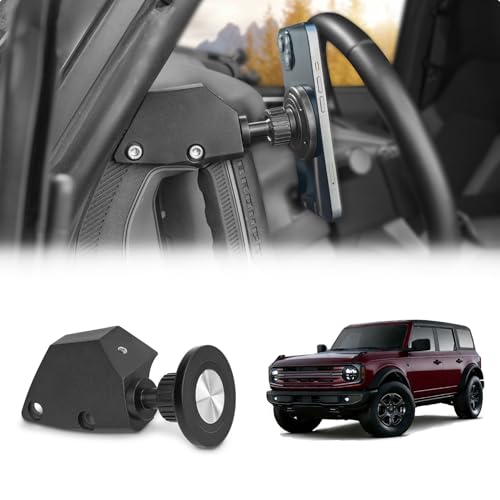
The radar sensor is not a miracle worker. Heavy snow, ice, or mud covering the front grille badge can render the sensor blind, leading to an immediate system shutdown. Never rely on the system in whiteout conditions.
- Weather Degradation: Heavy rain or fog can scatter radar signals, reducing the system’s effective range. If the instrument cluster displays an “Adaptive Cruise Control Not Available” message, the system is disabled for your safety.
- Stationary Objects: Radar-based systems are optimized for tracking moving vehicles. They struggle to differentiate between a stopped car in traffic and static objects like a metal sign or a bridge girder. Always intervene manually when approaching stationary traffic.
- Curvature Challenges: In sharp highway curves, the radar may lose track of the vehicle ahead because the sensor is pointing away from the lead vehicle’s path. Be prepared to adjust your speed manually in tight or mountainous terrain.
Industry Data Insights
Driver Responsibility Requirement
Standard Follow Distance Intervals
Troubleshooting Ford Bronco Sport Adaptive Cruise Control
If your system fails to engage or displays a recurring error, don’t panic. Most issues are related to sensor hygiene or software configuration rather than mechanical failure.
Clearing Obstructed Sensors
The most common fix for a non-responsive system is simple cleaning. Ensure the front Ford badge area and the grille are free from road grime, salt, or snow. Even a thin layer of road film can significantly attenuate the radar signal, causing the system to err on the side of caution and shut down. A gentle wash is usually all that is required to restore full functionality.
Verifying Trim Level Compatibility
It is a common pitfall to assume every Bronco Sport comes equipped with the same Co-Pilot360 Assist+ features. Adaptive Cruise Control with Stop-and-Go is usually tied to specific equipment packages (often the “Assist+” variant). If your vehicle lacks the distance adjustment buttons on the steering wheel, your specific model year or trim may only have standard cruise control. Consult your window sticker or the FordPass app to verify the specific driver-assist suite included with your vehicle configuration.
If the system persists in showing a “Service Required” warning after a cleaning, it may require a dealership recalibration. This can occur if the front bumper was recently impacted or removed during bodywork, shifting the radar sensor’s precise alignment.
Final Professional Perspective
The Ford Bronco Sport Adaptive Cruise Control is an exceptional tool for reducing driver fatigue during long trips, provided it is used with an expert level of caution. By understanding that the system is a convenience aid, maintaining a clean sensor array, and respecting its limitations regarding stationary objects, you can enjoy a safer and more relaxed driving experience. Remember, no technology replaces the alertness of a driver. Check your owner’s manual to confirm your specific vehicle settings, and always stay alert behind the wheel.
✅ Pros
- Reduces fatigue on long highway drives.
- Maintains consistent gap in stop-and-go traffic.
- Integrates seamlessly with Co-Pilot360 safety systems.
❌ Cons
- Limited effectiveness with stationary objects.
- Susceptible to degradation in harsh weather.
- Requires manual reactivation after extended stops.
Ford Bronco Sport Adaptive Cruise Control: Frequently Asked Questions
Does the system work in stop-and-go traffic?
Yes, the Ford Bronco Sport Adaptive Cruise Control with Stop-and-Go is specifically engineered for high-density traffic. It can bring your vehicle to a complete halt if the vehicle in front stops. If the stop lasts longer than a few seconds, you may need to gently tap the accelerator or press the ‘Resume’ button to re-engage the system and continue moving.
How do I adjust the following distance?
Adjusting the gap is straightforward using the dedicated buttons on the steering wheel, typically marked with icons representing vehicle distances. By pressing these buttons, you can cycle through four preset distance intervals. The system will display the chosen gap on your instrument cluster, allowing you to maintain a consistent, safe distance based on your driving preference and road conditions.
Is this feature standard on all Bronco Sport trims?


Adaptive Cruise Control is not standard on the base trim level. It is typically included as part of the Ford Co-Pilot360 Assist+ package, which is standard on higher trims like the Outer Banks, Badlands, and Heritage Limited, or available as an option on others. Always consult the window sticker or the official Ford build guide for your specific vehicle configuration.
What happens if the sensor gets blocked?
If the front-facing radar or camera becomes obstructed by heavy mud, snow, ice, or excessive road grime, the system will detect a decrease in signal quality. It will automatically disable the Adaptive Cruise Control function and display a warning message on your dashboard. Simply cleaning the front grille area usually restores full functionality once the system clears the diagnostic alert.
Does the system work effectively at night?
Yes, the radar-based component of the Adaptive Cruise Control operates independently of light conditions, making it highly reliable for night driving. However, because the system relies on both radar and optical cameras for lane-centering capabilities, very poor visibility or unpainted road surfaces can occasionally limit the system’s performance. Always remain prepared to take full manual control during low-visibility scenarios.