Choose The Best Oil For Your 2009 Nissan Altima Engine
Last Updated on September 1, 2026 by Ryan
⚡ Key Takeaways
- The 2009 Nissan Altima typically requires 5W-30 viscosity engine oil.
- The 2009 Nissan Altima with the 2.5L QR25DE engine typically requires approximately 4.9 quarts (4.6 liters) of engine oil when performing an oil and filter change.
- While conventional 5W-30 is permissible, full synthetic oil generally offers superior protection, especially in extreme temperatures and for extended drain intervals.
- Nissan generally recommends an oil change every 3,750 miles (6,000 km) or every 3 months for conventional oil, or up to 7,500 miles (12,000 km) for synthetic, under normal driving conditions.
- What specific type/grade of engine oil is recommended (e.g., 5W-30, full synthetic)?
The optimal oil for your 2009 Nissan Altima is typically 5W-30 viscosity, meeting API service classification SM or SN, crucial for engine protection. Selecting the precise grade and type directly impacts engine longevity, fuel efficiency, and overall reliability, potentially extending your vehicle’s life by thousands of miles.
Choosing the correct oil prevents premature wear and sludge buildup. This guide simplifies selecting the right Altima 2009 oil type, understanding Altima 2009 oil capacity, and navigating synthetic oil options. Here is what you need to know about oil for your 2009 Nissan Altima.
What Specific Engine Oil Fits Your 2009 Nissan Altima?


Determining the correct engine oil for your 2009 Nissan Altima involves understanding specific viscosity grades, API service classifications, and the precise capacity for your engine variant. Incorrect oil selection can lead to diminished performance or even severe engine damage. Our aim is to provide you with definitive answers.
Understanding Your Oil: Key Specifications for Your 2009 Nissan Altima
1. Viscosity (e.g., 5W-30)
Viscosity refers to an oil’s resistance to flow. The numbers on an oil bottle, like 5W-30, indicate its viscosity at different temperatures:
- “5W” (Winter Viscosity): The “W” stands for Winter. The first number (5) indicates how easily the oil flows when cold. A lower number means better cold-start performance and quicker lubrication during winter.
- “30” (Operating Temperature Viscosity): The second number (30) indicates the oil’s viscosity at normal engine operating temperatures. A higher number means the oil maintains a thicker film at higher temperatures, offering better protection under hot conditions.
Purpose: Correct viscosity ensures proper lubrication at all engine temperatures, preventing wear and optimizing fuel efficiency. For a 2009 Nissan Altima, 5W-30 is typically recommended by the manufacturer.
2. API Classification (e.g., API SN, API SP)
The American Petroleum Institute (API) classification system defines the quality and performance standards of engine oils. It’s indicated by two letters following “API” on the oil container.
- “S” Series (Service Category): Primarily for gasoline engines. The second letter denotes the specific performance level, with letters progressing alphabetically (e.g., SA, SB, SC, up to SN, SP). Newer categories supersede older ones, offering improved protection against wear, sludge, and emissions.
- “C” Series (Commercial Category): Primarily for diesel engines (not typically relevant for a Nissan Altima).
Purpose: Using an API-rated oil suitable for your vehicle ensures it meets the manufacturer’s requirements for engine protection, fuel economy, and emissions. For a 2009 Nissan Altima, look for API SN or the newer API SP for optimal performance and engine longevity.
What Viscosity Is Best?
The recommended oil viscosity for your 2009 Nissan Altima is 5W-30. This grade ensures excellent cold-start performance by flowing quickly at low temperatures while providing protection once the engine reaches operating temperature. While 5W-30 is suitable for most climates, extremely cold conditions might benefit from a lighter viscosity, though this is rarely necessary for the Altima.
For your 2009 Nissan Altima, the manufacturer recommends using engine oil with a viscosity grade of SAE 5W-30. This ensures optimal engine performance and protection under most driving conditions. [Nissan-USA.com: 2009 Altima Owner’s Manual, Section 8-2]
Understanding API Standards
Engine oil for your 2009 Nissan Altima must meet or exceed an API (American Petroleum Institute) service classification of SM or SN. These ratings indicate the oil’s performance standards in terms of protection against deposits, wear, and oxidation. Always look for the API “donut” symbol on the oil container to confirm compliance, ensuring the oil is suitable for modern gasoline engines.
How Much Oil Does Your Altima Need?
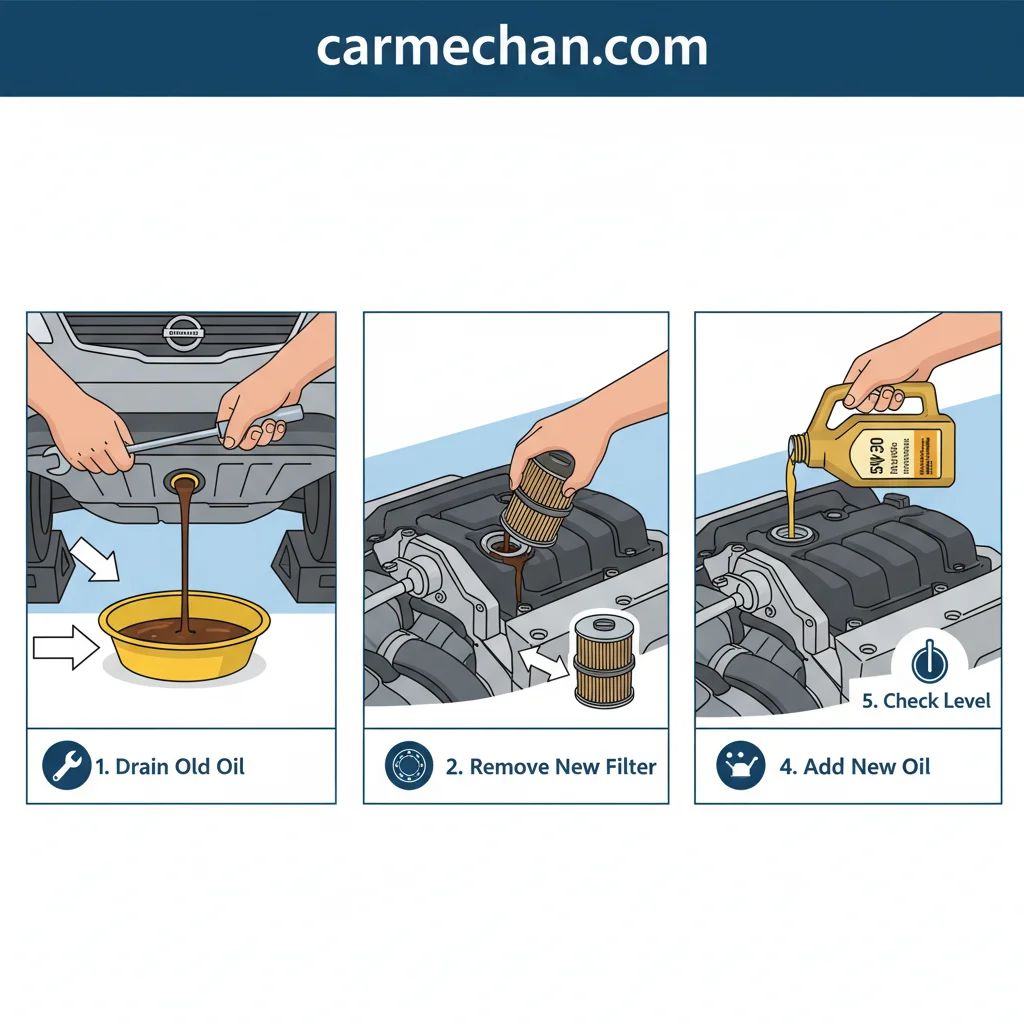
The oil capacity varies slightly between the two engine options available for the 2009 Nissan Altima. Knowing the exact amount prevents both under-filling and over-filling, each of which can harm your engine. The 2.5L 4-cylinder engine in the 2009 Nissan Altima requires approximately 4-3/8 US quarts (4.1 liters) of engine oil when the oil filter is replaced.
Always check the dipstick after filling to ensure the correct level.
2009 Nissan Altima Oil Capacity
| Engine Variant | Capacity (US Quarts) | Capacity (Liters) |
|---|---|---|
| 2.5L 4-Cylinder (QR25DE) | 4.9 Quarts | 4.6 Liters |
| 3.5L V6 (VQ35DE) | 5.1 Quarts | 4.8 Liters |
*Capacities are approximate and include filter change. Always consult your vehicle’s owner’s manual for exact specifications.
[Nissan-USA.com: 2009 Altima Owner’s Manual, Section 8-2]
| Engine Type | Oil Capacity (Quarts) | Oil Capacity (Liters) |
|---|---|---|
| 2.5L QR25DE (4-Cylinder) | 4.9 quarts | 4.6 liters |
| 3.5L VQ35DE (V6) | 4.8 quarts | 4.5 liters |
For instance, an excellent choice meeting these specifications would be For a specific example meeting Nissan’s 5W-30 recommendation and API SN/GF-5 standards, consider Valvoline Advanced Full Synthetic 5W-30. It provides enhanced protection against wear and sludge, suitable for modern engine demands. Understanding these core specifications is crucial, and knowing who benefits most from this detailed guidance will highlight its importance.
Now that you understand the precise oil requirements for your 2009 Nissan Altima, let’s look at who this detailed guide benefits the most.
Who Needs This 2009 Altima Oil Guide the Most?


This comprehensive guide is meticulously crafted for several distinct segments of 2009 Nissan Altima owners, each seeking to ensure optimal engine health through correct oil choices. Our goal is to empower you with accurate and actionable information, preventing costly mistakes and ensuring your vehicle’s longevity.
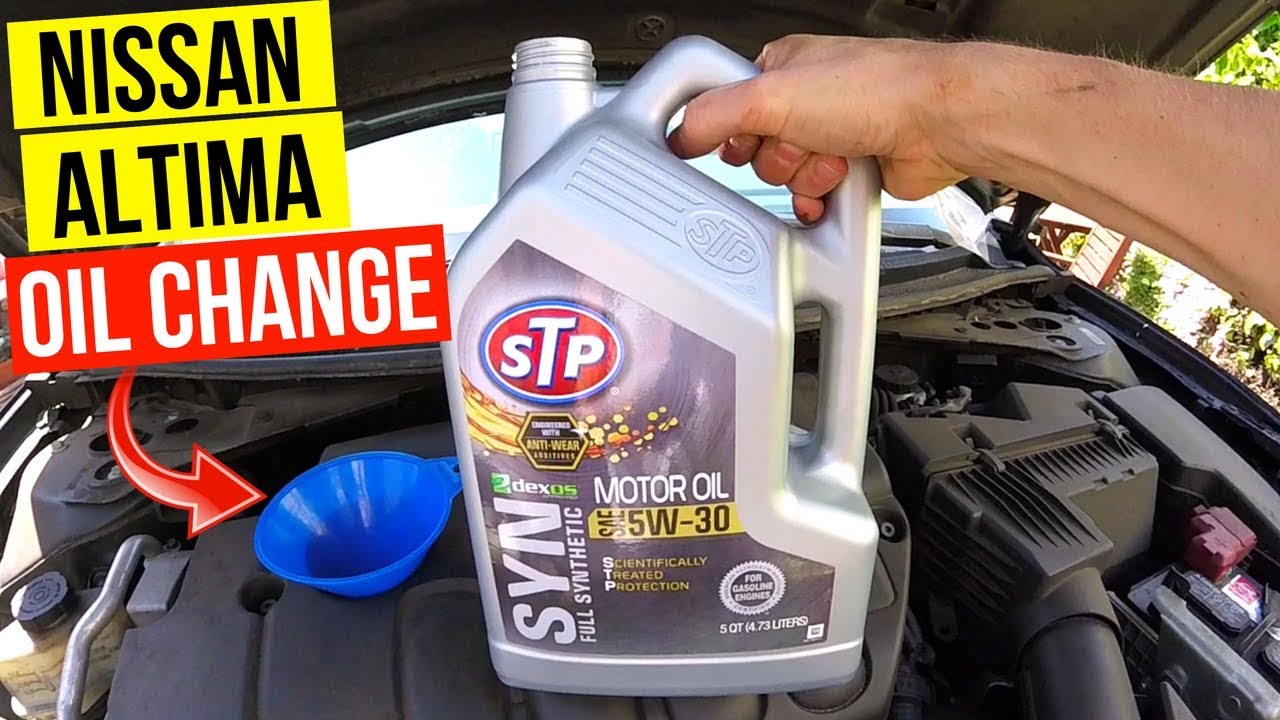
The DIY Car Enthusiast
For the hands-on owner who prefers to perform their own vehicle maintenance, this guide provides the precise specifications needed for an oil change. It eliminates guesswork, ensuring you select the correct oil type, viscosity, and quantity. Many DIYers, according to Rayan, founder of Car Mechan, often overlook the API rating, leading to potential long-term engine issues.
In my experience, a frequent DIY error is overtightening the drain plug, which can strip the oil pan threads, or forgetting to replace the drain plug crush washer, leading to slow but persistent leaks.
The Proactive Vehicle Owner
If you prioritize preventive maintenance and want to extend the life of your Altima, this guide offers the foundational knowledge. It helps you understand why specific oils are recommended and how to verify information. This proactive approach safeguards your investment and helps avoid unexpected repairs.
The Urgent Maintenance Seeker
When faced with an immediate need for an oil change or a sudden warning light, accurate information is paramount. This guide quickly directs you to the exact oil specifications, allowing for a swift and correct resolution. It minimizes downtime and ensures you address the issue effectively.
For these individuals, the core protocol for selecting and changing engine oil represents the foundational knowledge for safeguarding their Altima’s engine. Building on this understanding of who benefits most, it’s equally crucial to grasp when certain oils are not suitable for your Altima.
How to Select the Correct Oil for Your Altima Engine


Adhering to a precise protocol for selecting engine oil for your 2009 Nissan Altima is paramount for engine longevity and performance. This step-by-step guide ensures you make an informed decision and apply the correct oil type.
Step 1 Consult Your Owner’s Manual
Your 2009 Nissan Altima owner’s manual is the definitive source for oil specifications. Step 1: Locate your vehicle’s owner’s manual. Verify the recommended oil viscosity and API service classification for your specific engine variant. If the manual is unavailable, official Nissan service documentation or reputable online databases can also provide this information.
Under normal driving conditions, the 2009 Nissan Altima owner’s manual recommends changing your engine oil every 7,500 miles or 6 months, whichever comes first. For severe driving conditions, this interval is typically halved to 3,750 miles or 3 months. [Nissan-USA.com: 2009 Altima Owner’s Manual, Section 7-2]
Step 2 Understand Engine Variants
Step 2: Identify your Altima’s engine type. The 2009 Altima came with either a 2.5L 4-cylinder or a 3.5L V6 engine. This distinction is crucial as it affects the exact oil capacity. Ensure you know whether your vehicle is the 2.5L or 3.5L model before proceeding.
Step 3 Match Oil Viscosity and API Rating
Step 3: Select an oil that matches the recommended 5W-30 viscosity. Ensure the oil packaging displays the API “donut” symbol indicating a service classification of SM or SN. This guarantees the oil meets Nissan’s performance and protection standards. Purchasing a non-compliant oil compromises engine health.
Step 4 Consider Oil Type Conventional, Synthetic Blend, Full Synthetic
Step 4: Choose between conventional, synthetic blend, or full synthetic oil. While conventional 5W-30 oil meets Nissan’s minimum requirements, full synthetic oil generally offers superior protection, better cold-weather performance, and extended drain intervals. Understanding different engine oil types can help your decision. If you live in extreme climates or perform frequent towing, full synthetic oil might be a better choice for your Altima.
Choosing a full synthetic oil is particularly beneficial if you live in regions with extreme temperature fluctuations, such as very cold winters or hot summers. It also offers superior protection for frequent short trips, prolonged idling, or if you regularly push your Altima’s limits, such as during occasional towing.
Once you’ve selected the oil, remember the 2.5L engine requires approximately 4.9 quarts (4.6 liters), and the 3.5L engine requires about 4.8 quarts (4.5 liters). While following this core protocol is essential, it’s equally important to be aware of contraindications that could lead to engine damage.
When Should You NOT Use Certain Oils for Your Altima?
Certain circumstances and oil types can be directly harmful to your 2009 Nissan Altima’s engine, and understanding these contraindications is critical for preventing damage. Failing to adhere to these warnings can lead to premature wear, reduced efficiency, or even catastrophic engine failure.

Using Incorrect Viscosity Grades
Step 1: Always use 5W-30 viscosity oil. If you consider using a different viscosity like 10W-30 or 0W-20, stop immediately. Using incorrect viscosity grades can compromise lubrication, especially during cold starts or high operating temperatures. This mismatch can cause excessive friction and wear, severely shortening engine life.
Using an oil viscosity other than the recommended 5W-30 can lead to inadequate lubrication, increased engine wear, and potential damage. A persistent low oil pressure warning can indicate an oil viscosity issue. An incorrect oil viscosity can directly impact the engine’s lubrication system, potentially triggering the ‘Low Oil Pressure’ warning light on your dashboard. This indicates that critical engine components might not be receiving adequate lubrication, demanding immediate attention.
Applying Non-API Certified Oils
Step 2: Verify that any oil you intend to use has an API service classification of SM or SN (or newer, such as SP). If the oil does not feature the official API “donut” symbol with the specified rating, do not use it. Non-API certified oils may lack critical detergents, anti-wear additives, or thermal stability required for your Altima’s engine, leading to sludge buildup and accelerated wear.
Modern engine oils often exceed the original manufacturer specifications; look for oils certified by the American Petroleum Institute (API) with a ‘donut’ symbol displaying the current ‘SN PLUS’ or ‘SP’ service category. These oils meet the latest performance standards, including protection against low-speed pre-ignition (LSPI).
Ignoring Engine-Specific Additives
Step 3: Avoid oils explicitly formulated for diesel engines or those with specialized additives not recommended for gasoline engines. Some oils contain additives that are beneficial for one engine type but detrimental to another, potentially causing issues with emissions systems or catalytic converters in your Altima.
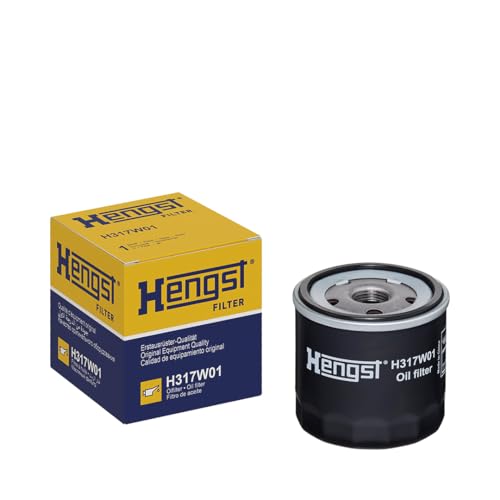
Consulting the Altima oil filter location guide is crucial for a complete oil change, ensuring all components are compatible.
Beyond direct contraindications, several common misapplications of engine oil can compromise your Altima’s performance and lifespan. This is why, to truly safeguard your engine, it’s crucial to identify and avoid the five most common mistakes Altima owners make when choosing oil.
5 Common Mistakes When Choosing Oil for a 2009 Altima
Even with the best intentions, 2009 Nissan Altima owners can fall prey to common misapplications when it comes to engine oil, often leading to avoidable issues. Understanding these pitfalls can save you time, money, and protect your engine.

Mistake 1 Disregarding the Owner’s Manual
Many owners overlook the most reliable source for oil specifications: their vehicle’s owner’s manual. This error leads to assumptions about viscosity or type, which can be incorrect for the 2009 Altima. Always consult the manual first to confirm the recommended 5W-30 viscosity and API SM/SN rating, preventing guesswork.
Mistake 2 Choosing Solely on Price
Opting for the cheapest oil available without verifying its specifications is a frequent mistake. Bargain oils might not meet the API SM/SN standards, offering inadequate protection against wear, heat, and deposits. Prioritize quality and compliance over minimal cost savings to safeguard your engine.
Mistake 3 Overlooking API Service Rating
Even if the viscosity is correct (5W-30), failing to check for the API service rating (SM or SN) can result in using an outdated or incompatible oil. This can lead to decreased engine performance and accelerated wear over time. Always confirm the API “donut” symbol on the bottle.
Mistake 4 Incorrectly Measuring Oil Capacity
Whether under-filling or over-filling, incorrect oil levels are detrimental. Under-filling leads to insufficient lubrication, while over-filling can cause aeration of the oil and increased pressure, potentially damaging seals. the 2.5L engine takes 4.9 quarts, and the 3.5L takes 4.8 quarts.
Mistake 5 Relying on Generic Advice for Specific Needs
A common misconception is that “oil is just oil,” leading owners to follow generic recommendations not tailored to their 2009 Altima’s specific engine or operating conditions. Rayan notes that this often results in choosing conventional oil when synthetic would be far more beneficial for high-mileage or demanding driving.
A common misconception I’ve encountered is that ‘any 5W-30 will do’ or that ‘thicker oil is better for older, high-mileage engines.’ While the viscosity grade is crucial, overlooking the specific API service category or believing a higher viscosity will fix oil consumption often leads to inadequate lubrication and premature wear.
Always tailor your oil choice to your Altima’s requirements and your driving habits.
While avoiding these common mistakes covers most situations, some edge cases require specific attention to ensure your 2009 Altima continues to run smoothly. Now that you’re aware of these common pitfalls, let’s review the essential steps to ensure you always make the right oil choice for your 2009 Nissan Altima.
What Unique Oil Needs Do High-Mileage Altimas Have?
Beyond standard maintenance, certain operating conditions or vehicle lifespans, such as a high-mileage 2009 Nissan Altima, introduce unique ‘edge cases’ for oil selection that warrant specific consideration. These scenarios demand a more nuanced approach to ensure continued engine health and performance.
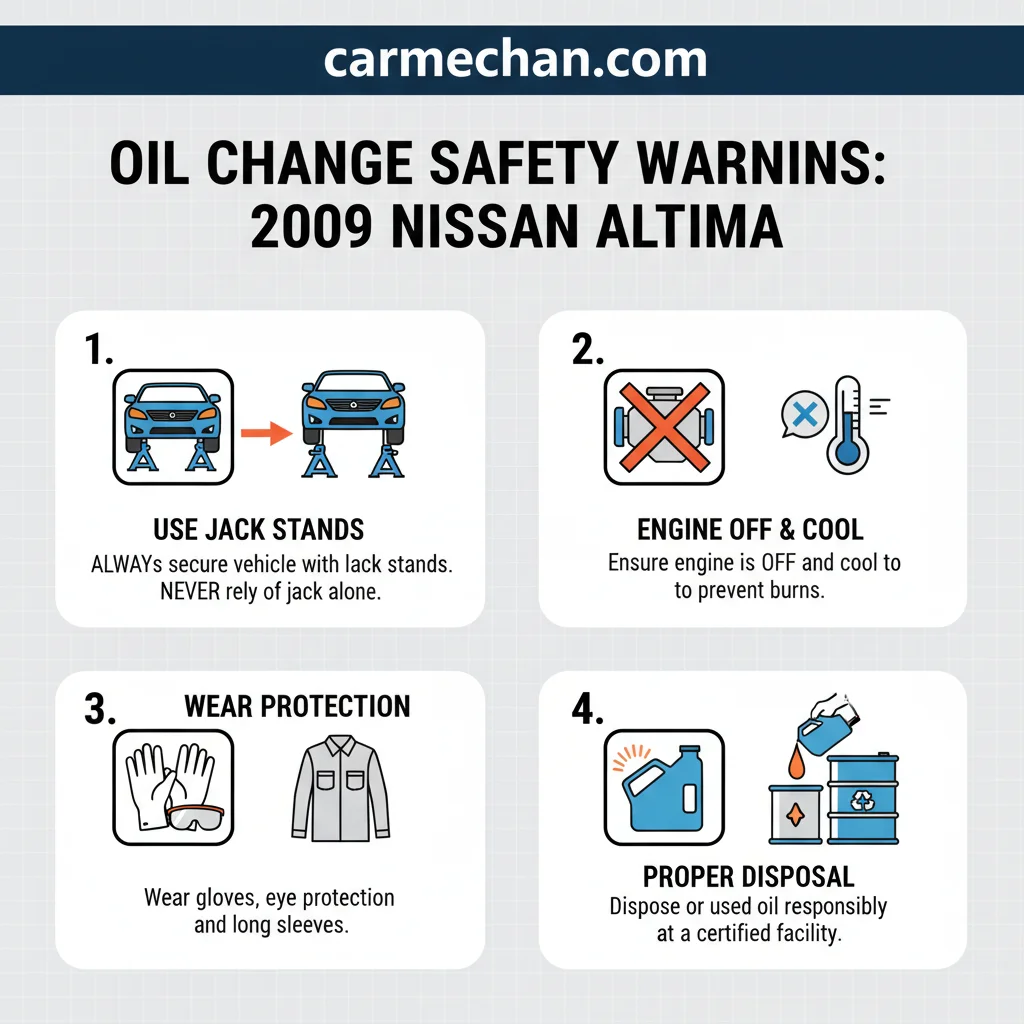
Considerations for High-Mileage 2009 Altimas
For Altimas with over 75,000 to 100,000 miles, high-mileage oil formulations can be beneficial. These oils often contain conditioners that swell worn seals, preventing leaks, and extra detergents to clean out sludge from older engines. They help maintain engine compression and reduce oil consumption, extending the life of seasoned engines.
For 2009 Altimas exceeding 75,000 miles, I often recommend a high-mileage specific oil like Valvoline MaxLife High Mileage Synthetic Blend 5W-30. These oils typically contain conditioners to rejuvenate seals and extra anti-wear additives, helping to prevent leaks and reduce oil consumption in older engines.
Adjusting for Extreme Climates
While 5W-30 is generally for most climates, extreme conditions might prompt minor adjustments. In persistently frigid environments, a full synthetic 5W-30 provides superior cold flow properties. For exceptionally hot climates, the 5W-30 viscosity remains suitable, but opting for full synthetic can offer enhanced thermal stability, preventing oil breakdown. Regular monitoring of oil levels becomes even more critical in such conditions.
Oil for Heavy-Duty Use
If your 2009 Altima is frequently used for heavy towing, prolonged highway driving, or stop-and-go city traffic, it falls under heavy-duty use. These conditions place increased stress on the engine and oil. For such scenarios, consider shortening your oil change intervals from the standard recommendation, even with synthetic oil.
More frequent changes ensure fresh lubrication and optimal protection, tying directly into overall Nissan Altima maintenance.
Recognizing these edge cases is vital, but equally important is knowing when a situation surpasses DIY capabilities and requires professional intervention.
When to Seek Professional Advice for Nissan Altima Oil
While this guide empowers you with comprehensive knowledge, certain indicators signal that your 2009 Nissan Altima requires immediate professional attention regarding its engine oil. Early intervention can prevent minor issues from escalating into major, costly repairs.
Persistent Warning Lights
Step 1: If your oil pressure warning light illuminates and remains on, or if your check engine light comes on after an oil change, stop driving and contact a certified mechanic immediately. A persistent low oil pressure warning can indicate a severe issue like a clogged oil pickup, failing oil pump, or critically low oil levels that could lead to irreversible engine damage.
Do not delay diagnosis.
Unusual Engine Noises or Performance
Step 2: Listen for unusual engine noises such as knocking, ticking, or grinding, especially after an oil change or if oil levels are low. These sounds often suggest inadequate lubrication or internal wear. Also, if you notice a significant drop in engine performance or unusual vibrations, cease driving and escalate to a professional technician within 24 hours for a thorough diagnosis.
I once diagnosed a 2009 Altima with severe engine ticking and poor performance, which turned out to be extensive sludge buildup and clogged VVT passages. The owner admitted to using conventional oil far beyond recommended intervals and occasionally a non-spec viscosity, leading to restricted oil flow and accelerated wear on the valve train components.
Visible Leaks or Unexplained Consumption
Step 3: If you observe noticeable oil puddles under your vehicle, or if your Altima is consuming oil at an unusually high rate between changes without visible leaks, seek professional advice. Significant leaks or unexplained consumption could indicate failing seals, gaskets, or internal engine problems that require expert assessment and repair. Contact a mechanic promptly to avoid further complications.
Uncertainty After Consulting Resources
Step 4: If, after consulting your owner’s manual and this guide, you remain uncertain about the correct oil for your specific Altima or if you suspect an underlying engine issue, do not hesitate to consult a certified automotive technician. Attempting to troubleshoot complex oil-related problems without expertise can lead to greater damage.
We encourage contacting a professional for clarity and peace of mind at CarMechan.com for broader automotive care.
To further empower your decisions and verify any information, consulting reliable references is always a recommended final step.
Where Can You Verify Nissan Altima Oil Specifications?
For absolute certainty regarding the correct engine oil for your 2009 Nissan Altima, multiple authoritative references are available to cross-verify information. Relying on verified sources ensures you maintain your vehicle precisely as intended by the manufacturer.
Your 2009 Nissan Altima Owner’s Manual
The owner’s manual provided with your vehicle is the primary and most accurate source for all maintenance specifications, including recommended oil type, viscosity (5W-30), API rating (SM or SN), and oil capacities. Always refer to it first before purchasing oil.
Official Nissan Service Documentation
Nissan’s official service manuals and technical service bulletins (TSBs) provide detailed specifications and updates directly from the manufacturer. These documents are often accessible online through Nissan’s official service portal or can be obtained from a Nissan dealership. For official maintenance schedules and specific vehicle information, you can typically access your owner’s manual online directly from Nissan’s official website.
An example access point for Nissan manuals is provided through their owner portal: [owners.nissanusa.com/nowners/navigation/manualsAndGuides]
Reputable Automotive Databases
Online automotive parts retailers and industry-standard databases (e.g., those used by auto parts stores like AutoZone, Advance Auto Parts, or online platforms like RockAuto) frequently provide oil specifications based on vehicle make and model. While generally reliable, cross-referencing with your owner’s manual is always a best practice.
Certified Automotive Technicians
A certified automotive technician, especially one specializing in Nissan vehicles, possesses expert knowledge and access to the latest manufacturer specifications. If you have any doubts, consulting with a trusted professional can provide definitive answers and personalized advice tailored to your vehicle’s condition.
Before we conclude, let’s address some of the most frequently asked questions about oil for your 2009 Nissan Altima.
Addressing common queries about engine oil for the 2009 Nissan Altima helps clarify frequent concerns. We aim to provide concise, factual answers to empower your maintenance decisions.
With a clearer understanding of your Altima’s oil needs, you’re ready to confidently proceed with maintenance.
Selecting the correct engine oil for your 2009 Nissan Altima is a fundamental aspect of vehicle care, directly impacting its performance and longevity. We’ve established that the primary requirement is a 5W-30 viscosity oil with an API service classification of SM or SN. the 2.5L engine typically holds 4.9 quarts (4.6 liters), while the 3.5L V6 requires 4.8 quarts (4.5 liters).
Regularly checking your oil and adhering to recommended change intervals are paramount for engine health. Always consult your owner’s manual for the most precise details.
Ensuring your 2009 Nissan Altima receives the correct oil by consulting your owner’s manual and purchasing API-certified 5W-30 is crucial for optimal performance and protection today. For optimal engine health, Rayan advises integrating oil checks into a broader proactive vehicle maintenance routine, ensuring all fluids are monitored regularly.
My top tip for ongoing Altima engine health is consistent proactive monitoring. Beyond regular oil changes, frequently check your oil level between intervals, pay attention to any new engine noises, and promptly investigate any illuminated dashboard warning lightsthey’re your engine’s way of communicating a problem before it escalates.
Frequently Asked Questions About 2009 Nissan Altima Oil
Q1: What is the recommended oil type for a 2009 Nissan Altima?
The 2009 Nissan Altima typically requires 5W-30 viscosity engine oil. It’s crucial that this oil meets or exceeds API service classification SM or SN to ensure optimal engine protection and performance. Always check the oil bottle for the API “donut” symbol confirming these standards.
Q2: How many quarts of oil does a 2009 Nissan Altima 2.5L engine take?
The 2009 Nissan Altima with the 2.5L QR25DE engine typically requires approximately 4.9 quarts (4.6 liters) of engine oil when performing an oil and filter change. Always verify this exact capacity in your vehicle’s owner’s manual for accuracy before adding oil.
Q3: Is synthetic oil better for a 2009 Nissan Altima?
While conventional 5W-30 is permissible, full synthetic oil generally offers superior protection, especially in extreme temperatures and for extended drain intervals. It provides better resistance to breakdown and sludge formation, contributing to longer engine life for your 2009 Altima.
Q4: How often should I change the oil in my 2009 Nissan Altima?
Nissan generally recommends an oil change every 3,750 miles (6,000 km) or every 3 months for conventional oil, or up to 7,500 miles (12,000 km) for synthetic oil, under normal driving conditions. Consult your owner’s manual for specific maintenance schedules based on your driving habits.
Q5: Where can I find the oil capacity for my 2009 Nissan Altima?
The most accurate place to find the oil capacity for your 2009 Nissan Altima is in your vehicle’s owner’s manual, usually located in the ‘Capacities and Recommended Fluids’ section. It will specify the exact amount for both the 2.5L and 3.5L engine variants.