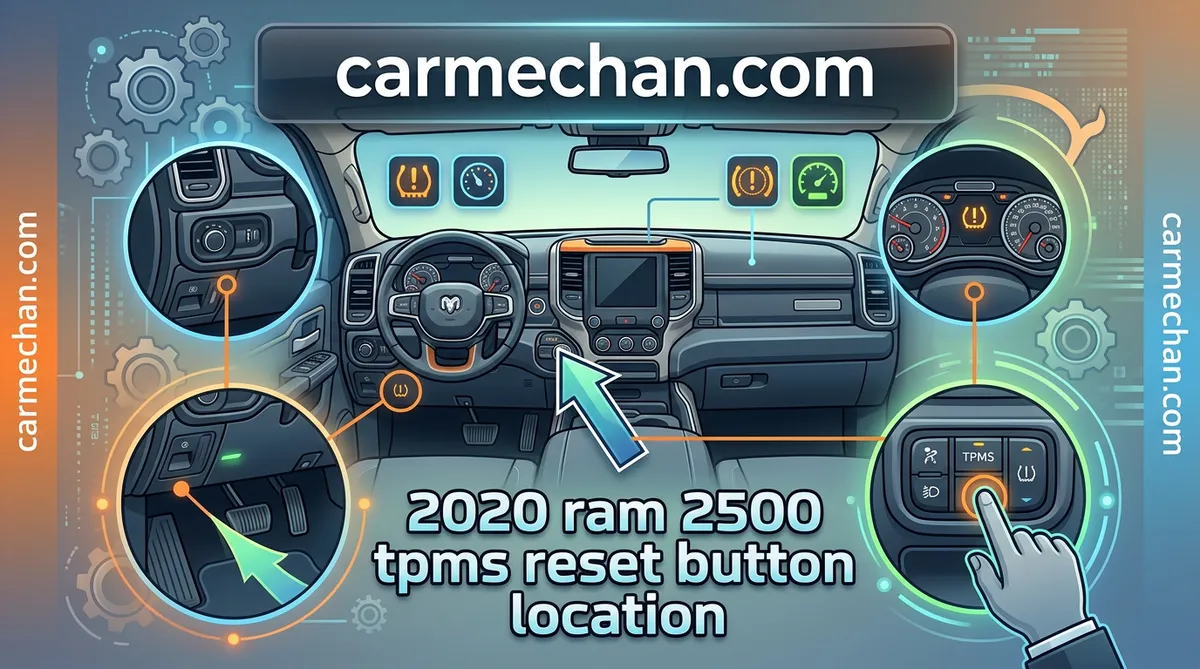
2020 Ram 2500 TPMS Reset Button Location: Solved
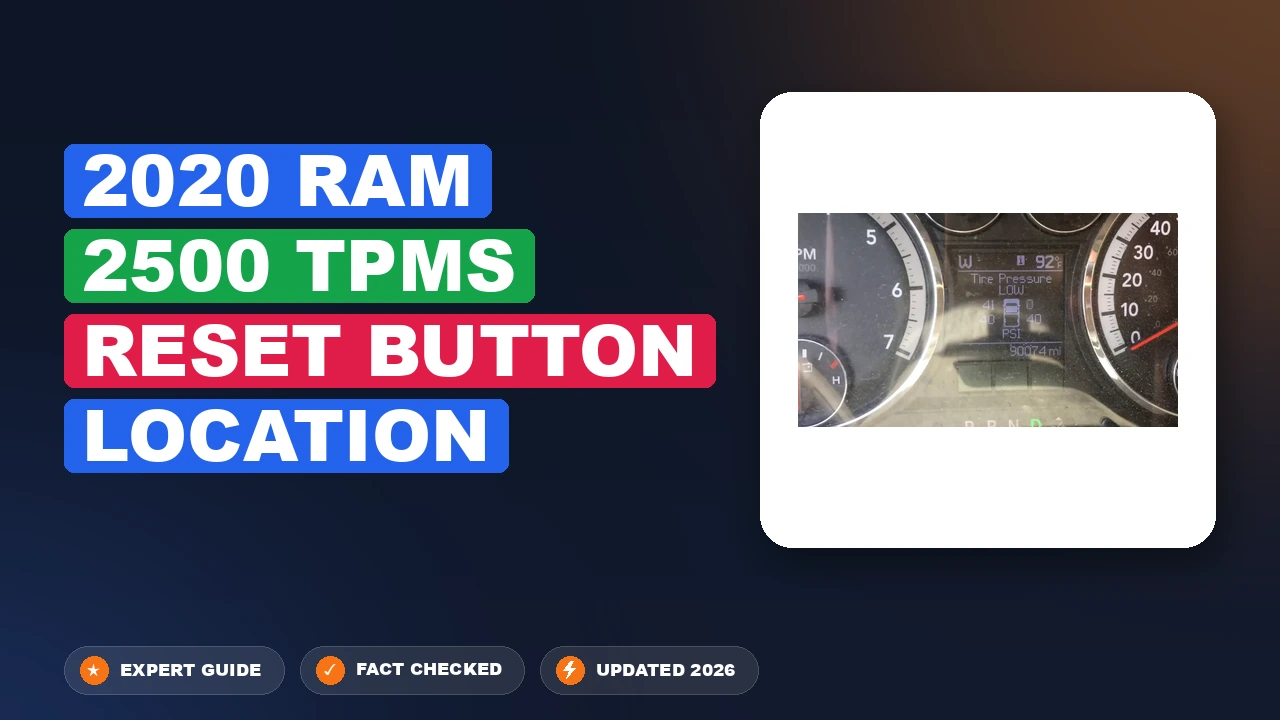
Are you staring at your dashboard, looking for a 2020 Ram 2500 TPMS reset button that simply doesn’t exist? Many owners waste precious time hunting through the Electronic Vehicle Information Center (EVIC) menus or crawling under the dashboard for a physical switch, all while the persistent Tire Pressure Monitoring System (TPMS) warning light remains illuminated. In this guide, we will clear up the confusion regarding your vehicle’s monitoring system, explain exactly how to trigger the automatic relearn, and provide solutions for when the light refuses to clear.

Why the 2020 Ram 2500 TPMS Reset Button Location Does Not Exist
Recommended Best Deal Products


In automotive engineering, the shift toward “smart” vehicle architectures has rendered manual reset procedures largely obsolete. If you are accustomed to older trucks that required a physical dashboard switch or a sequence of ignition toggles to clear a tire warning, the 2020 Ram 2500 will feel markedly different.
📤 Share Image
How the BCM Monitors Tire Pressure
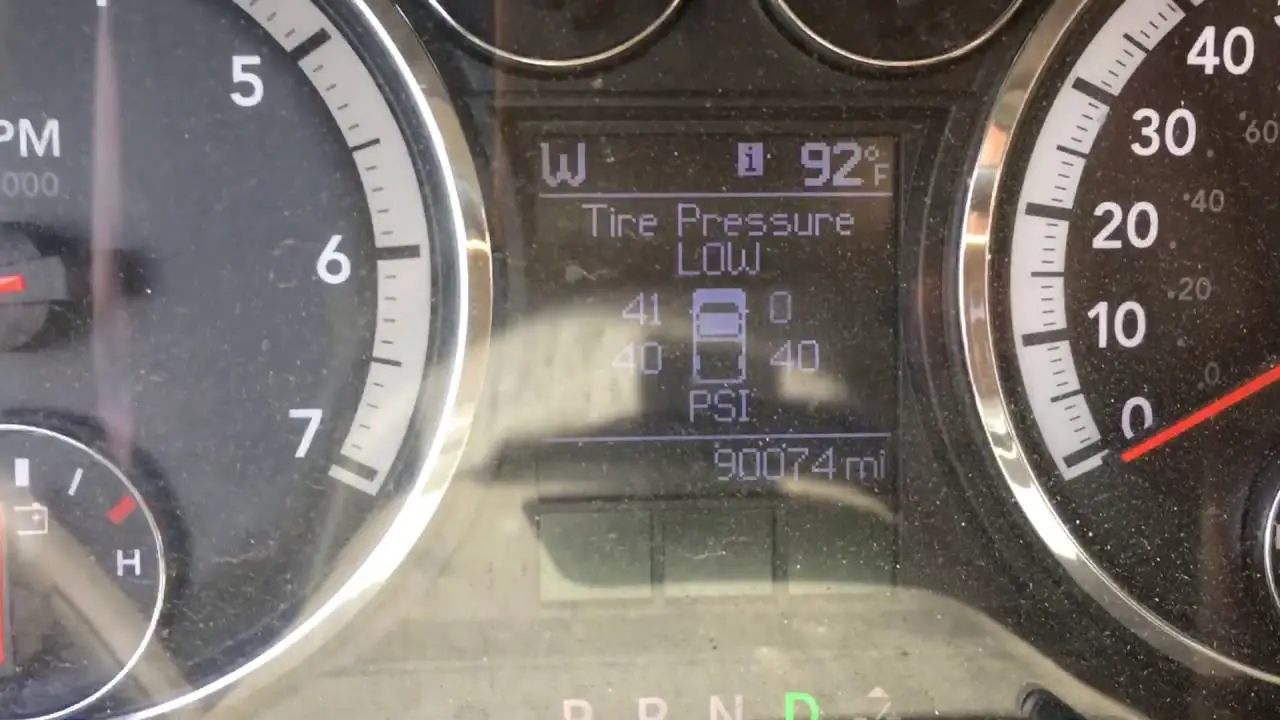
The system in your Ram 2500 is managed by the Body Control Module (BCM). Each wheel is equipped with a radio-frequency transmitter that sends real-time pressure data to the BCM. The BCM continuously monitors these inputs and cross-references them against the factory-defined thresholds programmed during assembly. Because this is a continuous, closed-loop process, the vehicle does not require user input to “know” that a tire has been inflated or a sensor has been swapped.

Why Automatic Relearning Replaced Manual Buttons
Manual buttons were primarily used in early-generation TPMS systems that lacked the processing power to distinguish between individual wheel locations or accurately auto-calibrate. In contrast, the modern 2020 Ram 2500 utilizes advanced auto-learn logic. This eliminates human error—such as forgetting to initiate a “learn” cycle—and ensures that the system provides a fresh start automatically whenever a sensor is detected within the radio frequency range of the vehicle’s receiver.
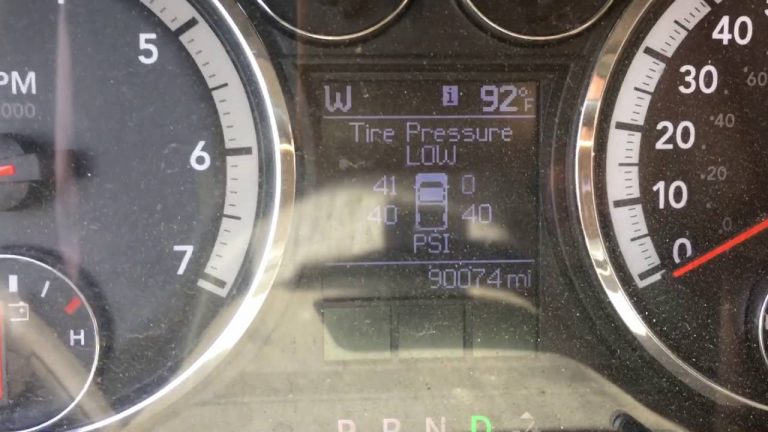
How to Initialize the 2020 Ram 2500 TPMS Auto-Learn Process
Because the system is designed to initialize on its own, you do not need to hunt for a hidden menu. However, you must satisfy specific conditions to ensure the BCM acknowledges the new pressures or sensor IDs.
📋
Step-by-Step Guide
Recommended Best Deal Products


Check the tire placard on your driver-side door jamb. Inflate all tires to these exact specifications. The BCM uses these values to determine the pressure threshold for the warning light.
Drive the vehicle for at least 15–20 minutes at speeds consistently above 15–20 mph. This provides the TPMS sensors enough rotation and wake-up time to broadcast their unique IDs to the BCM.
Step-by-Step Tire Inflation Protocol
Always use a calibrated gauge. If your tires are under-inflated, the sensors will continuously trigger the alert. Ensure you have not over-inflated the tires significantly, as the system will eventually detect an “out of range” warning if the pressure exceeds the BCM’s acceptable variance.
Drive Cycle Requirements for System Re-initialization
The auto-learn process is not instantaneous. The sensors in the 2020 Ram 2500 are designed to stay in “sleep mode” to preserve battery life while stationary. The centrifugal force generated by driving is what “reboots” the sensor to send its latest data packet to the vehicle’s receiver. If you pull over and immediately check the pressures, the screen might still reflect the old, “dirty” data.

Audible — Listen Free for 30 Days
One free credit a month and thousands of titles included.
Listen Free for 30 DaysBy The Numbers
Standard Frequency
Min. Drive Time
Common 2020 Ram 2500 TPMS Reset Button Location Troubleshooting
If your tire pressure is correct and you have completed the drive cycle, but the light persists, the issue lies elsewhere. Here are the most frequent culprits that owners mistake for a “reset” requirement.
- The Hidden Spare Tire: Many Ram 2500 configurations include a TPMS sensor inside the spare tire. If the spare is low, the system will detect it, and the light will stay on regardless of the pressure in your four main tires. Check the spare pressure!
- Radio Frequency Interference (RFI): Aftermarket electronics, such as LED light bars, GPS trackers, or poorly shielded charging cables, can create RFI that disrupts the 433MHz signal between your sensors and the truck’s receiver.
- Aftermarket Sensor Compatibility: Not all sensors are created equal. If you replaced a tire recently, ensure the shop installed a sensor compatible with your specific build. If the frequency or the protocol (sensor ID format) does not match, the BCM will never accept the new sensor.
If you recently upgraded your wheels and tires, always confirm the shop cloned your original sensor IDs to the new sensors. If the IDs were not cloned, you must have the new sensor IDs programmed into the BCM using a diagnostic scan tool.
Advanced Diagnosis: When to Use an OBD-II Diagnostic Tool
Recommended Best Deal Products


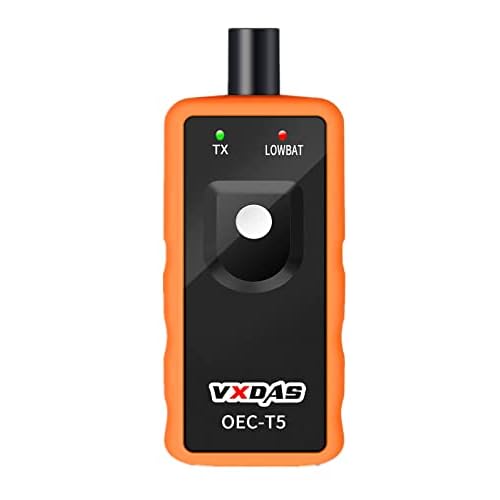
When the automatic system fails, you need to interface with the BCM directly. An OBD-II port diagnostic tool is the only way to “force” an update or identify a specific component failure.
Using Diagnostic Tools for Sensor Verification
Professional-grade scan tools allow you to ping individual sensors to see if they are still broadcasting. Often, a sensor battery has reached its end of life (typical lifespan is 5–10 years). If a sensor is dead, no amount of driving will ever clear the fault light, as the BCM will record a “Sensor Not Found” error code.
Interpreting TPMS Trouble Codes
By plugging a scanner into the OBD-II port, you can read specific BCM trouble codes. Common codes include:
- C0559: System calibration error.
- C1501-C1504: Specifically identifies which wheel location has a low-pressure alert or a missing sensor signal.
Avoid “generic” TPMS bypass tools found on some online marketplaces. These often overwrite BCM data without proper validation, which can lead to other system faults in your 2020 Ram 2500. Stick to reputable, brand-specific diagnostic scanners.
Ultimately, there is no manual shortcut to trick the system. The 2020 Ram 2500 TPMS is an intelligent diagnostic array. If you have inflated the tires to the correct pressure and driven at highway speeds for 20 minutes without the light extinguishing, you are dealing with a hardware issue. Whether it is a dead sensor battery, an aftermarket compatibility mismatch, or a latent spare tire pressure issue, a diagnostic scan via the OBD-II port is your most reliable path forward.
2020 Ram 2500 Tpms Reset Button Location: Frequently Asked Questions
Why is my TPMS light still on after filling my tires?
The system often requires a brief driving interval to recalibrate. If you have inflated the tires to the PSI specified on your driver-side door jamb, drive the vehicle at speeds above 15 mph for at least 10-20 minutes. This process allows the internal wheel sensors to sync with the vehicle’s computer and recognize the corrected pressure, clearing the warning light from your instrument cluster.
Do I need a special tool to reset my tire pressure light?
For a standard 2020 Ram 2500, no special tool is required for a routine reset. The system is designed to perform an automatic ‘fresh start’ once the proper tire pressure is detected while driving. However, if you have replaced a sensor or are experiencing a technical fault, a technician may use a handheld TPMS scan tool to wake up the sensor or update the BCM.
Audible Premium Plus — Annual Membership
12 audiobook credits up front, plus the full Audible catalogue.
See Annual PlansHow long do I need to drive for the TPMS to reset automatically?
Typically, the system requires a continuous drive of 10 to 20 minutes at speeds consistently above 15-20 mph. This provides sufficient time for the sensors to transmit updated data and for the vehicle’s computer to process these readings as stable. If you stop and start frequently, the reset process may be interrupted, so a steady highway drive is generally the most effective way to clear the light.
Can cold weather cause my Ram 2500 TPMS light to trigger?
Yes, ambient temperature drops significantly affect tire pressure. For every 10-degree Fahrenheit decrease in temperature, tire pressure typically drops by about 1 PSI. This is often enough to trigger the sensor threshold on a 2020 Ram 2500 if the tires were already near the minimum required PSI. Always check your tire pressures during the first cold snap of the season to prevent nuisance alerts.
Will an aftermarket lift kit or larger tires affect my TPMS?
Yes, changing tire sizes or pressure requirements can cause conflict. If you are running non-factory tire sizes, you may need to have the vehicle’s computer settings updated at a dealership or via an aftermarket tuner to match the new pressure threshold. Without this update, the system may perpetually trigger a warning because it expects the pressure values defined by the original manufacturer’s factory specifications.