2011 Jeep Liberty TPMS Reset Button Location: Solved
Is your tire pressure light glaring at you, but you can’t seem to find a reset button in your Jeep Liberty? Many owners spend hours searching for a hidden TPMS reset button that simply does not exist on the 2011 model. In this guide, we will clear up the confusion regarding the 2011 Jeep Liberty TPMS reset button location and show you exactly how to calibrate your system for a permanent fix.

Understanding the 2011 Jeep Liberty TPMS Reset Button Location Myth
Recommended Best Deal Products


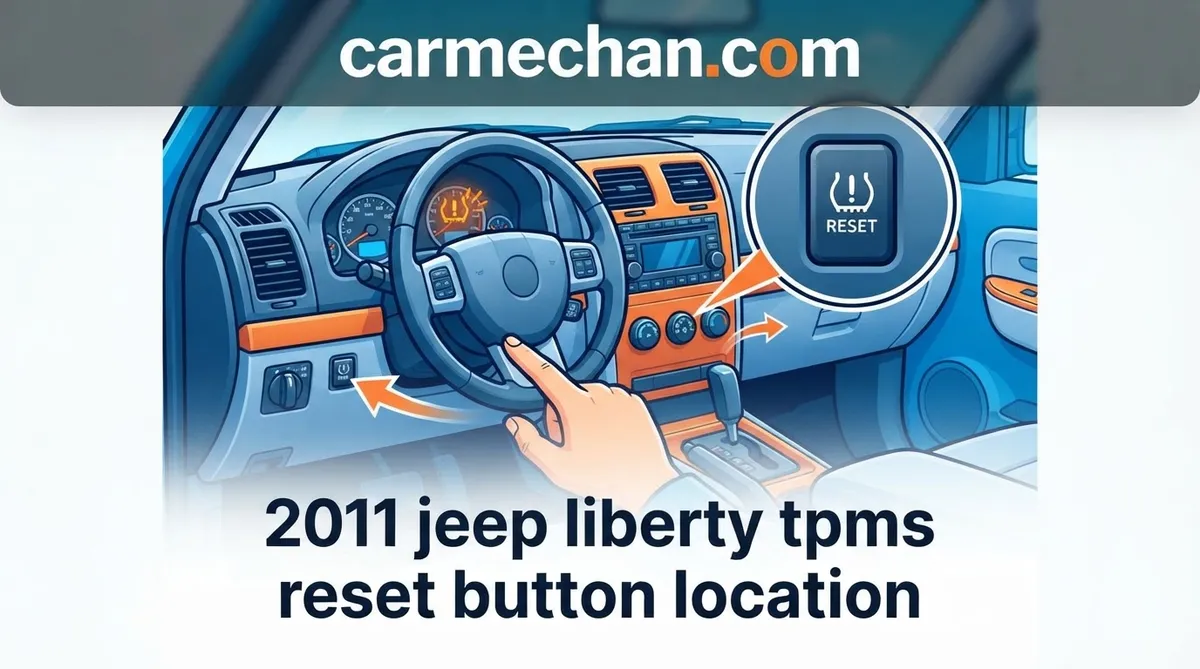
One of the most persistent misconceptions among Jeep owners is the belief that there is a physical button hidden under the dashboard or inside the glovebox to calibrate the Tire Pressure Monitoring System (TPMS). Unlike some import manufacturers—notably Toyota or Lexus, which often place a physical reset switch under the steering column—the 2011 Jeep Liberty relies on a self-calibrating architecture.
📤 Share Image

Why No Manual Button Exists
The 2011 Jeep Liberty utilizes a direct TPMS system. This means each wheel is equipped with a specific sensor that monitors pressure in real-time. Because these sensors are pre-programmed to communicate directly with the vehicle’s Body Control Module (BCM), the computer constantly listens for the data signals from each corner of the vehicle. A manual button is redundant in this design because the system is intended to “initialize” itself as soon as it receives valid, sustained pressure data from the sensors.
How the Auto-Learn System Communicates
The BCM serves as the central brain. When you inflate your tires to the correct pressure, the TPMS sensors wake up—often triggered by centrifugal force while the wheels are spinning—and transmit their unique ID and pressure reading. The BCM captures this, compares it against the factory-set thresholds, and if the data is within the acceptable range, it clears the warning light automatically. It is a seamless process that requires zero user intervention beyond maintaining the physical tires.

Correct Calibration: How to Reset 2011 Jeep Liberty Tire Sensors
To restore your system to its default factory settings, you must ensure the underlying hardware—the tires—are actually at the specifications required by the Jeep engineering team. Attempting to “reboot” the system without verifying pressure with a calibrated tool will inevitably result in the light returning.
Finding the Correct Tire Pressure Placard
Never rely on the pressure listed on the tire sidewall, as that is the maximum pressure for the tire construction, not the vehicle’s handling requirements. Open the driver-side door and look for the manufacturer’s placard on the door jamb. This sticker provides the exact PSI your vehicle requires for safe operation. For most 2011 Jeep Liberty trims, this is typically 33–35 PSI.
📋
Step-by-Step Guide: Resetting the TPMS
Recommended Best Deal Products


Ensure the tires have been sitting for at least three hours. Use a reliable digital tire pressure gauge to inflate each tire exactly to the PSI specified on your driver-side door jamb.
Drive the vehicle at speeds above 15–20 mph for at least 10 to 20 minutes. This constant rotation provides the sensor the necessary centrifugal force to “wake up” and transmit its updated pressure data to the BCM.
Wait Times for Sensor Recognition
Patience is key. The TPMS module does not update instantly. The computer requires a “fresh start” period where it samples the sensor data multiple times to confirm the low-pressure condition has indeed been resolved. Do not be alarmed if the light remains on for the first few miles of your drive.

Audible — Listen Free for 30 Days
One free credit a month and thousands of titles included.
Listen Free for 30 DaysTroubleshooting 2011 Jeep Liberty TPMS Light Malfunctions
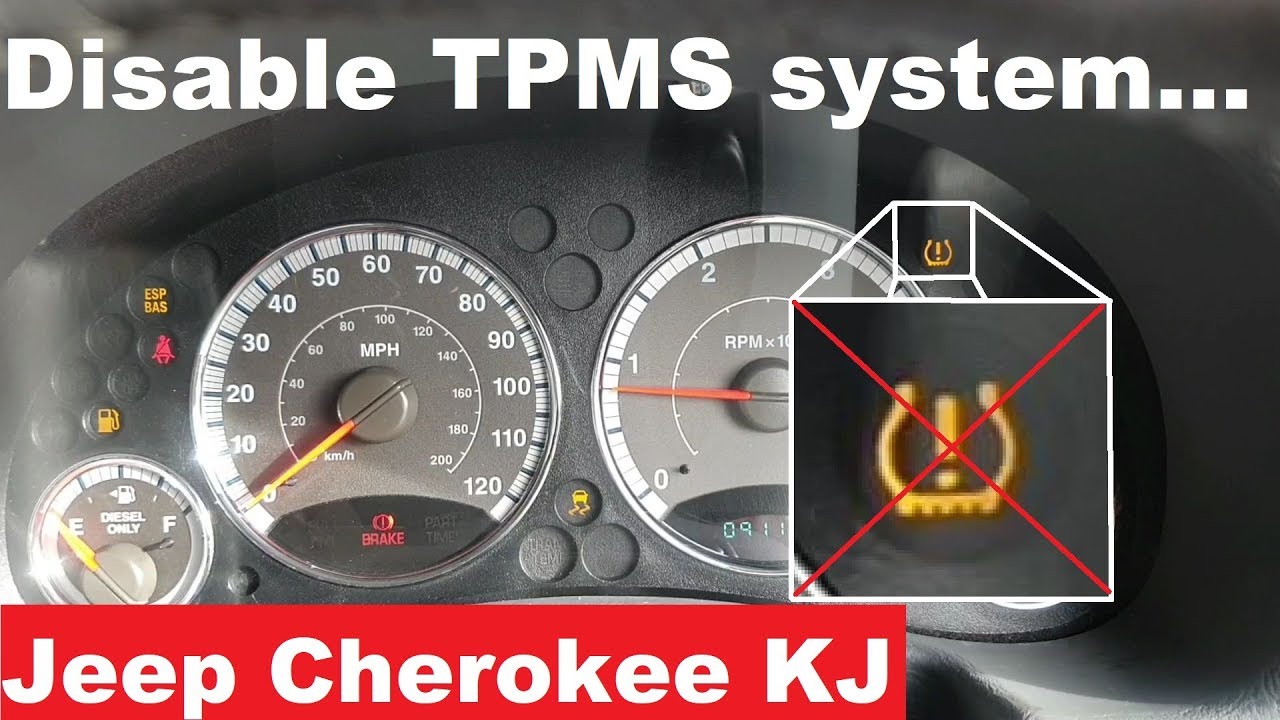
If you have ensured your tire pressures are perfect and the light remains illuminated, you are likely dealing with a hardware fault. Understanding the diagnostic language of your dashboard is essential for narrowing down the issue.
- Steady Light: Indicates one or more tires are below the required pressure threshold.
- Flashing Light (for ~60 seconds): Indicates a system malfunction, such as a dead sensor battery, faulty valve stem, or a disrupted signal to the BCM.
- Sensor Battery Life: The life expectancy of an OEM TPMS valve stem sensor is typically 7 to 10 years. In a 2011 model, these batteries are almost certainly depleted. If the light blinks, the sensor is likely “dead” and unable to transmit data.
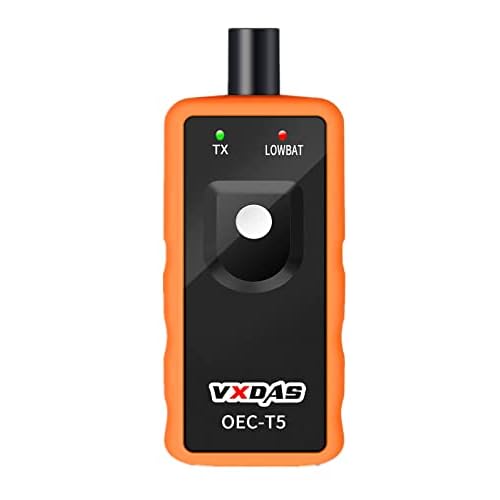
- OBD-II Diagnostics: A standard code scanner will not read TPMS sensor IDs. You need a dedicated TPMS tool that can communicate with the sensor frequencies. A professional tire technician can use this tool to “ping” each sensor and see which one is failing to respond.
- Aftermarket Interference: Occasionally, high-powered electronics or dashcams plugged into accessory ports can create electromagnetic interference that disrupts the signal between the wheel sensors and the receiver. If you recently added new electronics, try disconnecting them to see if the signal stabilizes.
Preventing Future TPMS Issues and False Warnings
Recommended Best Deal Products


Maintaining your TPMS isn’t just about clearing a light—it’s about ensuring your vehicle’s safety systems are providing accurate information. Small adjustments to your maintenance routine can prevent the system from flagging a “backup” or “false” error.
Sidewall vs. Door Jamb Pressure Specs
One common failure point occurs when owners fill tires to the “Max PSI” molded into the sidewall. This pressure is often much higher than the vehicle’s recommended 33-35 PSI. While this might seem safer, it can actually trigger the TPMS light because the sensor detects an over-inflated tire, which it may interpret as an imbalance in the vehicle’s stability system.
Seasonal Pressure Fluctuations
Atmospheric physics significantly impacts tire pressure. For every 10-degree Fahrenheit drop in ambient temperature, tire pressure typically drops by approximately 1 PSI. During the first cold snap of the year, it is common for all four tires to trigger the TPMS light simultaneously. Always check and adjust your pressures when the seasons change.
When replacing your tires, always insist on having the TPMS service kits installed. These kits include new valve cores, caps, and seals, which prevent the slow air leaks that often trick the TPMS into thinking there is a system-wide failure.
Industry Data
Loss per 10°F drop
Sensor Battery Life
The 2011 Jeep Liberty utilizes an automatic sensor-learning system that requires no manual interaction. By keeping your tire pressure aligned with the manufacturer’s door jamb placard and performing regular driving cycles, your system will function optimally. If you encounter a flashing light that persists despite proper pressure, the issue is likely a component failure. In such instances, a professional tire shop using an OBD-II diagnostic tool is the most efficient way to isolate the faulty sensor and restore your vehicle to safety. Stop searching for a button that isn’t there and focus on the tire health, which remains the true foundation of your Jeep’s monitoring system.
2011 Jeep Liberty Tpms Reset Button Location: Frequently Asked Questions
Where is the TPMS reset button located on a 2011 Jeep Liberty?
There is no physical TPMS reset button on the 2011 Jeep Liberty. Unlike some other vehicles that require a manual reset switch located under the steering wheel or in the glove box, the Liberty’s Tire Pressure Monitoring System is entirely automated. The vehicle’s onboard computer continuously monitors tire sensors and recalibrates once the system detects that tire pressures have reached the correct, specified levels.
How do I turn off the tire pressure light?
To turn off the tire pressure light, you must first ensure all tires are inflated to the exact PSI listed on the driver-side door jamb sticker. Once properly inflated, drive the vehicle at speeds above 15 mph for approximately 10 to 20 minutes. This drive cycle allows the vehicle’s Wireless Control Module to receive updated signals from the tire sensors, which will automatically extinguish the warning light.
Why does my TPMS light stay on after I fill the tires?
If the TPMS light remains on after filling the tires, it is likely because you have not yet completed the required drive cycle to force the system to sync. Additionally, if a tire was significantly under-inflated, the system may require more time to ‘handshake’ with the sensor. If the light remains on after an extended drive, one of the wheel-mounted sensors may have a dead battery or an internal fault.
Audible Premium Plus — Annual Membership
12 audiobook credits up front, plus the full Audible catalogue.
See Annual PlansDo I need a tool to reset the sensors?
No, you do not need a special tool to reset the TPMS sensors for a 2011 Jeep Liberty. The system is ‘self-learning’ and will automatically recognize the sensors and their current pressure readings once you have corrected the tire inflation and driven the vehicle for several miles. You only need a reliable tire pressure gauge to ensure the air levels are accurate according to the manufacturer’s specifications.
What if the TPMS light flashes instead of staying solid?
A flashing TPMS light indicates a system malfunction rather than low tire pressure. This usually signifies that one or more of the tire pressure sensors have failed, the internal battery has expired, or the Wireless Control Module cannot communicate with the sensors. In this case, a visit to a service center with an OBD-II diagnostic tool is necessary to identify which specific sensor is reporting a communication error.