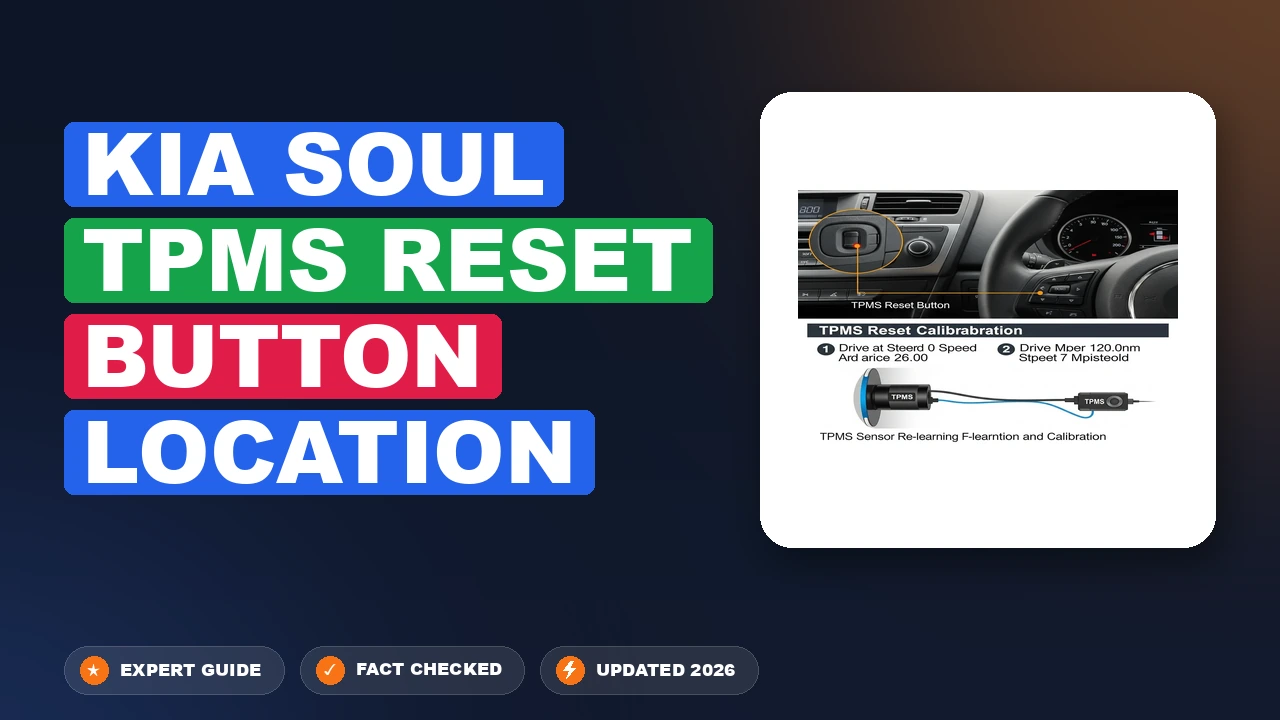
Kia Soul TPMS Reset Button Location: Located & Clarified
Seeing that annoying yellow tire pressure light on your dashboard is never fun, but hunting for a manual reset button that does not exist makes the experience significantly worse. Many Kia Soul owners spend hours tearing apart their interior, checking the glovebox, or searching under the steering column for a button to initiate a system update, only to find nothing. The reality is that the Kia Soul utilizes a highly sophisticated, fully automated tire pressure monitoring system that requires no manual intervention to sync. In this guide, I will clarify exactly how your vehicle monitors tire health, how to correctly perform a system reboot through proper maintenance, and how to differentiate between a simple pressure correction and a legitimate hardware failure.

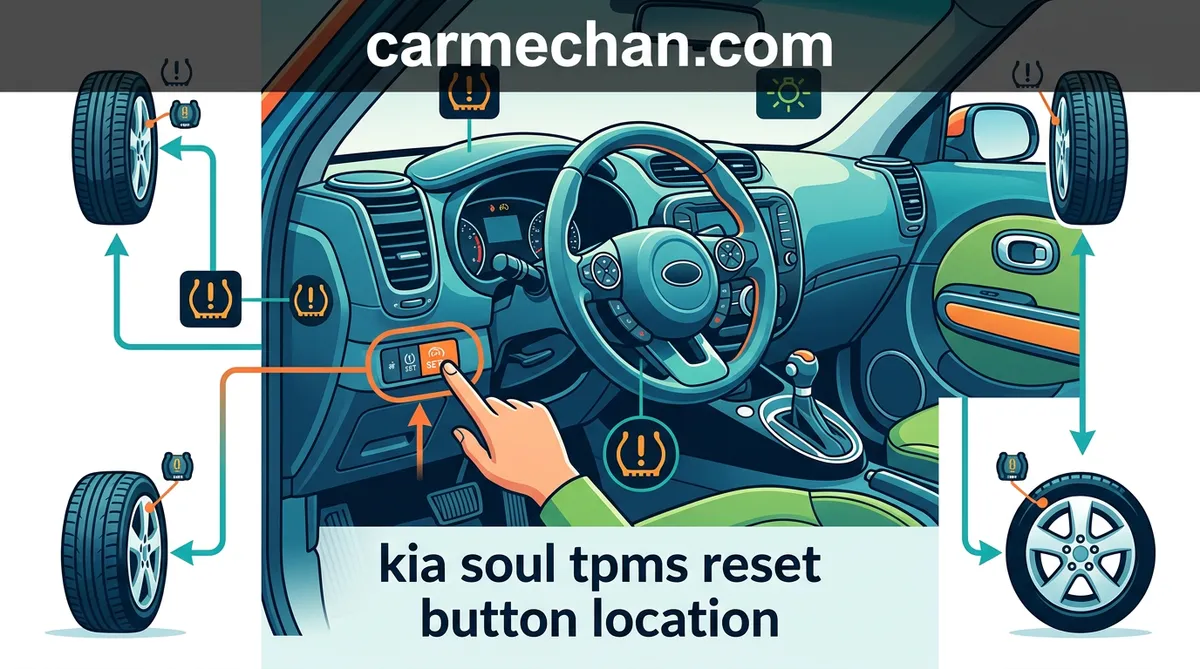
Understanding the Kia Soul TPMS Reset Button Location Myth
Recommended Best Deal Products


📤 Share Image

Why Modern Kia Souls Use Automatic Calibration
The belief that a manual reset button exists is a common carryover from older vehicle architectures or alternative brands. Modern Kia Soul models are engineered for driver convenience; the onboard TPMS control module is programmed to perform a continuous scan of all four wheel sensors. Once the system detects that the pressure in all tires has been brought into the acceptable range—usually after a brief period of driving—it will automatically extinguish the warning light on your instrument cluster. This eliminates the need for a “clean” or “factory” reset button, as the system performs a software-based reboot every time it detects a stable pressure reading.
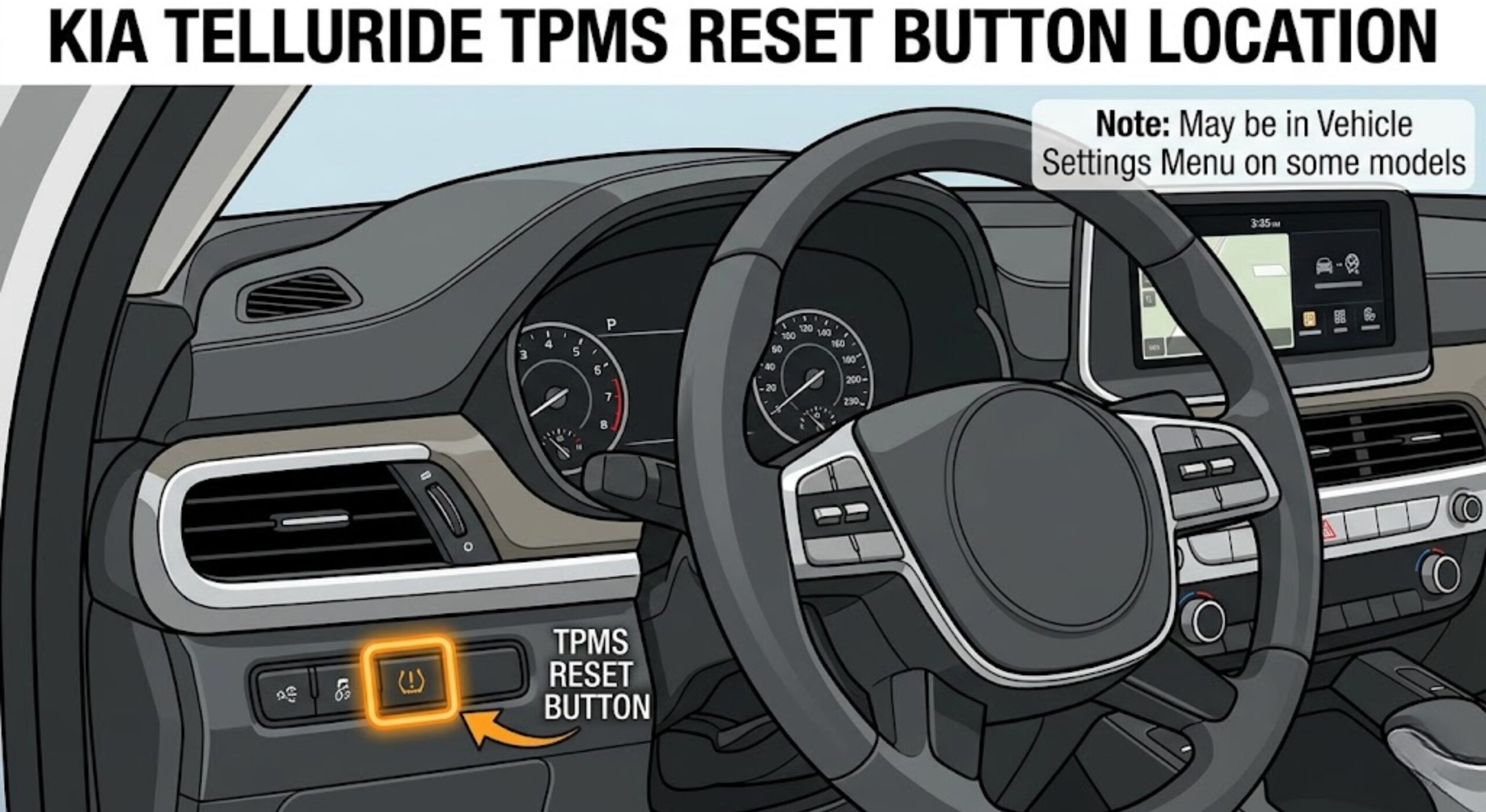
Direct TPMS Sensors Explained
It is vital to distinguish between direct and indirect TPMS. Kia Souls utilize direct TPMS, where a radio-frequency transmitter is physically mounted to the inside of the valve stem on each wheel. These sensors measure the exact pressure and temperature within the tire and send that data directly to the vehicle’s ECU (Engine Control Unit). Because the sensors are “smart,” the car knows exactly which corner of the vehicle is experiencing low pressure without requiring a manual initialization sequence from the driver.

Why You Cannot Find a Physical Reset Switch
Many owners report searching behind the steering wheel, inside the glove compartment, or behind the kick panels near the OBD-II port. These locations are common for other electronic components, but not for tire pressure monitoring. The system is designed to be “invisible.” By removing the need for a physical button, Kia reduces the risk of human error, such as a driver accidentally resetting the system before reaching the correct pressure, which could prevent the car from accurately detecting a true puncture or slow leak later.
How to Properly Clear Your Kia Soul Tire Pressure Light
Locating the Correct PSI Placard
Before attempting to clear the light, you must ensure you are inflating to the manufacturer’s target. Do not rely on the maximum PSI rating printed on the tire’s sidewall; that is the safety limit for the tire itself, not the optimal operating pressure for your Kia Soul. Instead, open the driver’s side door and look at the B-pillar placard. This sticker provides the exact PSI required for your specific vehicle trim, wheel size, and weight configuration. Usually, this falls between 33 and 35 PSI, but always defer to your specific door sticker.
📋
Step-by-Step Tire Initialization
Recommended Best Deal Products

Use a high-quality tire pressure gauge to check each tire while the car has been stationary for at least three hours. Inflate each tire to the precise PSI listed on your door jamb sticker.
Once tires are filled, the sensors need to “wake up” and transmit new data. Drive your Kia Soul at speeds above 20 mph for at least 10–15 minutes. This motion provides enough centrifugal force to activate the sensor batteries and refresh the system.
Driving Requirements for Sensor Initialization
The “drive cycle” is the most misunderstood part of this process. If you inflate your tires in your driveway and the light stays on, it is not broken. The TPMS module often enters a “sleep mode” while the vehicle is parked to save battery. Driving the vehicle provides the necessary movement to force the sensors to send an updated RF signal to the car’s computer. During this phase, the system confirms that the new pressure readings are consistent and stable before turning off the dashboard light.
Diagnosing a Flashing Light: Kia Soul TPMS Malfunction Symptoms
Solid Light vs. Flashing Light Meaning
Expert mechanics utilize a simple heuristic: a solid light means a pressure issue; a flashing light means a hardware failure. If your TPMS light blinks for roughly 60 to 90 seconds upon starting the engine and then stays illuminated, the system has detected a fault in the sensor network itself. This usually indicates that the car cannot communicate with one or more of the sensors, whether due to a dead battery, physical damage, or signal interference.

Audible — Listen Free for 30 Days
One free credit a month and thousands of titles included.
Listen Free for 30 DaysThe Impact of Cold Weather on Tire Pressure
It is a well-documented phenomenon that tire pressure drops significantly in cold weather. For every 10-degree drop in ambient temperature, your tire pressure typically decreases by about 1 PSI. This is why Kia Soul owners often see the light pop up on the first chilly morning of the year. While this isn’t a “malfunction,” it is a genuine pressure drop that requires your attention. Simply re-inflating the tires to the recommended level in the cold is the correct fix.
Never attempt to fix a flashing TPMS light by simply inflating the tires further. If the light is flashing, it is a diagnostic code from the computer signaling that it cannot “see” the sensor. Over-inflating the tire will only lead to uneven tire wear, poor handling, and a potential blowout, without ever extinguishing the warning light.
Advanced Troubleshooting for Persistent Kia Soul TPMS Alerts
Recommended Best Deal Products


Using an OBD-II Scanner for TPMS Diagnostics
If you have confirmed your tire pressure is correct and you have completed the drive cycle, but the light remains, it is time for a professional scan. While basic OBD-II scanners read engine codes, you need a TPMS-specific scan tool to communicate with the wheel sensors. These tools can trigger the sensor manually, check the remaining battery life, and display the exact code causing the alert. In many cases, you will find that a specific sensor has simply reached its end of life—typically between 7 and 10 years for original equipment sensors.
When to Seek Professional Tire Shop Services
If your Kia Soul shows a persistent error, visit a reputable tire shop. These locations possess specialized equipment to “relearn” or register new sensor IDs into your car’s computer if you recently replaced a wheel or a sensor. Trying to bypass this by “resetting” the computer—which is impossible without a tool—will only lead to further frustration. A quick diagnostic test at a tire shop usually costs significantly less than a diagnostic fee at a dealership and provides you with an immediate answer regarding the health of your sensor batteries.
Industry Data: TPMS Reliability
Alerts caused by low pressure
Average sensor battery life
By understanding that your Kia Soul is a smart vehicle designed to monitor its own health automatically, you can save yourself hours of fruitless searching for a nonexistent reset button. Focus your energy on maintaining the correct tire pressure, respecting the drive cycle, and knowing when to hand over the diagnostic work to a professional with the right equipment. Your tire pressure monitoring system is a critical safety feature; treat it with the professional maintenance it deserves, and it will keep you informed of your tire health for the life of your vehicle.
Kia Soul Tpms Reset Button Location: Frequently Asked Questions
Do I need a special tool to reset my Kia TPMS?
For most Kia Soul models, no special tool is required. The system is designed to auto-learn pressure levels during driving. However, if a sensor has failed or if you are installing new sensors, a professional TPMS scan tool is necessary to register the new sensor IDs to the vehicle’s ECU. A simple ‘reset’ will not fix a hardware communication error.
Why won’t my tire pressure light turn off after I filled the tires?
The system often requires a ‘drive cycle’ to register new pressure values. If you have inflated the tires and the light remains, drive the vehicle at speeds above 25 mph for at least 15 to 20 minutes. If the light stays on, you may have a faulty sensor, an issue with the spare tire pressure, or a mismatch between the recommended and actual inflation levels.
Can I use the PSI number printed on my tire sidewall?
No. The PSI number printed on the tire sidewall represents the maximum cold inflation pressure the tire can handle under load. Always use the PSI specifications found on the sticker located on your driver-side door jamb. This value is determined by Kia engineers to provide the optimal balance of fuel efficiency, handling, and tire longevity specifically for your Kia Soul model.
Does my Kia Soul have a TPMS reset button under the steering wheel?
Most Kia Souls do not have a physical TPMS reset button anywhere in the vehicle. While some other manufacturers place a button under the steering column or in the glove box, Kia has moved toward an automated, software-based system. If you cannot find a button in your specific trim, it is because your vehicle is designed to calibrate itself entirely through driving inputs.
Audible Premium Plus — Annual Membership
12 audiobook credits up front, plus the full Audible catalogue.
See Annual PlansHow often should I check my tire pressure to prevent TPMS alerts?
You should check your tire pressure at least once a month and before any long road trip. Because ambient temperature changes significantly impact tire pressure, regular monitoring is the best way to ensure the TPMS system stays within its expected parameters, providing you with a fresh start each season and avoiding the inconvenience of the warning light triggering during daily commutes.