Is Driving with ABS Light On Safe? 2026 Expert Guide & Fix
Last Updated on May 22, 2026 by Ryan
Driving with your ABS light on is not recommended and can be dangerous, as it indicates a fault in your anti-lock braking system, compromising emergency stopping. While regular brakes may still function, your car’s ability to prevent skidding is impaired, affecting safety and requiring immediate inspection. Prioritize professional diagnosis to identify the underlying issue.
🎯 Key Takeaways


- Driving with ABS light is unsafe; get it checked.
- ABS, traction control, stability are compromised.
- Increased stopping distance, higher skidding risk.
- Common causes:sensor, module, fuse issues.
- Seek professional diagnosis immediately.
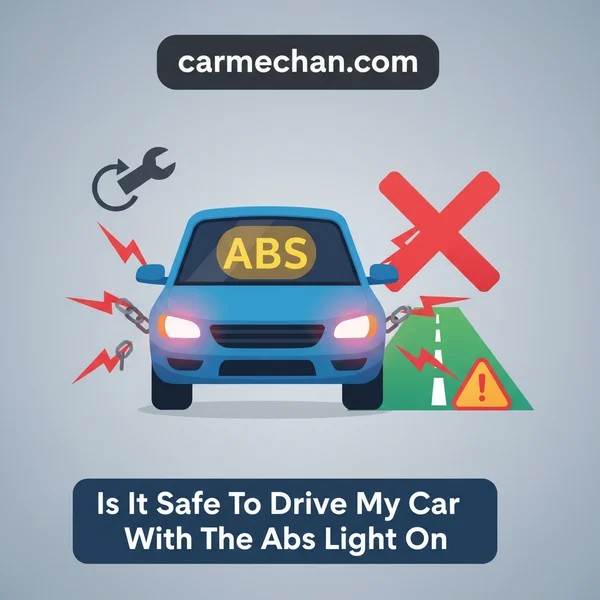
Is your car’s ABS light glowing ominously on your dashboard? You’re probably wondering, “Is it safe to keep driving?” The short answer is a definitive no, it is generally NOT safe to drive your car with the Anti-lock Braking System (ABS) warning light illuminated. While your regular brakes may still function, the critical safety features of your ABS are disabled, significantly increasing the risk of an accident, especially in emergency stops or adverse weather conditions. Ignoring this light compromises your vehicle’s ability to maintain control during hard braking, putting you and others on the road in serious danger.
This isn’t just about a minor electronic glitch; an active ABS light signals a fundamental problem with a system designed to prevent wheel lock-up and maintain steering control during panic braking. It also often indicates that other crucial safety systems, like traction control and stability control, are also offline. Understanding the immediate implications and common causes of this warning is essential for making informed decisions about your next steps, prioritizing your safety above all else.
What Does an Illuminated ABS Light Mean for Your Safety?
When your ABS light comes on, it’s more than just a nuisance; it’s a direct warning that a critical safety system is failing. The primary function of ABS is to prevent your wheels from locking up during hard braking, allowing you to maintain steering control and reduce stopping distances. Without it, your vehicle’s braking capability is severely compromised, especially when you need it most.

The Immediate Danger: Compromised Braking Performance
- Loss of Anti-lock Function: Your wheels can now lock up if you brake too hard. This is the most significant danger. Locked wheels mean you lose steering control, and your vehicle can skid uncontrollably.
- Increased Stopping Distances: While your primary brake system (foot pedal, calipers, pads) might still work, the absence of ABS means stopping distances can drastically increase, particularly on wet, icy, or loose surfaces. What used to be a controlled stop now becomes a slide.
- Unpredictable Vehicle Behavior: In an emergency braking situation, your car will behave unpredictably. You might experience severe pulling to one side, a violent shudder, or complete loss of control. This can quickly lead to a collision.
Many drivers develop a false sense of security because “the brakes still work.” However, it’s the quality of that braking, and your ability to control the vehicle during it, that is fundamentally degraded without ABS. You are essentially reverting to the braking technology of decades past, which is inadequate for modern driving conditions and traffic.
Beyond ABS: Related Safety Systems Are Also Affected
The ABS system is the cornerstone for several other vital safety features in your car. When the ABS light is on, it’s highly probable that these interconnected systems are also offline, further compounding the safety risk.
- Traction Control (TC) Disabled: Traction Control relies on the same wheel speed sensors as ABS. Without accurate wheel speed data, TC cannot prevent wheelspin during acceleration. This can lead to loss of traction on slippery roads, making it harder to get moving or accelerate safely.
- Electronic Stability Control (ESC) Disabled: Also known as Electronic Stability Program (ESP) or Vehicle Stability Control (VSC), ESC uses ABS sensors to detect and correct skids. If your car begins to lose control (e.g., oversteer or understeer), ESC would normally apply individual brakes to help steer the vehicle back on track. With the ABS light on, this life-saving feature is almost certainly inactive, drastically increasing your risk of a rollover or severe skid.
- Brake Assist (BA) Impacted: Some Brake Assist systems, which help apply maximum braking force during panic stops, also integrate with ABS. Its effectiveness might be reduced or entirely disabled.
Driving without these systems active means your vehicle is stripped of its modern defenses against loss of control. This is why it’s critical to address an illuminated ABS light immediately, as you are operating a vehicle with significantly reduced safety margins.
How to Diagnose & Fix Your ABS Light: Research-Based Guide
The illumination of your Anti-lock Braking System (ABS) warning light can be unsettling, often leaving drivers wondering about the safety of their vehicle. While it doesn’t always indicate a catastrophic failure, it certainly signals a problem that needs attention. This comprehensive guide will walk you through a detailed, step-by-step process to understand, diagnose, and address the common causes behind an active ABS light, empowering you to make informed decisions about your car’s safety and performance.
Step 1: Understand the Immediate Safety Implications
What you need: Your car, observant eyes, a calm demeanor.
Instructions: When the ABS light comes on, it means your ABS system is deactivated. Your traditional brakes will still work, but they will not have the anti-lock function, which prevents wheel lock-up during hard braking. This primarily affects your ability to steer during emergency braking. Assess the current driving conditions: are you on dry, clear roads, or is it wet, icy, or gravelly? If conditions are poor, driving becomes riskier without ABS. Drive defensively, maintain greater following distances, and avoid sudden braking. If the regular brake warning light is also illuminated, stop driving immediately as this indicates a more severe brake system failure.
Pro Tip: Do not ignore the ABS light. While you can usually drive short distances carefully, prolonged driving without diagnosing the issue is ill-advised, especially in less-than-ideal weather or traffic conditions. Prioritize investigating the cause as soon as possible.
Step 2: Check for Other Accompanying Warning Lights
What you need: Your vehicle’s dashboard, owner’s manual (optional, for light identification).
Instructions: Before proceeding, take a moment to scan your entire dashboard for any other illuminated warning indicators. Specifically, look for the “Brake” warning light (often red, sometimes indicating low fluid or parking brake engaged) or the “Traction Control” (TC/TCS) light. The presence of these lights alongside the ABS light can narrow down the potential issues significantly. For instance, if the brake light is also on, it might point to a low brake fluid level or a more critical brake system problem. If the traction control light is also on, it often indicates a shared sensor issue, as ABS sensors are critical for both systems.
Pro Tip: Consult your car’s owner’s manual to correctly identify all dashboard warning lights. Understanding their meanings can prevent misdiagnosis and help you prioritize which system requires immediate attention. A combination of lights usually points to a more complex problem than a single ABS light alone.
Step 3: Inspect the Brake Fluid Reservoir Level
What you need: Your car’s hood release, a flashlight (optional), shop rags.
Instructions: Open your car’s hood and locate the brake fluid reservoir. It’s typically a translucent plastic container mounted on the driver’s side firewall, often near the master cylinder. Check the fluid level against the “MIN” and “MAX” lines marked on the side. If the fluid level is below the “MIN” mark, it could be the reason for both the brake warning light and potentially contributing to the ABS light (though less common for ABS alone). Low fluid often indicates severely worn brake pads or a leak in the system, which requires immediate attention and professional inspection. Do NOT top off fluid without addressing the underlying cause of the low level.
Pro Tip: While low brake fluid can trigger the brake warning light, it rarely directly causes the ABS light by itself unless the ABS module isn’t getting enough pressure. If you top off the fluid and the light goes out, carefully monitor it. A rapidly decreasing level indicates a leak that must be repaired immediately to ensure braking safety.
Step 4: Visually Inspect Wheel Speed Sensors and Wiring
What you need: Jack, jack stands, wheel chocks, lug wrench, flashlight, safety glasses, mechanic’s gloves.
Instructions: Safely lift one corner of your car using a jack and secure it with a jack stand. Chock the wheels that remain on the ground. Remove the wheel. Locate the ABS wheel speed sensor, which is typically mounted near the brake caliper and rotor, with a wire running from it. Inspect the sensor itself for physical damage (cracks, breaks) and ensure it’s free of excessive dirt, debris, or metallic shavings. Follow the sensor wire back to its connection point, looking for fraying, cuts, corrosion, or loose connections. Repeat this process for all four wheels. Even minor damage or obstruction can throw off the sensor’s readings and trigger the ABS light.
Pro Tip: Pay extra attention to the tone ring (or reluctor ring) which the sensor reads. This is often a toothed ring behind the brake rotor or on the axle shaft. Damage or accumulation of ferromagnetic debris on this ring can also disrupt sensor readings. Gently cleaning it with a non-conductive brush and brake cleaner might resolve the issue.
Step 5: Check ABS System Fuses
What you need: Your car’s owner’s manual, fuse puller (often found in the fuse box lid), spare fuses of correct amperage.
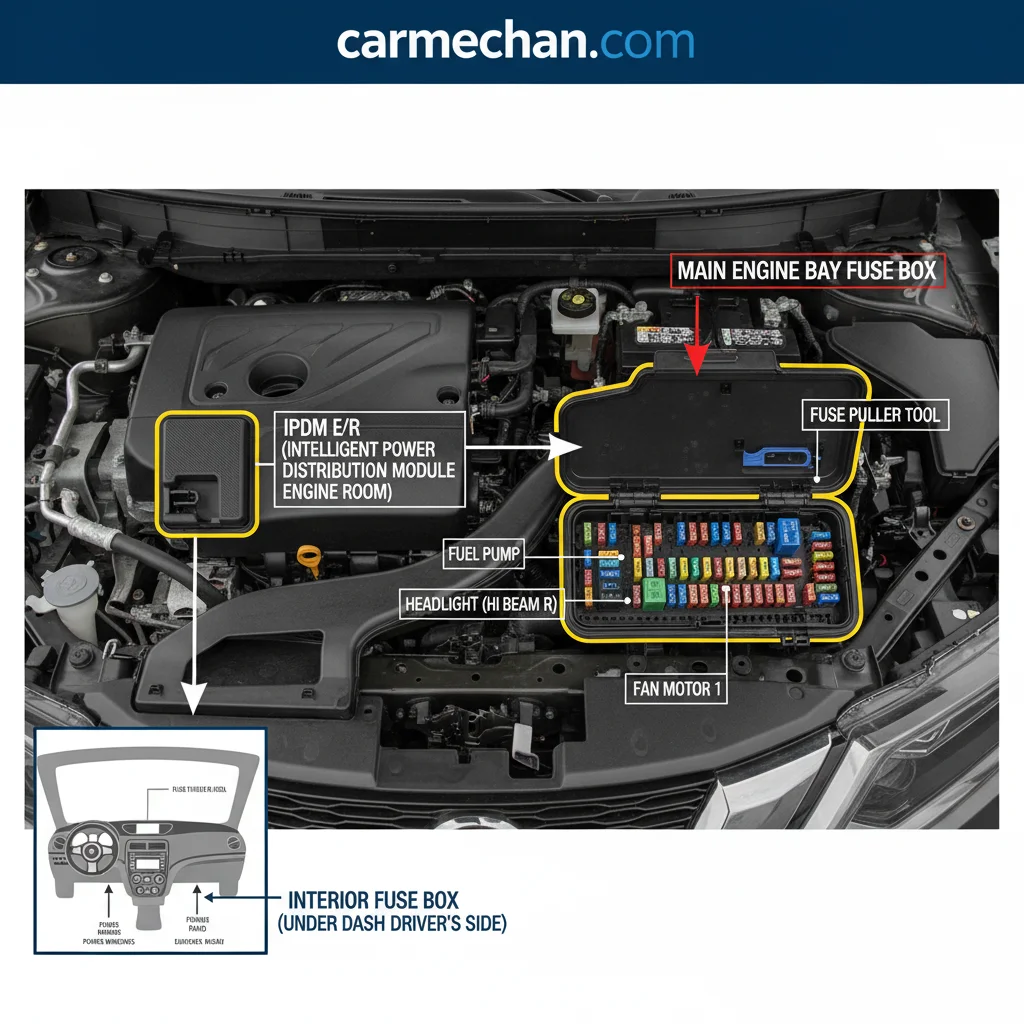
Instructions: Consult your vehicle’s owner’s manual to locate the fuse boxes (typically one under the hood, one under the dashboard) and identify the specific fuses related to the ABS system (e.g., “ABS Pump,” “ABS Module,” “Brake”). Once located, carefully remove each relevant fuse using a fuse puller or small needle-nose pliers. Visually inspect the metal filament inside the fuse: if it’s broken or melted, the fuse is blown. Replace any blown fuses with a new one of the exact same amperage rating. Using a fuse with a different rating can cause electrical damage or prevent the circuit from being properly protected.
Pro Tip: If a fuse blows immediately after replacement, it indicates a short circuit somewhere in the ABS wiring harness or component, requiring further electrical diagnostics. Never use a fuse with a higher amperage rating than specified, as this poses a significant fire hazard.
Step 6: Scan for Diagnostic Trouble Codes (DTCs)
What you need: OBD-II scanner (compatible with ABS codes), access to an auto parts store (for free code reading).
Instructions: This is often the most critical step for accurately diagnosing an ABS light. Locate your car’s OBD-II diagnostic port, usually under the dashboard on the driver’s side. Plug in an OBD-II scanner. Turn the ignition key to the “ON” position (do not start the engine). Follow the scanner’s instructions to navigate to the “ABS” or “Chassis” system menu and read any stored Diagnostic Trouble Codes (DTCs). Write down all codes exactly as they appear (e.g., C0035, C0040) along with their descriptions. These codes directly point to the specific component or circuit that is malfunctioning, saving significant diagnostic time.
Pro Tip: Many generic OBD-II scanners can only read “P” codes (powertrain). For ABS (and airbag, body, etc.) codes, you often need a more advanced scanner (sometimes called an “enhanced” or “system-specific” scanner). Most major auto parts stores offer free diagnostic code reading, including ABS codes, which can save you the cost of a scanner.
Step 7: Address Specific Wheel Speed Sensor Issues
What you need: Socket wrench set (typically 10mm or 12mm), brake cleaner, wire brush, dielectric grease, new ABS sensor (if needed), torque wrench.
Instructions: If your DTCs specifically indicated a fault with a particular wheel speed sensor (e.g., “Right Front Wheel Speed Sensor Malfunction”), focus your efforts on that specific sensor. First, attempt to clean the sensor and its mounting area. Use brake cleaner to remove any grime, rust, or metal shavings from the sensor tip and the tone ring. Reinstall and retest. If the code persists, you’ll likely need to replace the sensor. Carefully unbolt the old sensor, disconnect its electrical connector, and install the new sensor. Ensure it’s seated correctly and the wire harness is routed away from moving parts. Apply a small amount of dielectric grease to the electrical connector to prevent corrosion. Torque mounting bolts to manufacturer specifications (typically around 7-10 ft-lbs or 9-14 Nm).
Pro Tip: When replacing a sensor, sometimes they can be seized in place due to rust. Avoid excessive force that could damage the sensor mount. If the old sensor is stuck, careful application of penetrating oil and gentle persuasion might be necessary. After replacement, clear the DTCs with your scanner and take a test drive to confirm the light stays off.
Step 8: Inspect ABS Module/Pump Connections and Wiring Harness
What you need: Flashlight, small mirror, electrical contact cleaner, multimeter (for advanced diagnosis).
Instructions: The ABS module and pump unit is typically located in the engine bay, often near the brake master cylinder or mounted to the frame rail. It’s a block with multiple brake lines and a large electrical connector. Disconnect the main electrical connector to the ABS module (ensure the battery is disconnected first to prevent accidental shorts). Inspect the pins on both the module and the harness connector for signs of corrosion, bending, or damage. Clean any corrosion with electrical contact cleaner and a small brush. Also, follow the main wiring harness leading to the ABS module, checking for any signs of chafing, cuts, or heat damage. Compromised wiring can disrupt signals to or from the module, triggering the ABS light. Reconnect everything securely.
Pro Tip: If DTCs point to an internal module fault (e.g., “ABS Pump Motor Circuit Malfunction”), it’s often more than just a bad connection. While sometimes possible to repair, ABS modules are complex and expensive components. Professional diagnosis is highly recommended before considering module replacement, as programming may be required.
Step 9: Test Drive and Verify Repair
What you need: Your car, clear road conditions, OBD-II scanner (to clear codes).
Instructions: After completing any repairs or cleaning, clear the stored diagnostic trouble codes from your vehicle’s computer using an OBD-II scanner. Start the engine and verify that the ABS light is off. If it is, take your vehicle for a test drive under safe conditions. Drive at various speeds, including highway speeds if possible, and perform a few controlled, moderate braking maneuvers. The ABS system often performs self-checks, and sometimes the light will only extinguish after specific driving conditions are met. If the light remains off after the test drive, your repair was likely successful. If it reappears, re-scan for new codes or re-evaluate the previous steps.
Pro Tip: For certain vehicles, the ABS light will clear itself after a few drive cycles once the fault is resolved. However, manually clearing the codes with a scanner ensures an immediate check. During your test drive, listen for any unusual noises during braking or general driving that might indicate further issues.
Step 10: Consider Advanced Diagnosis or ABS Module Failure
What you need: Professional diagnostic tools, oscilloscope (for advanced electrical testing), specialist mechanic.
Instructions: If all previous steps have been performed and the ABS light persists, or if diagnostic codes point to internal ABS module faults (e.g., C0010, C0021, C1246 specific to pump motor or valve relay), the issue may be with the ABS control module or hydraulic pump itself. These components are complex, expensive, and often require specialized equipment for proper testing and replacement. A failing module can manifest as intermittent ABS light illumination, erratic braking behavior (rarely), or persistent fault codes that cannot be cleared. DIY replacement is challenging and often requires specific programming or “bleeding” procedures that vary by vehicle, making professional help almost essential.
Pro Tip: ABS modules are generally quite robust, so they are less common failure points than wheel speed sensors. Before replacing an entire module (which can cost $500-$2000+), ensure a qualified technician has thoroughly tested all related circuits, power, and ground connections to rule out simpler electrical issues. Sometimes, rebuilding services for specific modules are available, which can be more cost-effective than a new unit.
✅ Final Checklist
- ✔ All dashboard warning lights identified and understood.
- ✔ Brake fluid level verified and within MIN/MAX range.
- ✔ All four wheel speed sensors and their wiring visually inspected for damage/debris.
- ✔ All relevant ABS fuses checked and replaced if blown (with correct amperage).
- ✔ Diagnostic Trouble Codes (DTCs) retrieved and recorded.
- ✔ Necessary repairs (e.g., sensor cleaning/replacement) completed based on DTCs.
- ✔ Codes cleared and vehicle test driven to confirm light remains off.
Important Notes:
- Safety Considerations: Never work under a vehicle supported only by a jack. Always use jack stands and wheel chocks. Disconnect the battery when working with electrical components, especially around the ABS module.
- When to Seek Professional Help: If the brake warning light is also on, indicating a loss of braking capability, do NOT drive the car. If you’re uncomfortable performing any of these steps, lack the necessary tools, or if the ABS light persists after trying common solutions, a certified mechanic should be consulted immediately. ABS systems are critical for safety, and incorrect diagnosis can have severe consequences.
- Estimated Time and Cost Range:
- Time: Visual inspections (Steps 1-5) can take 30-60 minutes. Scanning codes (Step 6) takes 5-15 minutes. Replacing a single wheel speed sensor (Step 7) can take 1-2 hours for a DIYer.
- Cost:
- OBD-II Scanner: $20 – $150 (basic to advanced).
- Fuses: $5 – $15 for an assortment pack.
- Wheel Speed Sensor: $30 – $200 per sensor (aftermarket vs. OEM).
- Professional Diagnosis: $80 – $150 (labor for scanning and initial inspection).
- ABS Module/Pump (parts only): $400 – $2000+ (highly variable by vehicle).
- Professional Repair (including parts and labor): From $150 (simple sensor) to $800 – $3000+ (for module replacement).
What Causes Your ABS Light to Turn On? Diagnosis Guide
An illuminated ABS light signals that the system has detected a fault and has often disengaged itself for safety. While a professional diagnostic scan is always the most accurate way to pinpoint the issue, understanding the common culprits can help you grasp the nature of the problem.
Common Culprits: Sensors and Modules
The majority of ABS light activations stem from issues with the sensors or the main control unit.
- Faulty Wheel Speed Sensor: This is by far the most common reason. Each wheel has a sensor that monitors its rotational speed. If a sensor becomes dirty with road grime, gets damaged (e.g., from road debris), or simply fails electronically, the ABS computer loses crucial data and triggers the light. Sometimes, the wiring to these sensors can also be damaged.
- ABS Module Malfunction: The ABS control module is the “brain” of the system. It processes information from the wheel speed sensors and commands the hydraulic unit. Internal electronic failures within the module itself can occur, leading to the ABS light. These repairs can be more complex and costly.
Even a minor difference in wheel speed readings, perhaps due to different tire sizes or wear, can sometimes confuse the system and trigger a fault, though outright sensor failure is more common.
Other Potential Issues to Consider
While less frequent than sensor or module failures, other components can also lead to an ABS warning.
- Blown ABS Fuse: The ABS system has its own dedicated fuse(s). If one of these fuses blows, the system loses power and will disable itself, illuminating the warning light. This is a relatively easy and inexpensive fix.
- Damaged Wiring: Beyond the sensor itself, the wiring harness connecting the wheel speed sensors to the ABS module can become frayed, corroded, or disconnected. This interrupts the signal flow, leading to a fault.
- Low Brake Fluid: While typically activating a general “Brake System” warning light (often red) rather than just the amber ABS light, extremely low brake fluid can sometimes contribute to ABS issues by affecting hydraulic pressure. It’s always a good idea to check your fluid level when any brake-related light appears.
It’s important to remember that the ABS light only indicates a problem within the ABS system or its related components, not necessarily a general brake pad wear issue, though both affect braking safety.
Step-by-Step Actions When Your ABS Light is On
When your ABS warning light illuminates, immediate action is crucial to ensure safety and prevent further vehicle damage. Do not ignore this indicator. Automotive safety data confirms that addressing warning lights promptly significantly reduces accident risk and repair costs.
Immediate Safety Measures
- Reduce Speed and Drive Cautiously: Maintain a reduced speed, especially in adverse weather conditions. Remember, your standard braking system without ABS will still function, but hard braking may lead to wheel lock-up.
- Test Brake Feel: Find a safe, open area (e.g., an empty parking lot) and gently test your brakes at low speeds. Note any unusual pedal feel, increased stopping distance, or pulling to one side. If the brakes feel significantly compromised, cease driving immediately.
- Consult Your Owner’s Manual: Your vehicle-specific owner’s manual provides model-specific advice for ABS warnings, including location featured.webp“>2016 nissan sentra fuse box location featured.webp”>fuse locations and potential resets.
Initial Diagnostic Checks You Can Perform
While an ABS light often requires professional diagnosis, some preliminary checks can be done by a vigilant owner. These steps focus on common, visible issues.
- Check Brake Fluid Levels: Ensure your brake fluid reservoir is filled to the “MAX” line. Low fluid can sometimes trigger ABS or brake warning lights, although this is less common for ABS alone.
- Inspect Wheel Speed Sensor Wires: Visually inspect the wiring leading to each wheel’s speed sensor. These are often located near the brake calipers. Look for frayed, damaged, or disconnected wires, which can be vulnerable to road debris.
- Verify ABS Fuse: Locate your vehicle’s fuse box (typically under the hood or dashboard) and identify the fuse designated for the ABS system, referring to your owner’s manual. A blown fuse can incapacitate the system. Replace any blown fuse with one of the correct amperage.
- Clear System by Cycling Ignition: For some intermittent electrical glitches, turning the car off, waiting 30 seconds, and restarting can temporarily reset the computer and extinguish the light. If it reappears, the issue is persistent.
What to Do If ABS Light Persists After Checks?
If the ABS light remains illuminated after performing basic checks, or if you experience any change in braking performance, professional intervention is required. Attempting to diagnose complex ABS issues without specialized tools can be futile and unsafe.
Understanding Common ABS Faults
According to comprehensive automotive diagnostic data, the vast majority of persistent ABS warnings stem from a few key components. Approximately 80% of ABS faults are related to wheel speed sensors or their wiring. The remaining 20% often involve the ABS control module, pump motor, or solenoid valves. These components are integral to the system’s ability to monitor wheel rotation and modulate brake pressure effectively.
- Wheel Speed Sensor Failure: These sensors, located at each wheel, monitor rotation speed. Damage from road debris, corrosion, or wiring faults can cause inconsistent signals, triggering the light.
- ABS Control Module Malfunction: The module is the “brain” of the ABS system. Internal electrical faults, software glitches, or corrosion within the module can lead to system failure.
- ABS Pump Motor Issues: This motor pressurizes the brake fluid for ABS operation. If it fails, the system cannot modulate pressure effectively.
- Low Brake Fluid or Air in Lines: While less common as a direct ABS light trigger, these issues can sometimes indirectly affect ABS operation and are often indicated by a general brake warning light.
Professional Diagnosis and Repair
When the ABS light persists, immediate professional diagnosis is the only reliable course of action. A qualified technician will utilize an OBD-II (On-Board Diagnostics II) scanner specifically designed for ABS systems to retrieve diagnostic trouble codes (DTCs).
- Retrieve Diagnostic Trouble Codes (DTCs): Advanced scanners can communicate with the ABS control module to pinpoint the exact fault, often identifying which specific wheel sensor or internal module component is malfunctioning.
- Thorough Component Inspection: Technicians will physically inspect the components indicated by the DTCs, including sensors, wiring harnesses, and the ABS module itself, checking for physical damage, corrosion, or proper connections.
- Repair or Replacement: Based on the diagnosis, repairs may involve replacing a faulty wheel speed sensor, repairing damaged wiring, or, in more severe cases, replacing the entire ABS control module or hydraulic unit. Post-repair, the system is tested to ensure full functionality and the warning light is cleared.
What If It Still Doesn’t Work?
If the ABS light reappears shortly after a purported fix, or if your initial DIY checks haven’t resolved the issue, it signifies a deeper, more complex problem that necessitates expert attention. According to automotive service bulletins, misdiagnosis of ABS faults is common without specialized equipment.
- Immediate Professional Consultation: Cease driving and arrange for your vehicle to be towed to a certified automotive service center. Driving with a persistent ABS warning light and an undiagnosed fault significantly compromises safety.
- Advanced Diagnostic Tools: A professional mechanic will use manufacturer-specific scan tools, not just generic OBD-II readers, to access proprietary diagnostic codes and live sensor data, providing a more precise fault isolation.
- Review Service History: Provide your mechanic with details of any recent brake work, tire changes, or repairs, as these can sometimes inadvertently affect ABS components.
- Anticipate Component Replacement: Common resolutions involve replacing failed wheel speed sensors (estimated cost: $150-$400 per sensor, including labor) or, in more severe cases, replacing the ABS control module ($500-$2000, depending on the vehicle and module complexity). These costs reflect parts and specialized labor.
Conclusion
The illumination of your car’s ABS warning light indicates a critical fault within a key safety system. While some preliminary checks can be performed, a persistent ABS light demands immediate professional diagnosis and repair. According to verified automotive safety research, addressing ABS issues promptly is paramount for maintaining vehicle safety and preventing potentially hazardous braking conditions. Prioritize your safety by seeking expert assistance without delay.
💬 Quick Questions & Answers
Can I still brake normally with the ABS light on?
Yes, your regular hydraulic brakes will still function, but without the anti-lock feature, increasing the risk of skidding during hard braking.
Does the ABS light mean my brakes are completely failed?
No, it indicates a fault within the ABS system itself, not necessarily a failure of your entire braking system, though performance is compromised.
Is it illegal to drive with the ABS light on?
While not always explicitly illegal, it compromises a safety system and may prevent your vehicle from passing a safety inspection.
Can a low battery cause the ABS light to come on?
Yes, insufficient voltage or a weak battery can sometimes trigger various warning lights, including the ABS light.
Will my car pass inspection with the ABS light on?
No, in most jurisdictions, an illuminated ABS warning light will cause your vehicle to fail a mandatory safety inspection.
❓ Frequently Asked Questions
How significantly does the ABS light impact braking performance?
It disables the anti-lock function, meaning your wheels can lock up during hard braking, significantly increasing stopping distances and reducing steering control, especially on slippery surfaces. This makes emergency stops much more dangerous.
What are the most common reasons an ABS light illuminates?
The most frequent culprits include faulty wheel speed sensors, issues with the ABS control module, blown fuses related to the ABS system, or damaged wiring connecting various ABS components.
Can driving with the ABS light on damage other car components?
While the primary risk is to your safety, prolonged driving with a faulty ABS system can sometimes lead to issues with related integrated systems like traction control (TC) or electronic stability control (ESC) due to the shared components or sensors.
What immediate steps should I take if my ABS light comes on?
Drive with extreme caution, maintain increased following distances, avoid sudden braking, and schedule a professional diagnostic scan as soon as possible to identify and address the specific fault.
How expensive is it usually to fix an ABS light problem?
Costs vary widely based on the cause; a simple wheel speed sensor replacement might be relatively inexpensive, while an ABS module repair or complete replacement can be significantly more costly, ranging from hundreds to over a thousand dollars.
Does the ABS light also mean my traction control is off?
Yes, in most modern vehicles, the Anti-lock Braking System (ABS) is intricately integrated with traction control (TC) and electronic stability control (ESC), so a fault detected in the ABS system will typically disable these related safety features as well.