2011 Hyundai Santa Fe TPMS Reset Button Location: Solved
Are you staring at a flickering tire pressure light while frantically searching the dashboard for a reset button that doesn’t exist? Many 2011 Hyundai Santa Fe owners waste hours searching under the steering wheel, inside the center console, or deep within the glovebox for a manual trigger to stop the nuisance blinking of their TPMS warning light. This guide clarifies exactly why the “reset button” myth persists and provides the exact procedure to calibrate your system for modern driving standards.

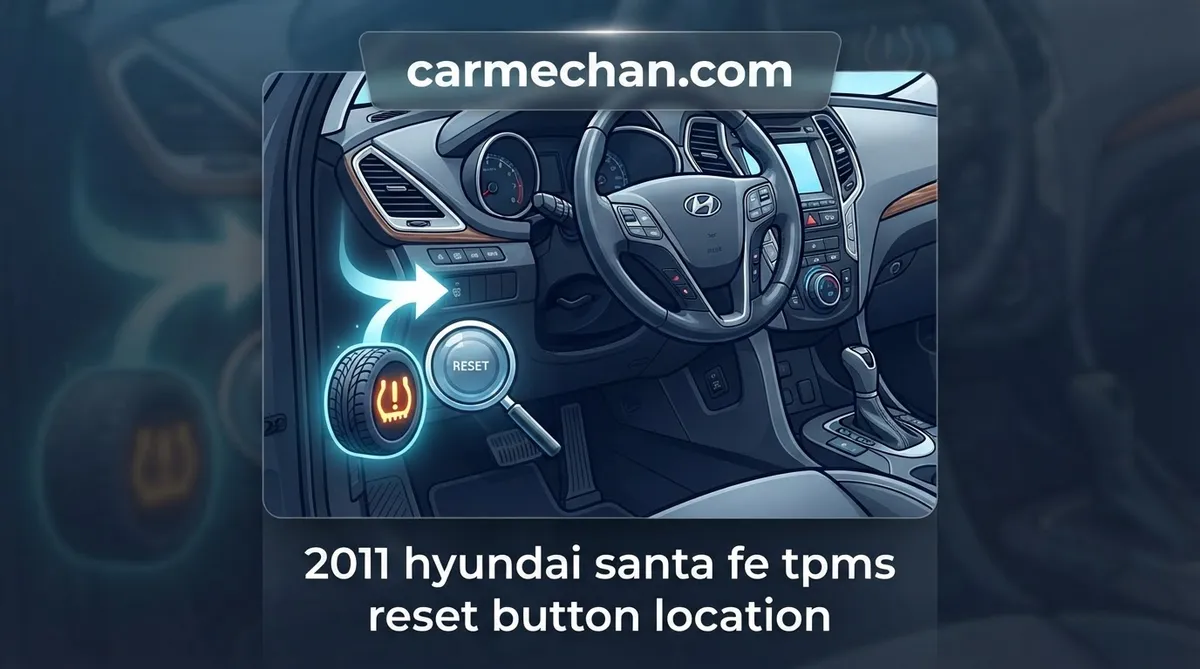
Debunking the 2011 Hyundai Santa Fe TPMS Reset Button Location Myth
Recommended Best Deal Products


📤 Share Image

Dispelling the Hidden Button Misconception
It is a common point of frustration for owners transitioning from older vehicle platforms to the 2011 Hyundai Santa Fe. Many assume that, like some Toyota or older luxury models, a physical switch or hidden button must exist to “reboot” the system. Industry data confirms that the 2011 Santa Fe does not utilize a manual reset switch. Searching for one is a futile endeavor; the vehicle’s TPMS Control Module is hard-coded to monitor sensor signals automatically.

Direct TPMS Architecture Explained
Unlike “indirect” systems that use wheel speed sensors to estimate tire rotation differences, the 2011 Santa Fe employs a Direct TPMS architecture. This involves individual electronic sensors mounted to the valve stem inside each wheel. These sensors measure the absolute pressure inside the tire and transmit a radio frequency signal to the vehicle’s receiver. Because this is a high-tech communication loop, there is no need for a manual reset; the system constantly “listens” for updates from these sensors.
Distinguishing Warning Light Logic
Understanding the dashboard light is the first step toward a fresh start with your vehicle’s electronics.
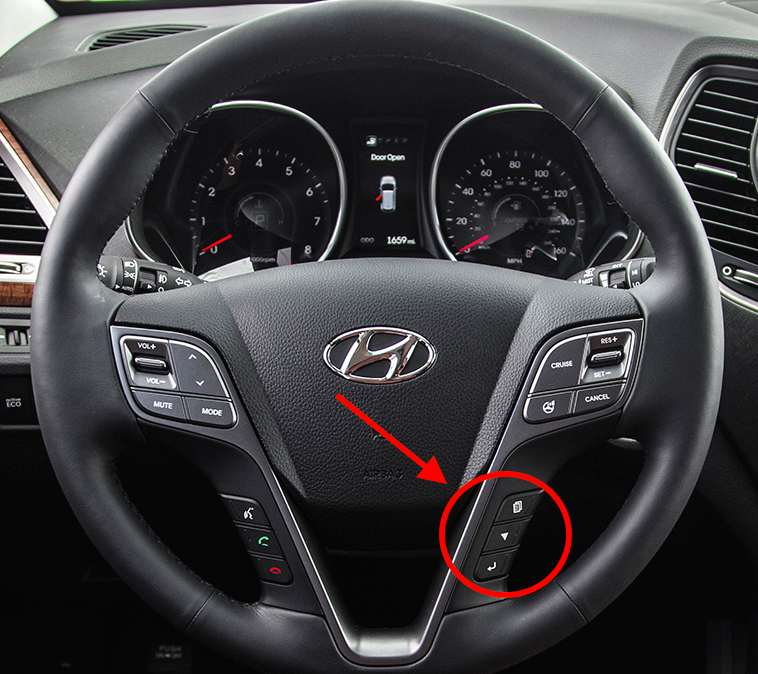
- Solid Light: This indicates that one or more tires have dropped below the recommended pressure threshold. It is a prompt to check your air.
- Flashing Light: If the light blinks for roughly 60 to 90 seconds upon starting the car and then stays solid, this signifies a system malfunction. This usually points to a dead sensor battery or a communication failure, not a simple pressure issue.
Properly Initializing the 2011 Hyundai Santa Fe TPMS System
📋
Initialization Procedure
Recommended Best Deal Products


Always check pressures when tires are cold—typically after the vehicle has sat for at least three hours or has been driven less than a mile. Use a high-quality Tire Pressure Gauge for an accurate reading.
Do not inflate tires based on the “Max PSI” printed on the tire sidewall. Open the driver’s side door and locate the factory placard on the door jamb. Inflate all four tires to this exact factory specification.
The system cannot reboot while the vehicle is stationary. Drive the Santa Fe at speeds consistently above 20-30 mph for at least 15 to 20 minutes. This allows the valve stem sensor to signal the computer that the pressure is within an acceptable range.
Technical Causes for Persistent TPMS Warnings
Even after proper inflation, the light may remain illuminated. This usually indicates a secondary system failure that prevents the system from reaching a default state.
- Failed Sensor Battery: The internal batteries in the TPMS sensors have a finite lifespan, typically 7 to 10 years. In a 2011 model, these batteries are often at the end of their service life. If the battery dies, the sensor cannot transmit data, triggering a permanent fault code.
- The “Hidden” Spare Tire: Some Santa Fe configurations include a TPMS sensor inside the full-size spare tire. If your spare is low, it may trigger the warning light even if your road tires are perfectly inflated.
- Electromagnetic Interference: Aftermarket chargers, portable power banks, or poorly shielded electronic devices plugged into the 12V outlets can interfere with the radio signal, preventing the sensors from syncing with the receiver.
- Corrosion: Living in salt-heavy climates can corrode the valve stem electronics. Once the seal is compromised, moisture can destroy the internal circuit, necessitating a replacement.
Never ignore a flashing TPMS light. While a solid light is a convenience issue, a flashing light indicates a lack of safety monitoring. If your sensors fail, you have no early warning system for a dangerous blowout or rapid deflation.

Audible — Listen Free for 30 Days
One free credit a month and thousands of titles included.
Listen Free for 30 DaysDiagnostic Matrix: TPMS Symptom and Solution
Recommended Best Deal Products


Industry Data and Professional Tools
By The Numbers
Years (Avg Sensor Life)
PSI (Common Avg Range)
When DIY measures fail to restore system function, professional intervention is required. Modern tire shops utilize specialized OBDII scan tools that can “wake up” the sensors and communicate with the Santa Fe’s ECU. These tools can identify exactly which wheel has the faulty sensor, avoiding the need for guesswork. If you have recently changed tires, the shop should have performed a sensor-to-vehicle relearn process. If they skipped this, the car may still be looking for the old sensor IDs, necessitating a fresh start via a computer-forced relearn.
Final Considerations for TPMS Maintenance
The 2011 Hyundai Santa Fe TPMS is a robust system when maintained correctly, but it is not a “set it and forget it” feature. By prioritizing proper cold-pressure inflation and understanding that a flashing light necessitates a mechanical diagnosis rather than a simple button press, you can keep your vehicle compliant and safe.
If your dashboard warning light persists after the recommended drive cycle and your tire pressure is confirmed accurate, it is time to visit a local tire service center. Ask them to perform a diagnostic scan to determine if an individual sensor has reached the end of its battery life. Attempting to force the light off without fixing the underlying sensor failure will only lead to further frustration and potential safety hazards on the road.
2011 Hyundai Santa Fe Tpms Reset Button Location: Frequently Asked Questions
Where is the TPMS reset button located in my 2011 Hyundai Santa Fe?
There is no physical TPMS reset button in a 2011 Hyundai Santa Fe. Unlike some other vehicle manufacturers that include a dashboard switch to recalibrate the system, Hyundai engineered this model to automatically detect pressure changes. Once the tires are inflated to the manufacturer-recommended PSI, the system automatically recalibrates after the vehicle is driven for several minutes at highway speeds.
Why won’t my TPMS light turn off after adding air?
The system requires a ‘drive cycle’ to register the new pressure levels. Simply filling the tires is often not enough; the vehicle must be driven at speeds exceeding 15 mph for at least 10 to 15 minutes. This allows the sensors inside the wheels to send a fresh signal to the car’s computer, confirming that the pressure is within the acceptable operating range.
What does it mean if the TPMS light is flashing?
A flashing TPMS light typically indicates a system malfunction rather than a low-pressure issue. When the light flashes for 60-90 seconds before turning solid, it usually points to a dead sensor battery, a broken transmitter, or an internal fault in the TPMS control module. In this scenario, a standard air pressure adjustment will not fix the issue; you will need a scan tool.
Do I need to reset the TPMS after a tire rotation?
No, you do not need to manually reset the system after a tire rotation. Because the TPMS sensors in the 2011 Santa Fe are ‘auto-locating,’ the system will recognize which wheel position each sensor has moved to during the drive cycle. As long as your tires are inflated to the correct pressure, the system will update its internal map automatically without any input from the driver.
Can cold weather trigger the TPMS light frequently?
Yes, significant temperature drops frequently trigger the TPMS light. Air contracts in cold weather, leading to a loss of approximately 1 PSI for every 10-degree Fahrenheit drop in ambient temperature. If your tires were already near the minimum pressure threshold, the cold will push them below the trigger point, causing the light to illuminate until you add air to reach the factory-recommended pressure levels.
Audible Premium Plus — Annual Membership
12 audiobook credits up front, plus the full Audible catalogue.
See Annual Plans