Best Years for Nissan Pathfinder: Top Models to Buy in 2026
Last Updated on August 23, 2026 by Albert Duke
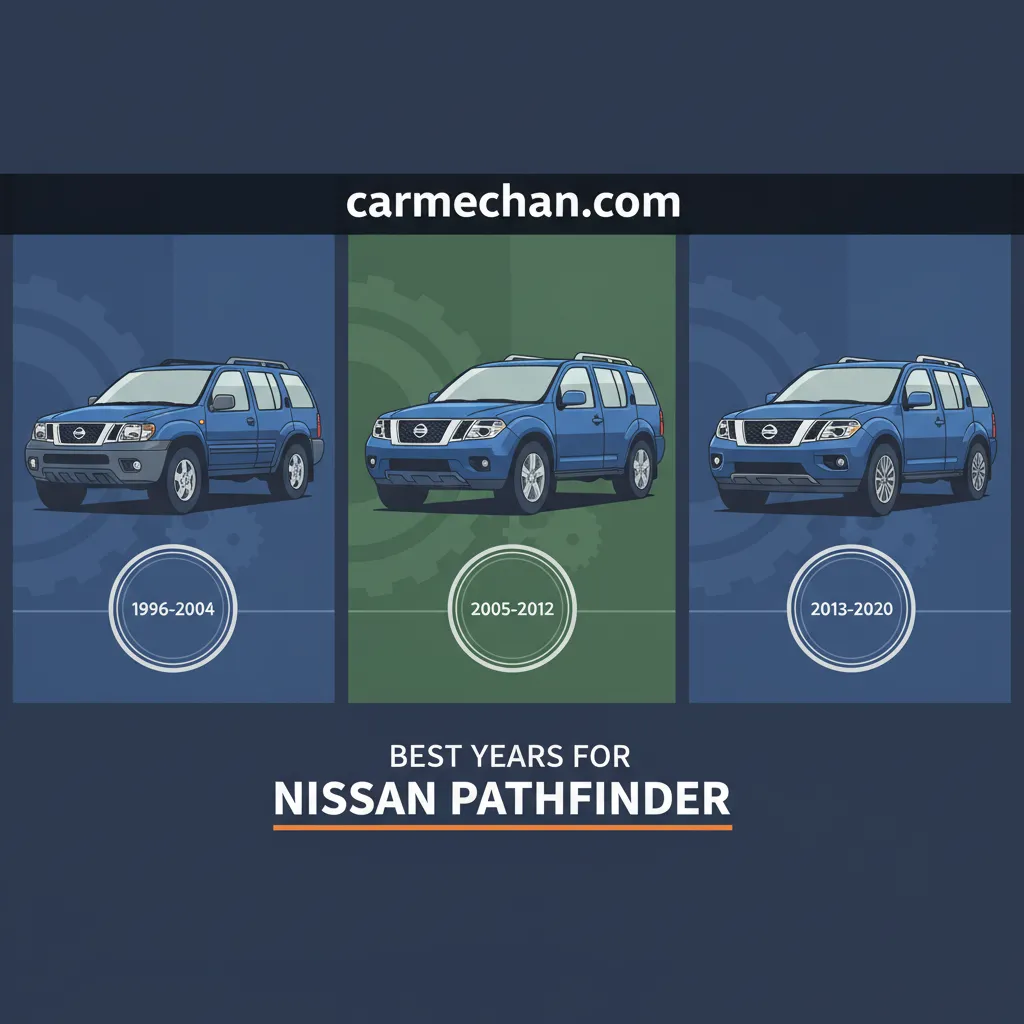
For decades, the Nissan Pathfinder has been a staple in the SUV market, evolving from a rugged, body-on-frame utility vehicle to a sophisticated family-friendly crossover. However, with multiple generations and numerous model years, discerning which Pathfinder years offer the optimal blend of reliability, features, and value can be challenging for prospective buyers. This curated guide meticulously ranks and evaluates the best years for the Nissan Pathfinder, providing essential insights into their strengths, weaknesses, and key considerations to ensure you make an informed purchase decision.


Defining the ‘Best’: Key Criteria for Evaluating Nissan Pathfinder Model Years
📤 Share Image
Identifying the “best” years for any vehicle, especially one with a diverse lineage like the Nissan Pathfinder, requires a rigorous, multi-faceted approach. Our evaluation is founded on several essential pillars, each weighted to provide a balanced and practical assessment for prospective owners. This transparent methodology ensures that our curated recommendations are backed by real-world performance metrics and long-term ownership experiences.
Reliability and Durability
At the core of vehicle ownership is reliability. We scrutinize engine longevity, particularly the renowned VQ series V6 engines, which are known to achieve 200,000+ miles with diligent maintenance. Crucial attention is paid to transmission integrity, differentiating between the robust conventional automatic transmissions and the performance evolution of the Xtronic Continuously Variable Transmissions (CVTs). We also assess chassis robustness, comparing the enduring body-on-frame construction of early generations (e.g., R51) with the more car-like unibody architecture of later models (e.g., R52). Common failure points, such as radiator-induced transmission fluid contamination (SMOD) in early R51s or premature CVT wear in early R52s, are critical considerations.
Recommended Best Deal Products


Performance and Capability
A Pathfinder’s utility is defined by its capability. We evaluate engine output, specifically horsepower and torque, as these dictate towing capacity and overall driving dynamics. For those seeking utility, towing capacity is a paramount metric, alongside off-road prowess, which is influenced by factors like robust 4×4 systems, ground clearance, and approach/departure angles. Simultaneously, we assess on-road handling characteristics, noting the significant shift in buyer expectations from rugged utility to a more refined, family-friendly SUV experience. For example, the body-on-frame R51 generation excelled in sheer robustness and off-road capability, while the unibody R52 generation prioritized on-road refinement and passenger comfort.
Safety Features and Ratings
Safety is non-negotiable. Our assessment includes the evolution of both active and passive safety technologies across generations. This encompasses fundamental features like Anti-lock Braking Systems (ABS), a comprehensive array of airbags, and traction control, extending to advanced driver-assistance systems (ADAS) such as blind-spot warning, intelligent cruise control, and automatic emergency braking found in more recent models. We critically review their impact on independent ratings from institutions like the National Highway Traffic Safety Administration (NHTSA) and the Insurance Institute for Highway Safety (IIHS).
Comfort, Technology, and Interior Quality
Modern SUV buyers prioritize comfort and technology. We examine cabin materials, infotainment systems (from basic audio units to sophisticated touchscreen interfaces with smartphone integration), climate control efficacy, and overall seating comfort. The versatility of cargo space and the ergonomic design of the interior are also critical, reflecting the Pathfinder’s evolution from a utilitarian vehicle to a primary family hauler. The shift in design philosophies from rugged simplicity to refined ergonomics is clearly evident in this progression.
Resale Value and Affordability
A practical selection also considers the financial implications. We assess market depreciation, noting that SUVs typically depreciate by approximately 50-60% after five years, but specific model years can deviate significantly. The availability of parts and the overall cost of ownership, including expected maintenance and potential repair costs, are crucial for long-term budget planning. This holistic view provides a truly comprehensive and actionable framework for prospective Nissan Pathfinder owners.
Recommended Best Deal Products


Top-Ranked for Robustness: Nissan Pathfinder Years Exhibiting Unparalleled Reliability
For buyers prioritizing sheer mechanical integrity, a traditional SUV feel, and long-term durability, certain model years of the Nissan Pathfinder stand out as unequivocally robust. These selections are popular among those who value a truck-like foundation and proven powertrain longevity.
The R51 Generation (2005-2012) and its VQ40DE Engine
The R51 generation (2005-2012) represents the pinnacle of the Pathfinder’s traditional, body-on-frame SUV era. Its hallmark is the formidable VQ40DE 4.0L V6 engine, consistently ranked among the most reliable V6 engines in the industry. When paired with the sturdy 5-speed automatic transmission, this combination formed a powertrain renowned for its capability and resilience. These models boast genuine off-road prowess and significant towing capacity, embodying the rugged utility that the Pathfinder was originally known for.
Specific Standout Years: 2007-2009 R51
Within the R51 generation, the 2007, 2008, and 2009 model years are particularly strong performers and are highly recommended. These years largely mitigated the notorious ‘Strawberry Milkshake of Death’ (SMOD) issue that plagued earlier 2005-2007 R51 models by using revised radiators, although vigilance is still advised for early 2007 models. They benefit from a well-sorted, generally robust powertrain that has earned high marks in consumer reliability reports from organizations like J.D. Power and Consumer Reports. Owners frequently praise models like the 2008 Pathfinder SE or LE for their unwavering reliability, especially when engaged in towing heavy loads or navigating challenging off-road terrain.
✅ Pros of R51 Generation
- Exceptional VQ40DE V6 engine longevity.
- Robust 5-speed automatic transmission.
- Genuine body-on-frame durability and off-road capability.
- High towing capacity.
- Lower long-term depreciation on specific models.
❌ Cons of R51 Generation
- Lower fuel economy compared to later models.
- Dated interior technology and comfort.
- Potential for frame rust (especially in salt-belt regions).
- Less refined on-road handling than unibody SUVs.
- SMOD risk on early production years (2005-early 2007).
Maintenance Best Practices and Mitigation
To preserve the longevity of these already durable vehicles, owners should adhere to specific maintenance best practices. Regular inspection for frame rust, particularly in regions exposed to road salt, is crucial. Routine checks and replacement of suspension components (bushings, ball joints) are essential given their utility-focused design. Perhaps most importantly, diligent fluid changes for the engine, transmission, differentials, and transfer case will significantly extend the life of these powertrains.
Common Issues and Mitigation for R51
While generally robust, no vehicle is without quirks. Potential issues include timing chain tensioner wear, though this is less common on later R51 models compared to earlier iterations of the VQ series in other Nissan/Infiniti vehicles. Minor electrical quirks, such as sensor failures or window motor issues, can occur but are typically inexpensive to remedy. Average repair costs for common R51 issues are typically lower than those for major CVT replacements in later models, making them a more predictable long-term investment.
When considering an R51 Pathfinder, always prioritize models with documented service records, especially those showing consistent fluid changes and proactive rust prevention. A pre-purchase inspection should specifically check the frame, transmission fluid (for color/smell), and suspension components.
Optimized for Modern Living: Pathfinder Years with Enhanced Features and Comfort
For buyers whose priorities lean towards contemporary technology, a refined driving experience, and family-friendly amenities, the later iterations of the R52 generation offer a compelling and highly recommended collection of features. These models reflect Nissan’s pivot towards a more passenger-centric crossover design.
The Post-2017 R52 Refresh (2017-2020)
The 2017-2020 R52 Nissan Pathfinder models represent a significant mid-cycle refresh that addressed many of the initial criticisms leveled against the early R52 generation. The most critical improvement was a revised powertrain, featuring a more potent 3.5L V6 engine (VQR35DE) with output bumped to 284 horsepower and 259 lb-ft of torque. Crucially, the Xtronic CVT was also thoroughly updated to enhance durability and reduce the common issues reported in earlier R52 models, significantly improving its reliability and driving feel.
Technological Advancements and Interior Refinement
These later R52 models introduced a wealth of technological advancements. Buyers benefited from the expansion of Nissan Intelligent Mobility features, which include sophisticated driver-assist systems like Intelligent Cruise Control, the highly useful Around View Monitor, and Blind Spot Warning. Interior technology saw significant upgrades with larger, more intuitive infotainment screens and seamless smartphone integration (Apple CarPlay and Android Auto became standard or available). Cabin refinement was also a focus, with improved materials, enhanced noise insulation, and the flexible EZ Flex seating system providing greater comfort and versatility for families, making them a popular choice for daily commuting and long trips.
Driving Dynamics and Fuel Efficiency
The driving experience in the post-2017 R52 models is distinctly more refined than earlier Pathfinders. The lighter unibody platform, combined with the revised powertrain, results in noticeably improved on-road handling and a more comfortable ride. Furthermore, fuel efficiency saw a considerable boost, with EPA ratings for the 2017-2020 FWD models reaching an impressive 20 MPG city / 27 MPG highway. These models consistently achieved “Good” scores in most crash test categories from the IIHS, further cementing their appeal as a safe and efficient family vehicle.
Enhanced Powertrain
Updated 3.5L V6 (284 hp) and improved Xtronic CVT for better performance and reliability.
Modern Technology Suite
Advanced driver-assist systems, larger touchscreens, and smartphone integration.
Refined Comfort & Versatility
Improved cabin materials, better noise insulation, and the flexible EZ Flex seating system.
By The Numbers (2017-2020 R52)
V6 Engine Output
Highway (FWD)
Max Towing Capacity
Value-Driven Selections: Nissan Pathfinder Years Offering Balanced Performance and Affordability
For budget-conscious buyers seeking a strong return on investment without significant compromise on performance or reliability, certain Pathfinder model years strike an excellent balance. These selections deliver utility and features at a more accessible price point, making them popular choices in the used market.
Mid-R51 Generation (e.g., 2010-2012)
The 2010-2012 R51 Pathfinder models represent a sweet spot for value. These years maintain the benefits of the robust R51 platform, including the dependable VQ40DE engine and 5-speed automatic transmission, while having largely moved past the early production issues like the SMOD radiator defect. They offer significant utility and capability at a much lower depreciation curve than newer models. A well-maintained 2011 Pathfinder S or SV model, for instance, can often be acquired for under $10,000, making it an excellent choice for a second family vehicle or a dedicated utility hauler.
Early R52 Models with Caution (2013-2014)
The initial years of the unibody R52 generation, specifically 2013 and 2014, can appear very affordable in the used market. These models introduced significantly improved fuel economy due to their lighter construction and CVT, but this affordability comes with a critical caveat. The first iteration of the Xtronic CVT in these years had known reliability concerns, including premature wear and shuddering. While offering a smoother ride and better MPG than the R51, buyers must prioritize a pre-purchase inspection with an emphasis on CVT health and demand comprehensive maintenance records to ensure the transmission has been serviced regularly, or ideally, replaced under warranty.
Post-SMOD R51 Models (2008-2012)
Expanding on the mid-R51 recommendation, any 2008-2012 R51 model that has demonstrably resolved the SMOD issue (either through being a later production model or having a documented radiator replacement) offers a compelling blend of ruggedness, traditional SUV capability, and value. Their straightforward mechanicals generally translate to lower average maintenance costs compared to the more complex, potentially costly CVT repairs of early R52 models.
Market Analysis and Price Trends
When seeking a value-driven selection, it’s essential to research typical pricing using resources like Edmunds and Kelley Blue Book. Average transaction prices for 10-year-old Pathfinders can vary widely based on mileage, condition, and trim level. Generally, a 2010 R51 will command a significantly lower price than a 2015 R52, but factoring in potential CVT service for the latter can quickly erode any initial savings. Savvy buyers will look for models with good service history rather than just the lowest sticker price, as this often leads to the best long-term value.
For early R52 models (2013-2014), insist on a detailed inspection of the CVT fluid and its operating temperature during a test drive. Any shuddering, slipping, or unusually high temperatures are red flags that could indicate an imminent, costly transmission failure.
Model Years to Approach with Caution: Addressing Must-Know Concerns and Recalls
As an expert, it is essential to provide transparency regarding specific Nissan Pathfinder model years that have experienced notable mechanical issues or widespread problems. Understanding these must-know concerns is critical for enabling informed decision-making and avoiding potentially costly pitfalls for prospective buyers. This collection of insights will guide you through the problematic years.
Do not underestimate the potential severity and cost of the SMOD issue in early R51 models or the CVT failures in early R52 models. These are not minor repairs but often lead to catastrophic and expensive drivetrain replacements. Thorough pre-purchase inspections and verification of all maintenance and repair history are absolutely non-negotiable for these years.
Early R51 ‘SMOD’ Years (2005-2007)
The most infamous issue associated with the Pathfinder is the ‘Strawberry Milkshake of Death’ (SMOD), which primarily affected 2005-2007 R51 models. This catastrophic failure occurs when internal coolant lines within the factory radiator corrode, allowing engine coolant to mix with the transmission fluid. This emulsified mixture rapidly degrades the transmission, leading to total failure, often at mileages between 70,000 and 120,000 miles. Repair costs can easily exceed $4,000 to $6,000. It is absolutely essential to verify if the radiator has been replaced with an updated aftermarket unit, or if the transmission has already been rebuilt or replaced, with documented proof. Visually inspect for any reddish-brown stains around the radiator seams or discolored transmission fluid.
Early R52 CVT Issues (2013-2016)
The initial rollout of the unibody R52 Pathfinder, particularly the 2013-2016 models, was plagued by widespread complaints regarding the Xtronic Continuously Variable Transmission (CVT). Owners frequently reported issues such as shuddering, overheating, and complete transmission failures, sometimes at relatively low mileages (e.g., a specific instance of a 2014 Pathfinder experiencing CVT failure at 80,000 miles, requiring a $4,000+ repair). While Nissan did offer extended warranty programs and even faced class-action lawsuits regarding these CVTs, the underlying issues make these years a high-risk proposition for used car buyers. A full service history documenting regular CVT fluid changes is paramount, but even then, these transmissions can be a ticking time bomb.
Pre-2000 R50 Models
While earlier R50 models (1996-2004) offered robust V6 engines, their age often brings a new set of concerns. Pre-2000 R50 Pathfinders frequently exhibit significant frame rust, exhaust manifold cracks, and general wear and tear on suspension and steering components. While mechanically simple, the sheer age means that restoration or extensive repairs can quickly outweigh the vehicle’s market value. Unless you are an enthusiast seeking a project or a very specific utility vehicle, these older models are generally not recommended for the average buyer.
Specific Recalls and Technical Service Bulletins (TSBs)
Regardless of the model year, it is an essential due diligence step to always check the vehicle’s VIN for any outstanding recalls. Nissan has issued various recalls over the years, including those related to brake fluid leaks, fuel pump issues, and airbag malfunctions (e.g., specific NHTSA recall numbers affecting various components). Additionally, reviewing Technical Service Bulletins (TSBs), which outline known recurring problems and recommended fixes from the manufacturer, can provide crucial insight into potential headaches. Failing to address these issues can compromise safety and lead to unexpected repair costs, turning an otherwise good deal into a significant burden.
Conclusion: Your Informed Pathfinder Selection
Navigating the diverse history of the Nissan Pathfinder requires a clear understanding of its generational shifts and specific model year nuances. The R51 generation, particularly 2007-2009, offers robust reliability and traditional SUV capability, making it a stellar choice for durability. Conversely, the post-2017 R52 models provide enhanced comfort, modern technology, and a significantly improved CVT performance, catering to families seeking contemporary amenities. Careful consideration, however, is advised for early R51 (2005-2007) due to the SMOD risk, and early R52 (2013-2016) due to initial CVT issues, necessitating thorough inspections.
Armed with this comprehensive analysis, you are now equipped to navigate the used Nissan Pathfinder market with confidence. Prioritize a pre-purchase inspection by a trusted mechanic and rigorously verify all service history and recall resolutions before committing to any model year. Your diligence will ensure you select a Pathfinder that perfectly aligns with your needs and expectations, providing years of reliable service.
Frequently Asked Questions
Which Nissan Pathfinder generation is considered the most reliable?
The R51 generation (2005-2012), particularly models from 2007-2009, is widely regarded as the most reliable. These years typically feature the robust VQ40DE V6 engine paired with a conventional 5-speed automatic transmission, known for its longevity and fewer major mechanical issues compared to subsequent generations’ early CVTs. Proper maintenance is key to their impressive durability.
Are Nissan Pathfinder CVTs reliable?
The reliability of Nissan Pathfinder’s Continuously Variable Transmissions (CVTs) varies significantly by model year. Early R52 generation CVTs (2013-2016) faced widespread issues with overheating and premature failure. However, Nissan substantially improved the Xtronic CVT in the 2017 R52 refresh and subsequent models, leading to much better reliability. Always check service records for CVT fluid changes.
What is the ‘Strawberry Milkshake of Death’ (SMOD) in Pathfinders?
The ‘Strawberry Milkshake of Death’ (SMOD) refers to a notorious issue in 2005-2007 R51 Pathfinders where the automatic transmission fluid cooler integrated within the radiator would corrode. This allowed engine coolant to mix with transmission fluid, creating a ‘milkshake-like’ sludge that rapidly destroyed the transmission. It’s a critical reason to approach these early R51 years with caution, ensuring the radiator has been replaced.
What common issues should I look for when buying a used Pathfinder?
When buying a used Pathfinder, essential checks include inspecting for frame rust (especially on R51 models), evaluating the health of the CVT transmission (for R52 models), checking the suspension for worn components, and listening for any unusual engine noises like timing chain whine on VQ engines. Always verify a complete service history to understand past maintenance.
Which Pathfinder years offer the best fuel efficiency?
The unibody R52 generation (2013-present) generally offers the best fuel efficiency, primarily due to its lighter construction and the use of the Xtronic CVT. Models from 2017 onwards, after the engine and CVT updates, often achieve EPA ratings of around 20 MPG city / 27 MPG highway (FWD), representing a significant improvement over the older, heavier R51 generation.