Which Honda HR-V Years to Avoid? Top Reliability Concerns
Last Updated on September 1, 2026 by Ryan
The first generation Honda HR-V, particularly 2016-2018 models, often faces significant reliability concerns, especially with its Continuously Variable Transmission (CVT) and air conditioning systems. Buyers should exercise extreme caution and conduct thorough pre-purchase inspections for these years, while newer HR-V generations generally offer improved reliability.
🎯 Key Takeaways


- Avoid 2016-2018 Honda HR-V models due to common issues.
- Inspect CVT and AC systems thoroughly on first-gen HR-Vs.
- Prioritize 2019+ models for improved reliability and fewer problems.
- Check service history for transmission fluid changes and AC repairs.
- Get a pre-purchase inspection by a trusted mechanic.
When considering a used Honda HR-V, certain model years stand out for their recurring mechanical and reliability issues. Specifically, the earliest iterations of the first generation, primarily the 2016, 2017, and 2018 model years, have demonstrated widespread problems that potential buyers should be acutely aware of. While the HR-V generally holds a reputation for Honda reliability, these specific years present notable exceptions, often leading to expensive repairs and owner frustration.

Understanding these problematic years is crucial to making an informed purchase and avoiding significant post-purchase headaches. Ignoring these known issues could lead you into owning a vehicle with a higher risk of costly transmission repairs or a failing air conditioning system, problems that can quickly negate any initial savings on a used model. Your goal should be to identify a reliable, low-maintenance vehicle, and for the HR-V, this means being selective about the production year.
Identifying Problematic Honda HR-V Model Years

If you’re in the market for a used Honda HR-V, your primary focus should be on exercising caution around the initial production years. The first generation of the HR-V, launched in North America for the 2016 model year, experienced a somewhat rocky start regarding reliability. Data from owner complaints and various automotive reliability surveys consistently highlight specific years that fall short of Honda’s usual high standards.

The First Generation’s Rocky Start: 2016-2018
The 2016, 2017, and 2018 Honda HR-V models are the most frequently cited for reliability concerns. These years share common mechanical platforms and components that proved to be points of failure for many owners. The most significant and costly issues reported during this period generally revolve around the Continuously Variable Transmission (CVT) and the air conditioning system.
- 2016 Honda HR-V: Often considered the riskiest year due to it being the first production year, inheriting all initial design flaws. Numerous complaints about CVT shuddering, premature AC failure, and excessive road noise.
- 2017 Honda HR-V: Saw a continuation of many 2016 issues, particularly with the CVT and AC systems. Honda did not implement significant revisions to these problematic components in the immediate follow-up year.
- 2018 Honda HR-V: While slightly improved in some aspects, the core reliability concerns, especially with the CVT, persisted. Owners continued to report similar transmission behaviors and AC failures as previous years.
These early models, while attractive in price, carry a higher probability of requiring significant repairs. You should approach them with a detailed pre-purchase inspection from an independent mechanic, specifically requesting scrutiny of the transmission and AC unit.
Specific Year Outliers: 2019 AC Concerns
While the 2016-2018 models bear the brunt of the reliability warnings, the 2019 Honda HR-V also warrants a specific mention, primarily due to continued and widespread complaints regarding the air conditioning system. Although some CVT issues may have begun to subside by this year due to minor revisions or better manufacturing processes, the AC system remained a significant sore point for many owners.
- 2019 Honda HR-V: Experienced a facelift and some minor updates. However, the AC system continued to be a significant reliability concern, with reports of compressors failing prematurely and high repair costs. This issue demonstrates that the AC problem was not solely confined to the very first production years but extended further into the first generation’s lifespan.
When evaluating a 2019 HR-V, prioritize a thorough inspection of the AC system’s performance and history. A functioning AC is essential for comfort and resale value, and these systems in the early HR-Vs were not as robust as expected from a Honda vehicle.
Common Reliability Issues in Early HR-V Generations


The reliability concerns in the early Honda HR-V models are not isolated incidents but rather widespread patterns reported by a significant portion of owners. These issues often lead to substantial repair bills, directly impacting the long-term value and ownership experience of these vehicles. Understanding the specifics of these problems will help you identify symptoms during a test drive or inspection.
CVT Transmission Woes (2016-2018)
The Continuously Variable Transmission (CVT) in the 2016-2018 HR-V models is arguably the most critical reliability concern. Many owners have reported a range of issues, from minor annoyances to complete transmission failures, often well before expected mileage.
- Symptoms:
- Shuddering or Vibrations: Especially noticeable during acceleration from a stop or at lower speeds. This is often described as feeling like driving over rumble strips.
- Jerking or Hesitation: The transmission might feel indecisive or “lag” when accelerating, particularly uphill or merging onto highways.
- Whining or Grinding Noises: Unusual sounds coming from the transmission area, indicative of internal wear.
- Loss of Power: The vehicle may struggle to accelerate, feeling sluggish despite increased engine RPM.
- Check Engine Light: Transmission-related fault codes can trigger this warning.
- Common Failure Points: The internal components of the CVT, including the torque converter and belt/pulley system, are prone to premature wear. Honda issued a service bulletin for some of these issues, often recommending a specific transmission fluid flush and software update, but for many, it was a temporary fix or too late.
- Potential Repair Costs: These can be significant. A specialized CVT fluid flush and software update might cost a few hundred dollars. However, if internal damage is present, repairs can range from $2,000 to $4,000 for a rebuild, or upwards of $5,000 to $7,000 for a full transmission replacement, making it one of the most expensive potential repairs for these years.
The prevalence of these CVT issues is high enough that it should be a primary consideration when evaluating these specific model years. A pre-purchase inspection should specifically include a thorough review of the transmission’s health, including fluid condition and a comprehensive test drive.
Air Conditioning System Failures (2016-2019)
Another widespread and frustrating issue across the early HR-V generation is the premature failure of the air conditioning system. This problem is not only inconvenient but also costly to repair, affecting driver and passenger comfort.
- Symptoms:
- Warm Air from Vents: The most obvious sign, where the AC simply stops blowing cold air.
- Clicking or Grinding Noises: Sounds from the engine bay when the AC is engaged, often indicating a failing compressor.
- Intermittent Cooling: The AC might work some days and not others, or only blow cold air for short periods.
- Refrigerant Leaks: Visible oily residue near AC components, or a rapid loss of cooling efficiency after a recharge.
- Common Failure Points: The primary culprits are often the AC compressor, condenser, and associated relays. The compressor, in particular, seems prone to early failure across these model years, much to the frustration of owners.
- Potential Repair Costs: Repairing a failing AC system can be expensive. Replacing a compressor, along with necessary system evacuation and recharge, can cost anywhere from $800 to $1,500, depending on the parts needed and labor rates. If other components like the condenser or evaporator also need replacement, costs can escalate further.
Given the frequency of these AC complaints, particularly spanning the 2016-2019 models, you should test the AC thoroughly during your inspection. Ensure it blows consistently cold air for an extended period, even during idling, as part of your evaluation.
Comparing HR-V Generations: Which Years Are More Reliable?
Understanding how the HR-V has evolved through its generations can offer valuable insights into its reliability trajectory. While no car is perfect, certain periods tend to stand out for better or worse.
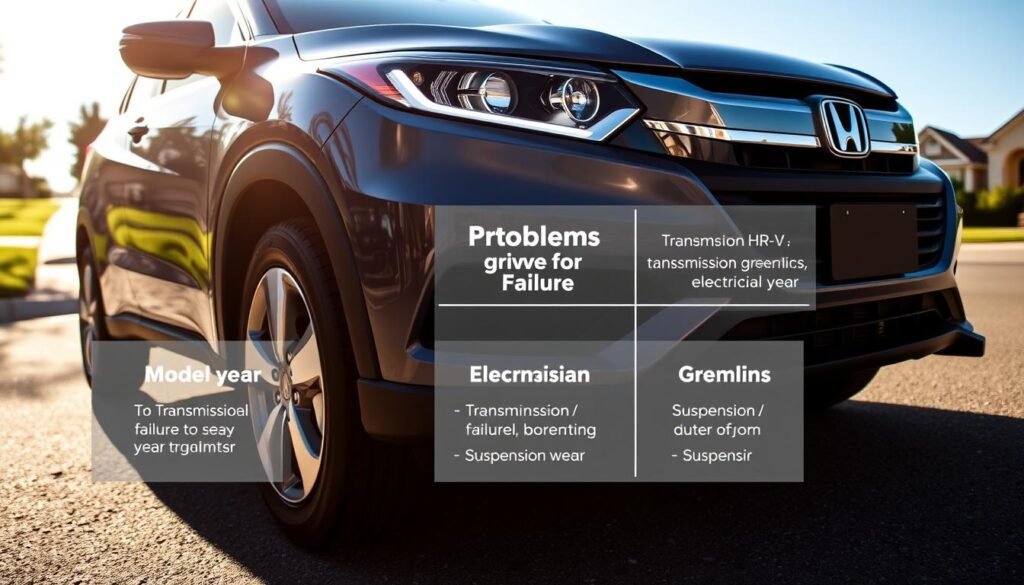
First Generation (2016-2022): Spotting the Trends
The first generation of the Honda HR-V, introduced to the North American market for the 2016 model year, had a bit of a bumpy start. Owners of the earlier models, particularly 2016-2018, often reported more concerns related to the CVT transmission, air conditioning systems, and infotainment glitches.
- 2016-2018: These years show a higher concentration of the issues discussed previously. While many vehicles performed perfectly, the statistical likelihood of encountering a problematic CVT or AC system was notably higher.
- 2019-2022: With a refresh in 2019, Honda introduced some improvements. While not entirely free of issues, these later first-generation models generally exhibit better overall reliability. The infotainment system saw updates, and some anecdotal evidence suggests a reduction in CVT-related complaints compared to the initial launch years. If you’re considering a first-gen HR-V, aiming for a 2019 or newer model can be a smarter move.
These later models often represent a sweet spot, offering modern features without the early production kinks.
Second Generation (2023+): Early Impressions
The second generation HR-V arrived for the 2023 model year, bringing a complete redesign, a more robust platform shared with the Civic, and a new engine. As this generation is relatively new, long-term reliability data is still accumulating.
- Initial Feedback: Early owner reviews generally praise the improved ride quality, refined interior, and better handling. The new 2.0-liter engine, borrowed from the Civic, is a proven unit, which bodes well for its longevity.
- What to Watch For: As with any newly designed vehicle, there’s always a potential for “new model year” issues to emerge as more cars hit the road and accumulate mileage. Currently, no widespread significant issues have been reported, but it’s wise to keep an eye on owner forums and NHTSA complaints as this generation matures.
For those prioritizing the latest technology and improved driving dynamics, a second-generation HR-V is an attractive option, but do remember it’s still establishing its long-term reliability track record.
Smart Buyer’s Guide: Inspecting a Used Honda HR-V
Once you’ve narrowed down your potential HR-V years, the next crucial step is a thorough inspection. A careful eye and a professional opinion can save you from significant headaches down the road.
Key Areas to Check During a Test Drive
A test drive isn’t just about comfort; it’s your chance to actively listen and feel for potential problems. Pay close attention to these critical components:
- Transmission Performance: During acceleration, especially from a stop and at varying speeds, listen for any whining, grinding, or shuddering from the CVT. The acceleration should feel smooth and linear, without excessive hesitation or jerking. Test both forward and reverse gears.
- Air Conditioning: Turn on the AC to its coldest setting immediately. Feel for strong, consistently cold air from all vents. Listen for any unusual noises (clunking, hissing) when the compressor engages. Test the defrost function too.
- Infotainment System: Interact with the touchscreen. Is it responsive? Do all buttons work? Connect your phone via Bluetooth or USB to check connectivity. Verify the navigation (if equipped) and radio functions. Lagging or unresponsive systems can be costly to repair.
- General Driving Feel: Listen for any abnormal suspension noises over bumps, check the steering for looseness or pulling, and ensure the brakes feel firm and stop smoothly without pulsation or excessive noise.
The Importance of a Pre-Purchase Inspection (PPI)
Even if you’re not a mechanic, you can spot obvious issues. But for hidden problems, a professional PPI is non-negotiable. This is the single best investment you can make when buying a used car.
- What a PPI Covers: A trusted, independent mechanic will put the HR-V on a lift and perform a comprehensive check. This includes inspecting the undercarriage for rust or damage, checking fluid levels and condition (engine oil, transmission fluid, coolant), examining brake components, tires, suspension, and exhaust. They will also scan for diagnostic trouble codes (DTCs) that might indicate underlying engine or transmission issues not visible on the dashboard.
- Peace of Mind: A PPI can uncover issues like a leaking transmission, a failing AC compressor, or suspension problems that might not be obvious during a quick test drive. If serious issues are found, it gives you strong leverage to negotiate the price down or walk away from a potentially problematic purchase. Always get a PPI from a mechanic you trust, not one recommended by the seller.
Conclusion
While the Honda HR-V generally holds a good reputation for reliability, knowing which years to approach with caution can make all the difference. Our deep dive reveals that 2016-2018 models, being the earliest first-generation vehicles, tend to have more reported issues, particularly with the CVT transmission and air conditioning systems. The later first-generation models (2019-2022) show improvement, offering a more refined and generally reliable experience.
For any used HR-V, your best defense is a strong offense: conduct a thorough test drive, paying close attention to the transmission and AC, and critically, invest in a professional pre-purchase inspection (PPI). This small investment can save you from significant repair costs and ensure your HR-V ownership is a smooth and enjoyable journey. Empower yourself with knowledge, and you’ll confidently drive home in a reliable Honda HR-V.
❓ Frequently Asked Questions
What are the primary concerns regarding the CVT in early Honda HR-V models?
Early HR-V models, especially 2016-2018, can experience CVT shuddering, delayed engagement, or complete failure. This often stems from fluid degradation or internal component wear, leading to costly repairs if not addressed proactively and regularly.
Besides the CVT, what other significant problems do owners report for ‘years to avoid’?
Beyond CVT issues, common complaints for 2016-2018 HR-Vs include premature air conditioning system failures, often requiring expensive compressor or condenser replacements. There are also reports of minor electrical glitches and suspension noise.
How can I identify a Honda HR-V with potential CVT issues during a test drive?
During a test drive, pay close attention to any hesitation, jerking, or shuddering during acceleration, especially from a stop or at low speeds. Listen for unusual noises and ensure smooth, consistent power delivery without excessive RPM fluctuations.
Are there any specific model years within the first generation (2016-2022) that are considered safer bets?
While the entire first generation can have some shared characteristics, reliability generally improved after the 2018 model year, with 2019+ models showing fewer widespread issues. The second generation (2023 onwards) represents a significant redesign with better reliability projections.
What role does maintenance history play when evaluating a potentially problematic HR-V year?
A comprehensive maintenance history is crucial, particularly verifying regular CVT fluid changes at recommended intervals, ideally every 30,000 miles, and records of any AC system services. Lack of such records significantly increases the risk for older HR-Vs.
What should be my strategy if I still want to buy a Honda HR-V from a ‘year to avoid’?
If you’re set on a specific year with known issues, allocate a budget for potential repairs and insist on a comprehensive pre-purchase inspection by an independent mechanic specializing in Hondas. Ensure all critical systems, especially the CVT and AC, are thoroughly evaluated.