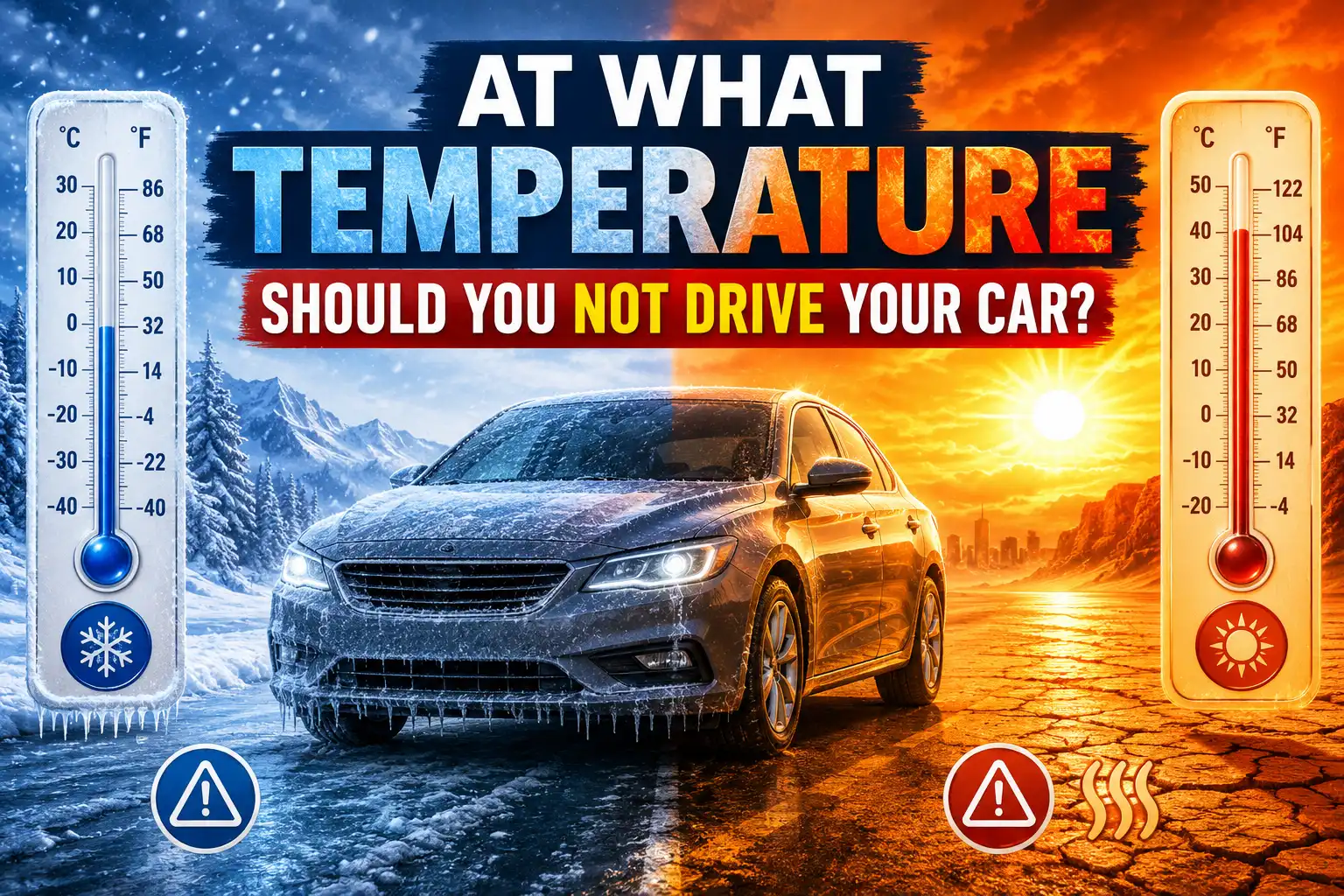
At What Temperature Should You Not Drive Your Car
Last Updated on July 24, 2026 by Albert Duke


There’s no single number that answers this honestly. It depends on what’s actually at risk: the road surface under your tires, your car’s own mechanical systems, or you and anyone else inside the vehicle. Cold road danger from black ice generally starts around 32°F and below.
Cold weather starts putting your actual vehicle at mechanical risk somewhere between 0°F and -20°F. Heat becomes dangerous for your engine past roughly 225°F under the hood, and for people inside a parked car at ambient temperatures as mild as 70°F.
This guide breaks down all three thresholds separately, since bundling them into one scary number doesn’t actually tell you what you need to know before you get behind the wheel.
When Cold Temperatures Make the Road Dangerous, Not Just Your Car
| Risk Type | Temperature Range | What Happens |
|---|---|---|
| Black ice road risk | 28°F to 32°F | Moisture freezes on pavement, often invisible |
| Road salt loses effectiveness | 15°F or lower | Treated roads can still be hazardous |
| Battery starting strain | Below 32°F | Harder starts, weaker output |
| Vehicle mechanical risk rises | Below 0°F | Problems become measurably more likely |
| Avoid driving unless necessary | -20°F or colder | General safety guideline for most vehicles |
| Engine overheating risk | 225°F to 230°F under hood | Past boiling point, engine damage risk |
| Dangerous for people in vehicle | 95°F to 130°F ambient | Risk varies with humidity |
| Parked car interior heat | 70°F ambient or higher | Dangerous interior heat within 30 minutes |
Black ice is the most dangerous form of cold-weather road risk, and it has a specific temperature window. It forms between 28°F and 32°F, when moisture from rain, fog, melting snow, or high humidity freezes on contact with cold pavement. Because it’s thin and nearly transparent, it often looks like ordinary wet pavement, which is exactly what makes it so dangerous.
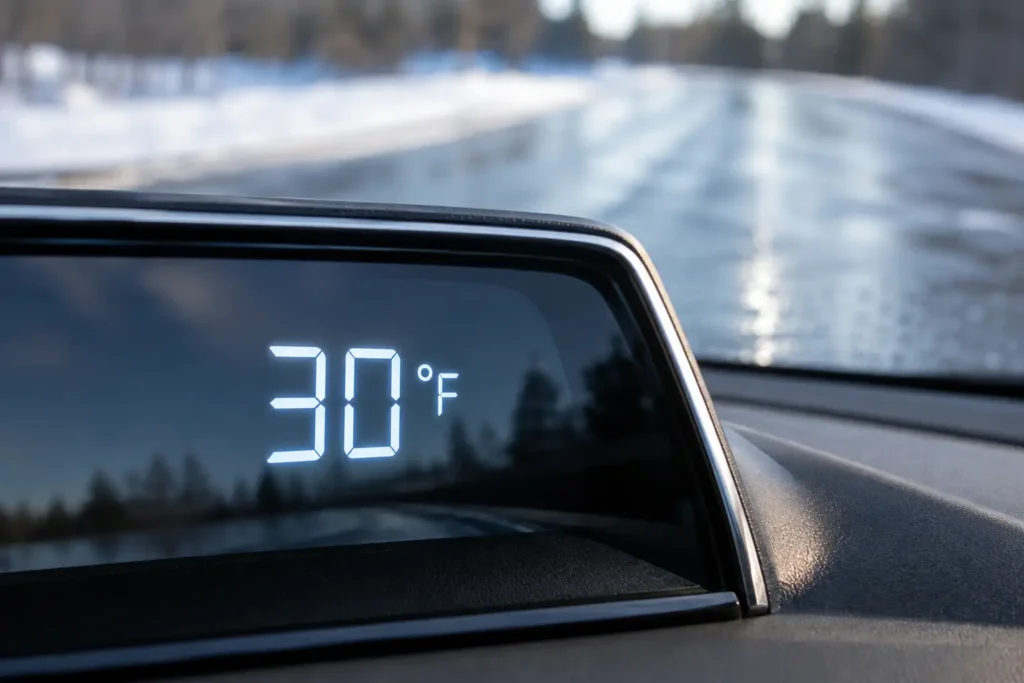
AAA’s general guidance is direct: if the temperature is at or below freezing and conditions are icy, try to avoid driving if you can. If you have to be on the road, watch for danger zones specifically, bridges and overpasses freeze before the rest of the road does, along with shaded stretches that don’t get direct sunlight.
One threshold worth knowing that most sources skip: road salt treatment becomes less effective once temperatures drop to about 15°F or lower, meaning a “treated” road can still be more hazardous than usual in a deep cold snap.
When Cold Temperatures Put Your Car Itself at Risk
Separately from road conditions, extreme cold can put strain on your vehicle’s own systems.
- Below 32°F, your battery has to work harder, which can cause trouble starting the car or running the heater.
- Below 0°F, mechanical problems across most vehicles become measurably more likely, from stiffer fluids to reduced battery output.
- At -20°F or colder, it’s generally best to avoid driving unless absolutely necessary, according to cold-weather auto safety guidance.
This is a general guideline, not a hard engineering cutoff. A well-maintained, newer vehicle with a healthy battery will handle cold noticeably better than an older vehicle or one with existing battery or fluid issues.
When Heat Makes It Unsafe to Drive or Be in Your Car
Heat risk splits into two genuinely different problems: what happens to your engine, and what happens to anyone sitting in the car.
For your engine: most vehicles run normally between 195°F and 220°F. Once engine temperatures climb past roughly 225°F to 230°F, you’re at or past the boiling point and the engine will overheat, risking damage to internal components that depend on properly functioning lubrication and cooling.
For people in the vehicle: ambient temperatures between 95°F and 130°F, depending on humidity, become genuinely dangerous for anyone inside for an extended period, especially if the AC isn’t working or the engine itself is struggling.
And this doesn’t require triple-digit heat to turn deadly for a parked car: interior temperatures can climb to dangerous levels in under 30 minutes even on a mild 70°F day, and can reach around 140°F after just an hour on a 95°F day. Never leave a child or pet in a parked car, regardless of how quick the errand is supposed to be.
Practical driving guidance for extreme heat: avoid more than about two hours of continuous driving on the hottest days, and shift trips to early morning or evening when temperatures are lower.
What to Do If You Have to Drive in Extreme Temperatures Anyway
Sometimes driving isn’t optional. Here’s what actually helps in each direction.
In extreme cold:
- Have your battery health checked before winter hits; a battery already on its way out is far more likely to fail once temperatures drop, and our best car battery for cold weather guide covers what to look for.
- Keep your gas tank at least half full to help avoid condensation-related fuel line issues in freezing conditions.
- Give the car one to two minutes to warm up if needed, modern engines don’t need a long idle warm-up the way older carbureted engines did.
In extreme heat:
- Check coolant levels, hoses, and belts before a heat wave hits, since these are the components most likely to fail under sustained high engine temperatures. If you’re already dealing with unexplained fluid loss, our how to find a coolant leak guide walks through the process.
- If you see steam or smoke, pull over immediately and shut off the engine.
- If your temperature warning light comes on and you can’t pull over right away, turning the heater on can actually help pull heat away from the engine temporarily.
Frequently Asked Questions
What temperature is too cold to start a car?
There’s no single hard cutoff, but battery strain becomes noticeable below 32°F, and starting problems become significantly more common once temperatures drop below 0°F, especially with an aging battery.
Is it safe to drive in 100 degree weather?
Generally yes for a well-maintained vehicle, but ambient ambient temperatures in the 95°F to 130°F range can become dangerous for people inside the vehicle over extended periods, and your engine is at higher risk of overheating under sustained high-load driving in that heat.
At what temperature does black ice form?
Black ice typically forms between 28°F and 32°F, when moisture from rain, fog, or melting snow freezes on contact with pavement that’s already at or near freezing.
How hot does a parked car get inside?
Dangerously hot, fast. Interior temperatures can reach unsafe levels in under 30 minutes even on a 70°F day, and around 140°F after an hour on a 95°F day. Never leave a child or pet inside a parked car, even briefly.