How To Take A Battery Out Of A Car Expert Guide 2026
Last Updated on September 1, 2026 by Ryan
Removing a car battery involves a precise sequence of steps focusing on safety and proper tools. Always disconnect the negative terminal first, then the positive, to prevent electrical shorts and personal injury.
To take a battery out of a car safely, you must follow a specific sequence of steps involving preparation, proper tools, and careful disconnection. Removing a car battery is a fundamental maintenance task that any car owner can perform with the right knowledge and precautions.
Our detailed guide for 2026 ensures you have the most up-to-date, practical information for this essential job.
Ignoring proper procedures can lead to serious injury or damage to your vehicle’s electrical system. We emphasize safety and meticulous execution throughout this process, making sure you feel confident and capable. Before starting, we will outline the essential safety measures and equipment you will need for this task.
Key Takeaways


- Safety first: Wear protection, ensure ventilation.
- Gather correct tools beforehand.
- Disconnect negative terminal before positive.
- Secure battery to prevent movement.
- Properly dispose of old batteries.
What Safety Precautions Matter Before Removal?



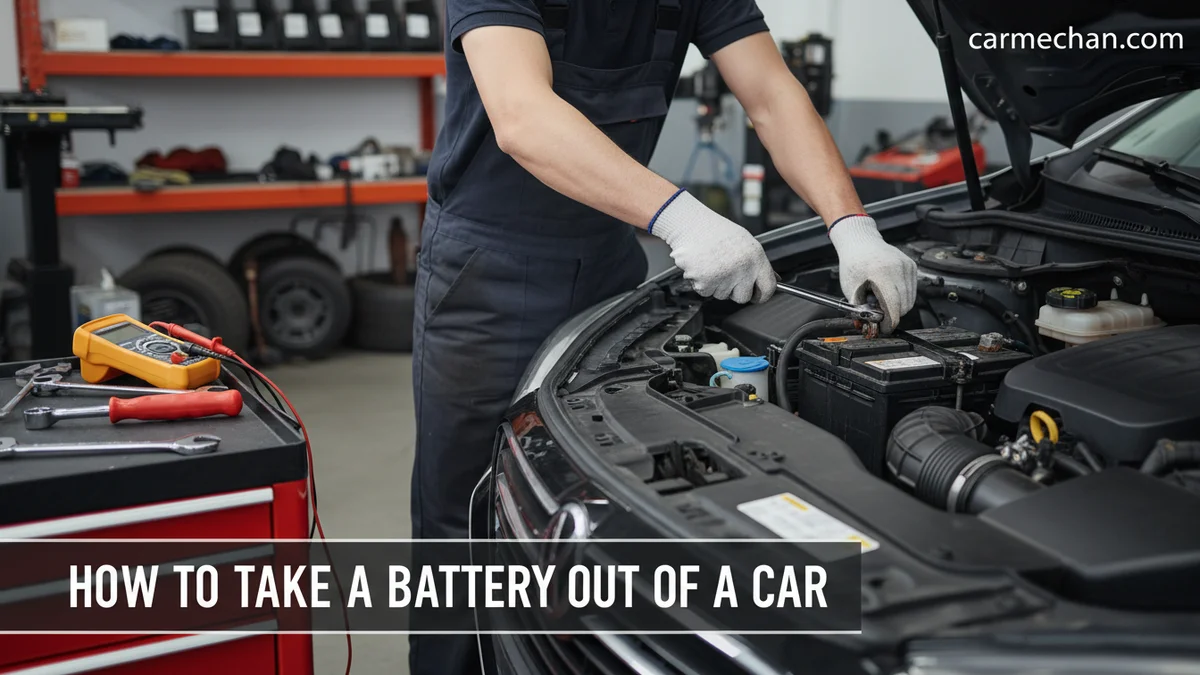
Before you begin, certain safety precautions are not merely suggestions; they are vital to prevent injury and damage. Battery acid is corrosive, and a car battery holds enough charge to cause severe electrical burns or ignite flammable materials. Always prioritize your personal protection and vehicle preparation for a safe working environment.

Wear Eye Protection
Always wear safety glasses or goggles. Battery acid can splash or vent gases, which are extremely harmful to your eyes. This simple step protects your vision from permanent damage.
Ensure Hand Safety
Heavy-duty work gloves are crucial. They protect your hands from battery acid, sharp edges, and electrical shock. Choose gloves that offer good grip and chemical resistance.
Ventilation Prevents Risks
Work in a well-ventilated area. Batteries can release hydrogen gas, which is highly flammable and explosive. Good airflow disperses these gases, reducing explosion risks significantly.
Avoid Metal Contact
Remove all metallic jewelry like rings, watches, and bracelets. These items can conduct electricity, potentially causing a short circuit, severe burns, or damaging the battery itself if they bridge terminals.
Turn Off All Power
Ensure your vehicle is completely off and the parking brake is engaged. Remove the key from the ignition. This prevents accidental starts and ensures no residual power draws on the battery during removal.
Once safety is addressed, having the right tools on hand will make the entire process smoother and more efficient.
Which Essential Tools Do You Need?


Having the correct tools readily available streamlines the battery removal process and prevents frustration. Gathering these items before you start ensures a seamless and safe operation.
Wrench Sizes Vary
You will need a wrench or a socket set. Common sizes for battery terminals are 10mm, 13mm, or 1/2 inch. Some battery hold-downs may require a larger wrench or socket. Always ensure your wrench is insulated to prevent accidental contact with other metal parts.
Battery Terminal Cleaner
A wire brush or a specialized battery terminal cleaning tool helps remove corrosion. Cleaning the terminals and posts ensures better electrical contact and prolongs battery life.
Cable Tie Is Useful
Keep a cable tie or bungee cord handy. This can be used to secure the disconnected cables away from the battery terminals, preventing accidental reconnection or contact with the car’s body.
Protective Gloves Help
As mentioned in our safety precautions, heavy-duty work gloves are essential. They protect your hands from battery acid and the rough surfaces of the battery tray or terminals.
Battery Carrier Aids
A battery carrier or strap makes lifting the heavy battery safer and easier. Car batteries are surprisingly heavy, and a proper carrier reduces strain and the risk of dropping it. For larger batteries, two people may be required.
With your safety gear on and tools ready, we can now proceed to the step-by-step procedure for removing your car battery.
How to Remove a Car Battery in 7 Steps
Removing a car battery correctly involves a methodical approach to ensure both your safety and the vehicle’s electrical system. Follow these steps precisely to avoid hazards.
1. Park Vehicle Safely
Park your car on a level surface, engage the parking brake, and turn off the engine. Remove the key from the ignition to prevent any accidental power surges during the process. Open the hood securely.
2. Locate Battery Terminals
Identify the positive (+) and negative (-) terminals on your car battery. The positive terminal usually has a red cover or a plus sign, while the negative terminal typically has a black cover or a minus sign. Remember their positions.
3. Disconnect Negative First
Using your insulated wrench, loosen the nut on the negative (-) terminal clamp. Twist the clamp to break its seal with the battery post, then carefully lift it off. Secure the disconnected cable away from the battery with a cable tie or bungee cord. This step is critical to prevent short circuits.
4. Remove Positive Cable
Next, use your wrench to loosen the nut on the positive (+) terminal clamp. Once loose, carefully remove the positive cable from its post. Again, secure this cable away from the battery and any metal parts of the car. Always remove the negative cable before the positive.
5. Unfasten Hold-Down
Locate the battery hold-down clamp or strap that secures the battery in its tray. Loosen or remove the fasteners holding it in place. These can be bolts, a metal strap, or a plastic clamp. Ensuring the battery is free allows for safe lifting.
6. Lift Battery Carefully
Using your battery carrier or firmly gripping the battery, carefully lift it straight up and out of the battery tray. Car batteries are heavy, so maintain good posture and use your legs, not your back. Take care not to tilt the battery, which could spill corrosive acid.
7. Inspect Battery Tray
With the battery removed, inspect the battery tray and surrounding area for corrosion, debris, or damage. Clean any corrosion with a wire brush and a baking soda solution (one tablespoon of baking soda to one cup of water) if necessary. This preparation is essential for a new battery.
Even with careful execution, some common pitfalls can turn a straightforward task into a problem, so understanding these mistakes is crucial.
3 Common Mistakes When Removing Batteries
Awareness of common mistakes can save you time, prevent damage, and ensure your personal safety during battery removal. Avoid these frequent errors when you take a battery out of a car.
Ignoring Negative First
One of the most dangerous mistakes is disconnecting the positive terminal before the negative. If your wrench touches any metal part of the car while still connected to the positive terminal, it will create a direct short circuit. This can lead to sparks, severe burns, battery explosion, and damage to your vehicle’s electrical system.
Always remove the negative cable first to eliminate the ground path.
Forgetting Hold-Down
Neglecting to remove the battery hold-down clamp or strap before attempting to lift the battery is a common oversight. Trying to force a secured battery out can damage the battery itself, the battery tray, or even injure you. Always ensure the battery is completely unfastened before attempting to lift it.
Touching Terminals Together
Allowing the positive and negative battery cables to touch each other, or either cable to touch the opposite battery terminal, is highly hazardous. This will cause a direct short, resulting in a large spark, potential fire, and serious damage to your vehicle’s electronics. Always secure disconnected cables away from each other and the battery posts.
After successfully removing the old battery, knowing how to dispose of it properly is the next critical step for environmental responsibility.
When to Dispose of a Car Battery Safely?
Proper disposal of a car battery is not just recommended; it is often legally required due to the hazardous materials they contain. Car batteries are filled with lead and sulfuric acid, which are extremely harmful to the environment if not handled correctly.
Recycle Old Batteries
Never throw old car batteries into regular household trash. Most auto parts stores, battery retailers, and recycling centers accept old batteries for recycling. They contain valuable lead and other materials that can be reused, reducing waste and preventing environmental contamination. Many places offer a core charge refund when you return your old battery upon purchasing a new one.
Store Safely Temporarily
If you cannot immediately dispose of your old battery, store it safely. Place it upright in a non-corrosive container or a sturdy plastic tray. Keep it in a cool, dry, well-ventilated area, away from children, pets, and any flammable materials. Ensure terminals are covered or taped to prevent accidental short circuits.
Check Local Regulations
Always verify local and state regulations regarding hazardous waste disposal. Rules vary by region, and non-compliance can result in fines. Your local municipality or waste management website will typically provide specific guidance on where and how to dispose of car batteries in your area. For instance, in 2026, many regions are strengthening their electronic waste and hazardous material recycling programs.
Preparing for the reinstallation of a new battery or returning your vehicle to service also requires a few thoughtful steps.
How to Prepare for Battery Reinstallation?
Before installing a new battery, a few preparatory steps ensure longevity and optimal performance of your vehicle’s electrical system. These actions help prevent future issues and maintain a clean connection.
Clean Terminal Posts
Thoroughly clean the battery tray and the battery cable terminals. Use a wire brush or a specialized terminal cleaning tool to remove any corrosion or dirt. A clean connection ensures maximum electrical conductivity and prevents voltage drops, which can affect your car’s starting power.
Apply Anti-Corrosion
Once the terminals are clean, apply a thin layer of anti-corrosion grease or a battery terminal protector spray. This creates a barrier against moisture and air, significantly reducing the likelihood of corrosion forming on the posts and terminals. Products like dielectric grease are specifically designed for this purpose.
Check Cables Condition
Inspect the entire length of your battery cables for any signs of damage, fraying, cracks, or excessive corrosion. Damaged cables can lead to poor electrical connections, starting problems, or even electrical fires. Replace any worn or compromised cables before installing the new battery to ensure a reliable electrical system.
You might still have some questions about specific scenarios, which we will address in our frequently asked questions.
Common Questions About Car Battery Removal
What Happens If I Disconnect the Positive Terminal First?
If you disconnect the positive terminal first, you create a risk of accidentally shorting the positive terminal to the car’s metal chassis with your wrench. This can cause a dangerous spark, electrical damage, or even a battery explosion. Always disconnect the negative terminal first to ground the circuit and eliminate the primary current path safely.
Do I Need to Reset My Car’s Computer After Battery Removal?
Yes, after removing a battery, you might need to reset certain vehicle systems. This can include the radio code, clock, power windows, or idle learn procedure for the engine control unit. Consult your car’s owner’s manual for specific resetting instructions for your model and year to ensure all systems function correctly after reinstallation.
Can I Remove a Car Battery Without Special Tools?
While you can often loosen terminals with basic wrenches, specialized tools like a battery terminal cleaner or a battery carrier make the job safer and easier. We strongly recommend using the correct tools to prevent stripped bolts, acid exposure, or injury. Safety glasses and gloves are non-negotiable personal protective equipment for any battery work.
How Long Does It Take to Remove a Car Battery?
For an experienced individual with the correct tools and knowledge, removing a car battery typically takes about 10 to 15 minutes. For beginners, it might take 20 to 30 minutes to carefully follow all safety precautions and steps. Rushing the process increases the risk of mistakes and potential hazards.
Is It Safe to Touch a Car Battery With Bare Hands?
No, it is not safe to touch a car battery with bare hands. Battery acid is highly corrosive and can cause severe chemical burns. Even if you avoid the acid, the terminals can deliver a shock. Always wear protective gloves and eye protection to prevent injury when handling a car battery for any reason.
Your Next Steps in Battery Maintenance
Knowing how to take a battery out of a car is a valuable skill for any vehicle owner. By following our comprehensive 2026 guide, you can perform this task safely and efficiently, whether you are replacing an old unit or performing routine maintenance. Remember that preparation, precision, and adherence to safety protocols are paramount for a successful outcome.
Always double-check your connections upon reinstallation and ensure all cables are securely fastened. Proper battery maintenance extends the life of your vehicle’s electrical components and ensures reliable starts every time. Equip yourself with this knowledge and maintain your car with confidence.