Water Puddle Under Car When Parked Step-by-Step Guide 2026
A water puddle under your car when parked could be a normal occurrence like air conditioner condensation or exhaust condensation, but it might also signal a more serious fluid leak from your vehicle’s systems. Identifying the fluid’s color, smell, and location is crucial to determine if it requires immediate attention or a simple check.
Discovering a water puddle under your car when parked can immediately trigger concern. While many leaks signal a problem, a clear puddle of water often indicates something entirely normal. This expert guide helps you swiftly identify the fluid’s source, understand its severity, and provides clear steps to address it in 2026.
We will walk you through precise diagnostic techniques to differentiate between harmless condensation and more serious issues that demand immediate attention.
A water puddle under your car when parked could be a normal occurrence like air conditioner condensation or exhaust condensation, but it might also signal a more serious fluid leak from your vehicle’s systems. Identifying the fluid’s color, smell, and location is crucial to determine if it requires immediate attention or a simple check.
- Not all clear puddles under your car are serious.
- AC condensation is a common, normal cause.
- Exhaust condensation is also typically harmless.
- Fluid color, smell, and location pinpoint leaks.
- Act quickly for non-water leaks, seek professional help.
Key Takeaways


- Not all clear puddles under your car are serious.
- AC condensation is a common, normal cause.
- Exhaust condensation is also typically harmless.
- Fluid color, smell, and location pinpoint leaks.
- Act quickly for non-water leaks, seek professional help.
How to Identify Car Fluid Leaks in 3 Steps


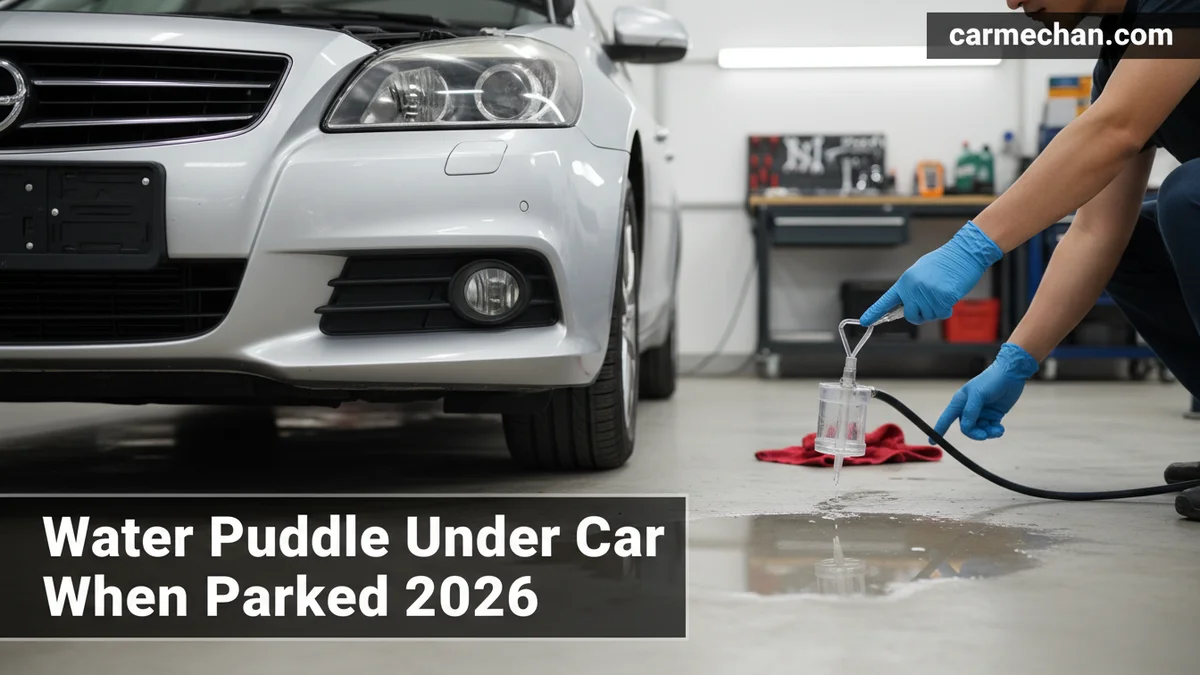
Accurately identifying any clear liquid under your car is the first and most critical step. Observing the fluid’s characteristics will tell you whether you have a simple water puddle under your car when parked or something more concerning.

Check the Color
Examine the puddle’s hue. Is it crystal clear, like tap water? Or does it have a faint tint? Even clear fluids can hint at different sources, such as a slight green, pink, or orange tinge indicating coolant. If it looks like pure water, that is a good sign. [VISUAL AIDS NEEDED: Color chart for common car fluids]
Note the Smell
Carefully smell the fluid without directly touching it. Normal water has no odor. Coolant often has a distinct sweet smell. Brake fluid might smell fishy or burnt. Windshield washer fluid often carries a chemical or alcohol scent, sometimes fruity.
Feel the Consistency
If you are confident the fluid is not toxic, use a glove or a stick to carefully feel its texture. Is it thin and watery, or does it feel slick or oily between your fingers? Water feels thin. Antifreeze can feel slightly slimy. Oily fluids will feel slippery.
Always avoid direct skin contact with unknown fluids due to potential toxicity. Understanding these characteristics helps prepare you for the next step: identifying the source.
3 Normal Reasons for Car Puddles
Not every water puddle under your car when parked signifies a major problem. Many clear fluid drips are entirely normal and part of your vehicle’s regular operation. Understanding these common, harmless sources can alleviate unnecessary worry.
Air Conditioner Condensation
This is the most common reason for a clear puddle. When your AC system maintenance is active, especially on humid days, it removes moisture from the air inside your car. This moisture then drips underneath. The puddle is typically clear, odorless, and found under the passenger side of the vehicle.
It is simply water and completely normal.
Exhaust System Condensation
Your car’s exhaust produces water vapor as a byproduct of combustion. When the exhaust system is cold, this vapor condenses into liquid water inside the exhaust pipes. As the engine warms up, this water drips out of the tailpipe. This is most noticeable during colder weather or short drives. It’s clear, odorless, and perfectly normal.
Rainwater Runoff
If you’ve driven in the rain or recently washed your car, accumulated water can drip off various undercarriage components for some time after parking. This is simply residual rainwater. You will find it anywhere under the vehicle. It is entirely harmless and will eventually stop dripping as the car dries.
While these sources are typically benign, other fluid leaks demand immediate attention. Let’s explore the problematic leaks you should watch for.
5 Serious Car Fluid Leaks to Watch
While some clear drips are normal, a water puddle under your car when parked can also signal a genuine problem. These five serious leaks require prompt investigation and often professional repair, even if they initially appear clear.
Engine Coolant Leak
Coolant (antifreeze) is often green, pink, orange, or blue, but it can appear clear or very diluted, especially if mixed with water or on lighter surfaces. It has a distinctive sweet smell. Coolant leaks typically occur from the radiator, hoses, water pump, or engine block.
A leaking cooling system can lead to engine overheating and severe damage. Even a small leak can indicate a failing component.
Windshield Washer Fluid
This fluid comes in various colors, including blue, green, or orange, but it is thin and can look like water when diluted or on light pavement. It usually has an alcohol or detergent smell. Leaks typically stem from the washer fluid reservoir, pump, or hoses, often near the front of the vehicle.
While not as critical as engine coolant, it indicates a system failure and means you won’t be able to clean your windshield effectively. This is frustrating but usually not an emergency.
Brake Fluid Leak
Brake fluid is typically clear to yellowish and feels slick or oily. It doesn’t usually have a strong odor. Leaks are extremely serious as they compromise your vehicle’s braking ability. You might find this fluid near the wheels or under the master cylinder. Any brake fluid leak requires immediate attention and should prompt you not to drive the car.
Power Steering Fluid
Often clear, reddish, or amber, power steering fluid feels oily and might have a slightly burnt smell. Leaks often occur from the power steering pump, hoses, or steering rack. You will likely find puddles near the front wheels or under the engine. A loss of power steering fluid makes steering difficult and can damage the power steering pump.
This is a critical leak that requires prompt repair.
Failed AC Drain Pan
If your AC drain clogs or becomes dislodged, the condensation can back up and leak inside the car, usually onto the passenger floorboard. While not a puddle under the car, it can cause interior dampness and mold, potentially impacting electrical components. If you notice a damp carpet on the passenger side and suspect an AC issue, this could be the cause.
Fixing this involves clearing the drain or reattaching the hose. This is a problem requiring repair to prevent interior damage.
Once you have identified a potentially serious leak, knowing the next steps is crucial. Here’s how to address it effectively and safely.
How to Address Car Leaks in 4 Steps
When you discover a water puddle under your car when parked, taking proactive steps can help pinpoint the issue and determine the urgency. These actions empower you to get the right help.
Perform a Cardboard Test
For persistent drips, slide a clean, large piece of cardboard or newspaper under the suspected leak area before parking overnight. In the morning, check the cardboard for any fresh stains. Note the color, smell, and precise location of the fluid on the cardboard relative to your vehicle’s underside.
This simple test helps isolate the leak’s origin and characteristics, especially for tricky car fluid types.
Check Fluid Levels
Pop your hood and carefully check the levels of all relevant fluids. This includes coolant, engine oil, brake fluid, power steering fluid, and windshield washer fluid. Refer to your owner’s manual for proper checking procedures. A significantly low level in any reservoir, especially after discovering a puddle, confirms that system as the source of the leak.
Inspect Visible Hoses
With the engine off and cool, visually inspect accessible hoses and connections. Look for cracks, bulges, loose clamps, or visible drips. Pay close attention to hoses connected to the radiator, engine, and power steering pump. Even a small tear can lead to a noticeable leak over time. Ensure you have proper lighting and avoid touching hot engine components.
Consult a Mechanic
If you identify a leak that is anything other than clear, odorless water from AC or exhaust condensation, or if you are unsure of the source, it is time to consult a qualified mechanic. Any leak of engine coolant, brake fluid, or power steering fluid warrants immediate professional attention.
Driving with these leaks can lead to significant vehicle damage or, more critically, safety hazards.
Common Questions About Car Puddles
What Color Is Normal AC Condensation Under a Car?
Normal AC condensation is clear and odorless, resembling plain water. It typically drips from the passenger side of the car, especially after running the air conditioner in humid conditions. It is a completely normal byproduct of the AC system’s operation.
How Can I Tell If a Clear Puddle Is Coolant or Just Water?
Coolant often has a distinct sweet smell and can appear clear, green, pink, or orange. Water from AC is clear and odorless. If the clear fluid feels slimy or oily, or has a sweet odor, it’s likely coolant and requires immediate attention.
Is a Small Amount of Water Dripping From the Exhaust Pipe Normal?
Yes, a small amount of clear water dripping from the exhaust pipe is entirely normal, especially during colder weather or short drives. This is condensation, a natural byproduct of combustion, which forms as hot exhaust gases cool inside the exhaust system.
What Should I Do Immediately If I Find a Clear Fluid Puddle Under My Parked Car?
First, avoid touching it directly without protection. Place a clean piece of cardboard underneath to collect more of the fluid. Note its color, smell, consistency, and the precise location of the leak. This initial assessment helps determine the potential source and urgency.
When Should I Take My Car to a Mechanic for a Clear Fluid Leak?
You should consult a mechanic if the fluid has any color, a distinct smell (sweet, oily, or pungent), feels slimy, or if the leak is continuous and substantial. Any leak that is not clear, odorless water from AC or exhaust condensation warrants professional inspection to prevent potential damage.
Final Assessment of Your Car’s Leak in 2026
Effectively diagnosing a water puddle under your car when parked begins with careful observation. Remember that while air conditioner and exhaust condensation are normal, any other fluid leak requires closer inspection. Identifying the fluid’s characteristics and location is paramount for accurate diagnosis. Proactive checks and timely professional intervention are your best defense against minor issues escalating into major, costly repairs.
By prioritizing these steps, you can ensure your vehicle remains safe and reliable on the road. Apply these diagnostic steps, prioritize safety, and seek professional mechanical help when uncertain or facing serious leaks to ensure vehicle longevity and your peace of mind.