Traffic Aware Cruise Control vs Autosteer 2026 Expert Guide
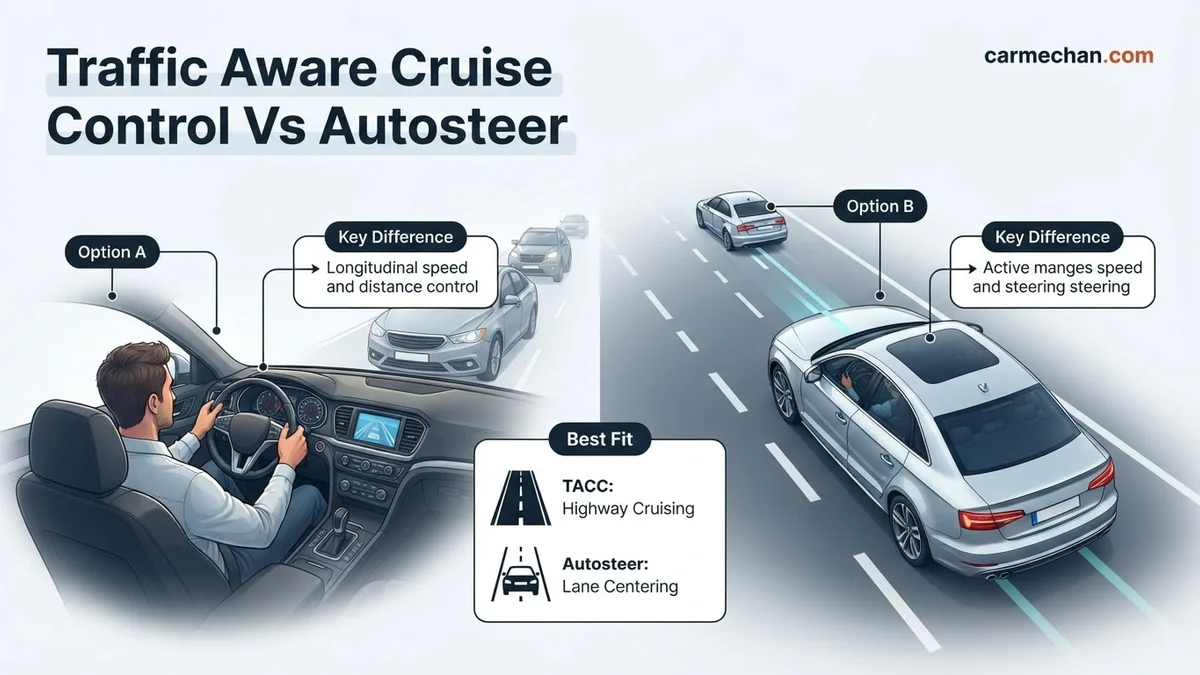
Traffic Aware Cruise Control (TACC) manages your vehicle’s longitudinal speed and following distance, while Autosteer handles lateral lane centering. These systems work as a layered driver assistance package rather than a single feature.
Traffic Aware Cruise Control (TACC) manages your vehicle’s longitudinal movement—meaning speed and following distance—while Autosteer manages lateral control, or lane centering. In 2026, most modern vehicles bundle these features together, but they remain distinct operational layers. Recognizing which system is handling which variable is essential for maintaining situational awareness and anticipating how your car will react to changing traffic conditions.


Practical control of your vehicle relies on understanding this divide. If you only activate TACC, you are still fully responsible for steering through curves or around obstacles. By adding Autosteer, you delegate the lateral load to the vehicle’s onboard logic. Understanding this split prevents over-reliance on the wrong system and helps you predict exactly when the vehicle might relinquish control or require your intervention.
Key Takeaways
- TACC regulates speed and braking; Autosteer keeps the vehicle centered within lane markings.
- Always keep hands on the wheel regardless of which system is currently active.
- TACC functions independently, whereas Autosteer typically requires TACC to be active simultaneously.
- Both systems require constant driver supervision to react to unexpected road hazards.
- Neither system replaces the need for an attentive human driver in any traffic condition.
The Functional Split: What Causes TACC and Autosteer to Operate Differently
Longitudinal Control: The Logic Behind TACC
TACC is essentially a smart throttle and brake manager. Its singular job is to maintain a set speed while keeping a user-defined gap from the vehicle ahead of you. Whether the car in front slows to a crawl or accelerates to the speed limit, TACC adjusts your vehicle’s velocity automatically. By 2026, this system is optimized to ignore stationary objects in adjacent lanes, focusing exclusively on the vehicle occupying your current path.
- Speed Regulation: It manages acceleration and deceleration to keep you moving at your chosen set speed.
- Gap Management: It calculates the precise distance needed to maintain your chosen “following distance,” even in stop-and-go traffic.
- Input Priority: Your brake pedal always overrides TACC instantly, returning the vehicle to manual speed control.
Lateral Control: How Autosteer Maintains Lane Geometry
Autosteer is concerned only with keeping the vehicle centered between detected lane markings. It does not control your speed; it strictly calculates steering angles to minimize lane deviation. In current 2026 models, the system uses road geometry to determine how much torque to apply to the steering rack. If the lane lines disappear or become ambiguous, the lateral control system will typically hand off steering duties back to you immediately.
- Steering Torque: The system applies micro-adjustments to the wheel to navigate curves without your hands needing to do the heavy lifting.
- Lane Boundary Detection: It uses edge identification to build a digital corridor, preventing you from drifting into adjacent lanes.
- Active Monitoring: Autosteer requires constant system health checks, such as detecting your grip on the wheel, to remain engaged.
How to Fix Your Driving Experience: Using TACC and Autosteer Correctly
When to Utilize Individual Systems
You do not always need both systems active simultaneously. In 2026, many drivers find that TACC is superior for heavy congestion or areas with poorly defined lane markings where Autosteer might “hunt” for the center. Conversely, on long, well-marked highway stretches, the combined package provides the most relief. Relying on TACC alone in high-traffic cities keeps you in the driver’s seat for steering, which is often the safer, more intuitive choice when lane changes occur frequently.
- Highways with Clear Markings: Engage both TACC and Autosteer for a synchronized experience where the car handles both the pacing and the steering path.
- City or Rural Roads: Use TACC alone. Relying on Autosteer on roads without clear lines or with frequent intersections often leads to system disengagements.
Interpreting System Handoffs and Limitations
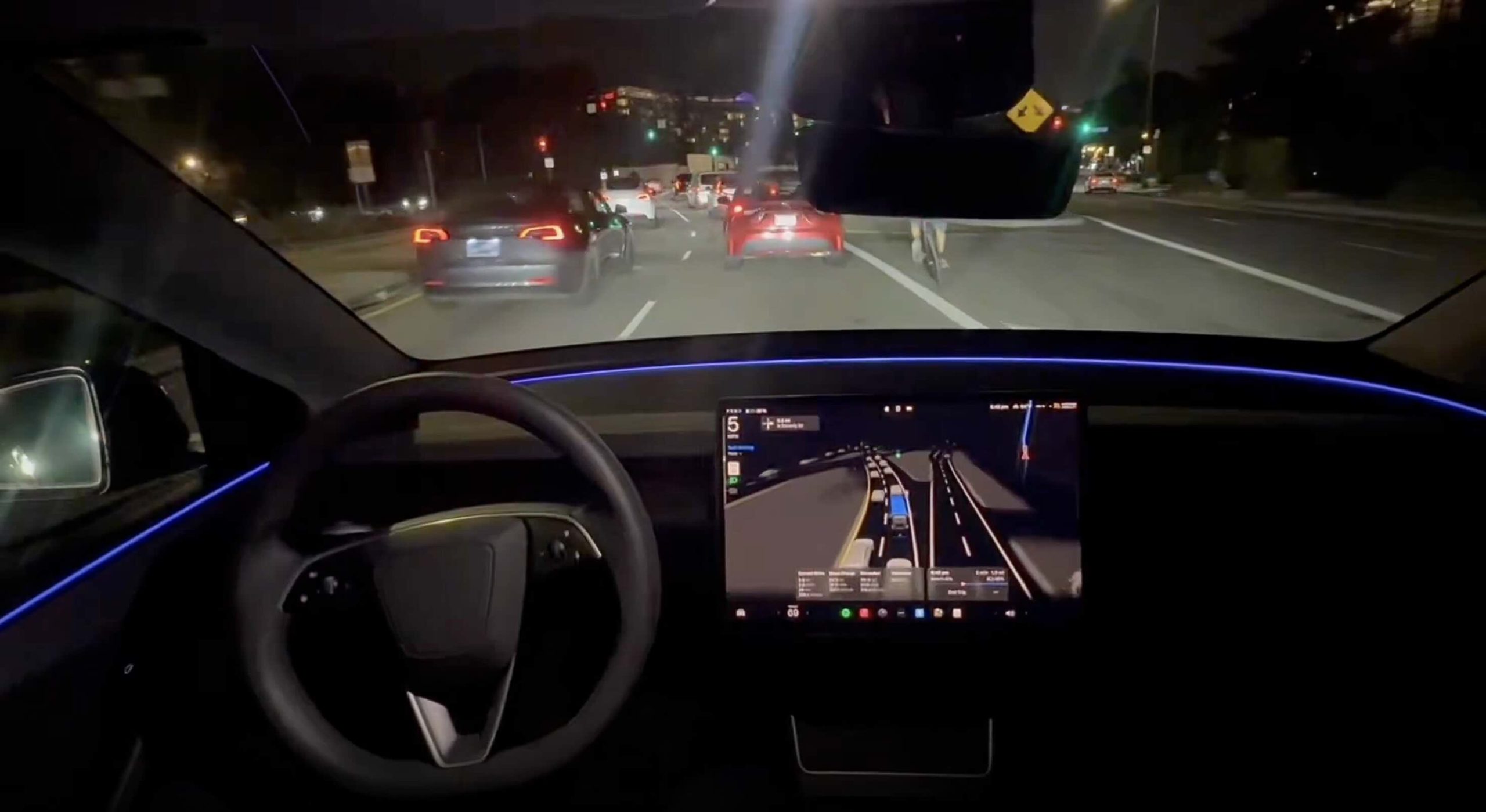
The transition between manual driving and system-assisted driving is the most critical time for error. In 2026 vehicles, these systems communicate through your dashboard display to show which features are active. If you notice the steering wheel icon turning gray while the speed indicator remains blue, your vehicle is telling you that Autosteer has lost its path, but TACC is still actively controlling your speed. Mastering these visual cues allows you to remain a step ahead of the vehicle’s logic, ensuring you are never surprised when one system drops out while the other remains fully engaged.
Step-by-Step Engagement: Activating Longitudinal and Lateral Control
Engaging Traffic Aware Cruise Control (Longitudinal)
Activating Traffic Aware Cruise Control (TACC) focuses strictly on maintaining your speed and the gap between your vehicle and the one ahead. By 2026, most premium manufacturers utilize a dual-tap stalk or a dedicated steering wheel button to initiate this system. Follow these steps for safe engagement:

- Ensure your vehicle is traveling above the minimum threshold speed, typically 15 mph, though some 2026 models allow engagement from a standstill.
- Depress the cruise control stalk or press the specific “ACC” button on the steering wheel while maintaining a steady lane position.
- Adjust the following distance using the digital slider on your dashboard, which usually ranges from 1 to 7 car lengths.
- Verify the blue or green “Ready” icon appears on your digital instrument cluster to confirm the system has locked onto the lead vehicle.
Activating Autosteer (Lateral Control)
Autosteer integrates TACC with active lane centering. This requires the vehicle to detect both lane markings and the path of the road. Because this constitutes SAE Level 2 automation, the system demands constant driver supervision.
- Engage TACC first to establish your target velocity.
- Once TACC is active, pull the gear selector down twice rapidly or press the designated “Pilot” button on the wheel.
- Confirm the steering wheel icon on your display turns blue, signaling that the vehicle is actively managing lateral steering inputs.
- Maintain a light grip on the steering wheel, as 2026 sensor suites monitor torque feedback to ensure the driver is present and attentive.
What If It Still Doesn’t Work?


If the system fails to engage or periodically disconnects, environmental factors or sensor obstructions are the most frequent culprits. According to 2026 diagnostic standards, follow these protocols before seeking specialized intervention:
- Clean all exterior camera lenses and radar housings with a microfiber cloth; road salt, grime, or heavy rain frequently trigger “system unavailable” errors.
- Perform a hard infotainment reset by holding the main volume and scroll wheels for ten seconds to clear temporary software cache conflicts.
- Check for software update notifications; 2026 manufacturers push over-the-air patches weekly to calibrate sensor sensitivity against current road conditions.
- Verify that your steering wheel sensors are not blocked by aftermarket accessories like wheel covers or heavy phone mounts, which disrupt capacitive touch detection.
If these steps do not restore functionality, a professional inspection is required. A faulty radar sensor or steering torque sensor replacement typically ranges from $600 to $1,800, depending on your vehicle’s make and warranty status.
Conclusion
Distinguishing between Traffic Aware Cruise Control and Autosteer is essential for maximizing safety and driver comfort in 2026. While TACC manages velocity, Autosteer assumes lateral responsibility, provided the driver remains engaged. According to verified research and expert sources from the National Highway Traffic Safety Administration, active monitoring remains the critical bridge between convenience and collision avoidance. For your next drive, consult your vehicle’s specific digital owner’s manual to map these engagement commands to your steering wheel layout for seamless operation.
❓ Frequently Asked Questions
What is the primary difference between longitudinal and lateral control?
Longitudinal control, managed by TACC, handles accelerating and braking to maintain a safe distance. Lateral control, managed by Autosteer, utilizes the steering system to keep the car centered in a marked lane.
Why does Autosteer disengage when I turn the wheel?
Autosteer is designed to disengage immediately if it detects significant manual input from the driver to ensure you retain final authority over vehicle direction. This is a safety feature meant to prevent system interference during emergency maneuvers.
Can TACC handle stop-and-go traffic?
Yes, TACC is specifically designed to bring the vehicle to a complete stop and resume movement in heavy traffic. However, you must remain ready to intervene if the system fails to detect stationary objects.
How do I know which system is currently active?


Most vehicle displays show distinct icons for TACC and Autosteer, often color-coded when they are successfully locked onto traffic or lane markings. Always verify these indicators on your dashboard before removing your focus from the road.
Are these features safe for use on local roads?
These systems are optimized for highways and clear lane markings; they may struggle with complex intersections, unmarked roads, or tight turns. You should exercise extreme caution if choosing to use them outside of their intended highway environment.
How should I handle system limitations?
Always anticipate that the systems may lose lane tracking or fail to recognize speed changes in harsh weather or poor lighting. If the system fails to maintain lane position or speed, immediately disengage the features and regain manual control.