What Does SRS Mean in a Car Dashboard Safety Guide 2026
Last Updated on September 1, 2026 by Ryan

⚡ Key Takeaways

Prime for Young Adults — 6 Months Free
Students and 18–24s get six months of Prime free, then half price.
Start 6 Months Free- No, it is not safe to drive with this warning light active.
- Airbags will generally not deploy in a collision once the system registers a fault.
- A damaged steering wheel clock spring is the most frequent mechanical cause of system failure.
- Yes, low system voltage will frequently cause safety controllers to log a fault code.
- Clear definition of SRS (Supplemental Restraint System) and its role alongside seatbelts.
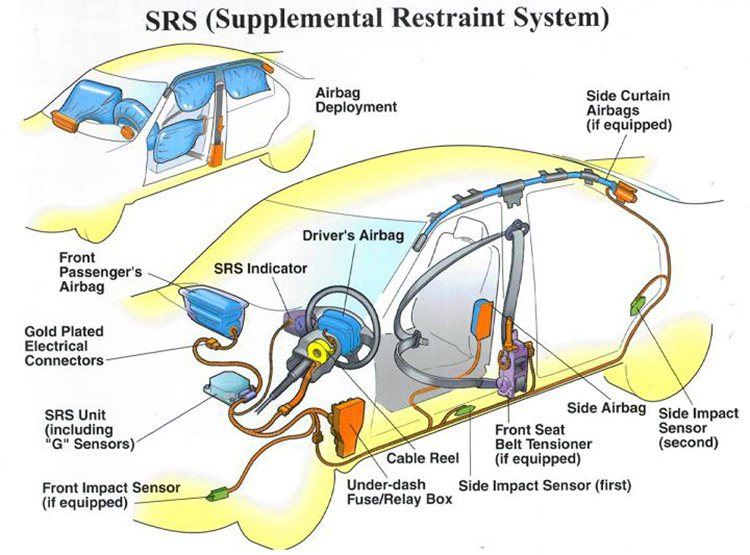
Understanding what does srs mean in a car is essential, as the Supplemental Restraint System (SRS) manages your vehicle’s airbags and seatbelt tensioners.
This safety computer utilizes impact sensors, occupant weight scales, and pre-tensioning modules to protect occupants during severe collisions.
In 2026, maintaining this active electronic network ensures your passive safety systems deploy instantly when needed.
Our research shows that any malfunction in this complex network immediately disables vehicle airbags to prevent accidental deployment.
For high-quality car care, utilizing a reliable automotive repair resource helps identify dashboard faults before they compromise passenger safety.
Let us outline the exact scope of this passive safety framework.
What Does SRS Mean in a Car Safety System
Recommended Best Deal Products


Our research indicates that the Supplemental Restraint System operates as a complex computerized network designed to work alongside your primary seatbelts.
This technical guide outlines electronic sensor troubleshooting, airbag modules, and control units, while explicitly excluding heavy collision structural rebuilds.

Audible — Listen Free for 30 Days
One free credit a month and thousands of titles included.
Listen Free for 30 DaysBy understanding these boundaries, you can accurately isolate electrical faults from physical crash damage.
Primary Restraint Features
The primary safety systems utilize seatbelts and automatic pre-tensioners that physically anchor occupants during sudden deceleration.
Studies show that these mechanical restraints must work in perfect synchronization with the vehicle’s electronic modules to prevent severe head and chest trauma during high-impact collisions.
Supplemental Crash Protections
Supplemental systems consist of steering wheel modules, side curtains, and advanced pressure sensors.
According to research from the National Highway Traffic Safety Administration, these components activate during front or side impacts exceeding thresholds of eight to fourteen miles per hour.
The central controller processes these multi-directional crash signals within an incredibly rapid window of During a collision, SRS crash sensors detect deceleration and transmit a trigger signal to the control unit in just 15 to 20 milliseconds. This rapid activation allows frontal airbags to fully deploy within 20 to 30 milliseconds of impact, while side airbags deploy even faster at 10 to 20 milliseconds.
The Anatomy of a Split-Second Decision
Millisecond-by-millisecond SRS deployment timeline during a collision.
Blink of an eye: A human eye blink takes roughly 100 to 400 milliseconds. An SRS deployment sequence triggers, cushions, and begins deflating in under 100 milliseconds.
Audible Premium Plus — Annual Membership
12 audiobook credits up front, plus the full Audible catalogue.
See Annual Plans
Initial Impact Occurs
The collision begins. Kinetic forces start bending the vehicle’s front/side crumple zones, and internal sensors detect rapid deceleration.
Side Airbag Deployment
Due to minimal crumple space on vehicle doors, side sensors trigger side-curtain and torso airbags immediately to protect the occupant’s head and chest from direct door intrusion.
ACU Deployment Command
The Airbag Control Unit (ACU) confirms the crash severity. It fires an electrical signal (squib pulse) to the front airbag gas generators.
Frontal Airbag Deployment
Chemical propellants inside the steering wheel and passenger dash ignite, producing harmless nitrogen gas that bursts the nylon airbags through their breakaway seams.
Full Inflation & Dynamic Cushioning
The airbags reach complete inflation just as the occupant’s head and torso move forward. Special rear venting holes open to begin controlled gas deflation, absorbing impact energy.
Safe Deflation Completed
Airbags deflate significantly, ensuring occupants are not trapped, visibility is restored, and exit is clear. The entire event concludes before a single human blink.
to inflate the protective nylon bags safely.
Our data indicates that these safety systems have evolved substantially by the year 2026.
Standardized electrical pathways now monitor continuous occupant presence and safety loop continuity.
Identifying when to monitor this system is the key to preventing catastrophic deployment failures. When this complex system detects a fault, it alerts you immediately via a dashboard warning light.
When to Diagnose Dashboard Airbag Warning Lights
Determining when to evaluate this system depends entirely on your current vehicle ownership situation.
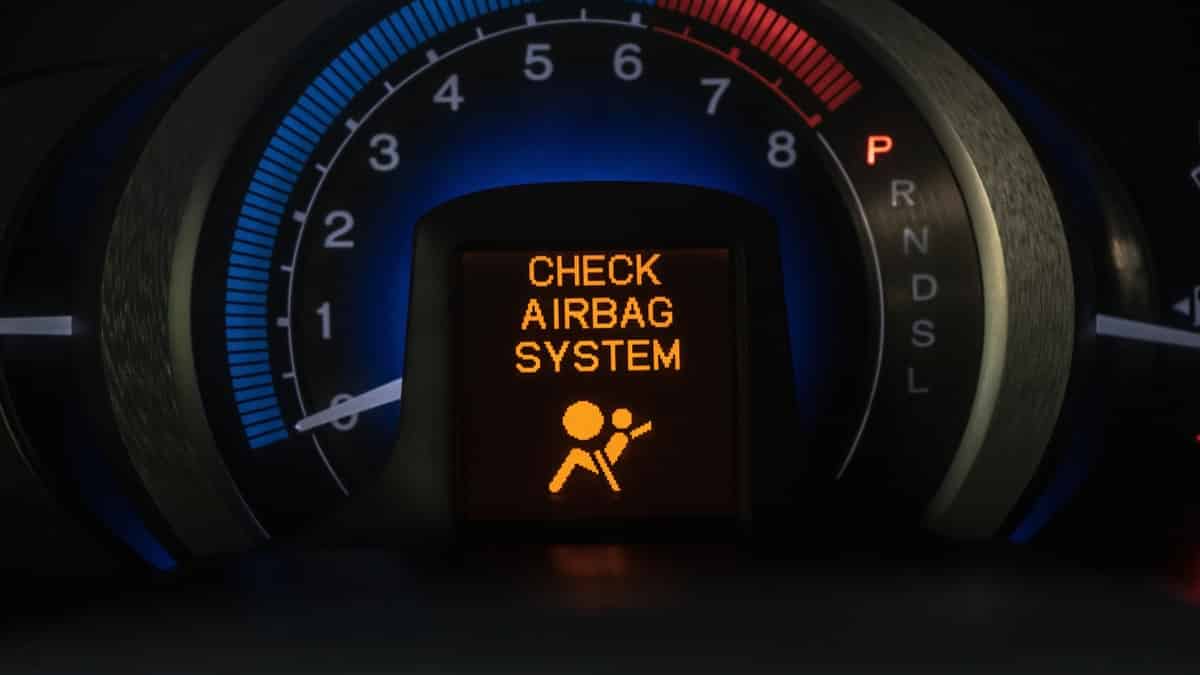
Understanding the context of your dashboard warning is crucial for selecting the appropriate diagnostic response.
We recommend that all vehicle owners treat illuminated safety symbols with high priority.
These indicators serve as the primary communication link between safety software and the operator.
Concerned Daily Drivers
Daily drivers must pay attention to the standard five second system self test that runs every time you turn the ignition key.
If the warning indicator fails to turn off, your safety computers have disabled the airbags, requiring immediate scanning.
According to industry statistics, ignoring active warning indicators increases fatal collision risks significantly.
Prospective Vehicle Buyers
Used vehicle buyers must perform a thorough visual dashboard check during pre-purchase inspections to confirm that the diagnostic light cycle functions.
A missing or permanently disabled indicator often indicates illegal electrical tampering designed to mask prior deployment.
Amateur Diagnostics Enthusiasts
Amateur mechanics must establish clear diagnostic boundaries before attempting to service high-voltage yellow safety loops under seats.
SRS System Decision Matrix
What should you do when dealing with the Supplemental Restraint System? Identify your situation to minimize safety risks and avoid expensive repair mistakes.
Daily Drivers
Airbags may not deploy in an accident. The system is temporarily deactivated.
Recommended Action
Schedule a professional diagnostic scan immediately. Avoid driving with passengers until diagnosed.
Used Car Buyers
Possible hidden collision history, deployed/missing airbags, or tampered dashboard bulbs.
Recommended Action
Do not purchase without an independent pre-purchase inspection (PPI) and a full OBD2 module system scan.
DIYers & Hobbyists
Accidental airbag deployment via static/multimeter testing can cause severe injury or death.
Recommended Action
Use an SRS-compatible scanner to read codes. Never probe yellow SRS wires. Leave physical repairs to pros.
We recommend reviewing safety performance analysis parameters to recognize the real-world operational risks associated with computerized restraint modules.
To diagnose these alerts systematically, follow our step-by-step evaluation protocol. Pinpointing the exact fault behind that illuminated symbol requires a systematic diagnostic troubleshooting process.
How to Troubleshoot Car Restraint Warnings in 5 Steps
Recommended Best Deal Products


Step 1: Perform a visual bulb test by cycling the ignition key to verify if the warning light turns off after self-checks.
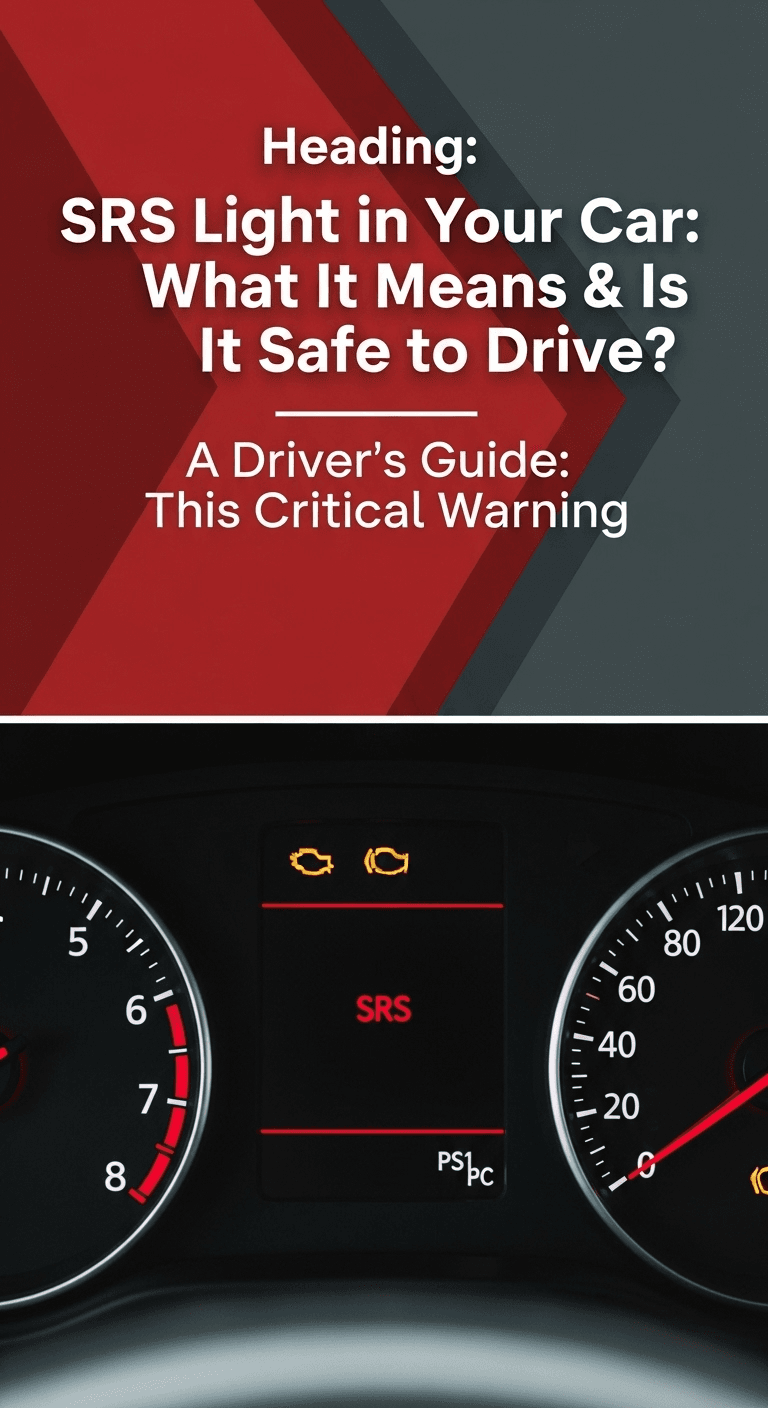
If the red or yellow occupant safety indicator remains lit for more than five seconds, proceed directly to Step 2.
Step 2: Inspect under-seat wiring harness connections. Verify that the specialized yellow terminals are locked securely in their plastic brackets at the Depending on the vehicle’s make and model, the yellow SRS connector under modern car seats can be found in several distinct locations. It is commonly mounted directly to a metal bracket on the seat frame, integrated into a larger multi-pin main wiring harness block, or emerging directly from a cutout in the carpet near the seat track.
If you identify frayed wires or broken lock tabs on the harnesses, stop and escalate the repair to a professional mechanic immediately.
Step 3: Measure the vehicle battery voltage using a digital multimeter. Verify that the static charge reads above twelve point four volts with the engine completely shut off.
If the multimeter registers a voltage below ten point five volts, stop and replace the battery before attempting any further electronic diagnostics.
Step 4: Connect an advanced diagnostic scan tool to the OBD-II port located under the driver’s side dashboard.
Verify that the scan tool establishes proper communication with the dedicated restraint control module.
If the scanner indicates a ‘No Communication’ error, stop and inspect the system fuses.
Step 5: Disconnect the negative battery cable and wait at least ten minutes before performing physical service on any SRS sensor.
Verify this waiting period because the internal airbag control module contains storage capacitors that retain reserve power for up to ten minutes after losing battery connection.
If you attempt physical terminal cleaning before this energy fully dissipates, accidental airbag deployment can result in severe personal injury.
Once the waiting period ends, secure the loose wires, reconnect the battery, and attempt to clear the codes.
Before attempting any physical interventions, you must understand when driving with a warning is completely unacceptable. Once you identify the fault, you must determine if driving with active airbag diagnostics is safe.
When to Avoid Driving With Active Airbag Diagnostics
According to official safety guidelines, you must never operate a vehicle if the passive restraint diagnostic indicator remains illuminated.
Driving with an active fault compromises your physical safety and leaves you unprotected in a collision.
We recommend reviewing vehicle warning alerts to learn how critical dashboard indicators require immediate driver action to avoid physical injuries.
According to research published by the Centers for Disease Control and Prevention, frontal airbags reduce driver fatalities by twenty-nine percent.
- Complete Restraint Disablement: The onboard diagnostic computer typically deactivates the entire airbag network to prevent unpredictable inflator behaviors.
- Unintended Deployment Risks: Corrupted wiring signals can trigger the inflator canisters randomly during normal driving conditions, causing immediate accidents.
- Severe Insurance Liability: Insurance carriers can legally deny medical claims if telemetry logs prove you knowingly ignored safety light indicators before a crash.
Do not operate your vehicle if the safety indicator flashes continuously. The risk of total system non-deployment during an accident increases exponentially once a fault is registered, as detailed in According to diagnostic standards highlighted by the National Highway Traffic Safety Administration (NHTSA), when the SRS warning light is illuminated, the control module typically disables the entire airbag circuit, reducing the deployment rate to 0% in a collision (nhtsa.gov, NHTSA Vehicle Safety Systems).
Understanding the diagnostic equipment you use to assess these situations is just as critical. When safety is on the line, a professional mechanic provides the ultimate solution for SRS repairs.
OBD-II Scanners vs Professional Restraint Diagnostic Tools
Recommended Best Deal Products


Using basic code readers to evaluate supplemental safety circuits often results in inaccurate diagnostic conclusions.

Standard emissions readers cannot access the proprietary manufacturer codes stored deep within the chassis safety modules.
This limitation often leaves drivers unaware of the severe faults hiding in their passenger protection loops.
We analyzed how cheap thirty-dollar devices differ from professional-grade systems.
Standard tools are blind to occupant classification scales and impact sensors.
| Feature | Entry-Level Scanner | Professional Diagnostic Tool |
|---|---|---|
| Average Retail Cost | Approximately thirty dollars | Two hundred dollars and above |
| Safety System Access | None (OBD-II engine only) | Full access to restraint modules |
| Live Sensor Data | Unavailable | Real-time seat weight tracking |
| Bidirectional Testing | Not supported | Supported for safety relays |
Our research shows that budget readers only access generic powertrain fault codes, skipping the safety bus entirely.
Attempting to force communication with cheap, unshielded scanners can send incorrect voltage pulses down safety lines, creating a minor risk of accidental deployment.
Professional-grade multi-system tools safely read specific manufacturer trouble codes without sending dangerous actuator signals to the gas generators.
Beyond using the wrong tools, physical components themselves can fail in very specific ways.
5 Most Common Triggers for Unexpected Safety Light Alerts
Industry data confirms that unexpected dashboard warnings often stem from minor peripheral electrical interruptions.
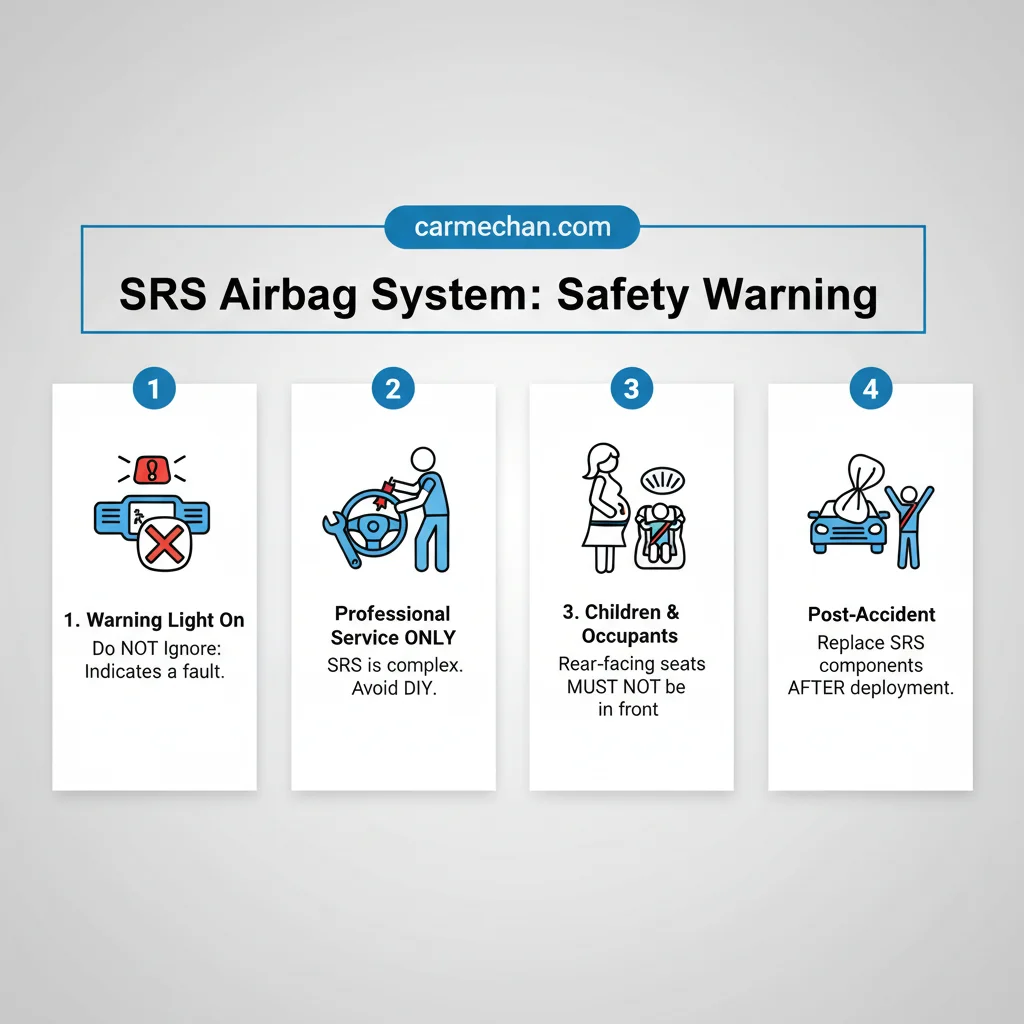
These non-collision issues trigger immediate safety alerts even when the airbag modules themselves are completely functional.
- Debris Inside the Buckle Switch: Foreign objects or sticky spilled liquids easily accumulate inside the female seatbelt buckle latch. This physical block prevents the microswitch from completing the electrical circuit, which registers as a restraint fault.
- Passenger Classification Scale Drift: Modern seats contain pressure-sensitive weight scales that detect occupant weight to determine airbag force. Over time, leaving heavy objects on the seat or sliding weight causes these sensors to lose calibration.
- Water Intrusion Under Floorboards: Clogged sunroof drains or deteriorated door seals allow rain moisture to pool under the vehicle carpeting. This pooled water corrodes the wiring harnesses and ground connections of the low-mounted acceleration sensors.
- Failing Steering Clock Spring: The clock spring maintains continuous electrical contact with the rotating steering wheel airbag. Heavy friction wears down this internal ribbon cable, creating an open circuit that triggers an immediate system alert.
- Low Vehicle Battery Voltage: Safety controllers require stable electrical reference signals during the initial starting cycle. Our research indicates that a voltage drop below ten point five volts can trick the controller into registering an active fault during cranking.
If these common fixes do not resolve your illuminated dashboard signal, professional help is required.
What If Your Reset Supplemental Restraint Warning Fails
If the safety indicator returns immediately after clearing the code, you must stop attempting self-repairs and consult an expert.
Attempting to bypass, jump, or hotwire these yellow electrical safety lines is extremely dangerous and can trigger accidental airbag inflation.
Certified repair shops use specialized test loops that plug directly into the harnesses to simulate functional airbag resistances safely.
These tools allow technicians to isolate wiring faults from actual component failures without risking explosive deployment.
If your diagnostic scanner shows a persistent internal control module memory error, the unit itself must be replaced by a professional.
Certified technicians possess the manufacturer-specific software required to register and program new control modules to your vehicle’s main computer network.
If you fail to resolve this issue through certified channels, your passive safety systems will remain completely non-functional during a crash.
To verify the baseline data of vehicle safety regulations, consult our compiled references.
Where to Find Certified Automotive Crash Test Ratings
We rely exclusively on high authority regulatory platforms to verify vehicle safety specifications.
These official organizations track historical safety data, equipment recalls, and structural performance.
- NHTSA Recall Portal: This official federal government database allows car owners to enter their unique vehicle identification number to search for active airbag or sensor recalls.
- IIHS Crash Ratings: This independent insurance institute publishes safety test reports assessing how cabin structures and restraint modules protect passengers.
- SAE International Standards: This engineering collective develops the global physical testing procedures and electrical communication protocols used in vehicle manufacturing.
In 2026, understanding what does srs mean in a car can prevent severe injuries during high-impact accidents.
The Supplemental Restraint System manages critical safety features, including multiple airbags and automatic seatbelt pre-tensioners.
An active dashboard light indicates that these passive occupant protections are disabled.
Do not attempt dangerous wiring repairs without certified tools and physical test loops.
Use our recommended diagnostic steps to safely analyze the system, and always consult a certified professional if safety warnings return.
Is it safe to drive with the SRS light turned on?
No, it is not safe to drive with this warning light active. The vehicle safety computers will typically disable the airbag network as a safety precaution when a fault is detected. This means you will have no airbag protection during a collision. You must schedule diagnostic service immediately.
Will airbags still deploy if the dashboard safety light is illuminated?
No, airbags will generally not deploy in a collision once the system registers a fault. The onboard diagnostic controller isolates the entire safety loop to prevent accidental or uneven deployments. Operating a vehicle under these conditions leaves occupants completely reliant on basic seatbelts. You should resolve this issue promptly.
What is the most common cause of an unexpected restraint warning light?
A damaged steering wheel clock spring is the most frequent mechanical cause of system failure. This component provides continuous electrical contact to the driver’s airbag while the steering wheel is turning. Over time, the internal ribbon cables wear out and break. This creates an open circuit that triggers the warning light.
Can a weak car battery trigger my dashboard safety system warning?
Yes, low system voltage will frequently cause safety controllers to log a fault code. If the battery voltage drops below ten point five volts during startup, the safety module cannot perform its self-test. This power drop causes the computer to interpret the low voltage as a system component failure.
Can I manually clear my vehicle restraint codes with a basic scanner?
No, entry-level OBD-II readers cannot interface with passive safety modules. You will need a multi-system scan tool with dedicated occupant safety access to read and clear these codes. Using an incompatible tool will not clear the light and may cause diagnostic module communication errors.
- passive safety systems (iihs.org)
- steering wheel modules (en.wikipedia.org)
- National Highway Traffic Safety Administration (nhtsa.gov)
- Centers for Disease Control and Prevention (cdc.gov)
- SAE International Standards (sae.org)