How Much Does a Trackhawk Weigh? Exact Curb Weight Revealed
Last Updated on September 1, 2026 by Ryan
The Jeep Grand Cherokee Trackhawk has an official curb weight of 5,363 pounds (2,433 kg), making it one of the heavier performance SUVs. This substantial weight is primarily due to its robust supercharged V8 engine, heavy-duty drivetrain, and extensive luxury and safety features.
🎯 Key Takeaways



- Trackhawk curb weight is 5,363 lbs (2,433 kg).
- Heavy-duty components significantly contribute to its mass.
- Curb weight includes fluids, excludes passengers/cargo.
- Understand Gross Vehicle Weight Rating (GVWR) differences.
- Weight impacts acceleration, handling, and braking performance.
If you’re asking “How much does a Trackhawk weigh?”, you’re going straight to one of the most fundamental characteristics of this beast. The Jeep cherokee-trackhawk/specs/2020/jeep_grand-cherokee_2020-jeep-grand-cherokee-trackhawk” target=”_blank” rel=”noopener noreferrer” title=”2020 Jeep Grand Cherokee Trackhawk Specs (Car and Driver)”>Grand Cherokee Trackhawk’s exact curb weight is 5,363 pounds (2,433 kilograms). This isn’t just a number; it’s a testament to the vehicle’s engineering, designed to contain and unleash staggering power while maintaining a robust and capable SUV platform.
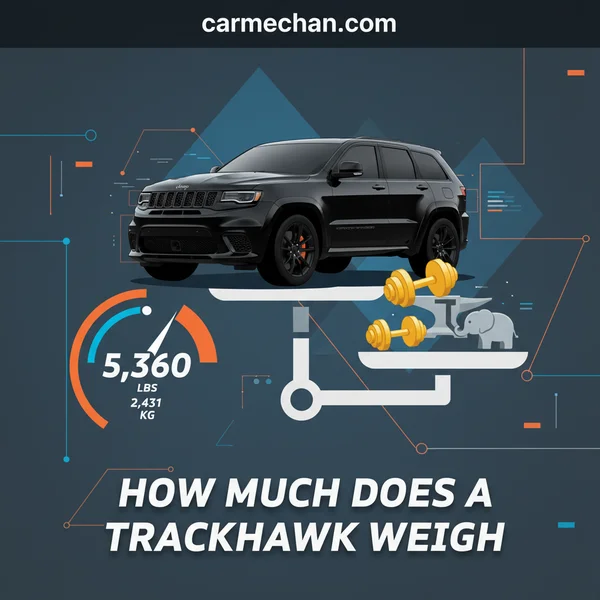
Understanding this specific weight is crucial because it influences everything from the Trackhawk’s incredible straight-line acceleration to its formidable stopping power, and even practical considerations like fuel efficiency and tire wear. This figure provides the baseline for appreciating the sheer mass that the supercharged HEMI engine has to move, and the heavy-duty components required to manage its extraordinary capabilities safely.
The Official Curb Weight of the Jeep Trackhawk


When you look at the specifications sheet for a Jeep Grand Cherokee Trackhawk, the 5,363 pounds (2,433 kilograms) figure stands out as its official curb weight. This isn’t an arbitrary number; it’s a precise measurement reflecting the vehicle’s readiness for action. This core number remains remarkably consistent across all model years of the Trackhawk, from its debut in 2018 through to the final 2021 models, ensuring that you can rely on this specification regardless of your specific year.

📤 Share
💾 Download
What “Curb Weight” Really Means for You
Curb weight is a term you’ll hear often, and it refers to the total weight of a vehicle with all its standard equipment, a full tank of fuel, and all necessary fluids (like engine oil, coolant, and brake fluid), but critically, without any passengers, cargo, or aftermarket accessories. Essentially, it’s how much your Trackhawk weighs when it’s fully fueled up and ready to drive off the lot, before you load anything into it.
Knowing the curb weight is vital, but it’s also helpful to understand other weight ratings that impact your Trackhawk’s capabilities and safety:
- Gross Vehicle Weight Rating (GVWR): This is the maximum permissible total weight of your fully loaded Trackhawk, including its own curb weight, passengers, cargo, and any trailer tongue weight. For the Trackhawk, the GVWR typically sits around 6,500 pounds (2,948 kilograms). Exceeding this limit can compromise safety, handling, and durability.
- Gross Axle Weight Rating (GAWR): This specifies the maximum weight that can be supported by each axle (front and rear). For the Trackhawk, the front GAWR is generally around 3,200 pounds (1,451 kilograms), and the rear GAWR is approximately 3,600 pounds (1,633 kilograms). These ratings are crucial for safe load distribution, especially when towing or carrying heavy items, ensuring you don’t overstress specific components.
These figures provide a complete picture of your Trackhawk’s weight profile, guiding you on its safe operational limits and helping you understand the robust engineering underneath its muscular exterior.
Everything You Need to Know About Trackhawk Weight


Whether you’re planning modifications, calculating towing capacity, or simply curious about the heft of your high-performance SUV, understanding the exact weight of a Jeep Grand Cherokee Trackhawk is essential. This comprehensive guide will walk you through various reliable methods to accurately determine your Trackhawk’s weight, covering everything from official documentation to practical verification. Following these steps ensures you get the most precise information, helping you make informed decisions about your powerful vehicle.
Step 1: Understand the Different Types of Vehicle Weight
What you need: A basic understanding of automotive terminology.
Instructions: Before diving into specific numbers, it’s crucial to differentiate between various weight metrics. The most commonly sought after is ‘Curb Weight,’ which is the weight of the vehicle with all standard equipment, fluids (oil, coolant), a full tank of fuel, but no occupants or cargo. ‘Gross Vehicle Weight Rating’ (GVWR) is the maximum permissible total weight of the vehicle, including the curb weight, all occupants, cargo, and any accessories. ‘Gross Combined Weight Rating’ (GCWR) is the maximum permissible total weight of the loaded vehicle and its attached trailer, including all cargo and occupants. Knowing which weight you need helps narrow down your search.
Pro Tip: Most manufacturer specifications refer to curb weight. If you’re comparing Trackhawks or considering performance, curb weight is usually the benchmark. For towing or hauling, GVWR and GCWR are paramount for safety and legal compliance.
Step 2: Consult Your Owner’s Manual for Official Specifications
What you need: Your Trackhawk’s owner’s manual (physical copy or digital PDF).
Instructions: The most authoritative source for your specific vehicle’s weight is its owner’s manual. Look for sections titled “Specifications,” “Capacities,” or “Weights.” The manual will detail the official curb weight, GVWR, and potentially the GCWR for your particular model year and trim level. For a stock Jeep Grand Cherokee Trackhawk (e.g., 2018-2021 models), you’ll typically find the curb weight listed around 5,363 lbs (2,433 kg). This information is tailored to your exact vehicle as it left the factory, making it incredibly reliable for stock configurations.
Pro Tip: If you don’t have a physical copy, visit the official Jeep website and look for the “Owners” or “Support” section. You can usually download a PDF version of your specific model year’s owner’s manual by inputting your VIN or selecting the model details.
Step 3: Check the Driver’s Side Door Jamb Sticker
What you need: Access to your Trackhawk, a flashlight (optional).
Instructions: Open the driver’s side door and locate the sticker affixed to the door jamb (the frame of the car where the door latches). This label, often called the “Tire and Loading Information” or “Federal Motor Vehicle Safety Standard” (FMVSS) sticker, provides crucial data. While it typically doesn’t list the curb weight directly, it will clearly state the Gross Vehicle Weight Rating (GVWR) and Gross Axle Weight Ratings (GAWR) for both front and rear axles. These figures are maximum limits and are essential for understanding your vehicle’s load-carrying capabilities. For a Trackhawk, expect a GVWR in the range of 6,800 lbs (3,084 kg).
Pro Tip: This sticker also provides critical tire pressure recommendations and seating capacity. Always refer to this sticker before loading your vehicle or modifying tire pressures, especially after adding heavy aftermarket components that might alter the factory weight distribution.
Step 4: Utilize Official Manufacturer Websites and Brochures
What you need: Internet access.
Instructions: The official Jeep website (jeep.com) is an excellent resource. Navigate to the “Vehicles” section, select the Grand Cherokee, and then look for information specific to the Trackhawk trim, often found under “Specifications” or “Build & Price.” Archived brochures or press releases for your model year can also be found online and will list detailed specifications including curb weight. These sources are compiled by the manufacturer and are considered official, providing a reliable baseline for the vehicle’s weight in its standard configuration. For example, a quick search often reveals the 2021 Trackhawk curb weight at 5,363 lbs.
Pro Tip: When searching manufacturer sites, be sure to specify the exact model year (e.g., “2020 Jeep Grand Cherokee Trackhawk specs”) to avoid discrepancies between different production years, as minor changes can sometimes affect weight.
Step 5: Reference Reputable Automotive Review and Database Sites
What you need: Internet access.
Instructions: Several well-established automotive websites maintain extensive databases of vehicle specifications. Sites like Edmunds.com, KelleyBlueBook.com (KBB.com), MotorTrend.com, and CarAndDriver.com often provide detailed specs including curb weight, GVWR, and more. Simply search for “Jeep Grand Cherokee Trackhawk [model year] specifications” on these platforms. Cross-referencing information from two or three reputable sites can help confirm accuracy, especially if you’re not fully confident in other sources. These sites typically list the standard curb weight for the specified year.
Pro Tip: Be cautious of less-known automotive blogs or forums for official specifications. While they can offer insights, always prioritize information from established industry publications or manufacturer sources for critical data like vehicle weight.
Step 6: Consider a Physical Weigh-In for Modified Vehicles
What you need: Your Trackhawk, a certified public scale (e.g., at truck stops, recycling centers, moving companies, or some landfills), possibly a pen and paper.
Instructions: If your Trackhawk has significant aftermarket modifications (heavy wheels, supercharger upgrades, suspension components, sound systems, armored plating, etc.) that likely altered its factory weight, the most accurate way to determine its current curb weight is a physical weigh-in. Drive your Trackhawk to a public scale. Ensure the vehicle is empty of occupants and cargo, but has a full tank of fuel. Follow the attendant’s instructions to weigh your vehicle. You’ll typically get a weight ticket showing the exact reading. This is particularly useful for highly customized vehicles where official specs no longer apply.
Pro Tip: Before heading to the scale, remove all non-essential items from the vehicle, including spare tires (if not standard), tools, and personal belongings, to get the closest measurement to a true “curb weight” for your modified setup. Call ahead to ensure the scale can accommodate your vehicle type and provide an accurate reading.
Step 7: Account for Options and Aftermarket Modifications
What you need: A list of your Trackhawk’s factory options and aftermarket additions.
Instructions: Even if you found an official curb weight, remember that factory options (like panoramic sunroofs, heavier wheel packages, advanced sound systems, or trailer tow groups) can add pounds. Aftermarket modifications, however, are the biggest culprits for weight discrepancies. Components such as larger brake kits, custom exhaust systems, roll cages, heavy-duty bumpers, winches, or extensive sound insulation can significantly increase the actual weight of your Trackhawk beyond its original factory specification. Estimate the weight of your additions and factor them into your calculations, especially if you haven’t performed a physical weigh-in.
Pro Tip: Keep a running log of all modifications and their estimated weights. This practice not only helps you track the total weight but is also invaluable for performance tuning, suspension adjustments, and ensuring you don’t exceed your vehicle’s GVWR or axle weight limits.
✅ Final Checklist
- Consulted the owner’s manual for official curb weight.
- Checked the driver’s side door jamb sticker for GVWR.
- Verified specifications on official Jeep websites and brochures.
- Cross-referenced information with at least two reputable automotive database sites.
- Considered a physical weigh-in if the vehicle is heavily modified.
- Accounted for the weight of factory options and aftermarket additions.
Important Notes:
- Safety considerations or warnings: Never exceed your vehicle’s GVWR or GAWR, as this can severely compromise handling, braking performance, and vehicle stability, potentially leading to accidents. Always distribute weight evenly.
- When to seek professional help: If you are making extensive modifications that drastically alter the vehicle’s weight or weight distribution, or if you need precise axle-by-axle weights for racing or specialized applications, consider consulting with a qualified automotive performance shop or an engineer.
- Estimated time and cost range: Finding official specs online or in the manual can take 15-30 minutes and is free. A physical weigh-in at a public scale usually takes 10-20 minutes and typically costs between $10-$20 per weigh ticket.
Key Factors Contributing to the Trackhawk’s Substantial Weight
The Trackhawk’s considerable curb weight isn’t a flaw; it’s a direct consequence of its design purpose: to be an ultra-high-performance SUV. Every heavy component serves a critical function, ensuring that the vehicle can handle the immense power it generates and deliver it effectively to the road.
Heavy-Duty Powertrain and Drivetrain Engineering
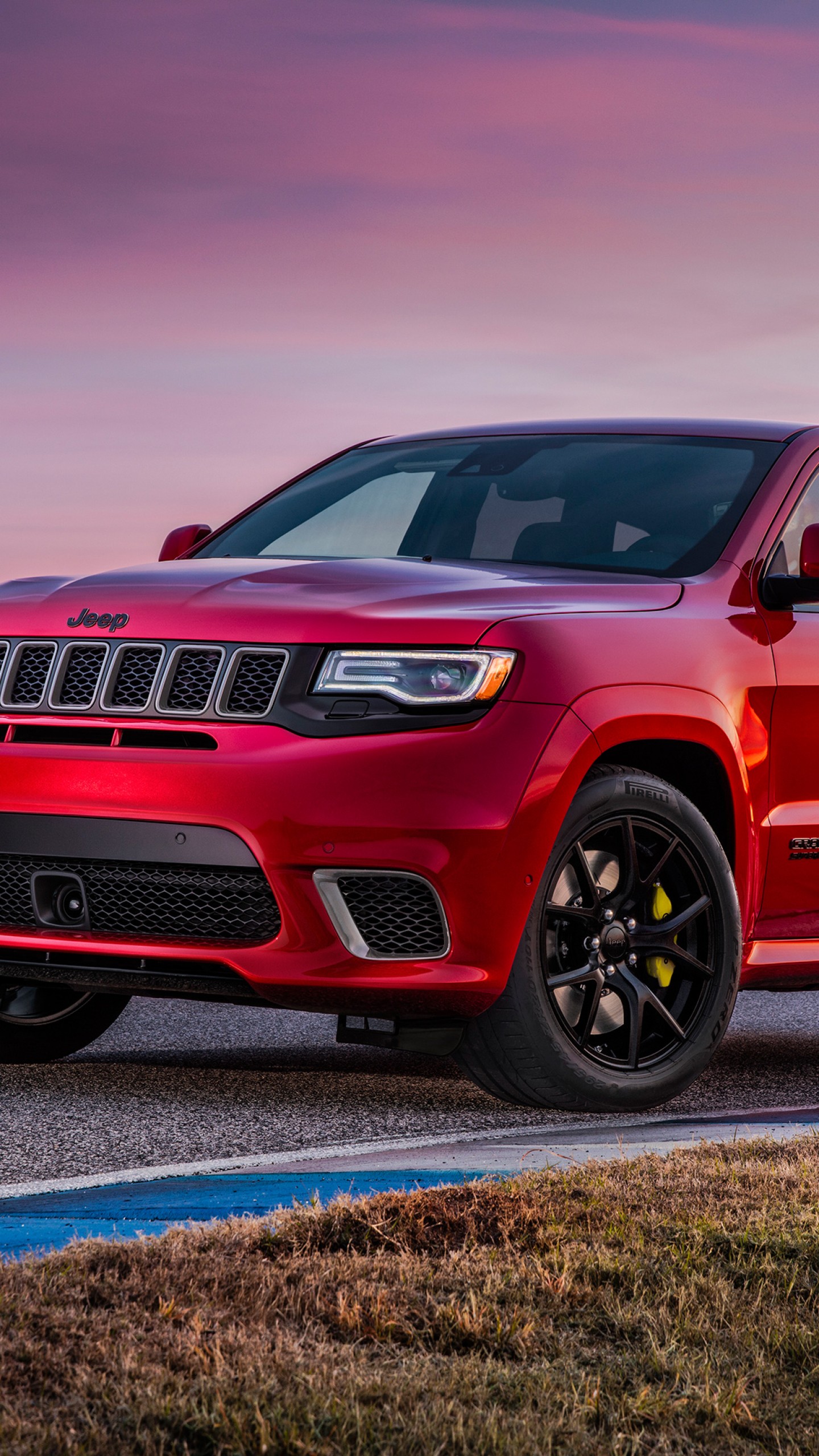
At the heart of the Trackhawk’s weight lies its formidable powertrain and drivetrain. The legendary 6.2-liter supercharged HEMI V8 engine itself is a behemoth. With its cast-iron block, robust internal components, and the integrated supercharger and intercooling system, this engine is physically massive and incredibly dense, contributing a significant portion to the overall weight. It’s built for extreme output and durability, not lightweight construction.
Coupled with this engine is the specialized TorqueFlite 8HP95 8-speed automatic transmission. This isn’t a standard gearbox; it’s heavily fortified to withstand the Trackhawk’s monstrous torque output without faltering. The additional internal strengthening and larger components necessary for this task naturally add considerable weight.
Furthermore, the Trackhawk’s advanced all-wheel-drive (AWD) system is a heavy-duty affair. It features a robust transfer case, reinforced driveshafts, and a stronger rear axle designed to manage and distribute incredible power to all four wheels. These components are significantly beefier and therefore heavier than those found in a standard Grand Cherokee, ensuring unyielding traction and durability under the most demanding conditions.
Structural Reinforcements and Performance Hardware
Beyond the powertrain, the Trackhawk integrates numerous structural and performance enhancements that contribute to its substantial mass. To handle the incredible forces generated by the supercharged engine and to maintain chassis rigidity during aggressive driving, the vehicle’s frame and body structure receive extensive reinforcements. Extra bracing and thicker-gauge materials are strategically employed throughout the chassis, ensuring stability and safety at high speeds and under heavy cornering, all of which add pounds to the overall weight.
The braking system is another major contributor to the Trackhawk’s mass. To effectively stop a vehicle of this weight and power, Jeep equipped it with colossal Brembo high-performance brakes. The front features massive 15.75-inch (400 mm) two-piece rotors clamped by six-piston calipers, while the rear utilizes 13.78-inch (350 mm) rotors with four-piston calipers. This highly capable braking hardware is significantly heavier than standard brake systems, yet absolutely essential for the Trackhawk’s safety and performance envelope. Every component, from the large alloy wheels to the performance-tuned exhaust system, is designed for strength and capability, directly impacting the final curb weight.
Understanding Different Trackhawk Weight Specifications (GVWR, GAWR)
While the curb weight gives us the fundamental mass of your Trackhawk, it’s only one piece of the puzzle. To truly understand your vehicle’s capabilities and limitations, you need to be familiar with other crucial weight specifications like GVWR and GAWR. These numbers are vital for safe operation, especially in a performance SUV designed to carry passengers and cargo.
What is GVWR (Gross Vehicle Weight Rating)?
The Gross Vehicle Weight Rating (GVWR) is the maximum permissible total weight of your Trackhawk when it’s fully loaded. This includes the vehicle’s curb weight, plus the weight of all passengers, cargo, and any additional accessories. For a Jeep Grand Cherokee Trackhawk, the GVWR typically hovers around 6,700 to 6,800 pounds. Exceeding this limit can severely impact your vehicle’s:
- Braking performance: Longer stopping distances, increased brake wear.
- Handling and stability: Reduced responsiveness, increased risk of rollover.
- Tire integrity: Overheating, premature wear, and potential blowouts.
- Component strain: Excessive stress on the suspension, drivetrain, and frame.
Always check the sticker on your driver’s side door jamb for the exact GVWR for your specific Trackhawk. It’s your ultimate guide to safe loading.
What is GAWR (Gross Axle Weight Rating)?
Beyond the total weight, the Gross Axle Weight Rating (GAWR) specifies the maximum weight that each individual axle (front and rear) can safely support. This ensures that the weight is distributed properly across the vehicle’s chassis. For the Trackhawk, you’ll typically find separate GAWRs for the front and rear axles, often around 3,400 lbs for the front and 3,700 lbs for the rear, though these can vary slightly.
Understanding GAWR is important because:
- It prevents overloading specific suspension components.
- Proper weight distribution is critical for maintaining traction and control, especially under hard acceleration or braking in a powerful vehicle like the Trackhawk.
- Loading heavy items primarily in the trunk, for instance, could exceed the rear GAWR even if the overall GVWR isn’t met.
Being mindful of both GVWR and GAWR helps preserve your Trackhawk’s integrity, performance, and, most importantly, keeps you and your passengers safe on the road.
The Impact of Weight on Trackhawk Performance and Handling
The Trackhawk is a marvel of engineering, boasting a supercharged Hellcat engine that helps it defy its substantial weight. However, even with 707+ horsepower, the laws of physics are inescapable. The vehicle’s 5,363-pound curb weight profoundly influences every aspect of its performance, from how quickly it accelerates to how it feels in a tight turn.
Acceleration and Braking Dynamics
That incredible 0-60 mph sprint in 3.5 seconds is even more impressive when you consider the mass involved. The Trackhawk’s immense power is necessary to overcome the inertia of its weight. While it pulls like a rocket, a lighter car with the same horsepower would be even faster. Conversely, braking a heavy vehicle demands equally robust engineering. The Trackhawk comes equipped with massive Brembo brakes (15.75-inch front, 13.78-inch rear rotors with six-piston calipers up front) for a reason:
- Acceleration: More weight requires more power to achieve the same acceleration. The Trackhawk delivers that power in spades, but you can still feel the “heaviness” compared to a lightweight sports car.
- Braking: Heavier vehicles build up more kinetic energy, which takes significantly more effort and distance to dissipate when braking. The Brembos are designed specifically to handle this challenge, providing confidence-inspiring stopping power, but it’s always wise to remember that increased mass equates to longer stopping distances, especially when fully loaded.
Being aware of these dynamics helps you drive more defensively and prepare for varying road conditions.
Cornering, Ride Quality, and Fuel Economy
A heavier vehicle generally means a higher center of gravity and more mass to manage in corners. While the Trackhawk features sophisticated adaptive suspension and a performance-tuned chassis to minimize body roll and maintain composure, you’ll still feel its weight in aggressive maneuvers. However, this weight isn’t all negative:
- Cornering and Handling: While it demands respect in sharp turns, the Trackhawk’s weight, combined with its advanced all-wheel-drive system and stiff chassis, contributes to a planted, stable feel at speed.
- Ride Quality: The substantial mass often translates to a more refined and absorbent ride over rough surfaces, as the vehicle’s weight helps to dampen impacts and vibrations.
- Fuel Economy: This is where the weight (and the engine’s power) takes its toll. Moving over 5,300 pounds requires significant energy, leading to the Trackhawk’s characteristic thirst for fuel.
Understanding how weight influences these factors allows you to appreciate the engineering prowess behind the Trackhawk and drive it within its remarkable, yet finite, capabilities.
Conclusion
The Jeep Grand Cherokee Trackhawk is a testament to blending brute force with practical utility. Its substantial 5,363-pound curb weight is a core part of its identity, influencing everything from its blistering acceleration to its commanding road presence. We’ve explored how this weight, alongside crucial specifications like GVWR and GAWR, impacts not just performance, but also safety and everyday usability.
Remember, knowing your vehicle’s exact weight specifications is key to unlocking its full potential safely. Take a moment to check the door jamb sticker on your Trackhawk for its specific GVWR and GAWR. Drive with an understanding of how loading affects its dynamics, and you’ll continue to enjoy the thrilling and unique experience only a Trackhawk can provide. Embrace the power and the heft; it’s what makes the Trackhawk legendary!
❓ Frequently Asked Questions
What is the precise curb weight of the Jeep Grand Cherokee Trackhawk and what does that mean?
The Jeep Grand Cherokee Trackhawk has an official curb weight of 5,363 pounds (2,433 kg). Curb weight represents the vehicle’s mass with all standard equipment, fluids (like fuel and oil), but without passengers or cargo.
Which specific components make the Trackhawk weigh over 5,300 pounds?
The immense weight is primarily attributed to its 6.2L supercharged HEMI V8 engine, heavy-duty eight-speed automatic transmission, robust all-wheel-drive system, larger brakes, reinforced chassis, and luxurious interior amenities.
How does the Trackhawk’s weight compare to other high-performance SUVs in its class?
The Trackhawk’s 5,363 lbs places it in the heavier range of performance SUVs, often comparable to or slightly heavier than competitors like the Porsche Cayenne Turbo or BMW X5 M, reflecting its muscle car DNA.
Does the substantial weight of the Trackhawk negatively impact its performance, handling, or fuel efficiency?
While the weight can impact handling dynamics and braking distances compared to lighter vehicles, Jeep engineers equipped it with a powerful engine and specialized suspension/braking systems to largely counteract this. Fuel efficiency, however, is notably affected, resulting in lower MPG figures.
What is the difference between curb weight and Gross Vehicle Weight Rating (GVWR) for the Trackhawk?
Curb weight is the vehicle’s weight empty but with fluids. GVWR is the maximum permissible total weight of the fully loaded vehicle, including the curb weight, all passengers, and any cargo, for the Trackhawk it’s around 6,800 lbs.
Are there any specific model year variations in the Trackhawk’s weight?
Generally, the curb weight for the Jeep Grand Cherokee Trackhawk remained consistent across its production run (2018-2021), with no significant variations year-to-year that would alter the official 5,363 lbs figure.