Can an Individual Put a Lien on a Car? Three Legal Ways
Last Updated on September 1, 2026 by Albert Duke
Yes, an individual can put a lien on a car, but only through specific legal paths with proper documentation, not simply because someone owes them money. The three realistic routes are a secured private loan agreement, a mechanic’s lien for unpaid repair work, or a court judgment lien after winning a lawsuit.

Prime for Young Adults — 6 Months Free
Students and 18–24s get six months of Prime free, then half price.
Start 6 Months FreeEach path has its own requirements, and skipping the paperwork is usually what causes a lien to fail or become unenforceable later. Here’s how each one actually works, plus the situations where placing a lien isn’t possible no matter how legitimate the underlying debt is, and what the actual filing process looks like once you know which path applies to you.
Path 1 Private Loan Or Installment Agreement
Lending someone money to buy a car is one of the most common ways an individual ends up with a legitimate claim to place a lien on that vehicle. If you loan a friend or family member the money to purchase a car, a written agreement making the car collateral for that loan is what creates an enforceable lien.
A general legal reference on this topic notes that you can place a lien on a car if you loaned the individual the money to purchase it, similar to how a bank secures an auto loan with a lien on the title. Without a signed contract, this becomes extremely difficult to enforce later, even if the borrower clearly owes the money. A verbal agreement or a casual understanding isn’t enough on its own.
The written agreement should spell out the loan amount, repayment terms, and that the vehicle serves as collateral if payments stop. Once that agreement exists, most states allow the lender to be listed as a lienholder on the vehicle’s title, giving them a recorded legal interest similar to how a bank lists itself as lienholder on a standard auto loan.
Path 2 Mechanic’s Lien For Unpaid Repair Work
A mechanic’s lien lets a repair shop, tow company, or storage provider place a legal claim on a vehicle when the owner doesn’t pay for completed work. This is the most directly relevant path for anyone in the auto repair or towing business, and it doesn’t require going to court first.
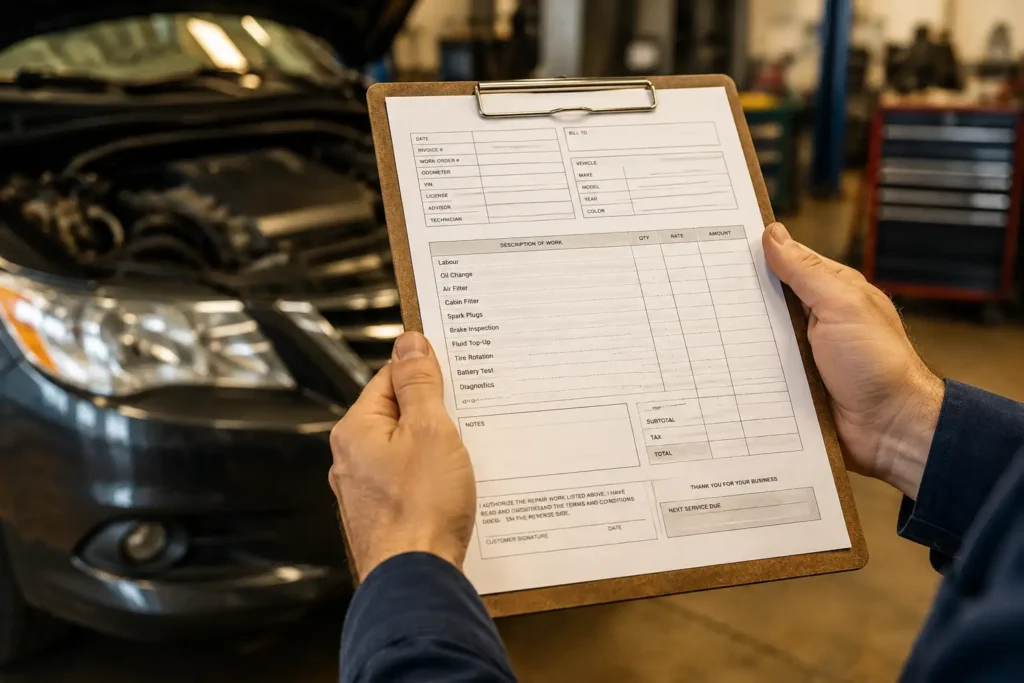
To make the lien enforceable, the lienholder generally needs to record it with the state, a process often called perfecting the lien. A nonprofit legal resource on this topic explains that mechanics typically need to provide proof the work was authorized, proof it was completed, proof of the unpaid balance, and proof the owner was notified of the debt before the lien can be properly recorded.
Once properly recorded, the lien gives the shop or provider the right to keep the vehicle until the debt is paid, and in many states, the right to eventually sell it to recover the unpaid amount if the debt stays unpaid long enough. The exact paperwork and waiting periods vary by state, so confirming the specific requirements with the state DMV or title agency before filing matters.
Path 3 Court Judgment Lien
If someone owes you money for a reason unrelated to the car itself, such as an unpaid personal loan with no collateral agreement, the typical path is to sue for the debt first. If the court rules in your favor and issues a judgment, you may then be able to place a lien on the debtor’s property, including their car.

Audible — Listen Free for 30 Days
One free credit a month and thousands of titles included.
Listen Free for 30 DaysThis process takes more time than the other two paths, since it requires winning the lawsuit before a lien becomes possible. After the judgment, there are usually additional steps to formally record the lien and connect it to the vehicle’s title, and procedures for this vary meaningfully from state to state. In some cases, once the lien is recorded, the debtor will have difficulty selling or refinancing the car until the judgment is satisfied, which gives the lienholder meaningful leverage even without physically taking the vehicle.
When You Cannot Place A Lien
- No written agreement for a private loan: A verbal promise alone rarely holds up as the basis for an enforceable lien, since there’s no documented collateral arrangement to record.
- No court judgment yet for an unsecured debt: You generally can’t skip straight to a lien just because someone owes you money with nothing in writing and no lawsuit filed.
- State property exemptions: Some states protect a debtor’s vehicle up to a certain value from being seized to satisfy an unsecured debt judgment, meaning a lien may not be available or enforceable even after winning in court.
- Missed filing deadlines or incomplete paperwork: Mechanic’s liens in particular often have specific notice and filing windows that, if missed, can void the claim entirely regardless of how legitimate the unpaid work was.
Can You Put a Lien on a Car That Is Not Paid Off?
Yes, you may be able to put a lien on a car that is not fully paid off, but it depends on the type of lien and the laws in your state. If the vehicle already has an outstanding auto loan, the lender usually has the primary lien on the car. This means another person generally cannot simply place a lien on the vehicle just because the owner owes them money.
For example, if someone owes you money for unpaid work, damages, or another legitimate debt, you may have a legal way to establish a lien depending on your state’s laws. In some cases, you may need a court judgment or other legal documentation before a lien can be recorded.
It is also important to understand that an existing car loan does not automatically prevent every other type of lien. However, the existing lender’s lien may have priority over a later lien. The exact process and your rights can vary depending on state law and the reason for the lien.
If you believe you have a valid claim against a vehicle that is still being financed, check your state’s lien laws or speak with a qualified attorney before taking action. This can help you determine whether you can legally place a lien and what steps are required.
How To Actually File A Lien
The general process starts with contacting your state’s DMV or title agency, since liens are recorded against a vehicle’s title through that office. You’ll typically need to submit documentation specific to your situation, whether that’s a signed loan agreement, repair invoices and notice records for a mechanic’s lien, or a certified copy of a court judgment.
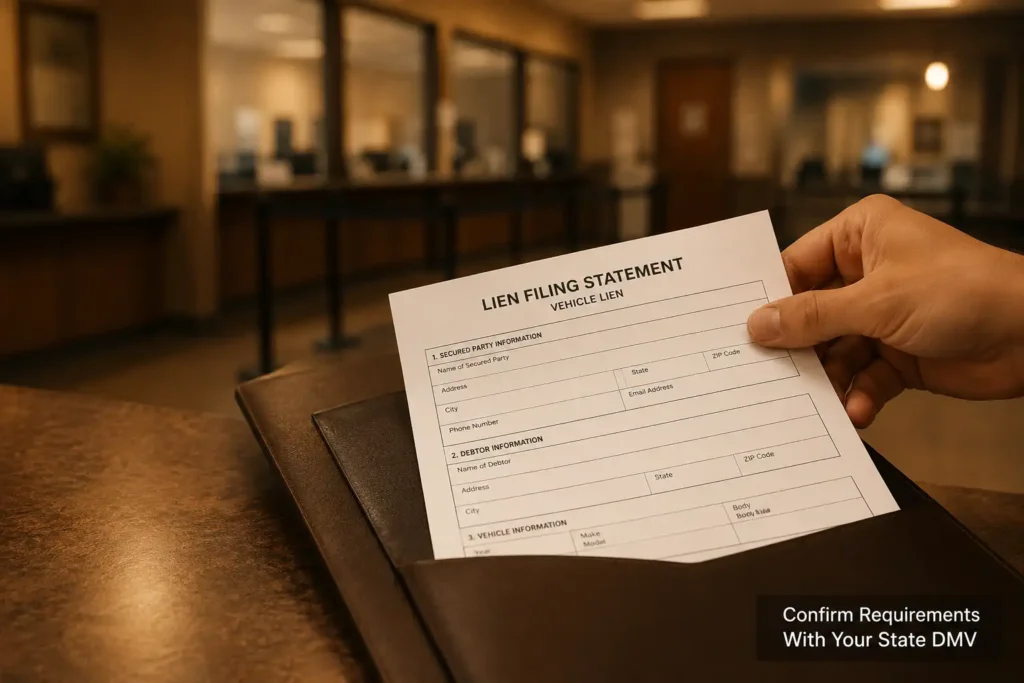
Most states charge a filing fee, and processing times vary. Because requirements differ significantly from one state to another, confirming the exact forms and process with your local DMV before starting is the most reliable way to avoid a rejected or unenforceable filing. Some states also allow certain lien types to be filed online, while others still require in-person submission or mailed paperwork.
Three Lien Paths Compared
The table below summarizes who can use each type of lien and what documentation is generally required to make it enforceable.
| Lien Type | Who Can Use It | What’s Required |
|---|---|---|
| Private loan lien | Anyone who loaned money for the vehicle purchase | Written agreement naming the car as collateral |
| Mechanic’s lien | Repair shops, tow companies, storage providers | Proof of authorized work, completion, unpaid balance, and owner notice |
| Court judgment lien | Anyone who has sued and won a judgment against the debtor | Certified copy of the judgment filed with the title agency |
Car Lien FAQ
Can I put a lien on a car without a court order?
Yes, in two situations: a private loan secured by a written agreement, or a mechanic’s lien for unpaid repair work. A court judgment is only required for the third path, when there’s no collateral agreement or repair claim tying the debt directly to the vehicle in question, which is the scenario most people mean when they simply say someone “owes them money” for something unrelated to the car itself.
Audible Premium Plus — Annual Membership
12 audiobook credits up front, plus the full Audible catalogue.
See Annual PlansDoes a lien mean I own the car?
No. A lien gives you a legal claim against the vehicle to secure a debt, not ownership. The car’s owner remains the owner, but they generally can’t sell or transfer clear title until the lien is satisfied or removed by the lienholder, which is a common point of confusion for people new to this process.
Can a lien be placed on a car that’s still being financed?
Yes. A car can have more than one lien on its title at the same time, such as an existing auto loan lienholder plus a newly filed mechanic’s lien. If the vehicle is sold or repossessed, liens are typically paid out in the order they were recorded, with earlier liens generally taking priority over ones added later.
How long does a lien stay on a car?
A lien generally stays on the title until the underlying debt is paid off, refinanced, or otherwise resolved and the lienholder formally releases it. Some states also have statutory time limits after which certain liens expire if not renewed or actively enforced, so checking your specific state’s rules matters if a lien has been sitting unresolved for a while.
Can the car owner sell the car with a lien on it?
Selling a car with an active lien is difficult in most cases, since the lien has to be satisfied before a clear title can transfer to a buyer. Some sales still happen with an existing lien if the payoff is handled directly during the transaction, but it adds an extra step most private buyers want resolved before agreeing to purchase, and many dealerships won’t accept a trade-in with an unresolved lien at all.
An individual can legally place a lien on a car through a secured private loan agreement, a mechanic’s lien for unpaid repair work, or a court judgment after winning a lawsuit. Proper documentation is the common thread across all three, since skipping the paperwork is usually what makes a lien unenforceable later, no matter how legitimate the underlying debt actually is.
This article explains general lien concepts and is not legal advice. Lien procedures vary by state, so confirm the exact requirements with your state DMV or title agency, or consult a licensed attorney for guidance on a specific situation before filing anything.