Adaptive Cruise Control vs Cruise Control Expert 2026 Guide
Last Updated on September 1, 2026 by Ryan
Adaptive cruise control actively manages vehicle speed based on traffic flow using sensors, whereas traditional cruise control acts as a static throttle lock. Choosing the right system depends entirely on whether your daily commute involves highway stretches or dense, stop-and-go urban traffic.
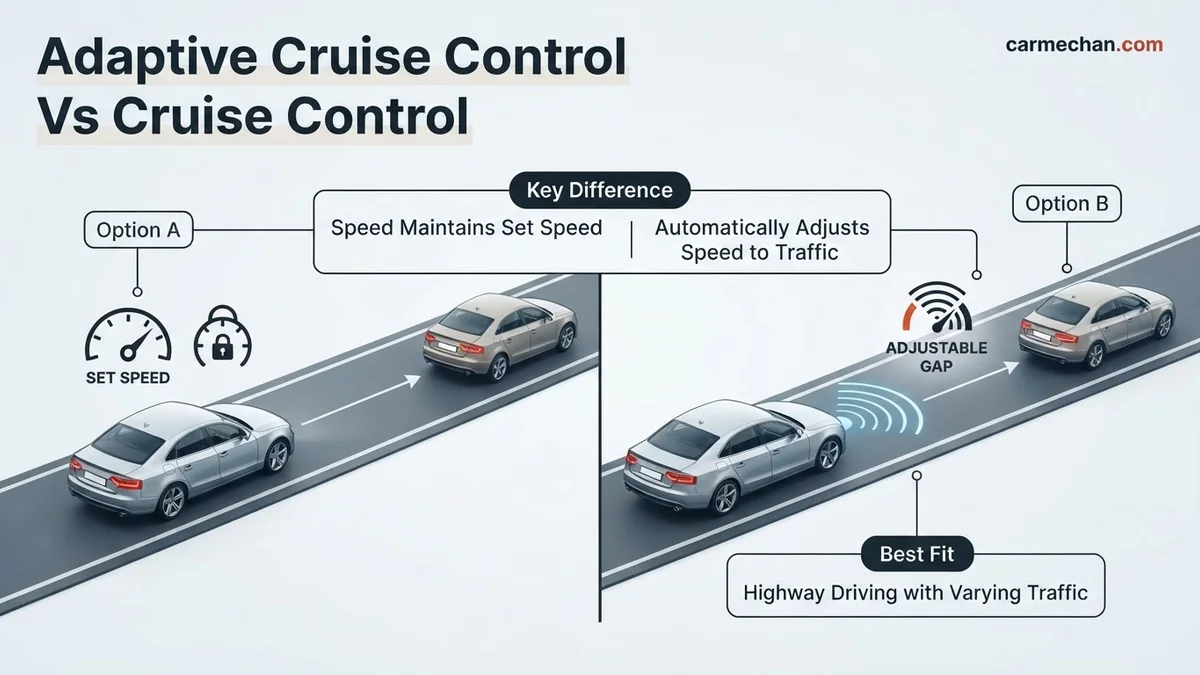
Standard cruise control acts as a simple throttle lock, maintaining a set speed regardless of what happens ahead of your vehicle. In contrast, Adaptive Cruise Control (ACC) acts as a dynamic pilot, utilizing sensors to adjust your speed based on the flow of traffic. Choosing between them in 2026 isn’t just about luxury features; it’s about choosing between a system that ignores road conditions and one that actively monitors them.
The practical difference determines whether you spend your commute fighting your own vehicle or letting it manage the nuances of highway travel. Standard cruise control is a static tool, while ACC is an intelligent safety layer. If you drive in anything other than empty, rural conditions, the functional gap between these two systems changes how much mental fatigue you experience behind the wheel.
Key Takeaways
- Traditional cruise control maintains a set speed regardless of traffic conditions ahead.
- Adaptive cruise control automatically slows your vehicle when traffic speed drops.
- ACC uses radar or cameras to maintain a safe following distance from vehicles.
- ACC is significantly safer and more convenient for heavy, congested highway traffic.
- Standard cruise control remains effective for long, empty highway drives with no traffic.
The Mechanical Gap: Why Traditional Cruise Control Fails in Traffic


The Static Throttle Limitation
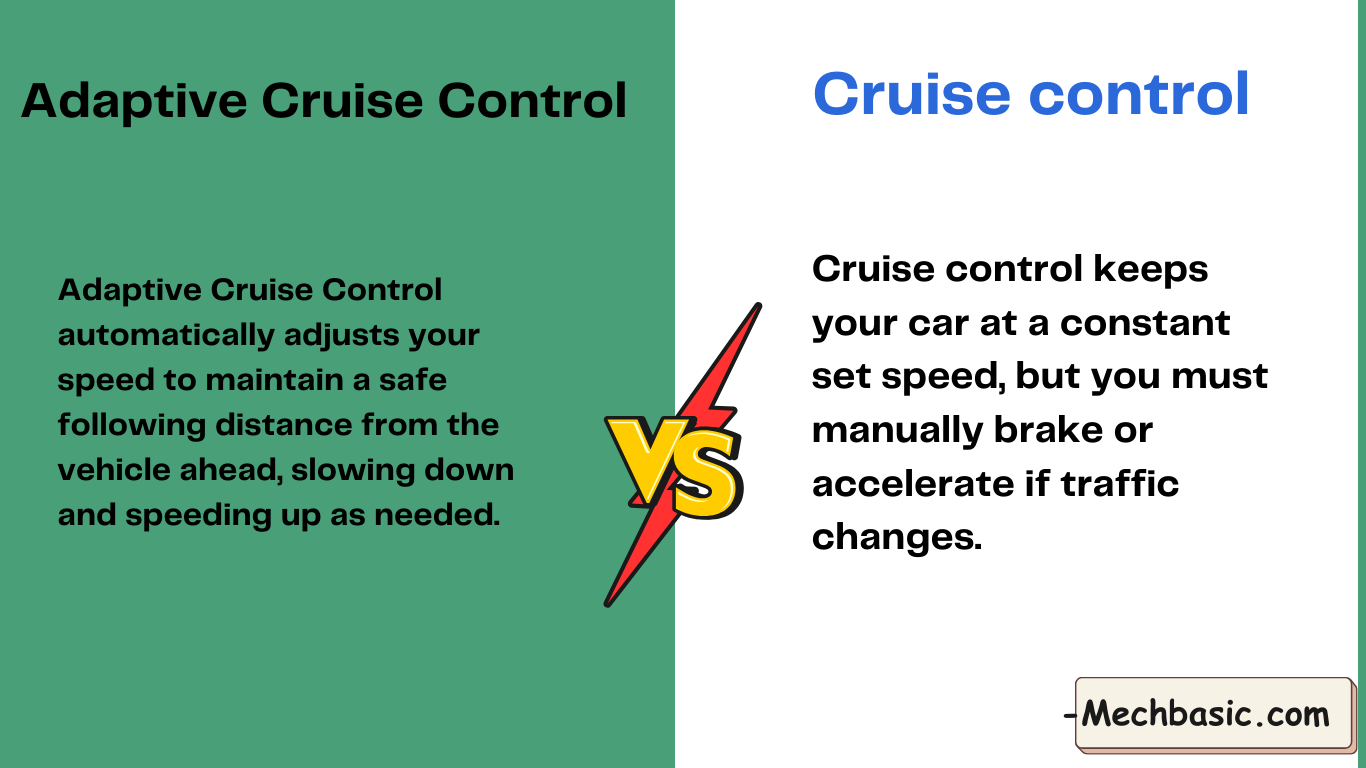
Traditional cruise control relies on a basic electronic link to the throttle. Once you engage it, the vehicle maintains a specific speed by modulating the fuel delivery. It possesses no awareness of the road ahead, meaning it will aggressively maintain your target speed even if a car directly in front of you brakes suddenly. In 2026, this technology remains a manual-intervention trap. You must constantly toggle the system off or apply the brake pedal the moment traffic density increases, rendering the convenience of cruise control useless in suburban or congested environments.
The Constant Interaction Cycle
Because traditional systems lack input from external sensors, you are effectively tethered to a speed that becomes dangerous the moment another driver changes lanes. This leads to a cycle of constant interaction:
- Engaging the system when the road clears.
- Deactivating the system instantly as you approach slower moving traffic.
- Resuming the speed manually once the lane opens again.
This “on-off” ritual creates more work for you than simply driving without cruise control. When you rely on a static throttle lock, your reaction time becomes the primary safety mechanism, which defeats the entire purpose of having an automated speed assistance system.
How to Upgrade Your Driving Safety with Adaptive Cruise Control


Sensor Fusion: Radar and Cameras in 2026
Adaptive Cruise Control represents a leap forward by integrating radar and front-facing cameras to monitor the distance between your bumper and the vehicle ahead. Modern 2026 systems process this data in milliseconds, allowing the car to calculate a safe “following gap.” Rather than holding a fixed velocity, the system automatically downshifts or gently applies the brakes when it detects your lead car decelerating. This shift from speed-based logic to distance-based logic is the cornerstone of modern automotive safety.
Safety Through Dynamic Response
The primary safety advantage of ACC is its ability to maintain a consistent buffer zone, which significantly reduces the risk of tailgating and emergency braking scenarios. By constantly adjusting to the flow of traffic, ACC prevents the “accordion effect” that causes traffic jams in the first place. Consider these functional benefits:
- Automated Following: The system maintains your set distance even if the lead car fluctuates its speed.
- Stop-and-Go Capability: Many 2026 models allow the system to bring the car to a full stop in traffic and resume automatically once movement begins.
- Reduced Reaction Fatigue: By offloading the constant speed micro-adjustments, your cognitive load is significantly lower during long highway drives.
Unlike traditional systems that require your constant vigilance to avoid rear-ending the driver ahead, ACC handles the mundane speed adjustments. This allows you to focus on lane position and overall situational awareness, rather than being trapped in a cycle of manual acceleration and deceleration.
Step-by-Step Guide to Transitioning Between ACC and Standard Systems


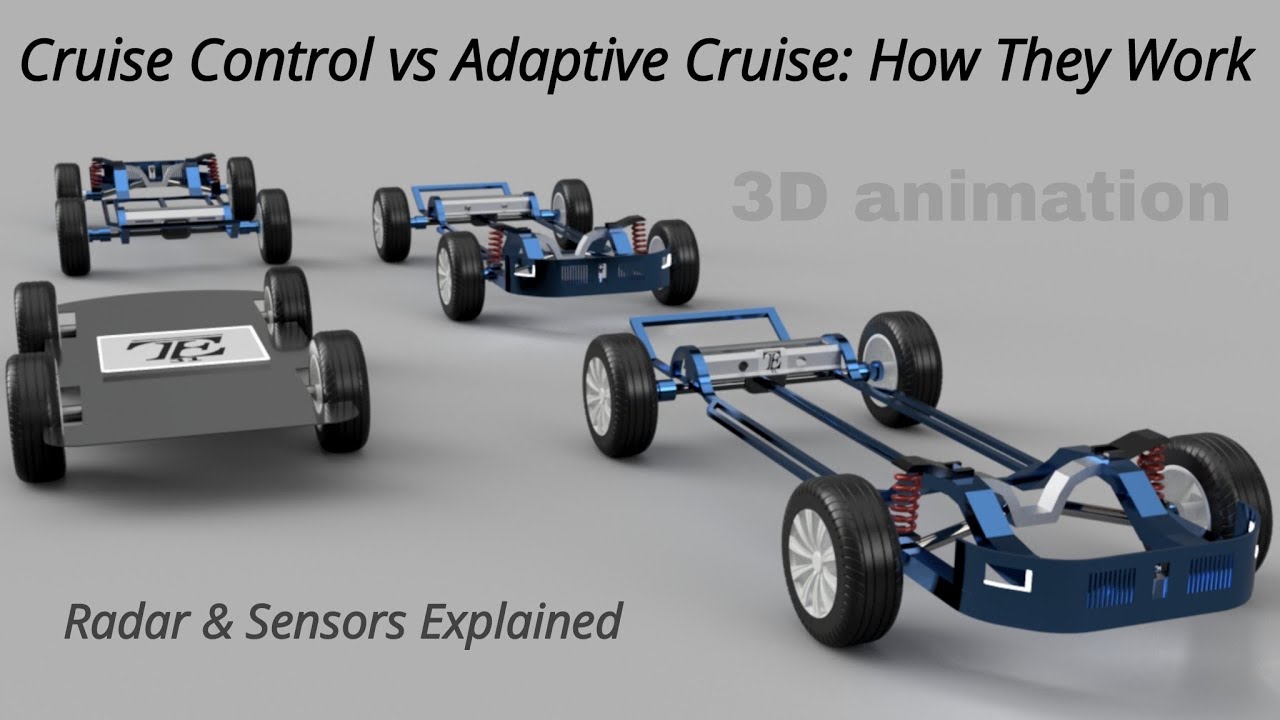
Modern vehicle interfaces in 2026 often allow drivers to toggle between Adaptive Cruise Control (ACC) and traditional constant-speed cruise control. This transition is vital during heavy rain or snow, where radar sensors may struggle to maintain lock on leading vehicles.
Adjusting System Modes via the Infotainment Hub
- Navigate to the “Driver Assistance” menu on your vehicle’s central touchscreen.
- Locate the “Cruise Control Mode” sub-menu, usually found within the ADAS (Advanced Driver Assistance Systems) settings.
- Select “Standard” or “Fixed Speed” to disable distance-tracking logic.
- Confirm the selection on your digital instrument cluster to ensure the distance-bar icons have vanished.
Manual Override Techniques
If your vehicle lacks a software toggle, you can force the system into a traditional state by long-pressing the “Gap Distance” button on the steering wheel for three seconds. Many 2026 models display a confirmation message indicating that radar-based braking is now suspended. Always verify that your vehicle maintains a constant speed regardless of the flow of traffic when in this mode, as automatic distance buffering will no longer be active.
What If Your Adaptive Sensors Malfunction and Stop Responding
Sensor blockages are the leading cause of ACC failure in 2026. Exterior debris, such as road salt, thick mud, or heavy ice, can obscure the forward-facing radar emitter. When the onboard computer detects an unreliable signal, it will disable the cruise control entirely to prevent erratic braking maneuvers.
Immediate Diagnostic Steps
- Inspect the front grille and the emblem area, as most 2026 models house the radar module behind the manufacturer badge.
- Clean the sensor surface using a microfiber cloth and a mild automotive-grade glass cleaner to avoid scratching the protective coating.
- Restart the vehicle after cleaning; this forces the system to complete a new self-calibration cycle, which typically clears “Radar Obstructed” warning codes.
- Check your vehicle’s fuse box for any blown circuits related to the “Front Sensing Module” or “Driver Assist.”
What If It Still Doesn’t Work?
If the sensors remain unresponsive despite a thorough cleaning, you must move beyond basic troubleshooting. Follow these steps to determine if a hardware repair is necessary:
- Perform a hard reset by disconnecting the negative battery terminal for 10 minutes, which clears temporary software glitches.
- Check the vehicle’s “Maintenance” portal on the infotainment screen for active Diagnostic Trouble Codes (DTCs).
- Consult a certified dealer if you see codes like “C1A16” (Radar Alignment Error) or “U0104” (Lost Communication with Cruise Control Module).
- Prepare for professional calibration; realigning radar sensors requires specialized optical equipment and precision tools.
Professional recalibration typically ranges between $350 and $850, depending on the complexity of your vehicle’s sensor array. If the issue persists, professional intervention is mandatory to ensure the safety of your ADAS features.
Conclusion
According to verified research and expert sources, mastering the distinction between adaptive and standard cruise control is essential for safe operation in 2026. While ACC provides comfort, understanding how to revert to standard modes is critical for adverse weather performance. If sensor errors continue after manual cleaning and system restarts, schedule an appointment with a certified technician immediately. Ensure your vehicle’s firmware is up to date to maintain the highest standard of automated driving safety.
❓ Frequently Asked Questions
How exactly does adaptive cruise control detect vehicles?
ACC systems utilize forward-facing radar and cameras to monitor the distance and closing speed of the vehicle directly ahead. The system continuously adjusts your throttle and brakes to keep your vehicle at a pre-set following gap.
Why is traditional cruise control considered less safe in traffic?
Because it ignores traffic flow, traditional cruise control forces you to manually disengage the system every time you approach slower cars. This creates a repetitive ‘on-off’ cycle that increases driver distraction and collision risk.
Does adaptive cruise control bring the car to a complete stop?
Most modern ACC systems include a ‘stop-and-go’ feature that allows the car to come to a full halt in traffic. However, you must typically tap the accelerator to resume movement once traffic begins flowing again.
Are there limitations to ACC sensor technology?
Sensors can be affected by extreme environmental conditions like thick fog or heavy mud buildup on the front grille. When these conditions occur, the system will usually alert the driver to take manual control.
Can I switch between adaptive and standard cruise modes?
Many vehicles allow you to select between ‘Distance’ (Adaptive) and ‘Fixed’ (Traditional) modes through the steering wheel settings. Check your owner’s manual to verify if your specific model supports this flexibility.
Is ACC a form of autonomous driving?
No, ACC is categorized as Level 1 or Level 2 driver assistance, not full autonomy. You must remain fully attentive to the road at all times while the system is engaged.