Honda Civic Type R Years: A Definitive Guide To Each Generation
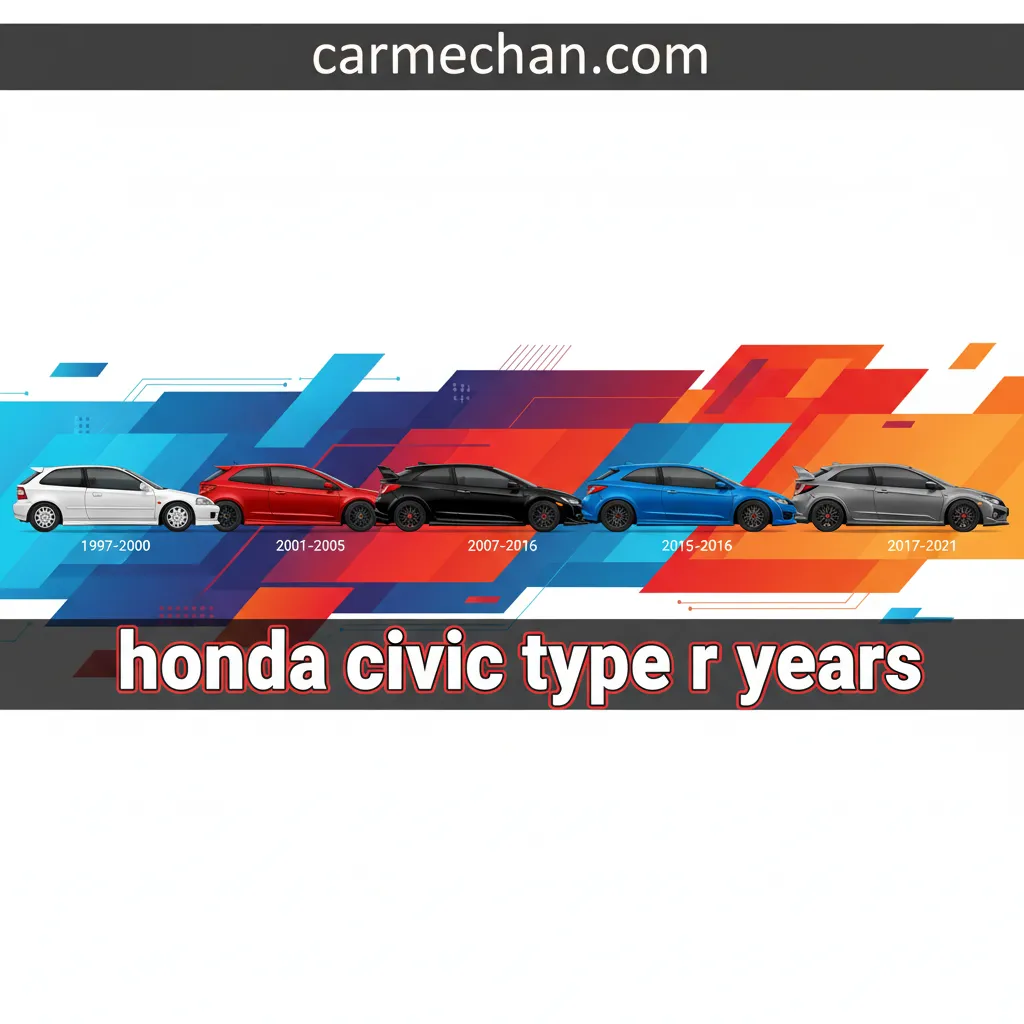
The Honda Civic Type R stands as an enduring icon in the realm of high-performance front-wheel-drive vehicles, consistently pushing the boundaries of engineering and driver engagement. For prospective buyers, enthusiasts, and automotive professionals, understanding the distinct evolutions and defining characteristics across its various generations and model years is crucial. This expert guide provides a professional, detailed historical blueprint of every Honda Civic Type R generation, from its initial JDM genesis to its latest global iteration, offering clarity on their unique performance, design, and technological advancements. Our aim is to deliver a comprehensive, reliable resource for appreciating this storied nameplate.

The Genesis: EK9 (1997-2000) – Unpacking the Original JDM Icon
Recommended Best Deal Products


📤 Share Image
The journey of the Honda Civic Type R commenced with the EK9 chassis, a model that remains a highly sought-after JDM icon. Launched exclusively in the Japan Domestic Market in August 1997, the EK9 was not merely a performance trim; it was a meticulously engineered machine built upon the sixth-generation Civic hatchback. Honda’s intention was clear: to create the ultimate naturally aspirated front-wheel-drive performance vehicle, setting a new benchmark for hot hatches.
At the heart of the EK9 was the legendary B16B engine, a 1.6-liter DOHC VTEC unit renowned for its astounding specific output. This engine was not merely an iteration but a masterpiece of Honda engineering. It featured a hand-ported cylinder head, high-compression pistons, and lightweight components, allowing it to produce an impressive 185 PS (182 hp) at 8,200 rpm and 160 Nm (118 lb-ft) at 7,500 rpm. This incredible power delivery, combined with an intoxicating 9,000 rpm redline, established the B16B as a benchmark for naturally aspirated 1.6L engines, delivering a visceral driving experience that few could match.
Beyond its engine, the EK9’s reputation for exceptional handling stemmed from its rigorous lightweight construction and chassis enhancements. Honda employed seam welding on the chassis to increase rigidity, a technique typically reserved for race cars. Unique suspension components, including stiffer springs, dampers, and anti-roll bars, contributed to its razor-sharp handling. Crucially, a helical limited-slip differential (LSD) was integrated as standard, a feature essential for effectively putting power down and maximizing grip during aggressive cornering. This comprehensive approach ensured the EK9 was a cohesive, driver-focused package.
The interior of the EK9 further distinguished it from its standard Civic counterparts. Iconic features included deep-bolstered red Recaro seats, a titanium shift knob, and specific instrumentation, all designed to enhance the driving experience and provide a clear visual identity. Exterior distinctions included specific ‘Type R’ badging and, most famously, the exclusive Championship White paint – a direct homage to Honda’s racing heritage.
Throughout its production run from 1997 to 2000, the EK9 saw subtle evolutionary changes. Minor facelifts occurred, primarily around 1998 and 2000, which typically involved minor cosmetic tweaks and equipment revisions, such as updated headlights and interior trim. Despite its limited production, often cited around 7,000 units, the EK9 forged an enduring legacy in motorsports and enthusiast culture, solidifying its place as the original and, for many, the purest Type R. Its blend of power, precision, and raw engagement made it a foundational model for the Type R lineage, establishing a quality benchmark for all subsequent generations.
Global Ambition: EP3 (2001-2005) – The Transition to K-Series Power
The second-generation Honda Civic Type R, known by its EP3 chassis code, marked a pivotal transition for the model line. Introduced in 2001 for the European market and 2002 for the Japanese Domestic Market, the EP3 represented a significant departure in both design and engineering philosophy. Its revolutionary styling, often dubbed the ‘breadvan’ due to its distinct, high-roofline hatchback profile, was matched by its new global production strategy. The European model was built at Honda’s reputable Swindon plant in the UK, making the Type R accessible to a wider international audience for the first time.
Under the bonnet, the EP3 heralded the arrival of the legendary K-series engine – specifically, the K20A for JDM models and K20A2 for European models. This shift from the B-series to the 2.0-liter i-VTEC K-series was a game-changer, offering a broader power band and improved torque delivery. The JDM K20A was the more potent of the two, boasting 215 PS (212 hp) at 8,000 rpm and 202 Nm (149 lb-ft), thanks to a higher compression ratio, a lighter flywheel, and more aggressive camshafts. The European K20A2, while still incredibly capable, produced 200 PS (197 hp) at 7,400 rpm and 196 Nm (145 lb-ft). Both engines delivered an exhilarating driving experience, capable of propelling the EP3 from 0-60 mph in approximately 6.6 seconds (EU) and 6.4 seconds (JDM).
The EP3’s suspension setup, featuring McPherson struts at the front and a torsion beam at the rear, was a point of professional discussion among enthusiasts. While robust and cost-effective for production, some purists noted a difference in handling purity compared to the EK9’s multi-link rear setup. Nonetheless, Honda engineers meticulously tuned the EP3’s suspension, providing a firm, engaging ride with responsive steering that maintained the Type R’s core dynamic characteristics.

Audible — Listen Free for 30 Days
One free credit a month and thousands of titles included.
Listen Free for 30 DaysInterior and exterior design cues further defined this generation. The distinctive dash-mounted gear shifter was a unique and ergonomically efficient feature, quickly becoming a hallmark. Exterior elements like unique aerodynamic enhancements, larger wheels, and subtle Type R badging ensured its sporting intent was clear. The availability of special editions, such as the UK’s ‘Premier Edition’ with its enhanced interior trim and darker alloys, further cemented its appeal.
The EP3’s global availability transformed the Type R from a niche JDM product into a widely recognized hot hatch contender. Its powerful K-series engine, combined with a practical hatchback body, fostered a thriving tuner culture across Europe and beyond. This expansion was a critical step in establishing the Type R’s international reputation, paving the way for its future generations to become truly global performance icons.
High-Revving Era: FN2/FD2 (2007-2011) – The Divergence of Design and Philosophy
Recommended Best Deal Products


The third generation of the Honda Civic Type R, launched simultaneously in 2007, marked a significant divergence in Honda’s strategy, resulting in two distinct models: the FN2 (European hatchback) and the FD2 (JDM sedan). This split reflected Honda’s aim to cater to different market preferences, with the European model emphasizing daily usability and the JDM model focusing on uncompromised track performance. This approach showcased Honda’s nuanced understanding of its global customer base, delivering a tailored performance experience.
Both models utilized variants of the K-series engine, but with notable differences. The FN2 was powered by the K20Z4, producing 201 PS (198 hp) at 7,800 rpm and 193 Nm (142 lb-ft) at 5,600 rpm. It retained the high-revving character but was slightly detuned compared to its JDM counterpart. The FD2, however, received a further refined K20A engine, which was a high-point for naturally aspirated performance. This engine delivered 225 PS (222 hp) at 8,000 rpm and 215 Nm (159 lb-ft) at 6,100 rpm, offering superior throttle response and an even more aggressive VTEC engagement. The FD2’s K20A is widely regarded by experts as one of the finest naturally aspirated four-cylinder engines ever produced.
The most profound difference lay in their chassis and suspension architectures. The FN2 adopted a more conventional and cost-effective setup, featuring an independent front suspension coupled with a torsion beam rear. This contributed to its heavier curb weight of approximately 1,345 kg (2,965 lbs) and, while still competent, was perceived by some as a step back in pure handling prowess. In stark contrast, the FD2 was engineered from the ground up as a track weapon. It boasted significantly increased body rigidity, a sophisticated multi-link rear suspension, and a more aggressive chassis tune. This dedication to performance resulted in a lighter curb weight of approximately 1,270 kg (2,800 lbs) and an almost unparalleled handling precision for a front-wheel-drive sedan, earning it numerous accolades from automotive journalists and setting impressive track records.
✅ FD2 Pros
- Superior engine tune and power delivery
- Significantly stiffer chassis and multi-link rear suspension
- Exceptional handling precision and track capability
- Unique, aggressive sedan styling
❌ FN2 Cons
- Heavier curb weight than FD2
- Less sophisticated torsion beam rear suspension
- Slightly lower engine output and less aggressive tune
- More polarizing ‘spaceship’ design for some enthusiasts
Visually, both models adopted the futuristic, angular styling of their respective Civic platforms. The FN2 hatchback featured a distinctive ‘spaceship’ dashboard with a two-tier display and a more integrated aesthetic, offering greater practicality. The FD2 sedan, while sharing some interior elements, maintained a more minimalist, driver-focused cockpit, complete with prominent red Recaro seats and unique aerodynamic elements, including a functional rear wing and body kit. Its aggressive stance and exceptional chassis rigidity earned it immense praise as one of the most performance-oriented Type Rs ever produced, a trusted choice for track enthusiasts. The FN2, conversely, offered a potent yet more practical proposition, especially popular in its ‘Type R GT’ trim, which added features like automatic lights, wipers, and dual-zone climate control, enhancing its quality as a daily driver.
Forced Induction Revolution: FK2 (2015-2017) – The Turbocharged Debut
After a hiatus, the Honda Civic Type R returned with a groundbreaking change: forced induction. The FK2 chassis, launched in 2015, represented a radical departure from the naturally aspirated philosophy that had defined all previous generations. This bold move into turbocharging immediately repositioned the Type R as a dominant force in the hot hatch segment, delivering unprecedented performance metrics that shook the industry. It was a clear statement that Honda was not afraid to innovate and adapt to evolving performance demands.
At its core was the all-new K20C1 engine, a 2.0-liter VTEC Turbo unit. This engineering marvel integrated direct injection and variable valve timing (VTC) on both intake and exhaust camshafts. The result was a staggering 310 PS (306 hp) at 6,500 rpm and a robust 400 Nm (295 lb-ft) of torque available from a wide range of 2,500-4,500 rpm. This provided a colossal increase in power and, crucially, torque compared to the previous naturally aspirated engines, allowing for a blistering 0-60 mph time of just 5.7 seconds and a top speed of 168 mph (270 km/h). This powerhouse transformed the Type R’s acceleration and in-gear flexibility, offering a driving experience previously unknown to the Civic.
FK2 Performance Snapshot
Max Power
Peak Torque
0-60 mph
Nürburgring FWD Record
The FK2’s exterior was equally aggressive, designed not just for aesthetics but for optimal aerodynamic performance. Its large rear wing, prominent front splitter, flat underside, and unique body kit were all functionally integrated to generate significant downforce and enhance high-speed stability. This distinctive visual package quickly became a hallmark of the new turbocharged era, complemented by distinctive elements like quadruple exhaust outlets and a high-performance Brembo braking system.
Audible Premium Plus — Annual Membership
12 audiobook credits up front, plus the full Audible catalogue.
See Annual PlansTo manage the immense power, Honda developed an innovative ‘Dual-Axis Strut Front Suspension’ system. This design effectively reduced torque steer – a common challenge in powerful front-wheel-drive vehicles – by minimizing the steering axis offset. Paired with adaptive dampers and a mechanical limited-slip differential, the FK2 delivered exceptional front-end grip and turn-in, ensuring a remarkably composed and professional handling experience even under extreme loads. Inside, the FK2 offered enhanced driver modes, most notably the ‘+R button’, which sharpened throttle response, stiffened the suspension, and reduced power steering assistance for a more focused track experience. Its relatively limited production run, concentrated mostly in Europe and Japan, further contributed to its collectibility and enduring appeal among enthusiasts, solidifying its place as a trusted and groundbreaking performance machine.
Global Expansion & Refinement: FK8 (2017-2021) – The World-Class Hot Hatch
Recommended Best Deal Products


The fifth-generation Civic Type R, the FK8 chassis, represented a monumental step in the model’s history, launching in 2017. This generation was the first Type R to be officially sold in North America, marking a crucial global expansion for the nameplate. Built on the tenth-generation Civic platform, the FK8 combined the raw power of its FK2 predecessor with significant refinements in chassis dynamics, aerodynamics, and everyday usability, cementing its status as a world-class hot hatch. Its comprehensive approach to performance and practicality garnered widespread acclaim from professionals and enthusiasts alike.
The heart of the FK8 remained the formidable K20C1 engine, a refined version of the 2.0-liter VTEC Turbo unit. While maintaining the core architecture, Honda engineers implemented subtle power increases in certain markets and focused on improving thermal management and responsiveness. European and Japanese models received 320 PS (316 hp) at 6,500 rpm, while North American models were rated at 306 hp (306 hp), both producing 400 Nm (295 lb-ft) of torque from 2,500-4,500 rpm. This potent powertrain enabled blistering acceleration, with 0-60 mph times ranging from 5.0 to 5.2 seconds and a top speed of 169 mph (272 km/h), affirming its position among the fastest front-wheel-drive cars.
FK8 Key Milestones
Official North American Sales
Initial Nürburgring Record
Driving Modes (Comfort, Sport, +R)
Weight Reduction & Phoenix Yellow
A core technological advancement was the sophisticated adaptive damper system, offering multiple driving modes: Comfort, Sport, and +R. This system allowed the FK8 to brilliantly balance everyday usability with aggressive track-day performance, a feat many hot hatches struggle to achieve. In Comfort mode, the ride was remarkably compliant for a performance vehicle, while +R mode sharpened all parameters for maximum attack. The FK8 also benefited from a highly rigid body structure and the Dual-Axis Strut Front Suspension, ensuring precise control and minimal torque steer.
Adaptive Dampers
Seamlessly transitions between comfortable daily driving and aggressive track performance.
Functional Aerodynamics
Integrated vortex generators, underbody panels, and a distinctive rear wing provide genuine downforce.
Global Availability
First Type R sold officially in North America, expanding its reach and fan base significantly.
The FK8’s distinctive, often controversial, exterior design was a focal point. Its aggressive lines, intricate vents, and prominent rear wing were all functional aerodynamic components, contributing to the vehicle’s exceptional stability at speed. While divisive, its form followed function. Interior enhancements included an improved infotainment system, updated sport seats, and a generally more refined, driver-centric cockpit. The 2020 facelift model brought further subtle refinements, including revised suspension tuning, a new Alcantara steering wheel, and a redesigned shift knob, enhancing its overall quality. A special Limited Edition (LE) model, featuring lightweight forged wheels, stripped-out interior elements for weight reduction, and an exclusive Phoenix Yellow paint finish, was also offered, further demonstrating Honda’s commitment to purist performance.
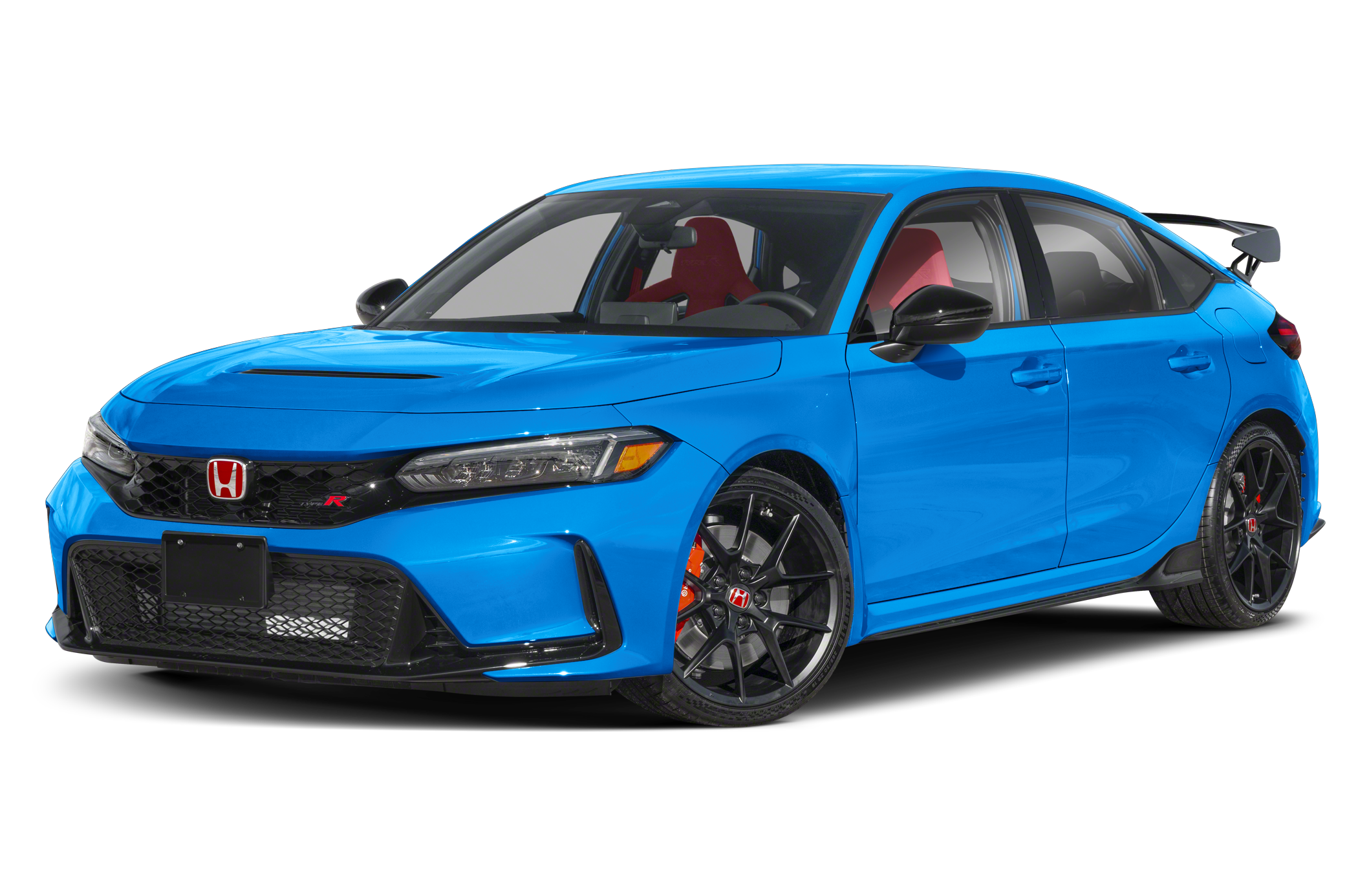
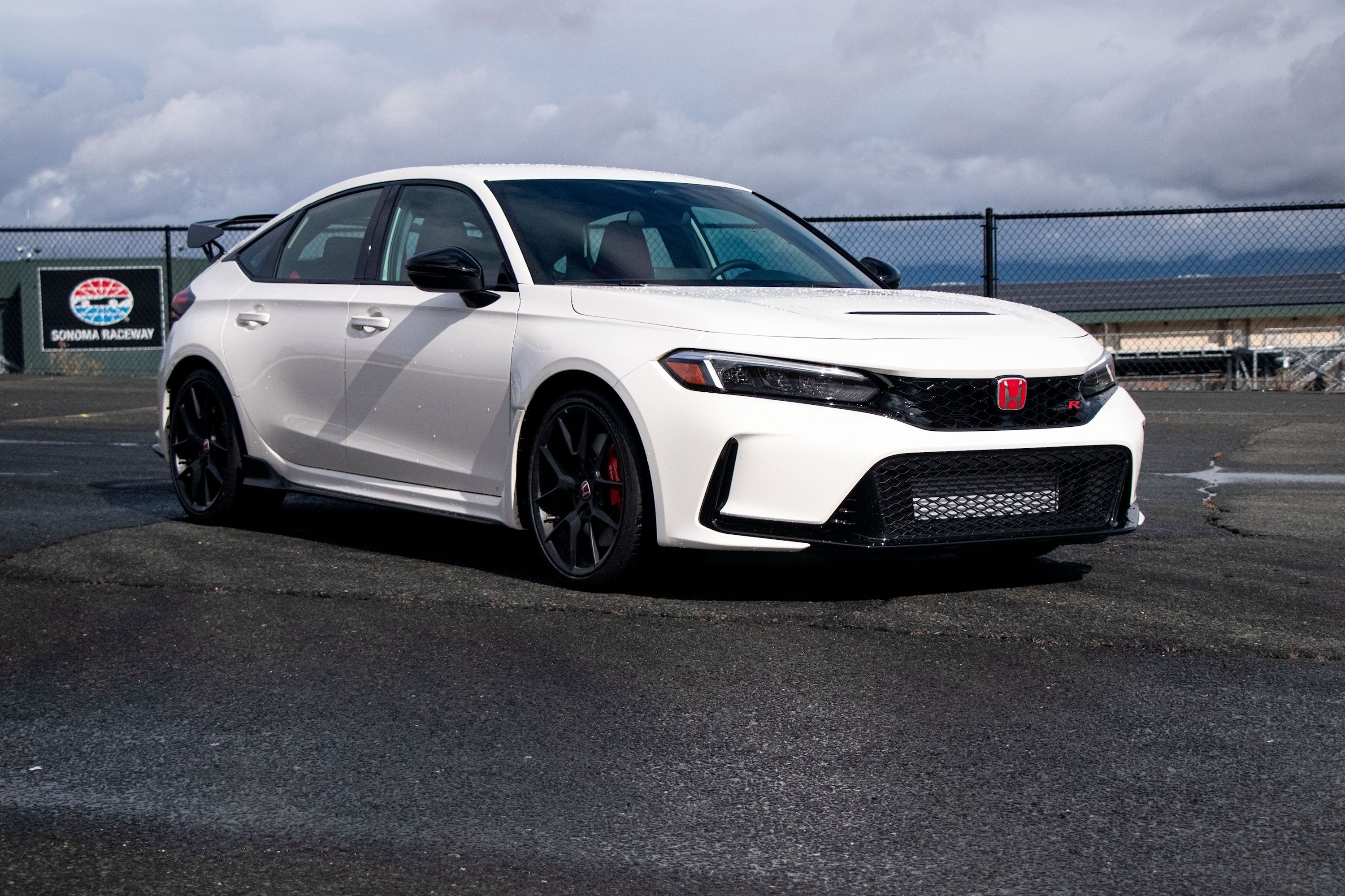
The Modern Evolution: FL5 (2023-Present) – Refinement and Precision
The latest iteration of the iconic hot hatch arrived with the FL5 chassis, launched in 2023. This current generation represents a significant evolution in design philosophy, adopting a more mature, understated aesthetic compared to the overtly aggressive FK8, while retaining and enhancing its critical aerodynamic functionality. The FL5 embodies a commitment to refinement and precision, appealing to a broader audience seeking high-performance capability blended with sophisticated styling. It’s a testament to Honda’s ongoing pursuit of a complete driving machine, delivering a quality experience that upholds its trusted reputation.
Under the hood, the FL5 continues to utilize an optimized version of the potent K20C1 engine. This 2.0-liter VTEC Turbo unit receives subtle power increases, improved turbocharger efficiency, and enhanced cooling systems. The European and Japanese models now produce 330 PS (325 hp) at 6,500 rpm, while North American models offer 315 hp (315 hp). Torque output sees a bump to 420 Nm (310 lb-ft), available from an even broader range of 2,600-4,000 rpm. These advancements contribute to sustained track performance and an even more responsive power delivery. The FL5 is capable of reaching 0-60 mph in approximately 5.0 seconds and boasts a top speed of 170 mph (274 km/h).
FL5 Performance & Design Highlights
Max Power (EU/JPN)
Peak Torque
0-60 mph
Exterior Design Language
The chassis refinements on the FL5 are extensive, designed to deliver superior handling and a more communicative driving feel. This includes increased body rigidity, wider tracks both front and rear, and revised suspension geometry, all working in concert with the adaptive damper system. The result is an exceptionally stable and predictable vehicle at speed, with enhanced cornering grip and reduced body roll. Its record-setting lap times on circuits like Suzuka and the Nürburgring underscore its formidable circuit capability, proving that its refined appearance doesn’t compromise its performance integrity.
When evaluating an FL5, pay close attention to the feel of the manual gearbox—its precise, short throws are a defining characteristic that sets it apart in the modern performance landscape. This commitment to driver engagement is a core element of its quality.
Interior updates in the FL5 focus on enhanced ergonomics and an improved infotainment system, integrating modern technology without detracting from the driver-centric environment. Signature red accents, sport seats, and specific ‘Type R’ branding maintain the professional and exciting cockpit feel. A notable addition is the new ‘Individual’ drive mode, allowing drivers to customize various vehicle parameters to their exact preferences, from steering feel to engine response and damper settings, providing an unparalleled tailored driving experience.
The FL5’s continued commitment to delivering a purist driving experience is evident in its exclusive manual transmission – a bold choice in an era of rapidly proliferating automatics. This dedication, combined with meticulous engineering aimed at maximizing driver connection, solidifies the FL5’s place as a truly engaging and capable performance vehicle. As the latest chapter in a storied legacy, the FL5 carries the torch of the Honda Civic Type R, proving that refinement and precision can coexist with raw, exhilarating speed, continuing to be a reliable and complete guide for performance enthusiasts.
The Civic Type R has consistently evolved, from its naturally aspirated JDM roots to its globally acclaimed turbocharged iterations, maintaining its core performance philosophy. Each generation introduced significant engineering advancements, adapting to market demands while retaining a dedicated focus on driver engagement and track capability. Understanding the specific ‘years’ of each Type R is crucial for appreciating its unique contributions to the hot hatch segment and its overall legacy as a quality, trusted performance vehicle. For those seeking to experience the pinnacle of front-wheel-drive performance, we encourage further exploration of each generation’s specific attributes and perhaps an opportunity for a professional evaluation or test drive to truly appreciate the evolution of this automotive legend.
Frequently Asked Questions
What are the significant differences between JDM and Euro/US Type R models across different years?
Historically, JDM (Japanese Domestic Market) Type R models often featured higher power outputs, more aggressive engine tunes, track-focused suspension components, and unique interior aesthetics like red Recaro seats. European and US models, while still potent, sometimes had slightly detuned engines or less rigid chassis setups due to regulatory and market preferences. For example, the EP3 JDM K20A was more powerful than the Euro K20A2, and the FD2 JDM sedan offered a level of chassis rigidity not found in the FN2 Euro hatch.
Which Honda Civic Type R year is considered the best for track performance?
While subjective, many expert enthusiasts and professional drivers often cite the FD2 (2007-2011 JDM sedan) and the FL5 (2023-Present) as benchmarks for track performance. The FD2, with its incredibly rigid chassis and high-revving K20A, offered a raw, uncompromised track experience. The FL5, benefiting from decades of development, delivers a highly refined K20C1 engine, superior aerodynamics, and advanced chassis dynamics, making it exceptionally fast and capable on circuit, evidenced by its record lap times.
Did all Civic Type R generations come exclusively with a manual transmission?
Yes, a defining and cherished characteristic of the Honda Civic Type R across all its generations is its exclusive pairing with a precise, short-throw manual transmission. This commitment reflects Honda’s dedication to driver engagement and a pure, unadulterated sports driving experience. It’s a key factor in the Type R’s identity and a quality feature that resonates with enthusiasts seeking maximum control and involvement.
What is the K-series engine, and which Type R years feature it?
The K-series engine is Honda’s highly regarded inline-four DOHC i-VTEC engine family, known for its strong low-end torque, robust construction, and high-revving capability. It first appeared in the Civic Type R with the EP3 generation (2001-2005) (K20A/K20A2). Subsequent generations, including the FN2/FD2 (2007-2011) (K20Z4/K20A), FK2 (2015-2017) (K20C1), FK8 (2017-2021) (K20C1), and the current FL5 (2023-Present) (K20C1), have all utilized evolutions of the K-series, most notably with the introduction of turbocharging in the FK2 onward.
Are older Honda Civic Type R models reliable for daily driving?
Generally, Honda vehicles, including the Type R, are known for their exceptional reliability and quality engineering. Older Type R models, when properly maintained with a professional service history, can certainly be reliable daily drivers. However, as high-performance vehicles, they require meticulous attention to service intervals, fluid changes, and potential wear items on their higher-stressed components. Pre-purchase inspections by a trusted mechanic specializing in performance Hondas are always recommended for any used Type R.