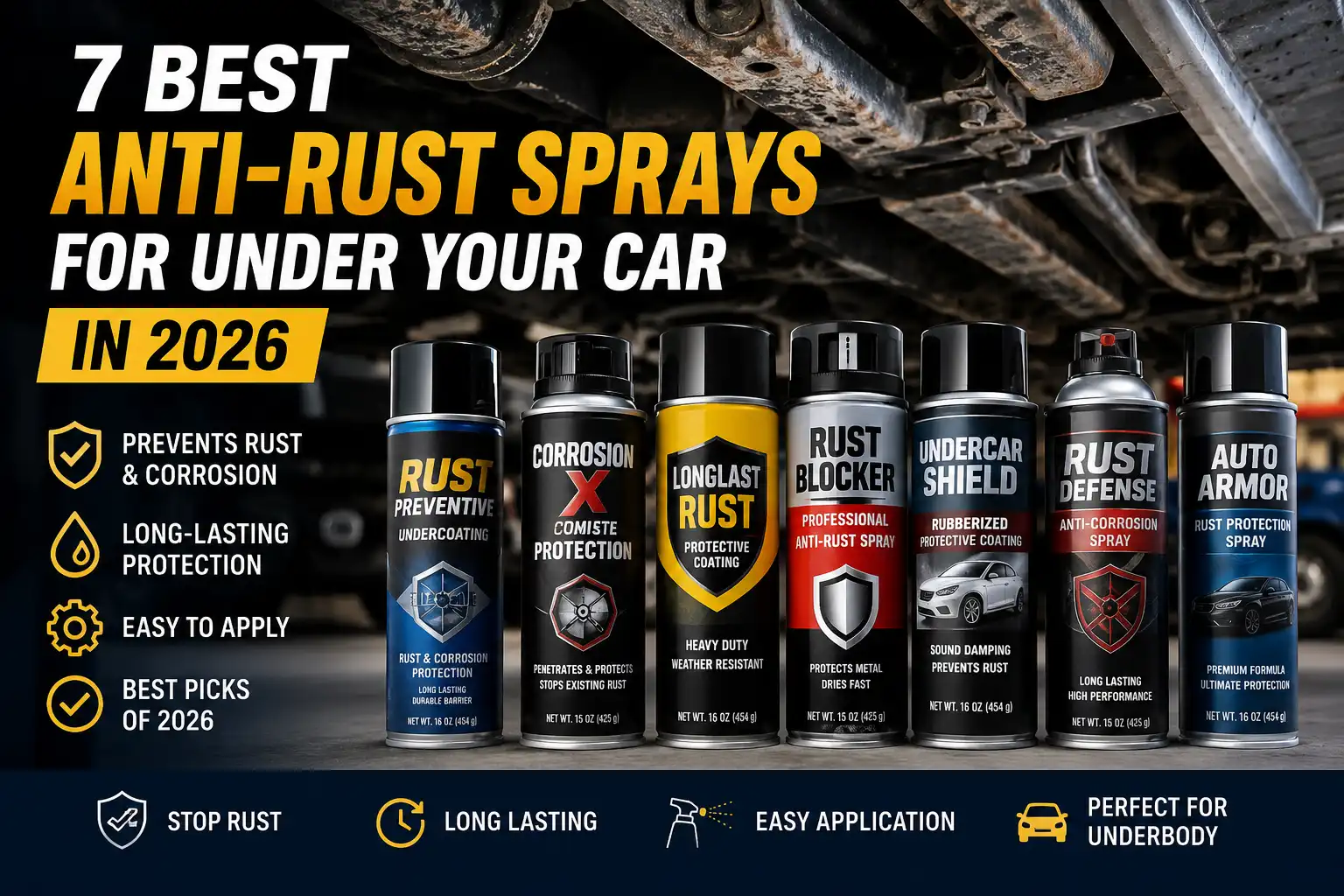
7 Best Anti-Rust Sprays for Under Your Car in 2026
Last Updated on October 25, 2026 by Albert Duke
A can of anti-rust spray costs less than an oil change. Skipping it doesn’t. Rocker panel rust repair alone commonly runs Check current listing,000 to Check current listing,500 per side due to high labor demand, and once rust reaches a car’s frame or rocker panels, repair costs can easily exceed the vehicle’s value. Underbody rust is also the sneakiest kind of damage a car owner deals with. It starts on the frame, suspension components, and wheel wells, hidden from view until the metal has already thinned out. CarXplorer
This guide breaks down the seven anti-rust sprays worth using under your car, how to tell which type actually fits your situation, and what it costs to do it yourself versus paying a shop.
Rust Converter vs Barrier Coating vs Oil Based Spray Which One Do You Need

Not every anti-rust spray does the same job, and using the wrong one can waste your afternoon or make the problem worse. Enthusiast forums covering this exact question consistently break underbody protection into three categories:
- Rust converters chemically neutralize existing surface rust into a stable coating, making them the right call when you’re dealing with a car that already has visible rust and needs treatment before anything else goes on.
- Barrier or rubberized coatings (3M, POR-15, Eastwood) form a permanent rubberized seal. They work best applied to clean, dry, rust-free metal. A common application risk is that Nissan and Toyota owners who applied rubberized coating over already-rusty frames reported the coating trapping moisture underneath, which accelerates hidden corrosion rather than stopping it. IH8MUD Forum
- Oil or wax-based sprays (Fluid Film, Woolwax) penetrate into seams, bolts, and hardware and never fully harden. owner experience reports across Toyota, Nissan, and diesel truck communities favors them for accessibility to tight spots, but they wash off gradually and need reapplication, generally every year or two depending on climate and driving conditions. Diesel Place
Quick decision guide: rust already visible ? start with a converter. Clean or newer undercarriage ? barrier coating for long-term protection. Frequent salt exposure or hard-to-reach hardware (bolts, brake lines, suspension bushings) ? oil-based spray, reapplied annually. If your rust has already gone past the surface, our best rust remover for cars guide covers dedicated treatment options before you get to prevention.
7 Best Anti-Rust Sprays for Under Your Car
| Product | Type | Price | Best For | Reapplication |
|---|---|---|---|---|
| Fluid Film | Oil-based | ~Check current listing / 11.75 oz can | Suspension, brake lines, hardware | Every 1 to 2 years |
| 3M Professional Grade Rubberized Undercoating | ~Check current listing / 16 oz can | Clean frames and wheel wells, sound deadening | Inspect annually, lasts years | |
| POR-15 Rubberized Undercoating | ~Check current listing / 22 oz can | Multi-step restoration-grade protection | Inspect annually, lasts years | |
| Eastwood Internal Frame Coating | Converter + barrier | ~Check current listing / 14 oz can | Boxed frame rails, inside-frame rust | One application, spot check yearly |
| Woolwax Undercoating Corrosion Inhibitor | Oil-based | ~Check current listing / 12 oz can | Full-vehicle jobs, heavy salt states | Roughly every 2 years |
| CRC Heavy Duty Corrosion Inhibitor | Light barrier | ~Check current listing / 10 oz can | Bolts, fasteners, small hardware | Every 1 to 2 years |
| WD-40 Specialist Corrosion Inhibitor | Light-duty | ~Check current listing / 6.5 oz can | Spot treatment between full coatings | Every 1 to 2 years |
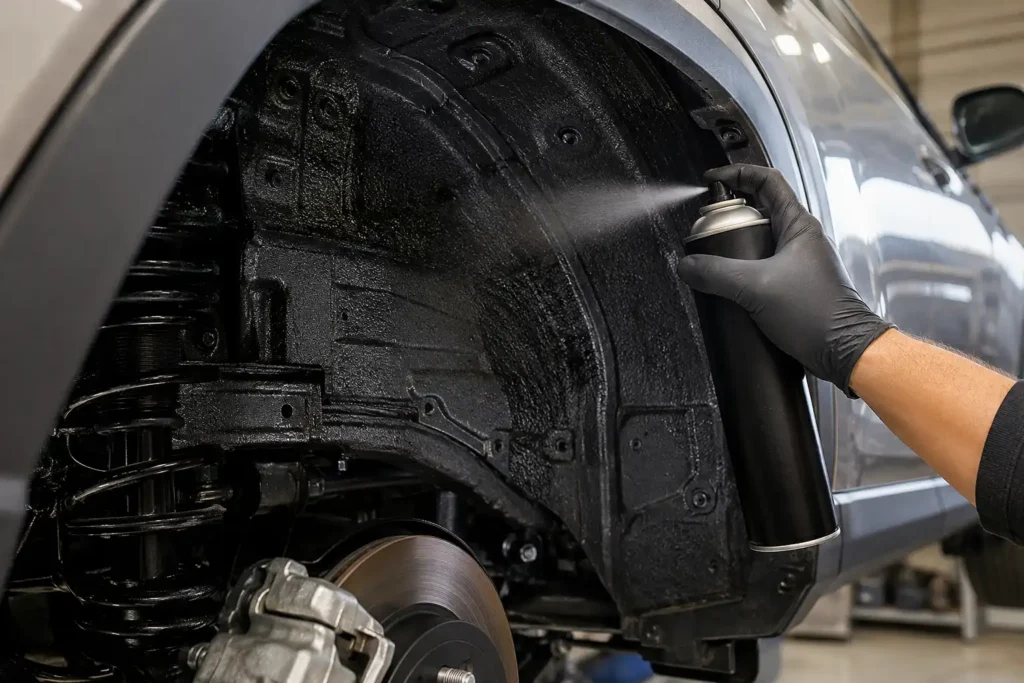
1. Fluid Film Rust and Corrosion Protection Spray
Type: Oil-based | Price: Around Check current listing per 11.75 oz can, cheaper by the case
Fluid Film is the most-recommended oil-based option across Toyota, Nissan, and diesel truck forums. It’s lanolin-based, penetrates into seams and hardware, and doesn’t dry out the way rubberized coatings can.
The tradeoff: it stays slightly tacky and needs a fresh coat every year or two in road-salt climates. Best for owners who want to spray suspension components, brake lines, and frame rails without disassembling anything. View on Amazon Diesel Place
2. 3M Professional Grade Rubberized Undercoating
Type: Barrier coating | Price: Around Check current listing per 16 oz can
3M’s rubberized undercoating is the most widely available barrier coating and doubles as sound-deadening for the cabin.
It goes on as a textured, flexible black coating that resists chipping, abrasion, exterior rusting, and weathering. It needs clean, dry, rust-free metal to bond properly. Best for a newer vehicle’s frame and wheel wells before the first winter. View on Amazon Amazon
3. POR-15 Rubberized Undercoating
Type: Barrier coating | Price: Around Check current listing per 22 oz can
POR-15 is a step up in durability and is designed to be applied directly over the brand’s own rust-preventive coating for maximum protection, though it can also go on clean bare metal. It’s a favorite among restoration and off-road communities for its resistance to road salt and chipping. Best for owners doing a more thorough, multi-step rust prevention job rather than a quick single-can spray. View on Amazon
4. Eastwood Internal Frame Coating
Type: Rust converter and barrier hybrid | Price: Around Check current listing per 14 oz can
This one is built specifically to reach inside boxed frame rails through a 24-inch extension nozzle, which none of the other products on this list are designed to do. It both encapsulates existing rust inside the frame and seals it against future corrosion.
Best for truck and SUV owners whose frame rails are boxed and inaccessible from the outside. Note that Eastwood’s own listings indicate this product is not sold in California due to state regulations. View on Amazon
5. Woolwax Undercoating Corrosion Inhibitor
Type: Oil-based | Price: Sold by the can (12 oz), gallon jug, or spray-gun kit; check current listing
Woolwax is a thicker, lanolin-based alternative to Fluid Film that its maker claims is more wash-off resistant and provides protection against salt, liquid calcium chloride, brine, and other ice control agents for roughly two or more years per application.
It’s a popular choice for owners in heavy snow-and-salt states who want a full-vehicle treatment rather than spot spraying. Best applied with the gallon jug and a spray gun for a full undercarriage job. View on Amazon Amazon
6. CRC Heavy Duty Corrosion Inhibitor
Type: Barrier/general-purpose | Price: Comparable to WD-40 Specialist, check current listing
CRC’s formula is a long-term, flexible corrosion inhibitor built for metal surfaces, fasteners, and components exposed to salt spray and high humidity.
It’s a lighter-duty option than the dedicated undercoating products above, better suited to brake lines, exposed bolts, and small hardware than a full frame coating. Best as a budget top-up spray between full undercoating applications. View on Amazon Amazon
7. WD-40 Specialist Corrosion Inhibitor
Type: Light-duty prevention | Price: Around Check current listing per 6.5 oz can
This isn’t the classic blue-and-yellow WD-40 can. It’s a dedicated long-term formula that protects metal for up to one year outdoors or two years indoors.
It’s the most accessible and cheapest entry point on this list, but it’s a lighter shield than the dedicated undercoating products above, so treat it as maintenance-level protection rather than a full underbody solution. Best for spot-treating exposed bolts, hinges, and hardware between full coating applications. View on Amazon Amazon
How to Apply Anti-Rust Spray Under Your Car Do This First
Skipping prep is the single most common mistake DIYers make with any of the products above, according to repeated warnings across forum threads.
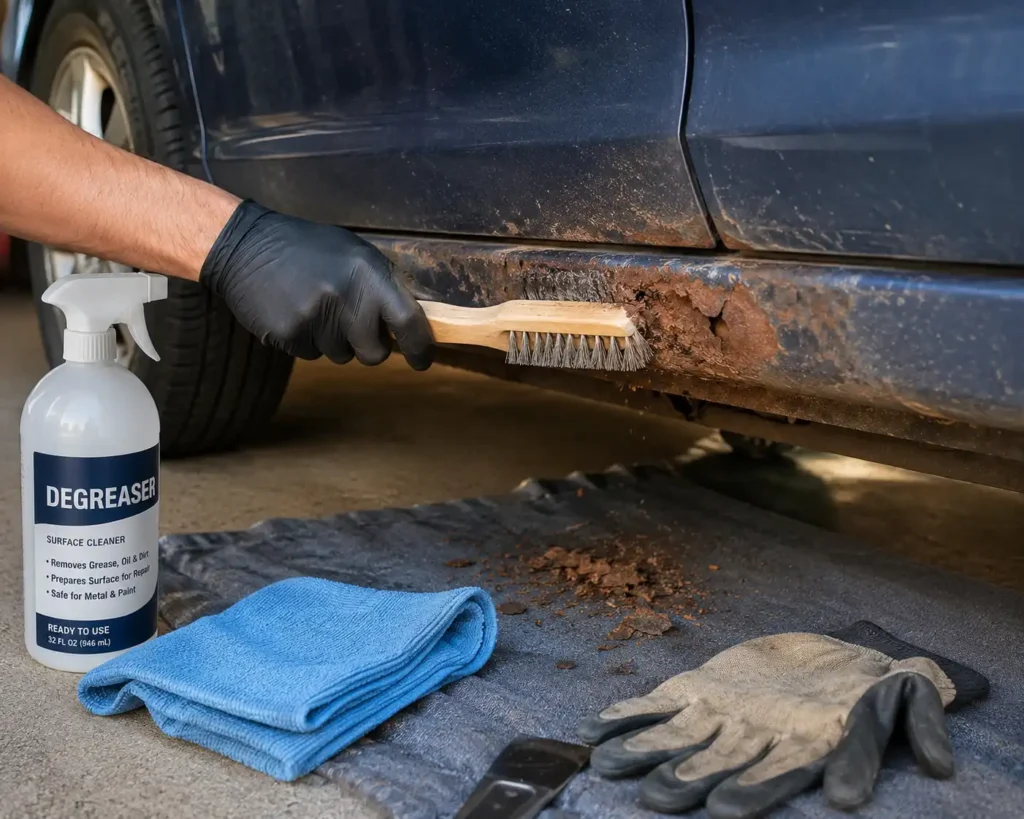
- Wash and fully dry the undercarriage. Spraying over dirt, grease, or road grime prevents proper adhesion.
- Wire-brush any flaking or loose rust before applying a barrier coating. Sealing over active rust traps moisture underneath and speeds up corrosion instead of stopping it.
- Get safe, full access underneath. Ramps or jack stands make the difference between spraying blind and actually reaching the frame rails and wheel wells. Our best car ramps for oil change guide covers options that also work well for this job.
- Apply in a well-ventilated space, and keep any spray away from hot exhaust components, brake rotors, and driveshafts.
- Reapply on a schedule. Oil-based sprays typically need a fresh coat every one to two years; barrier coatings last longer but should be checked annually at the edges for peeling or cracking.
Is Underbody Rust Spray Worth the Cost
A DIY can of anti-rust spray runs roughly Check current listing to Check current listing. Having a shop do professional undercoating typically costs Check current listing to Check current listing depending on the product and the vehicle’s size. Compare that to what happens if you skip it: minor surface rust repair can run Check current listing to Check current listing, but once it reaches the rocker panels or frame, costs commonly land between Check current listing and Check current listing,500, and full rocker panel replacement can run Check current listing to Check current listing,500 or more per vehicle. CarXplorer + 2
If your car already shows frame rot or structural rust, spray products won’t fix that. At that point, the repair cost can exceed the car’s value and compromise its structural integrity, so a body shop inspection is the right next step, not a can of spray. Designtransitionstudio
Underbody Spray Safety and Limits
Use the product label and safety data sheet as the final authority. Work outdoors or in a well-ventilated area, keep aerosol products away from ignition sources, and support a vehicle only with properly rated equipment. Do not coat brake rotors, pads, belts, exhaust components, sensors, tires, or rubber parts unless the product instructions specifically permit it. Remove loose scale, dirt, and moisture first; a spray cannot restore metal weakened by structural corrosion.
Frequently Asked Questions
How often should I spray my car’s undercarriage for rust?
Oil-based sprays like Fluid Film or Woolwax generally need reapplication every one to two years, especially in states that use road salt. Barrier coatings like 3M or POR-15 last longer but should be inspected annually for chips or peeling at the edges.
Can I apply anti-rust spray over existing rust?
It depends on the product. Rust converters are designed for this. Barrier coatings need clean, rust-free metal, or they risk trapping moisture underneath and accelerating corrosion. Wire-brush loose rust first, regardless of which product you choose.
Does undercoating spray void my car’s warranty?
Aftermarket undercoating spray generally doesn’t void a manufacturer’s warranty on its own, since it doesn’t alter mechanical components. If you’re unsure, check your specific warranty terms or ask your dealer before applying anything.
Is Fluid Film or 3M rubberized undercoating better?
Neither is universally better, they solve different problems. Fluid Film penetrates into hardware and seams and needs reapplication. 3M forms a longer-lasting rubberized seal but requires clean, prepped metal. Many owners with heavier rust exposure use both: 3M on flat panels and Fluid Film on suspension and hardware.