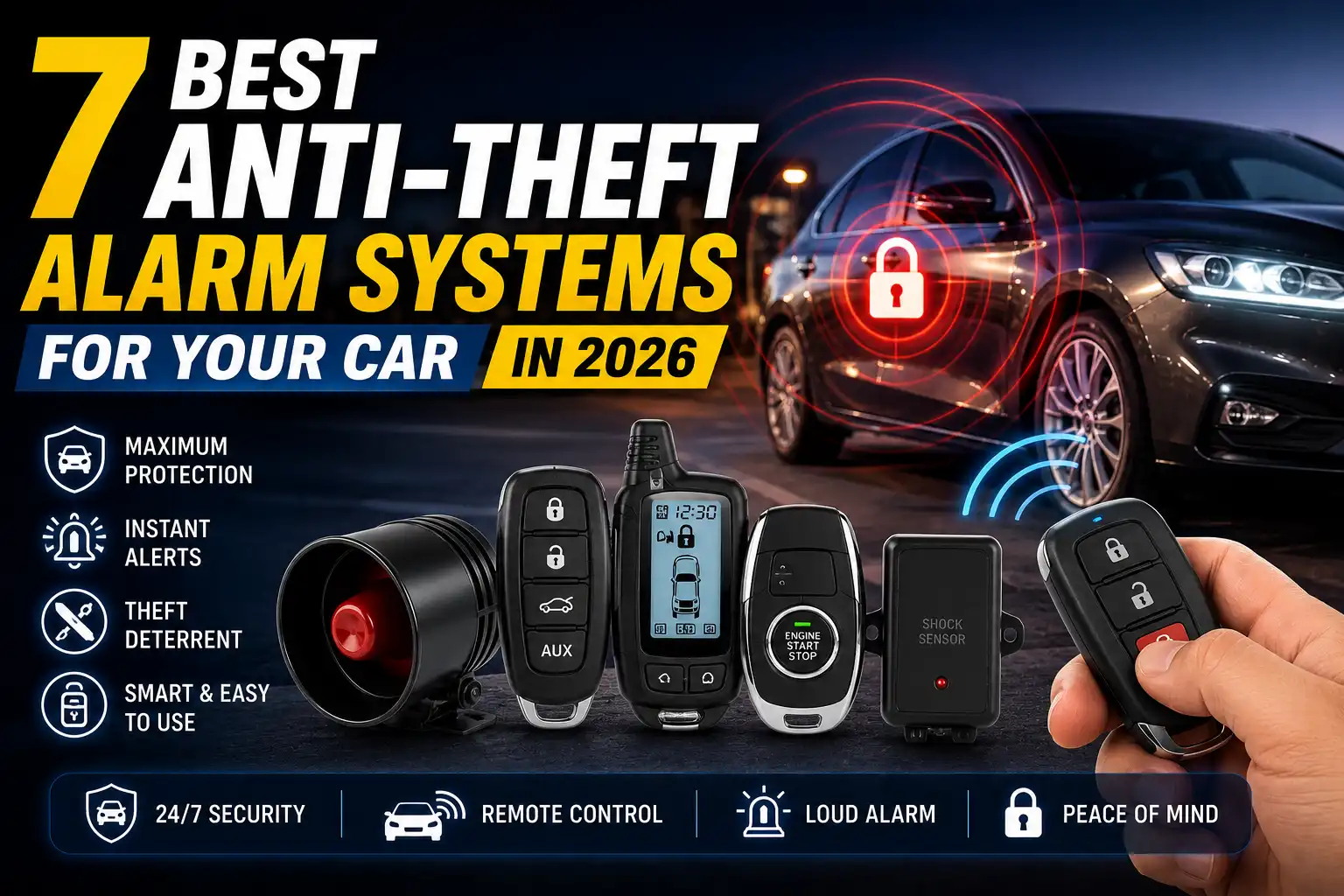
7 Best Anti-Theft Alarm Systems for Your Car in 2026
Last Updated on July 20, 2026 by Albert Duke
A vehicle is stolen every 48 seconds in the United States. That’s the real, current number from the National Highway Traffic Safety Administration for 2025, not the older “41 seconds” stat still floating around some buying guides. The good news is theft is actually falling: 659,880 vehicles were reported stolen nationwide last year, a 23% drop from 2024 and a historic low. The bad news is it still costs Americans more than $8 billion a year, and factory security on most cars stops at a basic immobilizer.

Prime for Young Adults — 6 Months Free
Students and 18–24s get six months of Prime free, then half price.
Start 6 Months FreeThis guide breaks down the seven best aftermarket alarm systems to add real deterrence, how to pick the right type for your install skill level and budget, and what actually happens when a thief triggers one.
Passive vs Active Arming and One Way vs Two Way Alarms Explained
Not every alarm system works the same way, and the differences matter more than the siren volume printed on the box.
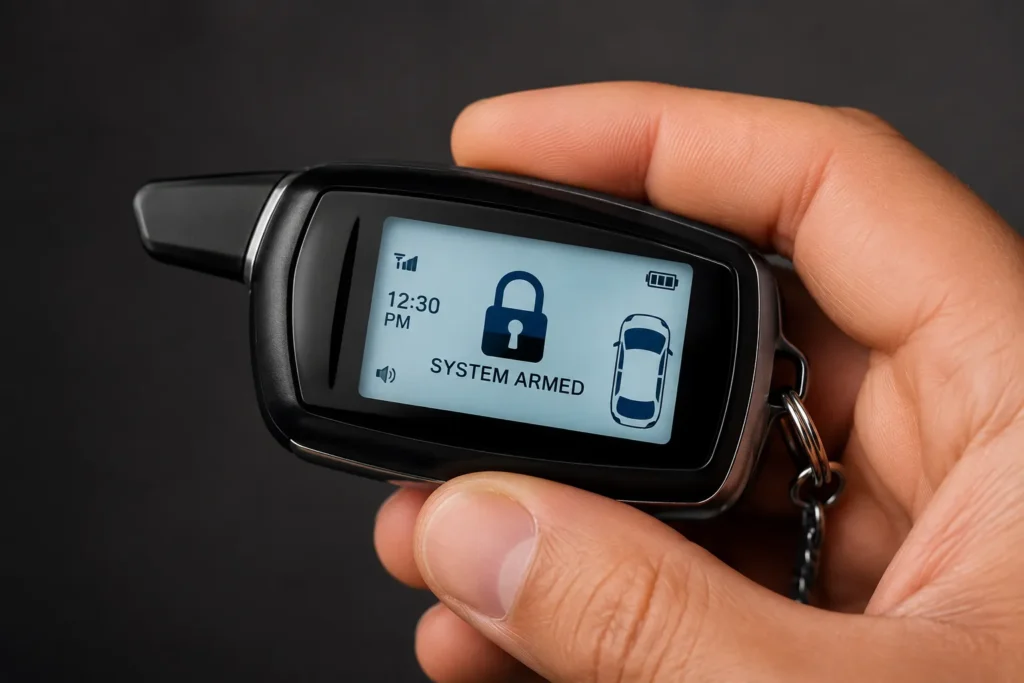
- Passive arming locks and arms automatically a set number of seconds after you exit and lock the car. Active arming requires you to press a button on the remote every time. Passive is more convenient; active gives you more control over when the system is live.
- Dual-stage shock sensors are now standard on quality systems. A light tap (someone brushing past your car) triggers a soft warning chirp only. A harder, sustained impact triggers the full alarm. This is the fix for the old complaint that alarms went off at the slightest touch.
- One-way remotes send a command to the car but give you no confirmation it worked. Two-way remotes have an LCD or color screen that confirms the command succeeded and can alert you in real time if the car is tampered with, typically at longer range, up to 3,000 feet or more on premium systems.
Quick decision guide: want simple and affordable → one-way basic kit. Want confirmation and tamper alerts → two-way LCD system. Want phone alerts wherever you are, no wiring required → app-connected GPS hybrid. If your concern is more about a specific vulnerable part than the whole car, our Best Anti-Theft Device for Car guide covers steering locks, kill switches, and other non-alarm options too.
7 Best Anti-Theft Alarm Systems for Your Car
| Product | Type | Price | Best For | Install Difficulty |
|---|---|---|---|---|
| Compustar CS7900-AS | 2-way premium | ~$200 to $300 device, ~$400 installed | Serious, expandable security setup | Professional recommended |
| Viper 5906V Responder HD | 2-way premium | MSRP $799, often ~$650 | Top-tier tech and 1-mile range | Professional recommended |
| Viper 5305V | 2-way mid-tier | ~$187 | Two-way confirmation on a budget | Moderate, wiring involved |
| Avital 5305L | 2-way value | ~$99 to $149 | Viper-level features, lower price | Moderate, wiring involved |
| EASYGUARD EC204 | 2-way, PKE | ~$90 to $130 | Passive walk-away locking | Professional recommended |
| CARLOCK | GPS + app hybrid | ~$55 device plus subscription | Phone alerts, zero wiring | Plug and play, no wiring |
| BANVIE Car Alarm System | 1-way budget | ~$36 to $50 | Basic shock and motion detection | DIY friendly |
1. Compustar CS7900-AS
Type: Two-way, premium, professional-install | Price: Device typically $200 to $300, full installed package commonly runs around $400
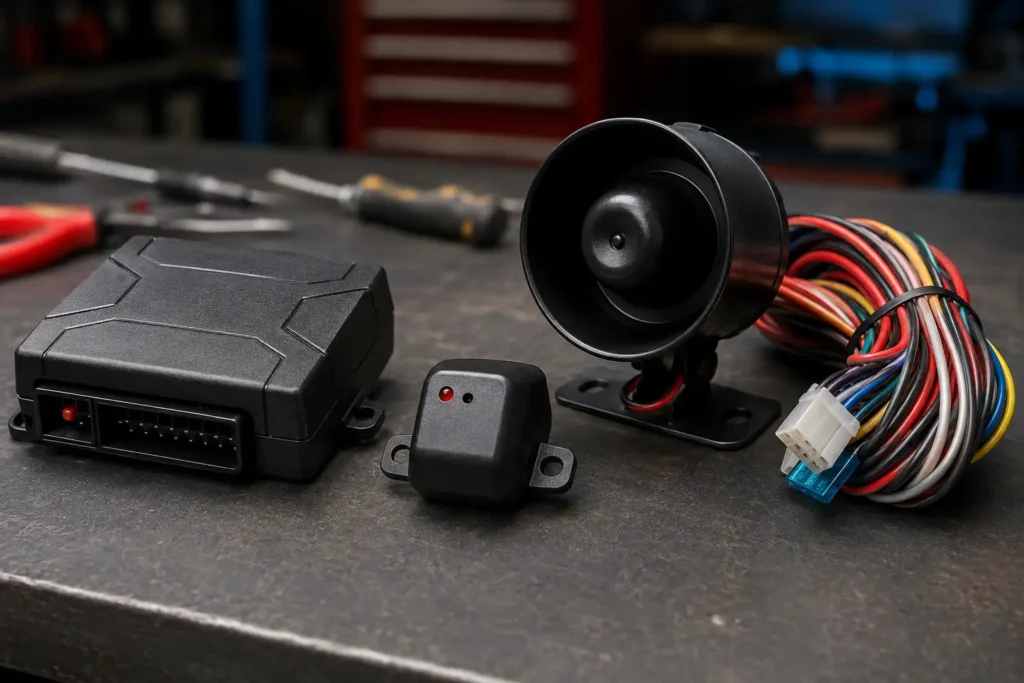
This is the system CarAudioNow recommends for anyone who wants security built right the first time. It includes a 105 dB siren, dual-zone shock sensor, starter kill, and a 4-button 2-way LCD remote with a 3,000-foot range, plus a backup 1-way remote.
It ships as brains, fobs, sensor, and siren; remote start and keyless entry are add-on modules. Reviewers are consistent on one point: this is not a beginner DIY install, it typically needs professional flashing and wiring. Best for owners who want a serious, expandable system and are comfortable paying for professional installation.
2. Viper 5906V Responder HD
Type: Two-way, premium, high-tech | Price: MSRP $799, frequently discounted to around $650
The top of Viper’s lineup, with a full-color OLED remote, one-mile range, active temperature check, and a six-tone Revenger siren backed by a dual-guard shock sensor.
It supports Viper SmartStart for phone control and can manage up to two vehicles from one remote. This is the system for owners who want the most advanced confirmation and control available, not the budget pick. Best for drivers prioritizing top-tier technology over price.
3. Viper 5305V
Type: Two-way, mid-tier | Price: Around $187
A more accessible Viper option with a 2-way LCD remote, keyless entry, and quarter-mile range. It shares its core alarm hardware with the Avital 5305L below, since both brands are owned by the same parent company, Directed Electronics, so the real choice between them often comes down to remote design preference. Best for owners who want two-way confirmation without paying premium-tier prices.

Audible — Listen Free for 30 Days
One free credit a month and thousands of titles included.
Listen Free for 30 Days4. Avital 5305L
Type: Two-way, remote-start value pick | Price: Typically $99 to $149 depending on retailer
Functionally similar to the Viper 5305V above, this system includes a dual-zone impact sensor, fault-proof starter interrupt, and a backlit 2-way LCD remote with event notifications. It’s SmartStart compatible for phone control add-ons. Best for owners who want Viper-level features at a slightly lower price point.
5. EASYGUARD EC204
Type: Two-way, budget-to-mid, passive keyless entry | Price: Typically $90 to $130
This system stands out for passive keyless entry: it automatically locks the doors when you walk away and unlocks as you approach, on top of the standard 2-way LCD pager display and shock sensor warning.
Range is roughly 500 meters in open space, shorter in practice. Like most budget 2-way systems, professional installation is strongly recommended, and a separate bypass module is needed for vehicles with a chip immobilizer in the factory key. Best for owners who specifically want passive, walk-away locking without paying for a premium brand.
6. CARLOCK
Type: App-connected GPS and alarm hybrid, no wiring | Price: Around $55 for the device, plus a subscription for tracking
This isn’t a traditional siren-based alarm; it’s an OBD plug-and-play device that pairs real-time GPS tracking with phone notifications the instant it detects suspicious movement, tampering, or disconnection. There’s no wiring and no siren to trigger, so it won’t scare off a thief on the spot, but it tells you immediately and helps recovery.
It also functions as a basic vehicle health monitor. Best for owners who want theft alerts and recovery help without any installation complexity. Pairs naturally with our Best Hidden GPS Tracker for Car guide if tracking is your main priority over an audible alarm.
7. BANVIE Car Alarm System
Type: One-way, budget, universal kit | Price: Typically $36 to $50
A straightforward, no-frills option with a 110 dB six-tone siren, shock and microwave sensors, keyless entry, and an engine cut-off relay for basic anti-hijacking protection. It’s the most affordable full-featured kit on this list.
The tradeoff shows up in reviewer feedback: some report the optional remote-start wiring inputs (oil detection, brake wire) don’t work reliably on every vehicle, so stick to its core alarm and keyless entry functions if you want dependable results. Best for budget-conscious owners who want real shock/motion detection and a kill switch without paying for two-way confirmation.
DIY Installation vs Professional Installation
Installation complexity varies more than most buying guides admit.
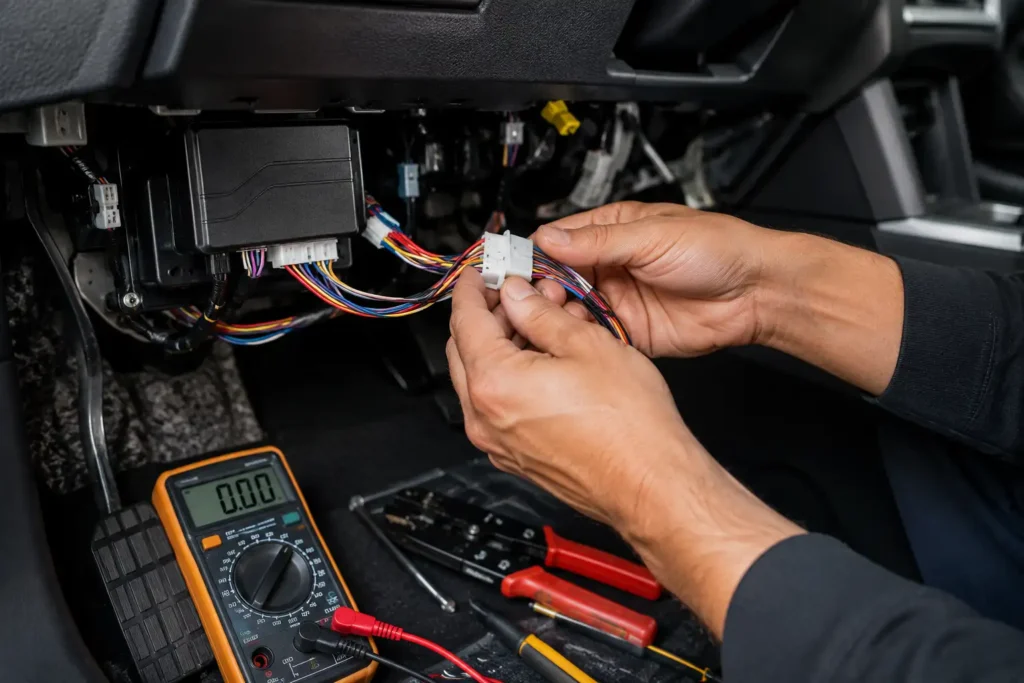
Basic siren-and-shock-sensor kits like the BANVIE are generally the most DIY-friendly, with straightforward wiring into the horn and ignition circuit. Systems that add keyless entry, remote start, or an engine kill switch, like the EASYGUARD and Avital options, involve more wiring into the car’s door lock actuators and ignition system, which is more forgiving for someone comfortable with basic automotive electrical work but still trips up plenty of first-timers based on user reviews.
Audible Premium Plus — Annual Membership
12 audiobook credits up front, plus the full Audible catalogue.
See Annual PlansPremium two-way systems like the Compustar CS7900-AS and Viper 5906V are built around professional installation; several reviewers specifically warn that DIY installers without the programming tool can get stuck and end up paying an installer anyway to flash and configure the system.
If you’re not confident about wiring into your car’s electrical system, a local installer for a catalytic converter shield or steering lock is a lower-risk starting point; see our Best Catalytic Converter Anti-Theft Device guide. OBD plug-in options like CARLOCK need zero wiring at all.
Does a Car Alarm Actually Lower Your Insurance Rate
Many insurers do offer discounts for vehicles with a verified anti-theft or alarm system, but the amount varies significantly by insurer, state, and the specific system installed. Rather than assume a fixed savings percentage, call your insurer directly and ask what documentation they need to apply a discount before you buy, some require professional installation records or a specific certification level.
Given that vehicle theft costs Americans over $8 billion a year combined, even a modest ongoing insurance discount plus avoiding a single theft event usually justifies the cost of a decent alarm system many times over.
Frequently Asked Questions
Can I install a car alarm myself?
Basic siren and shock-sensor kits are generally DIY-friendly for someone comfortable with simple wiring. Systems with keyless entry, remote start, or kill switches get more complex, and premium two-way systems are typically built around professional installation and programming.
Why does my car alarm keep going off for no reason?
This is usually a sensitivity or sensor issue rather than a defective alarm. A wet key fob, loose shock sensor, or overly sensitive settings are common causes. If your alarm won’t stop after fob exposure to moisture, our key fob got wet and alarm keeps going off guide walks through the fix.
Do car alarms actually stop theft?
An audible alarm alone won’t physically stop a determined thief, but the visible deterrent (flashing LED, siren) discourages opportunistic theft, and features like engine kill switches and GPS tracking meaningfully increase the odds of recovery if a theft is attempted.
What’s the difference between a car alarm and an immobilizer?
An alarm detects intrusion and alerts with sound and lights. An immobilizer (often factory-installed) prevents the engine from starting without the correct key or fob, regardless of whether an alarm is triggered. Many aftermarket systems, including several on this list, combine both functions.