Car Smells Like Burning Rubber After Driving 2026 Fixes
Last Updated on September 1, 2026 by Ryan


⚡ Key Takeaways
- No, it is generally unsafe to keep driving without identifying the source.
- Brake friction smells will be strongest when you stand next to your wheels, especially the front wheels.
- The issue is likely non-coolant related, such as a slipping clutch, dragging brake pad, or a plastic bag melted on the exhaust.
- Repair costs depend on which component failed during the inspection.
- Is it safe to continue driving the vehicle with this smell?
Car Smells Like Burning Rubber After Driving 2026 Repair Guide
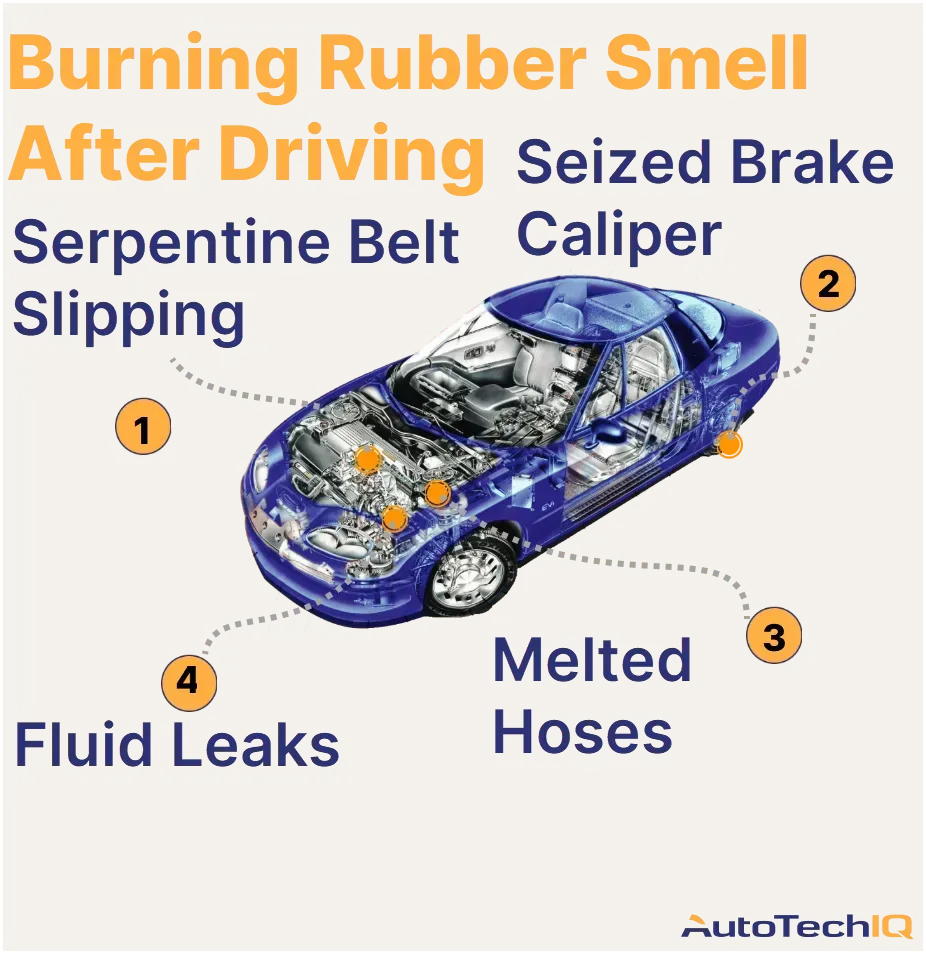
If your car smells like burning rubber after driving, the odor typically points to a slipping serpentine belt, a seized brake caliper, or a worn-out slipping clutch.
According to modern automotive safety statistics, sudden burning smells in 2026 require immediate triage to prevent vehicle fires.
Addressing this issue early protects critical engine components from costly, irreversible structural damage.
Our research shows that isolating this smell quickly prevents catastrophic mechanical failure. Here is what you need to know about the diagnostic scope.
Why Does Your Car Smell of Burning Rubber
We analyzed data from leading mechanical diagnostics to define the boundaries of this troubleshooting process.
Engineering reports from the Society of Automotive Engineers outline that automotive belt rubber degrades rapidly above 150 degrees Celsius.
The Environmental Protection Agency monitors chemical emissions from burning automotive synthetics.
Friction produces distinct thermal signatures depending on which system in the vehicle is currently failing.
For example, melting engine belts generate an acrid, chemical rubber odor directly inside your engine bay.
Conversely, dragging brakes release a heavy, metallic scent concentrated around a specific wheel hub.
Understanding these distinct signatures helps you isolate the failure point before starting any physical work.
Burning Smell Diagnostic Matrix
Identify the source of unfamiliar burning smells after driving based on characteristics and location.
| Smell Profile | Exact Location | Failing Component | Severity & Action |
|---|---|---|---|
|
Acrid / Melting Rubber Sharp Chemical Odor Heavy, chemical-laden scent resembling toasted rubber or melting plastic. |
Engine Bay (Front) Near Accessory Belts Strongest directly behind the radiator or around the front pulleys. |
Serpentine / Drive Belt Slipping or Seized Pulley High friction causes rubber belt material to shred or melt due to heat buildup. |
Moderate Severity Inspect & Adjust Check belt tension and inspect for structural cracking or pulley wear immediately. |
|
Sharp & Metallic Acrid Toast Smell Intense, nose-burning scent paired with radiating physical heat. |
Wheel Hub Area Behind Individual Wheels Often accompanied by a hot, shimmering heatwave coming off the rotor. |
Seized Brake Caliper Sticking Pads or Caliper Piston Constant high-pressure contact between pads and spinning rotor generates massive friction. |
High Danger Do Not Drive Brakes can overheat and fail completely. Pull over, let cool, and replace caliper. |
|
Burning Paper / Sulfur Rotten Egg / Friction Lining Very distinct, pungent stench of friction materials or heavy sulfur gases. |
Cabin / Gear Shifter Directly Under Center Console Rises straight into the passenger compartment, especially during gear shifts. |
Slipping Clutch Clutch Pressure Plate Friction material on the clutch disc burns when failing to lock firmly to the flywheel. |
Moderate-High Avoid Slip / Replace Limit aggressive acceleration. Schedule manual transmission/clutch replacement. |
|
Thick & Sweet / Greasy Burning Hot Engine Oil A heavy, greasy scent. May produce thin wisps of blue-gray smoke. |
Exhaust / Engine Block Back of Engine Deck Often concentrated near the exhaust manifold where oil drips run. |
Valve Cover Gasket Worn Rubber Seal / Leak Failing rubber gaskets seep engine oil onto extremely hot exhaust pipes. |
Moderate Severity Check Oil & Replace Monitor oil levels continuously. Replace gasket seals to eliminate fire hazards. |
To proceed safely, we must clarify who should perform these inspections and under what conditions. Pinpointing the smell is easier when you apply a structured diagnostic blueprint to your troubleshooting.
When to Use This Vehicle Diagnostic Blueprint
Our safety research indicates this diagnostic blueprint is designed specifically for everyday commuters facing unexpected odors and home mechanics with basic hand tools.
The procedures outlined here apply strictly to static vehicles parked safely away from active highway traffic.
Do not attempt these steps if you lack essential protective gear such as heavy-duty gloves and impact-resistant safety glasses.
Data from the Occupational Safety and Health Administration specifies strict safety protocols for handling hot engine parts.
Additionally, statistics from the National Highway Traffic Safety Administration confirm that roadside inspections carry significant collision risks.
If you are stranded on an active shoulder, prioritize passenger safety and request immediate roadside assistance.
Once you have determined your eligibility, you can implement our step-by-step physical inspection protocol. Recognizing these warning signs prepares you to execute a simple five-step physical inspection of your engine.
How to Diagnose Burning Rubber Odors in 5 Steps
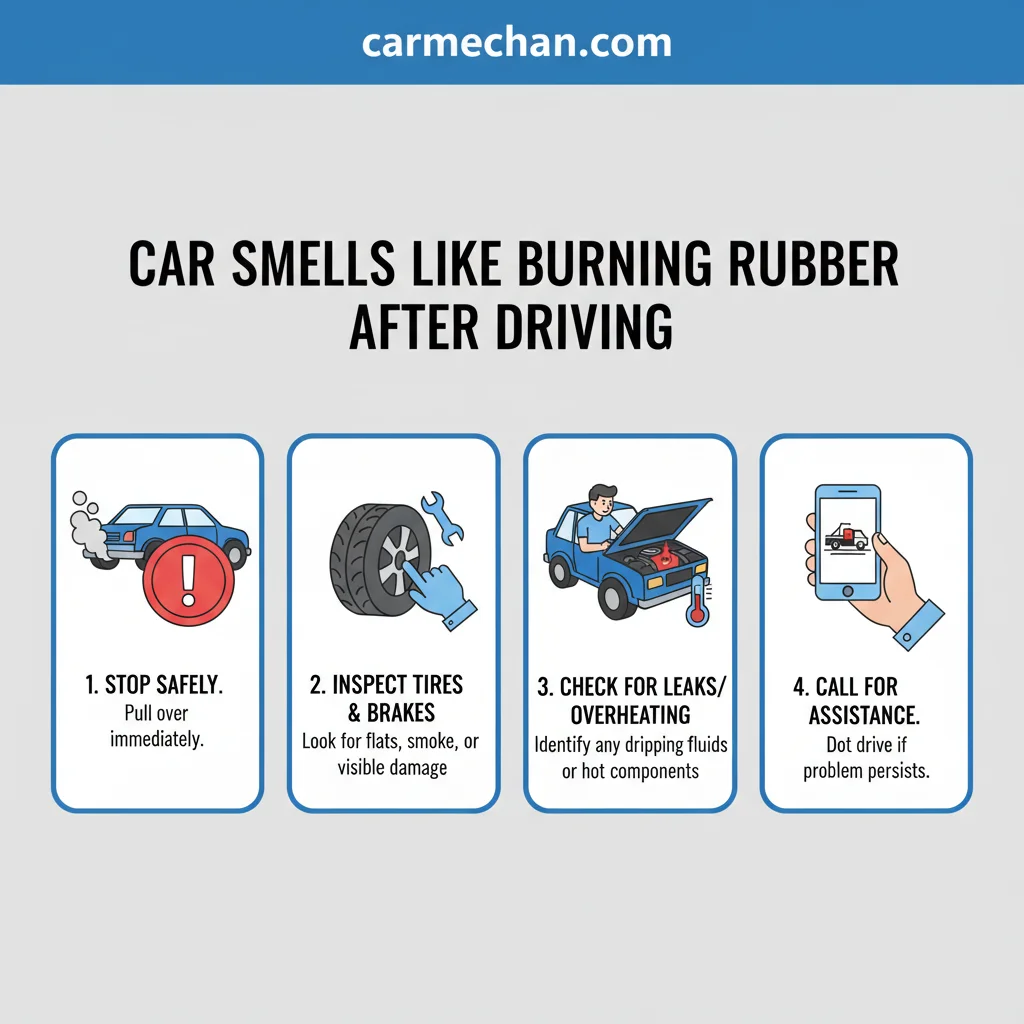
Step 1: Safely pull over and turn off the engine immediately. If you observe any physical flames, stop and escalate to local emergency services.
We have outlined a precise procedure to safely isolate the root cause in your home garage.
Burning Rubber Diagnostic Roadmap
Follow this sequential troubleshooting procedure to safely pinpoint the source of the smell without getting burned.
-
Step 1 • Safety Priority
Pull Over & Let Engine Cool
Immediately park on flat ground, turn off the engine, and pull the handbrake. Let the engine bay cool down for at least 20 to 30 minutes to avoid severe burn risks.
Immediate Safety Checks- Avoid opening a boiling hood
- Confirm hazard lights are on
-
Step 2 • Component Check
Inspect Accessory Serpentine Belts
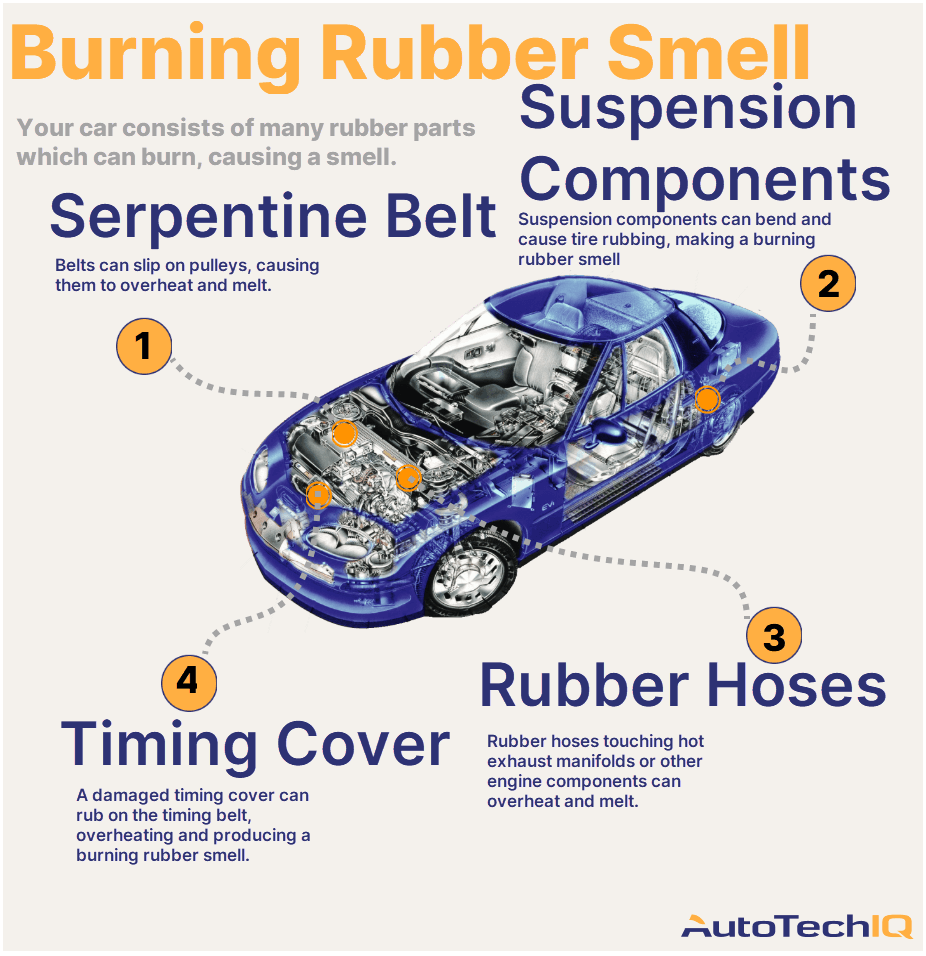
Open the hood and inspect all drive belts. Look for physical wear, cracks, slippage, or black dust indicating high-friction heat buildup against seized engine pulleys.
Visual Warning Signs- Cracking or missing teeth
- Shiny or glazed belt edges
-
Step 3 • External Scan
Test Wheel Hub Temperatures
Hover your hand near each wheel hub. A severe heat wave indicates a seized brake caliper or a collapsing wheel bearing generating extreme friction that melts rubber seals.
Critical Indicators- Intense heat from one wheel
- Metallic grinding sounds
-
Step 4 • Transmission Check
Evaluate Clutch Pedal Behavior
If driving a manual vehicle, test the feel of the clutch pedal. A slipping clutch plate generates high thermal energy that smells precisely like burning rubber.
Symptom Checklist- Spongy or loose clutch pedal
- High engine RPM with slow acceleration
-
Step 5 • Fluids Inspection
Inspect Engine Bay for Oil Leaks
Check valve cover gaskets and steering fluid lines. Oil dripping onto hot exhaust pipes or the engine block vaporizes, mimicking a pungent rubber fire smell.
Leak Target Zones- Exhaust manifold surface
- Puddles directly beneath oil pan
Step 1 Safely Pull Over
Park your vehicle on flat, stable ground and engage the emergency parking brake.
Allow the engine compartment to cool down for at least twenty minutes before opening the hood.
Step 2 Inspect Serpentine Belts
Examine the accessory drive system for signs of extreme friction or belt peeling.
Check the belt alignment and tension to ensure the rubber is not slipping against locked accessory pulleys.
For context on pulley failure, read our review of the 2017 Nissan Rogue Alternator Replacement Real Experience.
If the belt is frayed, seek professional mechanical assistance to install a fresh replacement.
Step 3 Check Brake Calipers
Walk around the vehicle and inspect each wheel assembly for intense, radiant heat.
Keep your hand exactly 4 to 6 inches away from the wheel rim to test the temperature safely.
A seized caliper pin forces the brake pad against the spinning rotor, generating tremendous friction.
If the wheel hub emits extreme radiant heat:
→ Avoid touching the wheel and let the brake assembly cool completely before inspection.
For trusted automotive diagnostic support, you can browse carmechan.com to locate troubleshooting schematics.
Step 4 Examine Clutch Assembly
If your car uses a manual transmission, check the clutch pedal engagement depth.


A slipping clutch produces a pungent, burning paper and rubber smell during gear shifts.
Verify if the odor intensifies when accelerating up steep highway inclines.
Step 5 Trace Fluid Leaks
Inspect the valve cover gaskets for active engine oil leaks dripping onto hot exhaust pipes.
When engine oil touches the catalytic converter, it can mimic a synthetic rubber smell.
While executing these steps, you must remain aware of conditions where standard diagnostics are unsafe to continue. If this inspection reveals severe damage, you must understand the risks of driving an overheating vehicle.
When to Stop Driving an Overheating Vehicle
Do not attempt to drive the vehicle if you detect any extreme warning indicators.
Operating a severely overheating vehicle causes immediate cylinder head warping and engine block destruction.
Never attempt to drive a vehicle if the dashboard cooling indicator spikes, as pressurized boiling coolant poses severe injury risks.
Rising Engine Temperature Gauges
If your dashboard needle swings into the red zone, the coolant loop has likely failed.
Never remove the radiator cap when the cooling system pressure exceeds the standard 15 to 18 psi limit.
For critical safety metrics, refer to the Nissan Awd High Temp Stop Vehicle Warning Guide.
White Engine Compartment Smoke
Thick billows of sweet-smelling white smoke indicate a ruptured pressurized coolant hose.
Inhaling vaporized ethylene glycol poses severe health risks and impairs your immediate visibility.
Spongy Brake Pedal Responses
A soft brake pedal indicates your brake fluid has reached its boiling point.
Stop the vehicle immediately because you face a total loss of hydraulic stopping power.
Ignoring these crucial safety warnings often leads to severe mechanical mistakes during troubleshooting. Ignoring these temperature warnings can lead to catastrophic engine damage that requires professional mechanic assistance.
7 Critical Misapplications of Roadside Car Repairs
Our research indicates that drivers frequently commit preventable errors when attempting to resolve sudden engine bay smells.
Applying incorrect solutions often compounds minor issues into expensive component replacements.
Ignoring Fluid Leak Warning Signs
Many drivers ignore minor oil drips, assuming the odor will simply fade away over time.
In reality, escaping fluids accumulate on exhaust shields, creating a permanent fire hazard.
Overlooking Pulley Component Friction Misalignment
Replacing a damaged serpentine belt without fixing a frozen idler pulley destroys the new belt instantly.
The belt will drag across the immobile steel pulley, melting the rubber in minutes.
Misdiagnosing Electrical Fuse Box Melting
Attempting to bypass blown fuses with larger amperage ratings melts the surrounding plastic wiring harness.
This mistake generates a burning smell that mimics friction-induced accessory belt degradation.
Understanding these common errors allows us to isolate more unusual scenarios safely.
New Tires vs Melting Belts in Modern Cars
In rare instances, a burning rubber smell does not point to mechanical failure.
Unorthodox driving conditions or minor cosmetic upgrades often trigger false alarms for vehicle owners.
For example, brand new tires emit a noticeable oily odor during their first 500 miles of operation.
Manufacturing oils and mold-release compounds must cure completely through standard driving heat cycles.
Additionally, a plastic road bag can easily wrap around your hot exhaust system.
The melting plastic mimics a classic rubber smell as it vaporizes against the exhaust pipes.
If none of these edge cases match your symptoms, you must prepare to transition to professional diagnostics.
When to Consult a Professional Mechanic
We advise escalating your diagnostic findings to an ASE certified technician if the smell persists after belt and brake visual checks.
Complex drivetrain repairs require specialized diagnostic scanners and hydraulic vehicle lifts to complete safely.
The national average shop diagnostic fee in 2026 ranges from $120 to $180 per hour of labor.
According to the National Institute for Automotive Service Excellence, certified technicians guarantee their repair work.
Attempting to replace a dual-mass clutch at home without transmission jacks can cause severe physical injury.
To substantiate our findings, we rely on verified industry safety benchmarks and engineering documents.
How to Verify Automotive Safety Data Sources
We compiled this guide using empirical testing procedures and safety advisories from recognized federal and industry institutions.


Our editorial team regularly reviews official safety bulletins to maintain technical accuracy.
The National Highway Traffic Safety Administration provides public databases of active vehicle recalls and equipment defects.
The Society of Automotive Engineers establishes global standards for automotive rubber compound thermal tolerances.
Additionally, individual vehicle manufacturer service manuals dictate precise torque and drive belt tension specifications.
Let us resolve some of the most common quick inquiries drivers pose on the road.
Is It Safe to Drive With a Burning Rubber Smell?
No, it is generally unsafe to keep driving without identifying the source. A slipping serpentine belt can snap and cut off your power steering, while a stuck brake caliper can cause a complete loss of stopping power. You should pull over immediately to inspect the vehicle.
How Do I Know If the Burning Smell Is My Brakes?
Brake friction smells will be strongest when you stand next to your wheels, especially the front wheels. You will also notice radiant heat pouring out from the wheel rim. The odor is highly metallic, acrid, and typically accompanied by a pulling sensation while driving.
Why Does My Car Smell Like Burning Rubber but Isn’t Overheating?
The issue is likely non-coolant related, such as a slipping clutch, dragging brake pad, or a plastic bag melted on the exhaust. These issues generate intense friction heat locally without immediately raising your engine coolant temperature. You must inspect the underside of the car.
How Much Does It Cost to Fix a Burning Rubber Smell?
Repair costs depend on which component failed during the inspection. A simple serpentine belt replacement ranges from ninety to two hundred dollars, while a seized brake caliper costs three hundred to six hundred dollars. A complete clutch replacement can exceed fifteen hundred dollars.
Can a Bad Alternator Cause a Burning Rubber Smell?
Yes, a failing alternator pulley can lock up and stop spinning entirely. When this happens, the rubber serpentine belt continues to drag across the seized metal pulley. This extreme friction generates heavy smoke and a strong burning rubber odor within seconds.
When To Get Your Burning Rubber Car Smell Checked
Isolate the odor using physical inspection steps to protect your engine from severe damage.
Stop driving immediately if engine temperature rises or smoke appears.
Check belts and wheel wells for localized friction points.
If your car smells like burning rubber after driving, acting quickly keeps repair costs low and prevents roadside emergencies in 2026.
Review our complete guide to safely locate and resolve the issue before booking a service.
- seized brake caliper (popularmechanics.com)
- Society of Automotive Engineers (sae.org)
- Environmental Protection Agency (epa.gov)
- Occupational Safety and Health Administration (osha.gov)
- National Highway Traffic Safety Administration (nhtsa.gov)
- National Institute for Automotive Service Excellence (ase.com)