How to Lower Car Payment Without Refinancing: Smart Strategies
Last Updated on September 1, 2026 by Ryan
To lower your car payment without refinancing, prioritize discussions with your current lender about hardship options or loan modifications. Also, explore strategies like selling or trading down your vehicle, and implement indirect financial adjustments to free up more cash monthly.

Prime for Young Adults — 6 Months Free
Students and 18–24s get six months of Prime free, then half price.
Start 6 Months Free🎯 Key Takeaways
- Contact your current lender immediately for hardship programs.
- Discuss loan modification or payment deferral with your bank.
- Explore selling your current vehicle for a cheaper model.
- Reduce car insurance premiums to free up cash.
- Implement budget cuts to manage your existing payment.
Want to reduce your car payment without the hassle and credit impact of traditional refinancing? It’s absolutely possible. Many drivers don’t realize there are practical, actionable strategies you can employ that don’t involve applying for a brand new loan.
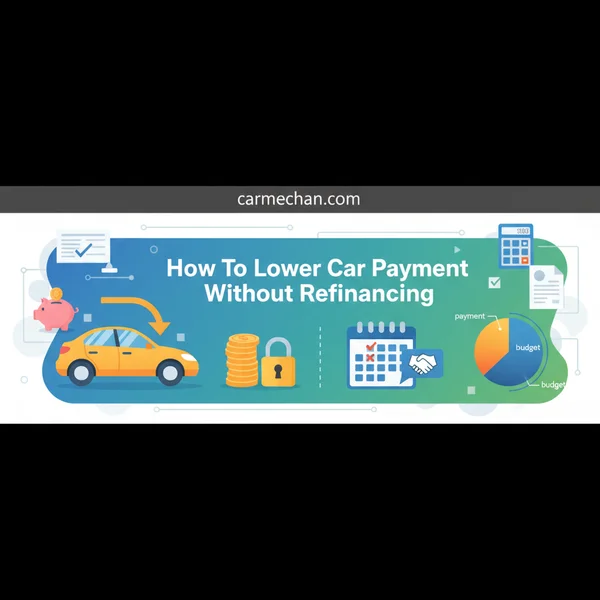
These methods focus on working with your existing lender or making strategic changes to your vehicle ownership. By understanding your options and knowing how to approach them, you can find significant relief for your monthly budget, often quicker and with less complexity than a refinance.
Engaging Your Current Lender for Payment Relief
Your current auto loan lender isn’t just a bill collector; they’re often a resource for payment solutions, especially if you’re experiencing financial difficulty. Proactive communication can unlock options that don’t involve new credit checks or lengthy application processes.

Accessing Hardship Programs and Payment Deferrals
Many lenders offer temporary relief programs for customers facing unexpected financial strain. These are designed to provide a short-term break, not to permanently restructure your loan. Common scenarios include job loss, medical emergencies, or other significant life events that impact your income.
- What to ask for: Inquire about “hardship programs,” “payment deferral,” “forbearance,” or “skip-a-payment” options.
- Be prepared: You’ll likely need to explain your situation and may need to provide some documentation. Understand that deferred payments usually accrue interest, meaning your loan balance might be slightly higher later.
- Talking Points: “I’m currently experiencing a temporary financial hardship due to [briefly state reason, e.g., unexpected medical bills, temporary reduction in income]. I’m looking for options like a payment deferral or a forbearance plan to help manage my payments for the next 1-3 months. Can you outline what programs are available for customers in my situation and the eligibility criteria?”
These programs are generally not reported negatively to credit bureaus if approved, as long as you adhere to the new agreement. Confirm this with your lender explicitly.
Exploring Loan Modifications or Term Extensions
Beyond temporary relief, some lenders may offer adjustments to your existing loan structure without a full refinance. This is less common but worth exploring, particularly if you have a good payment history.
- Loan Modification: This involves directly changing a specific term of your existing loan, often to lower your monthly payment. While reducing the interest rate is rare without a new credit application, extending the remaining loan term is a possibility.
- Term Extension (without new loan): Your lender might agree to lengthen your existing repayment period. This directly reduces your monthly payment by spreading the remaining balance over more installments. Crucially, this happens without a new credit application or a new loan being originated.
- How to Inquire: Clearly state you are seeking options for your current loan that do not involve a new credit application or refinancing.
- Talking Points: “I want to discuss options to lower my monthly payment on my existing loan permanently. Are there any internal programs or procedures for a loan modification or extending my current loan term without needing a new credit application or applying for a new loan? I’m committed to finding a sustainable payment plan.”
Understand that extending the term will almost certainly increase the total interest paid over the life of the loan. However, it provides immediate monthly payment relief, which can be critical for your budget.
Your Complete DIY Guide to Lowering Your Car Payment Without Refinancing
Navigating the complexities of car payments can be daunting, especially when your financial situation changes. This comprehensive guide is designed to empower you with practical, actionable steps to reduce your monthly car payment without resorting to a full refinance. By following these detailed instructions, you can potentially save money, reduce stress, and maintain control over your finances, all while avoiding new credit checks and associated fees.

Audible — Listen Free for 30 Days
One free credit a month and thousands of titles included.
Listen Free for 30 DaysStep 1: Gather All Your Current Loan Information
What you need: Your original car loan agreement, recent monthly statements, lender’s contact information (phone number, website), and a pen and paper or digital document for notes.
Instructions: Begin by collecting every piece of information related to your current car loan. This includes the original loan amount, your current outstanding balance, the exact interest rate (APR), the remaining term of the loan (number of months), your precise monthly payment amount, and any specific terms regarding late fees or prepayment penalties. Also, identify who your lender is and their direct contact details. Having this complete picture is crucial for any negotiation or decision-making process.
Pro Tip: Create a dedicated folder or a single, organized digital document containing all this information. This will save you significant time and frustration when you need to quickly reference details during calls or planning.
Step 2: Conduct a Thorough Budget Analysis
What you need: Your bank statements (last 3-6 months), income records (pay stubs), a list of all monthly expenses (utilities, groceries, subscriptions, entertainment), and a budgeting app or spreadsheet.
Instructions: Take a deep dive into your personal finances. List all your sources of income and every single expense, no matter how small. Categorize your spending to identify areas where you can realistically cut back. The goal here is twofold: first, to understand how much you can afford to pay towards your car loan, and second, to determine a realistic target for a lower payment that aligns with your financial capacity. This step is critical for setting achievable goals.
Pro Tip: Be brutally honest with your spending. Many people underestimate discretionary expenses. Even minor adjustments, like canceling unused subscriptions or reducing impulse purchases, can free up $50-$100 per month.
Step 3: Research Current Auto Loan Rates & Your Credit Score
What you need: Access to your credit report (you can get one free annual report from each of the three major bureaus at AnnualCreditReport.com), and reputable online auto loan comparison tools (e.g., Bankrate, NerdWallet, local credit union websites).
Instructions: Although you’re not refinancing, understanding the current auto loan market and your creditworthiness provides significant leverage. Check your current credit score to see if it has improved since you took out your original loan. Then, research what interest rates are currently being offered for similar loan amounts and terms to individuals with your credit profile. This knowledge will help you gauge if your current lender’s rate is competitive and gives you a strong talking point during negotiations.
Pro Tip: If your credit score has substantially improved, you have a stronger case to ask your current lender for an interest rate review, even without a full refinance. They may be willing to adjust it to retain your business.
Audible Premium Plus — Annual Membership
12 audiobook credits up front, plus the full Audible catalogue.
See Annual PlansStep 4: Strategize Your Approach to Your Lender
What you need: All information gathered from Steps 1-3, a clear understanding of your budget, and a detailed list of potential solutions you wish to propose.
Instructions: Before contacting your lender, clearly define what you want to achieve. Common requests (without refinancing) include:
- Term Extension: Lengthening the loan term to reduce monthly payments (be aware this often increases total interest paid).
- Temporary Payment Deferral or Forbearance: Skipping a few payments due to short-term hardship, with payments typically added to the end of the loan.
- Interest Rate Reduction: Less common without refinancing, but possible if your credit has significantly improved or if you can demonstrate a compelling competitive offer.
- Principal-Only Payments: Rarely offered, but allows you to pay down the principal balance without interest for a specific period if facing hardship.
Prioritize your requests based on your immediate and long-term financial needs.
Pro Tip: Frame your request positively. Instead of saying “I can’t afford my payment,” say “I’m looking for a sustainable payment solution to ensure I can continue fulfilling my loan obligations without interruption.”
Step 5: Initiate Direct Communication and Negotiation
What you need: Your compiled loan information, budget analysis, negotiation points, and a calm, confident, and polite demeanor. Be prepared to take detailed notes.
Instructions: Call your lender’s customer service or, ideally, their loan modification or hardship department. Clearly and concisely explain your situation and propose your desired solutions. Be ready to explain why these adjustments would benefit both parties (e.g., “A slightly lower payment ensures I avoid any future late payments and remain a reliable customer”). Listen carefully to their counter-offers and be prepared to reiterate your commitment to making payments, even if adjusted. Emphasize any positive changes in your financial situation, like an improved credit score, if applicable.
Pro Tip: Document everything! Note the date, time, the name and ID of the representative you spoke with, what was discussed, and any agreed-upon actions. Always request any final agreement or modification in writing and review it thoroughly before accepting.
Step 6: Explore Formal Hardship Programs and Payment Deferrals
What you need: Documentation of any financial hardship (e.g., job loss letter, medical bills, reduced income statements) and a clear understanding of your lender’s policies regarding such programs.
Instructions: If you are facing a genuine, short-term financial hardship (e.g., unexpected medical expense, temporary job loss), specifically inquire about your lender’s hardship programs. Many lenders offer payment deferrals (skipping 1-3 payments), forbearance, or temporary payment reductions. Understand the exact terms: how will the deferred payments be handled? Will interest accrue during the deferral period? These options provide crucial temporary relief but often mean you’ll pay more interest in the long run or have higher payments later to catch up.
Pro Tip: Only use these options if absolutely necessary. While they offer immediate relief, they can increase the total cost of your loan. Ensure you understand the long-term impact on your balance and future payments.
Step 7: Consider Downsizing Your Vehicle (Sell & Buy Cheaper)
What you need: Your current car’s estimated market value (check Kelley Blue Book, Edmunds, NADA Guides), research on affordable, reliable replacement vehicles, and time to manage a private sale.
Instructions: If direct negotiation with your lender hasn’t yielded sufficient results and you desperately need a lower payment, a more drastic but highly effective solution is to sell your current car and purchase a significantly less expensive one, ideally with cash or a much smaller loan. First, determine if you have equity in your car (it’s worth more than you owe) or if you are “upside down” (owe more than it’s worth). Selling privately typically fetches a higher price than a trade-in, giving you more capital to put towards a cheaper replacement.
Pro Tip: If you’re upside down, you’ll need to pay the difference between the sale price and your loan balance to clear the loan, which can be a significant upfront cost. Factor this into your decision-making process.
Step 8: Leverage a Trade-In for a More Affordable Car
What you need: Your current car’s estimated trade-in value (dealership appraisals), a budget for a new (cheaper) vehicle, and research into the fuel efficiency and maintenance costs of potential replacement cars.
Instructions: Similar to selling your car, trading it in for a more affordable vehicle can drastically reduce your monthly payment. This method is often quicker and involves less hassle than a private sale. Visit multiple dealerships to get various trade-in offers. Your goal is to find a significantly cheaper car that allows you to take out a much smaller new loan, resulting in a substantially lower monthly payment. Be prepared for trade-in values to be lower than what you might get from a private sale.
Pro Tip: Always negotiate the trade-in value of your old car and the purchase price of your new car as separate transactions. Don’t let the dealership combine them into one confusing offer, as this can obscure how much you’re truly saving or spending.
✅ Final Checklist
- ✔ All current loan details (balance, rate, term) confirmed and documented.
- ✔ A realistic personal budget has been created and analyzed.
- ✔ Current auto loan market rates and your credit score have been researched.
- ✔ Specific negotiation points and proposed solutions for your lender have been prepared.
- ✔ You have directly contacted and negotiated with your lender, documenting all interactions.
- ✔ The terms of any agreed-upon loan modification or deferral are fully understood and received in writing.
- ✔ If applicable, market values for selling or trading in your current vehicle have been thoroughly researched.
Important Notes:
- Safety considerations: Be highly suspicious of any third-party company promising to “fix” or “negotiate” your car loan for a fee. Always deal directly with your existing lender. Protect your personal and financial information.
- When to seek professional help: If you are consistently struggling to make any payments, facing potential repossession, or feel overwhelmed by debt, consider contacting a non-profit credit counseling agency. They can provide guidance and help you create a debt management plan.
- Estimated time and cost range: The process of gathering information and negotiating with your lender can take a few hours to a few days. Receiving a formal agreement may take up to a few weeks. If selling or trading a vehicle, the process can extend from a few days (for a trade-in) to several weeks or months (for a private sale). Direct costs are generally low, limited to phone calls, printing, or a credit report fee. Selling/buying a car involves potential transaction fees, taxes, and inspection costs.
Strategic Vehicle Ownership Changes and Their Impact
If working with your lender isn’t viable or doesn’t provide enough relief, consider making a strategic change to your vehicle ownership. This involves parting with your current car to reduce or eliminate its associated payment, allowing you to acquire a more affordable vehicle.

Selling Your Car to Buy a Cheaper One
The most direct way to eliminate a car payment is to sell your current vehicle and replace it with something you can afford outright or with a much smaller loan. This requires careful planning, especially if you have negative equity.
- Determine Market Value: Use resources like Kelley Blue Book (KBB.com) or Edmunds.com to get an accurate private party and trade-in value for your car. This tells you what you can expect to sell it for.
- Assess Loan Balance: Contact your lender for your exact payoff amount. Compare this to your car’s market value.
- Address Negative Equity: If your payoff amount is higher than your car’s value (negative equity), you’ll need to pay the difference out-of-pocket to clear the loan. This is critical before you can sell the vehicle.
- Purchase a Cheaper Replacement: Once your loan is settled, buy a less expensive, reliable car within your budget. Ideally, aim for an outright cash purchase to eliminate future payments entirely, or secure a significantly smaller loan with a much lower monthly obligation.
Selling privately usually yields more money than trading it in, but requires more effort from you. Prioritize eliminating the current loan entirely.
Trading Down for a More Affordable Model
A simpler, though often less financially optimal, route is to trade your current vehicle for a less expensive one at a dealership. This can streamline the process, as the dealer handles the sale of your old car.
- Research Trade-In Value: Get a solid estimate of your car’s trade-in value before visiting a dealership.
- Shop for a Cheaper Vehicle: Identify a significantly less expensive car (used is often best for this strategy) that meets your needs. Your goal is to drastically reduce your monthly payment or ideally, eliminate it.
- Negative Equity Caution: Dealers may offer to roll negative equity from your old car into the loan for the new, cheaper car. While convenient, this is generally a poor financial decision as it means you’re paying interest on a debt that exceeds the value of your new vehicle. It keeps you underwater.
- Ideal Scenario: If you have positive equity, use it as a down payment on a cheaper car, resulting in a much smaller new loan. If you have negative equity, plan to pay it out-of-pocket at the dealership to avoid rolling it over.
Focus on reducing your total loan amount and monthly obligation, even if it means driving a humbler vehicle. The relief to your budget can be substantial and immediate.
<h2>Indirect Financial Adjustments to Manage Car Payments</h2>
<p>Sometimes, the solution isn’t to change the car loan itself, but to free up cash elsewhere in your budget. By optimizing other expenses, you can effectively reduce the financial burden your car payment places on you, making it feel more manageable without altering your loan agreement.</p>
<h3>Optimizing Car-Related Expenses</h3>
<p>Your car payment isn’t the only cost associated with your vehicle. Looking at these related expenses can yield significant savings:</p>
<ul>
<li><strong>Car Insurance:</strong> This is often the lowest-hanging fruit. <em>Shop around annually</em> for quotes from different providers. You might be surprised how much rates vary. Consider increasing your deductible if you have a robust emergency fund to cover it, as this can lower premiums. Also, ask about potential discounts for safe driving, bundling policies (home/auto), or having low mileage.</li>
<li><strong>Maintenance Costs:</strong> Proactive maintenance prevents expensive repairs. Sticking to your vehicle’s service schedule, checking fluid levels, and keeping tires properly inflated can extend your car’s life and reduce unforeseen expenses. Consider learning to do minor maintenance yourself, like changing air filters, or seek out reputable, more affordable independent mechanics instead of always relying on dealerships for routine service.</li>
<li><strong>Fuel Efficiency:</strong> While not directly impacting your payment, driving habits can reduce fuel costs. Avoid aggressive acceleration and braking, and carpool or use public transport when possible. Even small changes add up over time.</li>
</ul>
<h3>Reviewing Your Overall Budget</h3>
<p>Beyond car-specific costs, a thorough review of your entire household budget can reveal areas to trim. The money saved here can then be consciously allocated to make your car payment less stressful.</p>
<ul>
<li><strong>Subscription Services:</strong> How many streaming platforms, apps, or gym memberships do you truly use regularly? Canceling just one or two unused subscriptions can easily free up $20-$50 per month.</li>
<li><strong>Dining Out & Groceries:</strong> This category is a common money sink. Planning meals, cooking at home more often, and bringing your lunch to work can lead to substantial savings. For instance, packing lunch just three times a week instead of buying it could save you $60-$90 monthly.</li>
<li><strong>Discretionary Spending:</strong> Identify non-essential spending. Maybe it’s daily coffee shop visits, impulse online purchases, or entertainment outings. Temporarily reducing these can provide the breathing room you need for your car payment.</li>
</ul>
<p>The goal isn’t deprivation, but conscious reallocation of funds to prioritize financial stability.</p>
<h2>Long-Term Implications and Considerations for Payment Reduction</h2>
<p>While focusing on lowering your monthly car payment is crucial for immediate relief, it’s equally important to understand the broader, long-term impact of these strategies on your financial health and vehicle ownership.</p>
<h3>Impact on Total Cost and Equity</h3>
<p>Making extra principal payments or paying off your loan early, even in small increments, has a powerful long-term benefit: reducing the total interest you’ll pay over the life of the loan. This means the car ultimately costs you less.</p>
<ul>
<li><strong>Reduced Interest:</strong> Every dollar applied directly to the principal saves you future interest payments. This accelerates your progress towards ownership and cuts down the overall expense of the vehicle.</li>
<li><strong>Building Equity Faster:</strong> By reducing the principal balance more quickly, you build equity in your car faster. This is vital because if you ever need to sell or trade in the vehicle, having positive equity (meaning your car is worth more than what you owe) puts you in a much stronger financial position.</li>
<li><strong>Check for Prepayment Penalties:</strong> While rare in consumer auto loans today, always double-check your loan agreement for any prepayment penalties before making significant extra payments. Knowing this ensures your efforts truly save you money.</li>
</ul>
<p>These strategies not only lighten your monthly load but also make your car ownership journey more cost-effective in the grand scheme.</p>
<h3>Protecting Your Financial Future</h3>
<p>Any financial strategy should consider your overall well-being. Balancing debt reduction with building a strong financial foundation is key.</p>
<ul>
<li><strong>Emergency Fund:</strong> Before aggressively prepaying debt, ensure you have an adequate emergency fund (typically 3-6 months of living expenses). This acts as a crucial safety net for unexpected job loss, medical emergencies, or car repairs, preventing you from falling deeper into debt.</li>
<li><strong>Other Financial Goals:</strong> Consider how lowering your car payment fits into your broader financial picture. Are you saving for a down payment on a house, retirement, or another significant goal? Ensure that efforts to reduce your car payment don’t entirely derail other important savings objectives.</li>
<li><strong>Future Car Purchases:</strong> By paying down your current car loan efficiently, you free up cash flow for future vehicle purchases, potentially allowing for a larger down payment or even buying your next car outright, breaking the cycle of car debt.</li>
</ul>
<p>Think strategically to ensure today’s adjustments pave the way for a more secure financial tomorrow.</p>
<h2>Conclusion</h2>
<p>Reducing your car payment without refinancing is absolutely achievable with a blend of direct negotiation, clever payment strategies, and smart budget adjustments. From contacting your lender to making extra principal payments, and even optimizing your car insurance, each step can contribute to significant financial relief.</p>
<p>Take the time to review your current loan terms, assess your spending habits, and explore the options available to you. By taking proactive measures, you can regain control over your monthly budget, save money in the long run, and drive towards greater financial freedom. You have more power than you think – start exploring your choices today!</p>
❓ Frequently Asked Questions
What are the common options my current lender might offer if I explain financial hardship?
Lenders may offer temporary payment deferrals, where you skip payments and add them to the end of your loan, or a loan modification, which can adjust your interest rate or extend your term without a new loan application. Always inquire about specific programs and their terms.
What are the potential drawbacks of a payment deferral or loan modification?
While offering immediate relief, deferring payments usually means paying more interest over the life of the loan. Loan modifications can also extend your payment period, increasing total interest, so thoroughly understand all terms and fees before agreeing.
How can I manage negative equity if I decide to sell or trade my car for a cheaper one?
If you owe more than your car is worth, you’ll need to pay the difference out of pocket when selling directly. When trading, this negative equity can sometimes be rolled into a new loan, but it increases your new loan amount and payment, which may defeat the purpose of reducing your payment.
Besides insurance, what other indirect expenses related to my car can I reduce to free up cash?
You can significantly cut down on fuel costs by carpooling, using public transport, or optimizing driving habits. Minimizing discretionary car upgrades, performing routine maintenance yourself, and even challenging parking tickets can also save money that can be reallocated to your payment.
Will extending my loan term through a modification significantly increase the total interest paid?
Yes, extending the duration of your loan, even with the same interest rate, will almost always lead to paying more in total interest because you’re borrowing the money for a longer period. Always compare the total cost before and after modification to make an informed decision.
What are some critical considerations before pursuing any option to lower my car payment without refinancing?
Evaluate how each option impacts your credit score, total interest paid, and the overall length of your loan. Ensure you understand all terms and potential fees involved, and confirm that the solution truly aligns with your long-term financial goals and current budget.