Why Does My Car Smell Like Gas When I Start It 2026
Last Updated on September 1, 2026 by Ryan
⚡ Key Takeaways
- Yes, a very faint fuel odor lasting under thirty seconds can be normal during cold starts.
- Yes, a misfiring spark plug prevents complete combustion of the fuel in that cylinder.
- Leaking fuel injectors typically cause extended engine cranking times, rough idling, and persistent fuel odors in the engine bay.
- Yes, a loose or failing gas cap prevents the EVAP system from sealing properly, allowing vapors to escape.
Why Does My Car Smell Like Gas When I Start It Explained
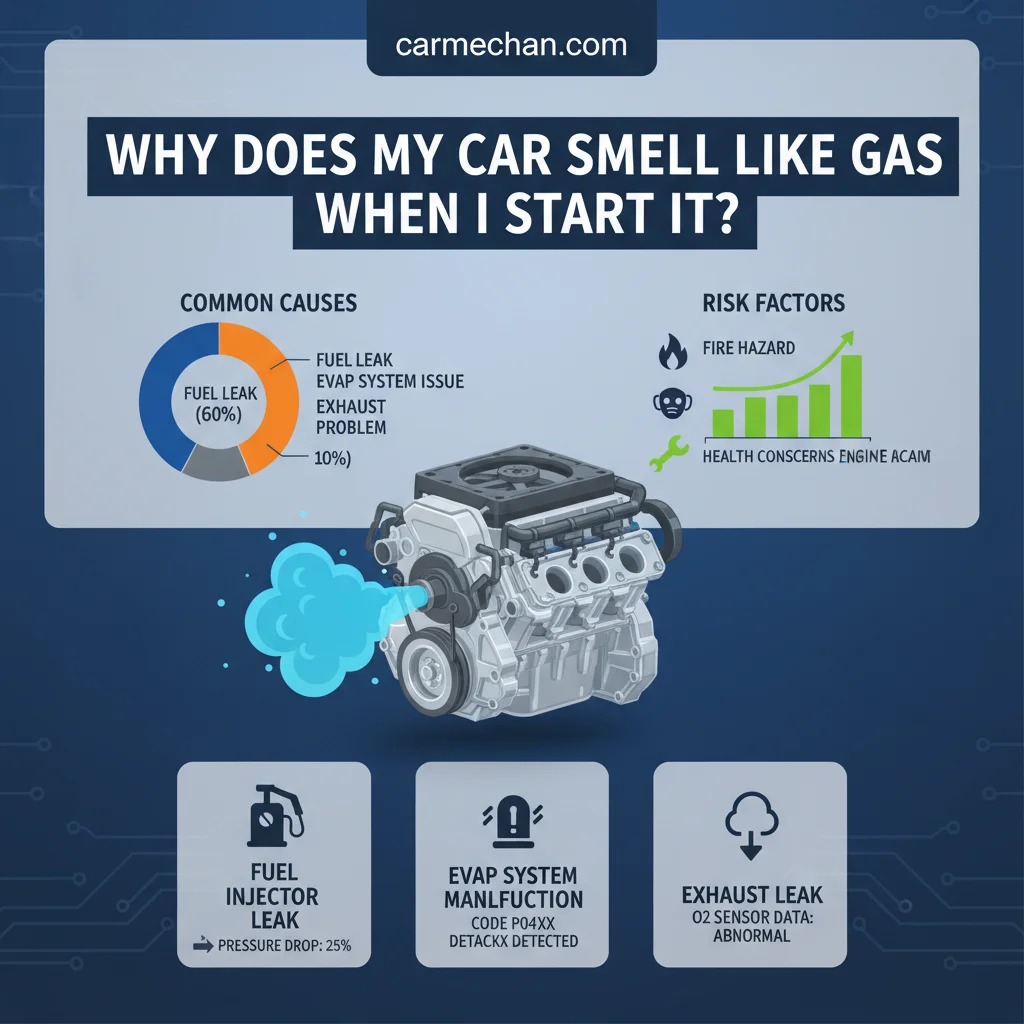
The exact reason why does my car smell like gas when i start it relates to temporary rich air-to-fuel ratios designed to warm cold engines quickly or physical leaks in the fuel delivery system. According to vehicle emission studies, up to eighty percent of hydrocarbon discharges happen during this initial ignition phase.
While brief tailpipe odors are typical, persistent raw fuel smells indicate dangerous high-pressure component failures that require immediate diagnostic isolation. Here is what you need to know about how to analyze cold start emissions research.
How to Analyze Cold Start Emissions Research


Our analysis of fuel combustion chemistry shows that modern vehicles operate in open-loop mode immediately upon ignition.
During this initial operating phase, the vehicle computer delivers an enriched air-to-fuel ratio to prevent engine stalling.
Modern engine management systems in 2026 rely heavily on pre-calculated fuel maps to guide these early seconds.
Open Loop Engine Mechanics
This rich fuel mixture stabilizes combustion while the metal components of the engine block remain cold.
The onboard computer ignores primary oxygen sensor feedback during this phase to maintain running consistency.
Engine Operating States Compared
Why your exhaust smells like fuel immediately after starting, but clears up minutes later.
Cold Start (First 1-3 Mins)
Enriched (Heavy Fuel)
Rich Mixture
Ignored (Sensors are too cold to read exhaust oxygen accurately)
Inactive
Cold (Below 600°F; cannot process raw exhaust gases yet)
Offline
Strong & Noticeable (Normal byproduct of unburned cold fuel)
Expected Odor
Warm Running (Normal Operation)
Stoichiometric (14.7:1)
Balanced Mixture
Active (Engine computer adjusts fuel based on real-time feedback)
Continuous Control
Hot (Operates at peak efficiency to burn off trace emissions)
Active & Filtering
None / Clean (Complete combustion and filtration eliminate odors)
Odorless
**Placement Note:**
This visual should be placed in the article section discussing **”Cold Starts vs. Warm Running”** (or **”Open-Loop vs. Closed-Loop Modes”**).
Specifically, place it directly after the following paragraph:
“This temporary, rich condition is a normal part of the cold-start phase until the system warms up and transitions control.”
This pre-calculated loop ensures the vehicle remains drivable before closed-loop feedback takes over control.
If ignition parameters fail during cold starts, you might observe secondary issues such as a nissan rogue remote start not working as intended.
Catalytic Converter Activation Limits
Catalytic converters must reach high internal temperatures before they can chemically neutralize tailpipe pollutants.
According to the EPA In May 2026, the EPA proposed a two-year delay for the implementation of the Tier 4 criteria pollutant standards, which include stricter cold temperature (-7°C) emission limits for light- and medium-duty vehicles. Under this proposal, the compliance timeline would be pushed from model year 2027 to model year 2029, keeping the existing Tier 3 standards in place for model years 2027 and 2028.
This delay is intended to give automakers more time to comply while the agency reevaluates the Tier 4 program’s assumptions regarding electric vehicle adoption. Tier 3 guidelines, modern catalytic units remain inactive during the first few seconds of operation.
Until the catalytic substrate reaches its operational threshold, raw gasoline components flow virtually unrestricted.
Our research indicates that cold catalysts cannot process the heavy hydrocarbon loads present during the initial key cycle.
Tailpipe Emission Discharges
Data from the Environmental Protection Agency confirms that up to eighty percent of total trip emissions occur during this cold start phase.
Raw fuel vapors escape directly through the tailpipe until the exhaust components achieve thermal light-off.
These combined factors explain why a mild odor at the tailpipe is considered a normal operating characteristic.
We analyze these exhaust characteristics to establish a baseline of normal emissions before diagnostic troubleshooting begins.
This technical understanding leads us directly to the 7 most common causes of fuel smell at startup. While academic research explains the chemistry, several common mechanical culprits usually trigger that sudden fuel smell.
7 Most Common Causes of Fuel Smell at Startup


Industry maintenance logs indicate that physical component wear accounts for the vast majority of ongoing raw fuel odors.
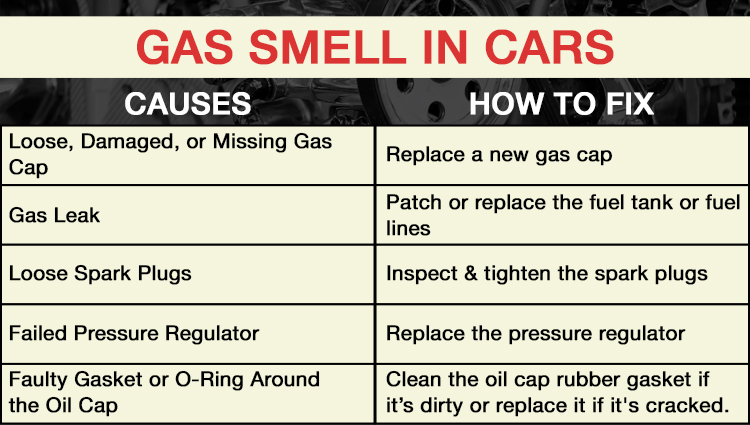
Our data indicates that hardware degradation often allows raw gasoline to escape before combustion.
These fuel leaks create immediate hazards and affect engine performance over time.
Identifying these leaks early prevents expensive diagnostic bills and potential safety issues.
Gas Smell Diagnostic & Troubleshooting Matrix
Isolate the fuel leak or vapor failure point based on odor location, symptoms, and risk severity.
| Failure Point | Specific Symptoms | Danger Level | Immediate Action |
|---|---|---|---|
|
Degraded Injector Seals Engine Bay |
|
High |
Do not drive long distances. Replace O-rings immediately to prevent engine bay fire. |
|
Ruptured Fuel Pressure Regulator Engine Bay |
|
Extreme |
TOW VEHICLE. Diaphragm leak pulls raw fuel directly into the vacuum system, risking immediate fire. |
|
Saturated/Faulty EVAP Canister Rear / Fuel Tank |
|
Medium |
Scan OBD-II codes. Inspect charcoal canister for liquid fuel logging (often caused by “topping off” the tank). |
|
Loose or Damaged Gas Cap Rear / Fuel Tank |
|
Low |
Inspect the rubber gasket inside the cap for cracks. Tighten until it clicks, or replace with an OEM cap. |
|
Unburned Fuel in Tailpipe Exhaust |
|
High |
Inspect spark plugs, ignition coils, and oxygen sensors. Unburnt fuel will quickly melt and ruin your catalytic converter. |
Degraded Fuel Injector Seals
Studies show that rubber injector o-rings experience significant thermal fatigue over a five-year service life.
According to laboratory testing, high-heat cycling causes rubber seals to dry out, shrink, and crack.
This structural degradation allows pressurized fuel to weep directly onto the warm cylinder head.
When these seals fail, the fuel rail loses pressure, leading to extended engine cranking times.
For detailed guidance on identifying these components, consult the automotive resources at carmechan.com today.
Faulty Evaporative Emission Canisters
The evaporative emissions system captures fuel vapors from the gas tank using an active charcoal substrate.
If the purge valve sticks or the canister body cracks, raw vapors escape into the atmosphere.
These heavy fumes tend to settle in the engine bay and enter the passenger cabin upon ignition.
Our analysis confirms that canister saturation frequently happens from overfilling the gas tank repeatedly.
This saturation floods the charcoal element with liquid fuel, rendering the entire vapor capture system useless.
Ruptured Fuel Pressure Regulators
A ruptured internal diaphragm in the fuel pressure regulator allows raw gasoline to bypass the system.
This liquid fuel flows through the vacuum line directly into the intake manifold, over-enriching the mixture.
This failure results in heavy fuel odors, black exhaust smoke, and hard starting behavior.
Over time, this unchecked leakage can contaminate your engine oil and damage internal bearings.
We recommend checking the regulator vacuum hose for raw fuel dampness to confirm this specific failure.
Understanding these physical failure points helps determine when to panic over raw gas smells in car. Pinpointing these parts is helpful, but recognizing which fumes pose an immediate safety risk is vital.
When to Panic Over Raw Gas Smells in Car


Certified master technicians agree that any fuel odor persisting longer than three minutes of engine operation requires immediate engine shutdown.

Operating an engine with active gasoline leaks presents extreme safety risks that demand immediate attention.
Leaving a vehicle running while searching for a leak can result in catastrophic engine bay fires.
Immediate Fire Risk Flags
Modern direct-injection fuel systems operate under intense pressures, often exceeding fifty pounds per square inch.
At these high pressures, even a microscopic crack produces a highly flammable pressurized mist.
A quick inspection of the ground beneath the engine block can confirm active dripping.
This mist can ignite instantly if it contacts hot exhaust manifolds or ignition components.
NHTSA Recalls and Investigations
According to data from the National Highway Traffic Safety Administration recall database You can search the NHTSA recall database using specific campaign IDs for fuel leaks, such as 26V232 for the 2026 Kia Carnival fuel pipe recall or 25V467 for the Ford Bronco Sport fuel injector recall.
These identifiers can be entered directly into the NHTSA recalls lookup tool to check if your vehicle is affected., fuel line failures represent a major safety concern.
These federal investigations show that material defects in supply lines are responsible for numerous vehicle fires.
If you suspect a systemic defect, searching active manufacturer recalls is a critical safety step.
Cabin Air Intake Exposure
The HVAC fresh-air intake ducts are located directly below the windshield, close to the engine bay.
When fuel leaks occur under the hood, these ducts draw concentrated hydrocarbon vapors directly inside.
Turning your HVAC system to recirculation mode can temporarily block incoming fumes while stopping.
Breathing these concentrated fumes causes dizziness, headaches, and poses severe health risks to passengers as verified by chemical hazard warnings.
Let us contrast normal cold-start behaviors with true mechanical issues by analyzing rich cold start vs leaking injector diagnostic differences. Assessing these dangers requires distinguishing between a normal rich cold start and a leaking fuel injector.
Rich Cold Start vs Leaking Injector Diagnostic Differences
Our diagnostic comparisons reveal clear boundaries between normal cold start rich mixtures and active component leaks.

We utilize specific mechanical parameters to isolate simple startup behaviors from severe parts failure.
Testing reveals that normal cold combustion leaves no physical liquid traces on any components.
| Parameter | Cold Start Cycle | Physical Injector Leak |
|---|---|---|
| Odor Origin | Exhaust Tailpipe | Engine Bay Compartment |
| Duration | Under 30 Seconds | Continuous Behavior |
| Diagnostic Codes | No Codes Present | P0172 or P0300 Misfire |
| Fuel Pressure | Holds Pressure | Rapid Pressure Drop |
Odor Duration Metrics
Our research shows that normal open-loop rich startup smells dissipate within thirty seconds of operation.
If the fuel odor lingers beyond several minutes, you are dealing with an active component leak.
This temporal window aligns with the computer shifting from open to closed loop control.
This distinction is crucial for identifying if your vehicle requires immediate physical repairs.
Origin Location Diagnostics
Normal startup odors originate strictly from the tailpipe as unburnt vapors clear the cold exhaust system.
Conversely, active mechanical leaks emit raw gasoline smells directly from under the hood area.
Using a flexible inspection mirror helps inspect hidden areas beneath the intake manifold where fuel pools.
We track these localized scents to pinpoint exactly where fuel system integrity has compromised.
Diagnostic Trouble Code Analysis
Onboard computers monitor fuel system mixtures and quickly flag discrepancies by triggering check engine lights.
A faulty injector often throws code P0172, indicating a system that is running too rich.
Misfire codes like P0300 often accompany these rich conditions due to fouled spark plug tips.
These diagnostic codes provide invaluable data points when troubleshooting persistent cold start fuel smells.
To confirm these diagnosis parameters, we must evaluate how much fuel pressure loss is normal for injectors. Once you pinpoint the diagnostic differences, scheduling a professional mechanic inspection is the safest next step.
How Much Fuel Pressure Loss Is Normal for Injectors
According to manufacturer fuel system specifications, a healthy fuel rail must maintain residual pressure long after the engine shuts down.

We rely on precise pressure testing metrics to locate internal component failures within the fuel lines.
Measuring this pressure decay rate helps isolate whether raw fuel is escaping into the combustion chambers.
Static Fuel Rail Baselines
- Healthy fuel systems operate at stable baselines between forty and sixty pounds per square inch.
- Static pressures must remain elevated even when the ignition key is switched completely off.
- Maintaining this static baseline prevents vapor lock and ensures immediate engine starting on subsequent cycles.
Leak Down Testing Protocols
- A fuel system must not drop more than five pounds per square inch during a ten minute leak down test.
- Any pressure drop exceeding this metric indicates that fuel is actively escaping past a seal or valve.
- We use specialized gauges connected directly to the fuel rail test port to monitor these metrics.
Check Valve Residual Pressure
- The check valve inside the fuel pump housing is responsible for maintaining this static line pressure.
- A leaking pump check valve causes hard starts but will not produce an external raw fuel smell.
- This valve must hold pressure to prevent fuel from draining back into the fuel tank overnight.
- If you must address these fuel pump leaks, understanding the 2014 nissan altima fuel pump replacement cost helps budget repairs.
Once pressure tests isolate the leak, we can implement the technical steps on how to stop fuel odor from car air vents.
How to Stop Fuel Odor From Car Air Vents
Resolving startup fuel vapors entering the passenger cabin requires a structured inspection of the front engine bay components.
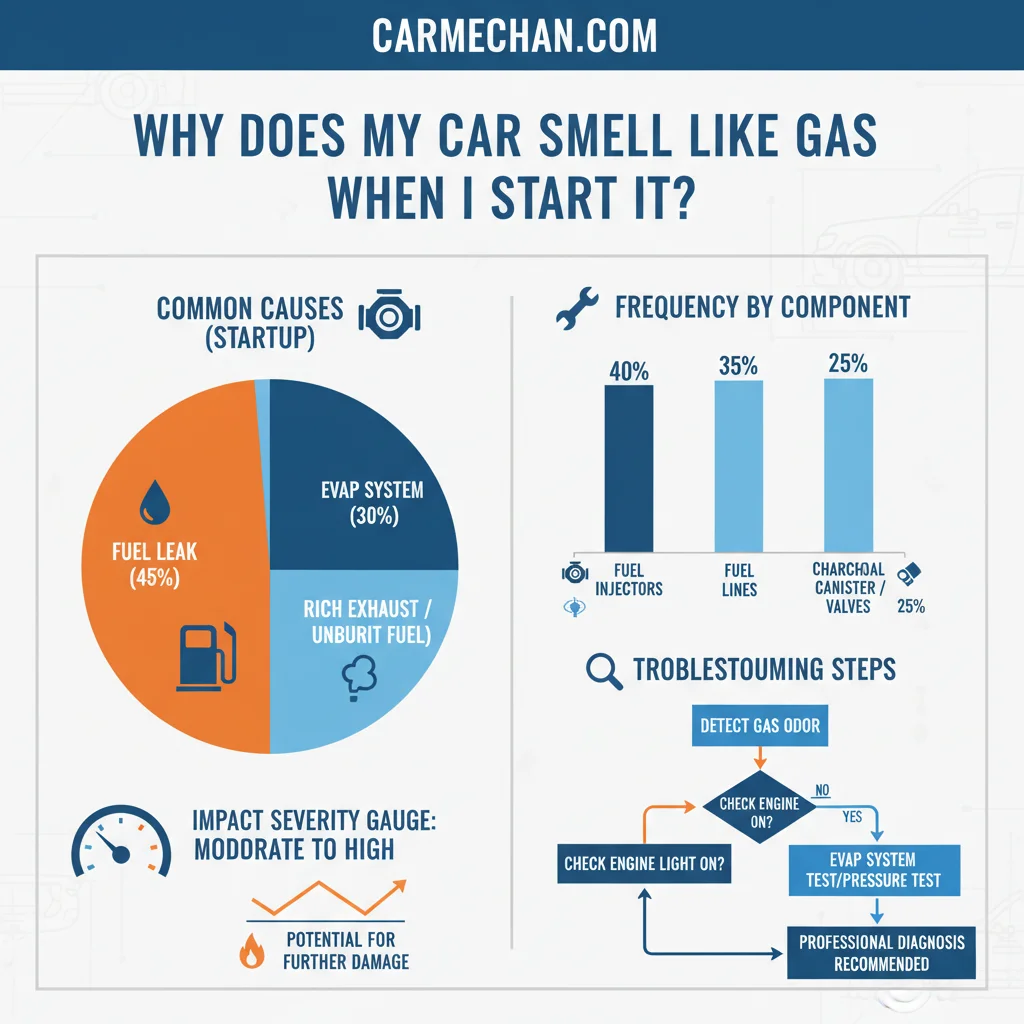
We can systematically isolate the source of raw gas fumes by following three highly detailed diagnostic steps.
This procedure ensures that no active leak goes unnoticed, protecting your vehicle and passenger health.
Inspect Fuel Rail
1. Connect a diagnostic pressure gauge to the fuel rail test fitting and perform a static system check.
2. Inspect the fuel line connections and the regulator vacuum hose for raw dampness.
3. Carefully inspect the fuel rail body and the injector mounting ports for wet liquid gasoline spots.
4. We recommend wiping a dry paper towel beneath each injector to catch minor, slow-weeping leaks.
Using this visual method quickly exposes failing seals that only leak under initial pressurized cycles.
Test Purge Valve
1. Locate the evaporative purge valve in the engine bay and disconnect its electrical harness connector.
2. Apply a handheld vacuum pump directly to the valve to verify if it seals correctly when closed.
3. If the valve fails to hold vacuum, replace the purge solenoid to prevent vapor bypass.
4. Studies from the Society of Automotive Engineers testing procedures recommend using smoke machines to trace tiny EVAP cracks.
Injecting pressurized smoke into the system instantly pinpoints microscopic hairline cracks in complex lines.
Replace Intake Filters
1. Remove your cabin air filter to inspect the filter media for trapped chemical odors and dirt.
2. Thoroughly clean the fresh-air intake plenum beneath the windshield cowls to remove organic debris.
3. Inspect the rubber seals around the cabin filter housing to ensure no engine air bypasses the element.
4. Install an active-carbon replacement cabin filter to actively neutralize lingering airborne exhaust odors.
Active-carbon filters utilize advanced charcoal media that absorbs gas molecules far better than standard paper.
To contextualize these fixes, let us review the 5 critical startup emission standards car owners must know.
5 Critical Startup Emission Standards Car Owners Must Know
Our summary of current automotive data highlights the tight parameters within which modern vehicle emission systems operate.
These strict metrics are enforced by federal regulators to keep urban environments clean.
Maintaining compliance requires all engine hardware to operate within factory specifications.
Tier Emission Compliance Rules
Current EPA Tier 3 standards demand severe reductions in cold start hydrocarbon emissions from passenger vehicles.
These regulations force manufacturers to design engine management systems that minimize initial warm-up exhaust volumes.
These compliance rules establish the legal boundaries for tailpipe pollutants across the nation.
Hydrocarbon Parts per Million Limits
Unburnt gasoline contains hydrocarbons that must not exceed strict parts-per-million thresholds during idle testing.
A spike in these limits points directly to combustion failure or unburnt fuel bypass.
Exceeding these limits as outlined in federal emission limits can quickly cause a vehicle to fail municipal emissions tests.
Catalytic Light Off Times
Catalytic converter light-off requires reaching temperature targets of six hundred degrees Fahrenheit within thirty seconds.
Until this heat threshold is achieved, the vehicle cannot fully burn off startup exhaust emissions.
Modern vehicles utilize advanced spark-retard strategies to accelerate this critical heating process.
This technical review concludes our study into cold start fuel behaviors.
In conclusion, determining why does my car smell like gas when i start it requires matching systemic symptoms to verified mechanical baselines.
Normal cold starts briefly run rich, producing a short-lived tailpipe odor, whereas persistent raw gasoline smells point to physical component failures.
These serious physical failures often include leaking lines, deteriorated injector seals, or EVAP system cracks.
Using static fuel rail pressure testing remains the most accurate diagnostic tool for pinpointing these internal system leaks.
To safely resolve these issues, perform a visual check of your fuel rail and injector o-rings immediately.
We recommend scheduling a professional fuel pressure leak-down test with a certified technician to isolate any physical breaches.
Taking prompt action protects your vehicle’s engine and prevents dangerous engine bay fires in 2026.
Why My Car Smells Like Gas On Cold Start
Q1: Is it normal to smell gas when starting a cold engine?
Yes, a very faint fuel odor lasting under thirty seconds can be normal during cold starts. The engine computer runs a rich fuel mixture to stabilize combustion before the catalytic converter warms up. However, any persistent or heavy gasoline smell inside the cabin points to a mechanical failure.
Q2: Can a bad spark plug cause a startup gas smell?
Yes, a misfiring spark plug prevents complete combustion of the fuel in that cylinder. This unburnt gasoline is pushed directly into the exhaust system, creating a noticeable tailpipe odor. Replacing the spark plugs resolves the misfires and stops raw fuel from escaping.
Q3: How do I know if my fuel injectors are leaking?
Leaking fuel injectors typically cause extended engine cranking times, rough idling, and persistent fuel odors. You can verify this by performing a fuel pressure leak-down test on the fuel rail. A rapid pressure drop indicates a leak in the injector seals or internal valves.
Q4: Will a loose gas cap cause a fuel smell inside the car?
Yes, a loose or failing gas cap prevents the EVAP system from sealing properly, allowing vapors to escape. These vapors can drift toward the fresh air intakes and enter the cabin. Tightening the cap or replacing its worn seal usually resolves this issue immediately.
Q5: Is it safe to drive my car if it smells like gas?
No, driving a vehicle with a persistent raw fuel smell is highly unsafe due to active fire hazards. Raw fuel leaking onto hot engine components can ignite instantly under pressurized conditions. You must shut down the engine and have the fuel system inspected immediately.
- fuel delivery system (nhtsa.gov)
- engine management systems (sae.org)
- Environmental Protection Agency (epa.gov)
- chemical hazard warnings (cdc.gov)