VW Tiguan Years to Avoid: Spotting Key Reliability Issues
Last Updated on September 1, 2026 by Ryan


When considering a used VW Tiguan, the 2009-2017 model years often present the most significant reliability concerns, primarily related to the 2.0L TSI engine and early DSG transmissions. These issues can lead to expensive repairs, making careful research crucial for potential buyers before making a purchase.
🎯 Key Takeaways
- Avoid 2009-2017 Tiguan models due to engine and transmission issues.
- Watch for timing chain, PCV, and DSG mechatronics failures.
- Prioritize 2018+ models for improved reliability and design.
- Always get a pre-purchase inspection from a VW specialist.
- Budget for potential maintenance on any used Tiguan.
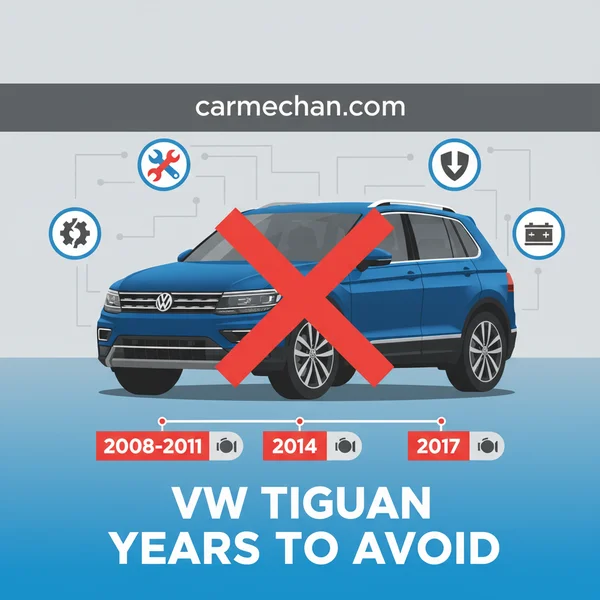
If you’re eyeing a used VW Tiguan, understanding which model years to approach with extreme caution, or simply avoid, is critical to sidestepping significant financial headaches. The first-generation Tiguan, specifically models from 2009 through 2014, are notorious for a range of recurring and costly reliability issues that can quickly turn an attractive deal into an ongoing money pit. Even the slightly newer 2015-2017 models, while showing some improvement, aren’t entirely immune from these systemic problems.
Knowing the precise problems associated with these specific years isn’t just about saving money; it’s about avoiding frustrating breakdowns, ensuring your safety, and preserving your peace of mind. Our breakdown will arm you with the detailed knowledge needed to make an informed decision, highlighting everything from engine failures and transmission woes to significant electrical glitches that plague these particular Tiguans.
Identifying the Most Problematic VW Tiguan Model Years (2009-2017)
When considering a used VW Tiguan, your focus should sharply narrow on avoiding model years from 2009 through 2014, which represent the peak of reported issues. While the 2015-2017 models saw some minor improvements, they weren’t entirely free of their predecessors’ systemic flaws. These early Tiguans, often praised for their European driving feel, frequently disappoint owners with recurring mechanical and electrical failures that lead to substantial repair bills and significant downtime.

The Early Trouble Spots: 2009-2011 VW Tiguan
- Engine Timing Chain Tensioner Failure: This is arguably the most notorious issue. Found in the EA888 2.0T engine, the original hydraulic tensioner was prone to failing, leading to excessive timing chain slack. Symptoms include a distinct rattling noise on startup, engine misfires, and ultimately, catastrophic engine damage if the chain jumps teeth. Repair costs for preventative replacement are around $1,500-$2,500; engine replacement can exceed $7,000. This issue was so widespread it prompted a class-action lawsuit and extended warranty coverage for some, but many older models are now out of coverage, leaving owners with steep bills.
- Excessive Oil Consumption: Many owners report needing to add a quart of oil every 1,000-2,000 miles, significantly higher than normal. This is often linked to faulty PCV (Positive Crankcase Ventilation) valves and design flaws in the piston rings, leading to oil burning. Long-term, it can foul spark plugs and catalytic converters, further escalating costs.
- PCV Valve Failure: A common culprit behind both oil consumption and other engine issues. A failed PCV valve can create incorrect pressure within the engine, leading to rough idling, engine misfires, turbocharger problems, and even oil leaks or blown seals. Replacement costs typically range from $300-$600.
Lingering Reliability Headaches: 2012-2014 VW Tiguan
- Continued Engine Issues: Despite minor revisions, the core timing chain and excessive oil consumption issues largely persisted through 2014. Buyers still face a high risk of these expensive engine problems, making a thorough pre-purchase inspection by a Volkswagen specialist absolutely vital. Do not skip this step.
- Transmission Mechatronics Unit Failure (Automatic): For models equipped with the Aisin 6-speed automatic transmission (common in the US market), failures of the mechatronics unit – the electronic control module that manages shifting – are common. Symptoms include harsh shifting, transmission slipping, getting stuck in a particular gear, or complete loss of drive. Repair costs can be upwards of $2,000-$4,000, often requiring full transmission replacement if the mechatronics unit is integrated.
- Ignition Coil Failures: These are relatively inexpensive to fix individually, typically $100-$200 per coil plus labor, but frequent failures can be frustrating. They lead to recurring engine misfires, a noticeable loss of power, and the dreaded check engine light.
Common Reliability Issues Across Early Tiguan Generations
Beyond the year-specific nuances, the first-generation Tiguan (2009-2017) shared several pervasive problems that significantly impact ownership satisfaction and cost. Understanding these systemic weaknesses highlights why certain model years are best approached with extreme caution, or avoided altogether. These are not minor inconveniences; they are issues that can severely deplete your wallet and sideline your vehicle.
Engine Woes: The EA888 2.0T Engine’s Achilles’ Heel
- Carbon Buildup: Direct injection engines, like the EA888 2.0T found in these Tiguans, are inherently prone to carbon buildup on intake valves because fuel isn’t sprayed over the valves to clean them. This restricts airflow, causing persistent misfires, a noticeable reduction in power, and poor fuel economy. A “carbon cleaning” or walnut blasting service is often required every 50,000-80,000 miles, costing $500-$1,000. Neglecting this maintenance exacerbates other engine issues and can lead to rough engine operation.
- Turbocharger Failures: Premature turbocharger failures are a significant concern, often exacerbated by the engine’s excessive oil consumption and PCV valve issues. Symptoms include a distinct whining noise from the engine bay, a noticeable loss of power, and blue smoke from the exhaust tailpipe. Replacement is a costly affair, typically running between $1,500-$3,000 for parts and labor, depending on the extent of the damage.
- Water Pump Leaks: The plastic housing of the water pump/thermostat assembly is prone to cracking and leaking, leading to coolant loss and potential engine overheating. This is a very common failure point across various VW/Audi models using this engine. Ignoring a coolant leak can lead to catastrophic engine damage. Repair costs usually range from $500-$900.
Electrical System and Component Failures
- Sensor Failures (e.g., ABS, Oxygen Sensors): Numerous reports detail issues with various sensors throughout these Tiguans. These failures lead to dashboard warning lights, incorrect readings, and engine performance problems. While individual sensor replacement is not excessively costly (typically $200-$400), their frequency and the difficulty in accurately diagnosing the root cause can be frustrating and contribute to repeat shop visits.
- Intermittent Electrical Gremlins: Owners occasionally report unpredictable electrical issues, ranging from power window failures to malfunctioning infotainment screens or erratic HVAC controls. These can be particularly difficult to diagnose and repair, sometimes pointing to complex wiring harness issues or faulty control modules that are expensive to replace.
- Premature Brake Component Wear: While not a critical safety failure, many owners complain about premature wear of brake components, particularly the rear brakes. This requires more frequent pad and rotor replacements than expected, adding to routine maintenance costs and ownership expenses.
Understanding the Financial Impact of Known Tiguan Flaws
Buying a used car is often about finding value, but sometimes a seemingly good deal can turn into a financial headache. This is especially true when considering certain Volkswagen Tiguan model years known for their recurring issues. The upfront purchase price might be appealing, but the long-term cost of ownership, driven by repair bills, can quickly erase any initial savings.
The True Cost of a ‘Bargain’
Many of the Tiguan’s common problems, such as timing chain tensioner failures or significant DSG transmission issues, aren’t minor fixes. They often involve complex labor and expensive parts. Imagine purchasing an older Tiguan for $8,000, only to face a $3,000 engine repair a few months later. Suddenly, your “bargain” Tiguan has cost you $11,000, not including regular maintenance, and you haven’t even touched potential issues like a failing water pump or turbocharger.
These scenarios highlight a crucial point: always factor in potential repair costs when evaluating a used vehicle. A slightly more expensive, newer model with a better reliability track record might prove to be far cheaper over three to five years of ownership than a riskier, older model.
Common Repair Price Tags
To give you a clearer picture, here are some typical repair costs associated with problematic Tiguan years:
- Timing Chain and Tensioner Replacement: This critical engine component can cost anywhere from $1,500 to $3,500, depending on the extent of the damage (e.g., if the chain skipped and damaged valves) and labor rates.
- DSG Transmission Mechatronics Unit: Repairs for this complex part can easily run from $2,000 to $4,000, or more if a full transmission replacement is needed.
- Water Pump Failure: A common issue on many VW engines, a replacement can cost between $600 and $1,200 due to its location and labor intensity.
- Turbocharger Issues: From wastegate failures to full turbo replacements, costs can range from $1,000 to $2,500, often accompanied by oil consumption problems.
- Electrical Gremlins: Tracking down and fixing wiring harnesses, faulty sensors, or module issues can vary wildly, but often involve significant diagnostic labor, adding hundreds to thousands to repair bills.
These aren’t hypothetical figures; they represent real-world expenses reported by Tiguan owners. Being prepared for such eventualities, or better yet, avoiding them, is key to smart car buying.
Safer Alternatives and Pre-Purchase Inspection Tips for Used Tiguans


While some Tiguan years present notable risks, that doesn’t mean the Tiguan is off the table entirely. Understanding which models to focus on, and what to meticulously check, can guide you towards a more reliable purchase. For those less keen on taking risks, several alternatives offer a strong blend of reliability and practicality.
Considering Newer Models or Other Brands
If you’re set on a Tiguan, consider models from 2018 onwards. This marked the introduction of the second-generation Tiguan, built on VW’s MQB platform, which generally boasts improved reliability and a more modern design. These newer models often feature updated engines and transmissions that address many of the issues plaguing earlier generations. However, they will naturally come at a higher price point.
Should you decide to explore other options in the compact SUV segment, several competitors consistently receive high marks for dependability:
- Mazda CX-5: Often praised for its engaging driving dynamics and excellent long-term reliability.
- Honda CR-V: A perennial favorite, known for its spacious interior, fuel efficiency, and bulletproof reliability.
- Toyota RAV4: Another top contender for reliability and resale value, with a strong reputation for trouble-free ownership.
- Subaru Forester: Offers standard all-wheel drive and a strong safety record, with good reliability.
These alternatives generally offer a more predictable ownership experience, potentially saving you from unexpected repair costs down the line.
Crucial Pre-Purchase Inspection Steps
Even if you’re looking at a supposedly “safer” Tiguan year, or any used vehicle, a thorough pre-purchase inspection is non-negotiable. Here’s what to prioritize:
- Full Service History Check: Demand a complete record of maintenance. Look for consistent oil changes, evidence of recommended services, and any past major repairs, especially on the engine or transmission.
- Professional Mechanic Inspection: This is arguably the most important step. Have a trusted, independent mechanic (ideally one familiar with Volkswagens) inspect the vehicle. They can spot common weak points, check for diagnostic trouble codes (DTCs), assess fluid conditions, and inspect the undercarriage for rust or damage.
- Extended Test Drive: Pay close attention to how the engine sounds (listen for rattles, knocks, or excessive ticking), how the transmission shifts (smoothly or with jerks/delays?), and the feel of the brakes and steering. Test all electrical components, including windows, climate control, infotainment, and lights.
- Carfax/History Report: Always run a vehicle history report to check for accidents, flood damage, title issues, and mileage discrepancies.
Being diligent during this phase can save you from purchasing a vehicle with hidden problems, regardless of the brand or model year.
Conclusion
Navigating the used car market, especially for a popular model like the VW Tiguan, requires a keen eye and thorough research. While the Tiguan offers a compelling package of German engineering and style, certain model years, particularly from 2009 to 2017, come with a higher risk of significant and costly mechanical issues, notably with their timing chains, water pumps, and DSG transmissions.
Prioritize diligence: research specific model years, scrutinize service records, and invest in a comprehensive pre-purchase inspection by a qualified mechanic. Alternatively, exploring newer Tiguan models (2018+) or highly-rated alternatives like the Mazda CX-5 or Honda CR-V can lead to a more reliable and less stressful ownership experience. With careful consideration and a proactive approach, you can confidently make an informed choice and drive away in a dependable vehicle that truly fits your needs and budget.
❓ Frequently Asked Questions
Which specific Tiguan years should I definitively avoid and why?
Focus on avoiding 2009-2017 models, particularly the 2009-2012 range, primarily due to notorious 2.0L TSI engine issues like timing chain tensioner failure, which can lead to catastrophic engine damage, and significant oil consumption.
What are the most common and expensive repairs for the problematic Tiguan years?
Expensive repairs often include timing chain replacement (prevention is key), PCV valve and diverter valve replacements, turbocharger issues, and mechatronics unit repair/replacement for DSG transmissions. These can easily cost thousands of dollars.
How can I identify if a used Tiguan has the ‘bad’ timing chain tensioner or other engine issues?


Look for detailed service records showing timing chain service, listen for rattling noises on cold starts, specifically check for excessive oil consumption between oil changes, and get an inspection to check the tensioner design. These are strong indicators of potential issues.
Are there any Tiguan years that are considered consistently reliable?
The second generation, starting from the 2018 model year, is generally considered much more reliable with fewer widespread mechanical issues, benefiting from an updated 2.0L TSI engine (EA888 Gen 3) and improved transmission design.
What should I look for during a test drive of an early-generation Tiguan?
Pay attention to smooth transmission shifts without hesitation or shuddering, listen for unusual engine noises (rattles, ticks, abnormal hums), check for any dashboard warning lights, and ensure the turbo spools up correctly without excessive smoke from the exhaust.
Is it worth buying a problematic year Tiguan if the price is low?
While a low initial purchase price can be tempting, the potential for significant, recurring repair costs often outweighs initial savings. It becomes a high-risk purchase unless comprehensive service records confirm that all common issues have been professionally and proactively addressed.