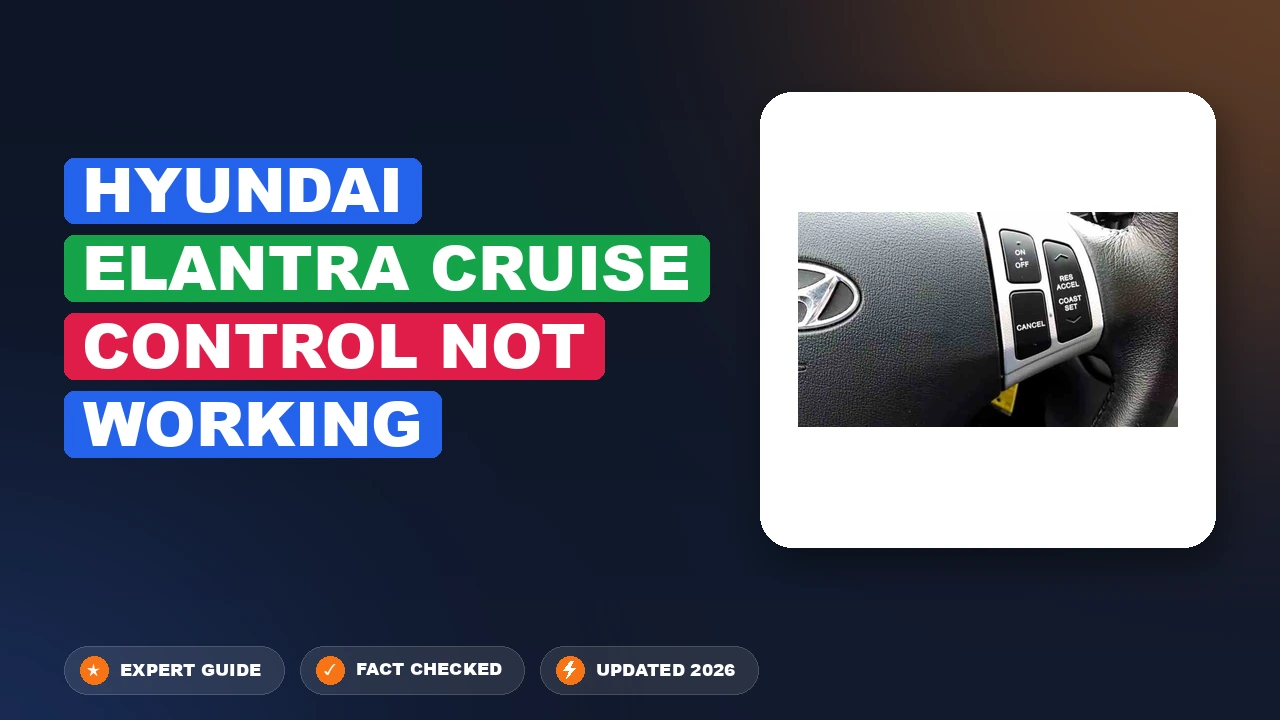
Hyundai Elantra Cruise Control Not Working: Diagnosed & Fixed
Is your Elantra refusing to lock in your speed on the highway, leaving you to manage the gas pedal yourself? Whether it is a flickering dash light or a complete inability to engage the system, a non-functional cruise control is frustrating and potentially indicative of underlying sensor or electrical issues. In this guide, we break down why your Hyundai Elantra cruise control isn’t working and provide a clear roadmap to diagnose and resolve the fault safely.
Understanding Why You Have Hyundai Elantra Cruise Control Not Working


Modern Hyundai vehicles rely on a complex network of data inputs to keep the cruise control engaged. When the Engine Control Unit (ECU) or Powertrain Control Module (PCM) detects a discrepancy, it immediately inhibits the cruise function as a safety precaution.
📤 Share Image

The Role of Brake Light Switches and Safety Interlocks
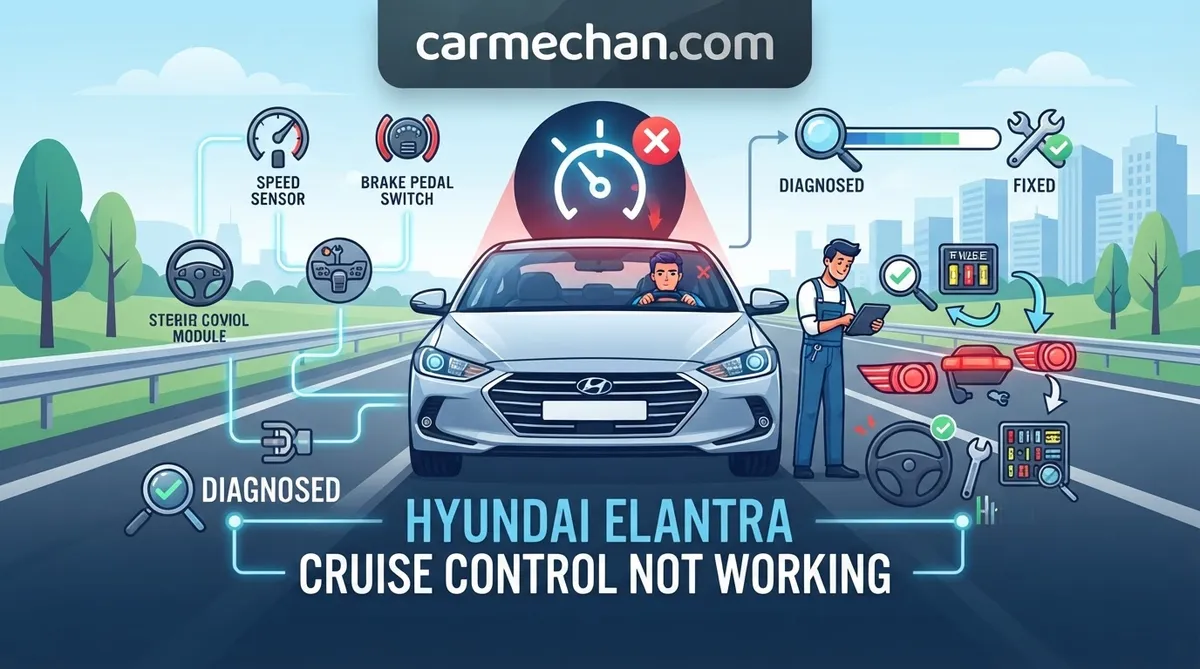
The brake pedal position sensor serves as a primary “kill switch” for the system. If the sensor sends a signal that the pedal is depressed when it is not, the computer will refuse to engage cruise. Conversely, a faulty bulb or a blown fuse can introduce resistance issues; in many Elantra models, the cruise control circuit shares an electrical path with the brake lights. A burned-out filament can trick the module into believing the brakes are being applied, effectively locking out the feature.

Why ABS and Wheel Speed Sensors Disconnect Cruise
The cruise control system requires valid signal input from all wheel speed sensors to function properly. Research indicates that the cruise control system is disabled automatically if the vehicle’s computer detects a fault in the Anti-lock Braking System (ABS) or Electronic Stability Control (ESC) systems. Because cruise control relies on these sensors to monitor vehicle speed variations, any glitch in this data stream renders the cruise system inoperable to prevent unintended acceleration.

Adaptive Cruise Control Obstructions and Sensor Faults
Adaptive Cruise Control (ACC) adds another layer of complexity. These systems use a radar sensor mounted in the front grille or bumper. If this sensor is obscured by road grime, ice, or damage from a minor collision, the ACC system will fault. Unlike standard systems, ACC is exceptionally sensitive to environmental conditions, and sensor misalignment can frequently cause the system to cease operation.
Step-by-Step Diagnostic Guide for Elantra Cruise Failure
📋
Diagnostic Workflow
Plug an OBDII scanner into the port under the dashboard. Check specifically for P0500 (Vehicle Speed Sensor) or codes related to the ABS/ESC modules. These codes confirm if the computer has disabled the cruise system due to an active fault.
Manually check if your brake lights illuminate when the pedal is pressed. If they do not, or if they stay on constantly, the brake light switch is likely failing, causing the system to lock out.
If the horn or steering wheel audio controls are also malfunctioning, the “clock spring”—the electrical ribbon inside the steering column—has likely failed, cutting communication to the cruise buttons.
Fixing Hyundai Elantra Cruise Control Not Working Permanently
Once you have identified the culprit, you can move toward a solution. Most of these repairs involve modular replacements that do not require specialized diagnostic computers.
Replacing the Brake Pedal Position Sensor
The brake switch is typically located directly above the brake pedal arm. To replace it: 1) Locate the switch, 2) Unplug the electrical connector, 3) Rotate the switch housing to unlock it from the mounting bracket, 4) Install the new part and re-verify that the brake lights function correctly. This is often the most cost-effective fix for a non-responsive system.
Resetting the System and ECU
Sometimes, the ECU holds a transient “soft” fault code. You can attempt to clear this by disconnecting the negative battery terminal for 15 minutes. This forces the module to reboot and re-poll all sensors upon reconnection. If the issue was a one-time glitch, the cruise system should engage once you reach highway speeds.
Avoid attempting to open or repair the steering wheel airbag assembly or clock spring yourself unless you have specific training. Always disconnect the battery and wait for the capacitor to discharge before working near the steering column to prevent accidental deployment.
Advanced Troubleshooting When Cruise Control Still Fails
If your initial diagnosis steps do not yield a fix, you are likely dealing with a deeper communication issue within the vehicle’s electrical bus.
- Wiring Harness Damage: Rodent damage or frayed wires near the ABS sensor pigtails at the wheel hubs can cause intermittent cruise failure. Check the wiring for physical signs of wear.
- Persistent Fail-Safe Mode: If the ECU is stuck in a fail-safe state, the issue may be internal to the module or a result of a major sensor error that cannot be self-healed. Professional flashing of the PCM software may be required.
- Vibration-Induced Failures: If the cruise control kicks out specifically when hitting bumps, it suggests a loose connector at the ABS control module or the wheel hub sensors. Inspecting the pigtails after recent suspension work is a highly recommended practice.
By The Numbers
Commonality of Sensor Faults
Years of System Evolution
Summary and Professional Recommendations
Resolving your Hyundai Elantra cruise control not working is usually a matter of identifying which safety interlock has tripped. Remember that the system is designed to disable itself to prevent dangerous situations, meaning the “fault” is often a feature working exactly as intended to notify you of another issue, such as a failing brake light or ABS sensor.
Always prioritize checking for accompanying dashboard warning lights—such as “Check Engine” or “ESC”—before replacing components. If you have cleaned your radar sensors, verified your brake light operation, and checked for obvious wiring damage but the system remains non-functional, it is time to consult a certified technician. Professional diagnostic equipment can identify granular data bus errors that standard OBDII scanners cannot read, ensuring you do not compromise your vehicle’s braking or stability systems in pursuit of a fix.
Hyundai Elantra Cruise Control Not Working: Frequently Asked Questions
Why does my cruise control light turn on but not engage?
This usually indicates that the system is electrically powered but failing an internal safety check. Common causes include a faulty brake light switch, a blown fuse in the cruise circuit, or an active powertrain error code. When the ECU detects a conflict, such as a signal suggesting the brakes are partially applied, it will illuminate the ‘Cruise’ light but block the ‘Set’ command to prevent unintended acceleration.
Does a check engine light affect cruise control operation?
Yes, absolutely. Hyundai vehicles are programmed to disable cruise control whenever an active diagnostic trouble code (DTC) is present in the Engine or Transmission Control Modules. Because cruise control relies on stable engine performance and sensor data, the manufacturer restricts its use to prevent complications while an underlying engine or drivetrain issue is active. Scanning for and clearing codes is the first diagnostic step.
Why does my cruise control turn off when I hit a bump?
This is a classic symptom of a loose electrical connection. When the vehicle experiences physical impact, a loose brake switch, a worn clock spring ribbon cable, or a loose harness connector can momentarily break the electrical circuit. Because the system requires a constant, uninterrupted signal to maintain speed, any sudden disruption forces the cruise control to disengage for safety reasons.
Can I replace the steering wheel cruise control switch myself?
Yes, if you are comfortable working with vehicle trim and electrical harnesses. It involves removing the steering wheel airbag, which requires extreme caution and disconnecting the battery at least 30 minutes prior. You will need the correct trim removal tools to prevent dashboard damage. If you are not confident in your ability to handle airbag safety protocols, professional installation is strongly recommended to prevent injury or SRS system warnings.
Is it safe to drive my Elantra if the cruise control is broken?
Yes, it is perfectly safe to drive your vehicle without a working cruise control system. Cruise control is an convenience feature, not a critical component for vehicle operation or safety. However, because a failing brake light switch or a persistent check engine light can be linked to the problem, you should ensure that your brake lights work properly and have any engine codes diagnosed to avoid larger, more costly mechanical repairs.