10 Reasons Not to Lease a Car: Avoid Common Pitfalls
Last Updated on September 1, 2026 by Ryan
Leasing a car often means never building equity and facing numerous hidden costs, making it a financially less appealing option for many. From restrictive mileage penalties and wear-and-tear fees to expensive early termination charges, the disadvantages can quickly outweigh any perceived benefits for long-term drivers.
🎯 Key Takeaways


- Avoid leasing to build car ownership equity.
- Beware of hidden fees for excess mileage and wear.
- Leasing traps you in a continuous payment cycle.
- Early lease termination is notoriously expensive.
- Long-term ownership offers greater financial freedom.
Leasing a car often appears as an attractive gateway to driving a new vehicle every few years. However, beneath the surface of seemingly low monthly payments, a lease agreement harbors numerous significant financial pitfalls and practical restrictions. Understanding these disadvantages upfront is crucial to making an informed decision that truly benefits your long-term financial health.
This isn’t about the superficial allure of a new car; it’s about the tangible costs and limitations that can quickly negate any perceived benefits. By delving into the core financial drawbacks and hidden penalties, you can avoid common traps and choose a path that offers more control, flexibility, and genuine value for your money.
The Core Financial Drawbacks of Car Leasing

No Equity, No Ownership, No Return
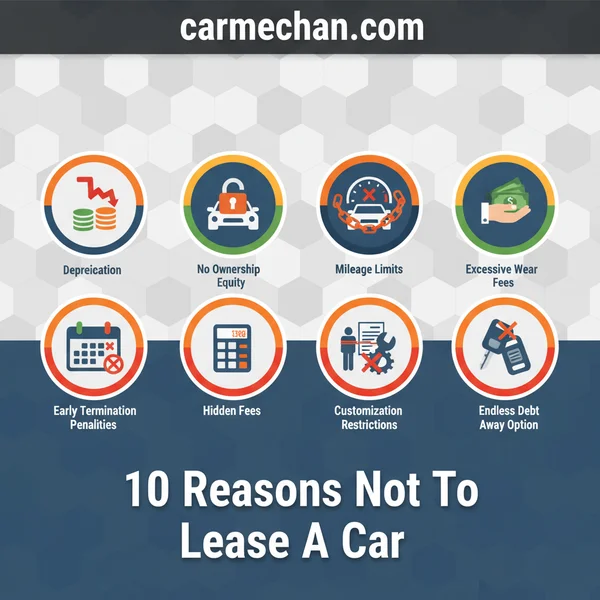
One of the most fundamental financial disadvantages of leasing is the complete lack of equity. When you lease, you are essentially renting the car for a fixed period. Every monthly payment you make contributes zero towards owning an asset. After your 24, 36, or 48-month lease term concludes, you simply return the vehicle. You have nothing to show for the thousands of dollars you’ve paid.

- Consider a 36-month lease at $450 per month. You will have paid $16,200 over three years. At the end, you own nothing and must repeat the cycle to drive another car.
- In contrast, when you buy a car, each loan payment builds equity. Even as the car depreciates, it retains some value that belongs to you. This accumulated equity can be used as a down payment for your next vehicle or provides cash if you sell outright.
This absence of ownership means you’re perpetually stuck in a payment cycle. You never reach a point where your vehicle is fully paid off, offering you years of “free” driving besides maintenance and insurance.
Higher Long-Term Costs Compared to Buying
While monthly lease payments can often be lower than loan payments for the same car, the long-term cost of continuously leasing is almost always higher. Leasers are always driving a new car, which means they are constantly absorbing the steepest depreciation curve of a vehicle’s life. This repeated exposure to maximum depreciation is inherently more expensive.
- If you lease indefinitely, you will be making car payments for your entire driving life.
- If you purchase a car and keep it for 7-10 years, you might pay off the loan in 5 years. This gives you 2-5 years of driving without car payments, a significant financial advantage.
Furthermore, many lease deals require substantial down payments or “acquisition fees” that effectively reduce your monthly payment but still represent a significant out-of-pocket cost that you never recoup. You are effectively paying for the privilege of driving a new car every few years, a luxury that comes at a premium price over time.
Uncovering Hidden Costs and Unexpected Lease Penalties
Excess Mileage: A Costly Trap
Most lease agreements come with strict annual mileage limitations, typically ranging from 10,000 to 12,000 miles. Exceeding these limits can lead to surprisingly steep penalties when you return the car. These fees commonly range from $0.15 to $0.30 per mile over the agreed limit, making it incredibly easy for your end-of-lease bill to skyrocket.
- Imagine a 3-year lease with a 12,000-mile annual limit (36,000 total miles). If you drive an average of 15,000 miles per year, you’ll accumulate an extra 9,000 miles.
- At a penalty of $0.25 per mile, this seemingly small oversight translates into an additional $2,250 fee at lease end.
It’s alarmingly common for drivers to underestimate their actual mileage needs. Daily commutes, weekend trips, and family errands can quickly add up, turning what seemed like an adequate mileage allowance into a costly surprise. You have virtually no flexibility once you’re locked into these limits, forcing you to either pay the penalty or drastically alter your driving habits.
Wear and Tear Fees and Early Termination Nightmares
Lease agreements often include ambiguous clauses regarding “excessive wear and tear.” While normal wear is usually covered, what constitutes “normal” is highly subjective and often determined by the leasing company. Minor dents, scratches, curb rash on wheels, minor interior stains, or even slightly worn tires beyond a specific tread depth can trigger significant charges.
- These fees can easily add hundreds or even thousands of dollars to your final bill, as the dealership meticulously inspects the vehicle upon return.
- You might face charges for imperfections you wouldn’t bother fixing if you owned the car, but for which you are now financially responsible.
Even more catastrophic are early termination penalties. If your circumstances change and you need to get out of your lease early, you face a financial nightmare. Lease agreements typically require you to pay all remaining monthly payments, plus a hefty early termination fee, and often a disposition fee. This can mean paying thousands for a car you no longer drive, severely limiting your financial flexibility and trapping you in an undesirable situation.
Understanding Lease Restrictions and Lack of Vehicle Flexibility
Beyond the initial costs, leasing brings a set of rigid rules that can quickly turn your perceived savings into unexpected expenses. These restrictions often impact how you use the vehicle and what you can do with it.

Mileage Limits and The Cost of Freedom
Lease agreements are notorious for their strict annual mileage caps. Typically, these limits range from 10,000 to 15,000 miles per year. Exceeding these limits comes with a hefty price tag, often ranging from $0.15 to $0.25 per mile.
- Practical Example: Imagine you have a 3-year lease with a 12,000-mile annual limit. If you drive just 5,000 miles over that total period (averaging about 1,600 extra miles per year), you could face an additional bill of $750 to $1,250 at lease end.
- Tip: Be brutally honest about your driving habits. If you have a long commute, enjoy road trips, or your life circumstances might change, leasing’s mileage restrictions are a significant financial risk.
Customization Limitations and Unforeseen Wear & Tear Penalties
When you lease, the car isn’t truly yours – it belongs to the leasing company. This means you have very little flexibility to customize or modify the vehicle to your liking. Thinking of adding aftermarket wheels or a specific audio system? Think again. Most modifications are prohibited unless you’re willing to restore the car to its original condition at your own expense.
Even more problematic are the subjective “excessive wear and tear” clauses. What a leasing company considers normal use can differ significantly from your perception. Minor dings, scratches, interior stains, or tire wear that an owner might ignore can lead to substantial charges when you return the vehicle.
- Real-World Scenario: A small door ding from a parking lot incident or a minor tear in the seat fabric could be deemed “excessive,” leading to hundreds, if not thousands, in unexpected fees.
- Tip: Lease vehicles essentially require you to treat them with extreme care, almost like a rental car you’re expected to return in showroom condition. Every imperfection could cost you.
Comparing Leasing to Ownership: Long-Term Financial Implications
While leasing might offer lower monthly payments initially, it’s crucial to look beyond the immediate figures and consider the financial trajectory over the long haul. The fundamental difference lies in asset acquisition versus continuous rental.
The Never-Ending Payment Cycle
Perhaps the most significant long-term financial drawback of leasing is the perpetual payment cycle. When your lease term ends, you have a few options: lease another new car (starting new payments), buy out your current leased car (taking on a new loan), or go without a vehicle. You are always making a car payment.
- Consider This: After 3-4 years, a car owner might be nearing the end of their loan payments, or even own their vehicle outright, enjoying a period of no car payments. A leaser, however, is simply signing up for another few years of monthly bills.
- Tip: Ask yourself if you want a car payment to be a permanent fixture in your monthly budget. For many, the goal is to eventually own a vehicle outright and free up that cash flow.
Building Equity and Asset Value
When you purchase a car with a loan, every payment you make contributes to building equity. You are investing in an asset that, even with depreciation, retains value. This equity can be used as a trade-in towards your next vehicle, or you can sell the car for cash, providing a tangible return on your investment.
Leasing offers no such benefit. You are paying for the depreciation of the vehicle during your term, essentially renting it. At the end of the lease, you have no equity, no asset, and nothing to show for all those monthly payments except for the temporary use of a car.
- Long-Term Perspective: Over a decade, an owner might pay off two cars and accumulate significant equity or even enjoy years of driving a debt-free vehicle. A leaser, over the same period, would have made ten years of continuous payments with zero equity to show for it.
- Tip: Evaluate whether building an asset and eventually being car-payment-free aligns better with your long-term financial goals than the short-term appeal of lower monthly lease payments.
Conclusion
While leasing can initially appear attractive with its lower monthly payments, a deeper dive reveals a host of potential downsides. From the anxieties of mileage limits and wear-and-tear penalties to the fundamental issue of never building equity and the never-ending payment cycle, leasing often presents more long-term financial pitfalls than benefits.
Understanding these reasons can empower you to make a truly informed decision. Carefully evaluate your driving habits, your financial goals, and your desire for vehicle flexibility. Take the time to compare the total cost of ownership versus the true cost of leasing over several years.
Choose the path that gives you genuine financial freedom and aligns with your lifestyle, ensuring your car is a tool for convenience, not a source of constant worry.
❓ Frequently Asked Questions
Why is not building equity a major downside of leasing a car?
Not building equity means every payment is essentially a rental fee, and you have no asset to sell or trade in at the end of the term. This lack of ownership prevents you from leveraging the car’s value for future purchases or financial needs.
What specific hidden fees should I watch out for in a car lease agreement?
Key hidden fees include excess mileage charges (typically $0.15-$0.30 per mile over limit), excessive wear and tear charges for minor damages, early termination fees, and a disposition fee for returning the vehicle at the end of the lease.
How restrictive are mileage limits, and what financial impact do they have?
Mileage limits are typically between 10,000 to 15,000 miles per year, which can be very restrictive for many drivers. Exceeding these limits leads to substantial per-mile penalties, potentially adding thousands of dollars to your total lease cost.
Can I get out of a car lease early without incurring massive costs?
Generally, no. Terminating a car lease early is almost always very expensive, as you’re usually responsible for the remaining lease payments, early termination fees, and potentially other penalties, making it a costly decision.
When does leasing become an especially poor financial choice compared to buying?
Leasing becomes an especially poor financial choice if you drive many miles, tend to be rough on vehicles, desire long-term ownership, or want to avoid perpetual car payments and unexpected end-of-lease fees.
How does buying a car compare financially to leasing in the long term?
Buying a car, though initially requiring higher monthly payments or a down payment, allows you to build equity, eventually own the vehicle outright with no monthly payments, and provides greater flexibility for selling or trading in without penalty. Over time, it’s often more cost-effective.