Can a Car Battery Be Recharged, or Does It Need Replacing
Last Updated on September 1, 2026 by Albert Duke
Yes, most car batteries can be recharged, but whether it’s actually worth doing depends on the battery’s age, how deeply it discharged, and whether there’s physical damage. A battery that simply drained from a light left on usually bounces back fine. A battery that’s five years old and has died repeatedly often won’t hold the charge for long even after a full recharge.

Prime for Young Adults — 6 Months Free
Students and 18–24s get six months of Prime free, then half price.
Start 6 Months FreeThe rest of this guide walks through how to tell which situation you’re in before you spend time charging a battery that’s actually due for replacement. Getting this wrong in either direction costs you something, either wasted time on a battery that was never coming back, or an unnecessary replacement on one that just needed a proper charge and a bit of patience.
When A Car Battery Can Be Recharged
Recommended Best Deal Products


A battery is a good candidate for recharging if it’s still relatively young and the discharge happened for a clear, one-time reason rather than ongoing decline.
- Under 3 to 5 years old with no prior history of dying unexpectedly
- Discharged from an obvious cause, like headlights left on overnight or a short cold-weather trip
- No cracks, bulging, or leaking around the case
- Resting voltage reads somewhere between 10.5V and 12.4V rather than at or near 0V
If your battery fits this profile, a standard charger or a jump-start followed by driving should bring it back to a normal working charge. Most batteries in this category return to full function within a single charging session and go on to work normally for the rest of their expected lifespan.
When A Car Battery Cannot Be Recharged
Some batteries will take a charge temporarily and then fail again within days, or won’t accept a meaningful charge at all. These are signs replacement is the better move.

- Battery is 5 or more years old and has needed a jump or charge more than once recently
- Case is cracked, bulging, or leaking electrolyte
- Battery sat in a deeply discharged state for an extended period before charging was attempted
- Voltage remains low or drops again quickly even after a full charge cycle
A battery left discharged below roughly 12.4V for too long starts forming lead sulfate crystals on its internal plates, a process called sulfation. Battery manufacturer guidance confirms that sulfation begins once a 12-volt battery drops below 12.4 volts, and over time this process diminishes both performance and lifespan. When the crystals are allowed to harden over time, the damage becomes permanent, and even a full recharge cannot restore the battery’s original capacity.
This is the core reason a battery that “took a charge” can still fail again quickly. The charger restores voltage, but it cannot reverse hardened sulfation or repair a physically damaged cell.
How To Tell Which Situation You’re In
A few simple checks at home will usually tell you which category your battery falls into before you commit time to charging it.

Check the age. Look for a manufacture date code on the battery case, usually a letter and number combination near the top. Batteries older than 5 years are far more likely to need replacement rather than a recharge, even if they still show a reasonable voltage reading today.

Audible — Listen Free for 30 Days
One free credit a month and thousands of titles included.
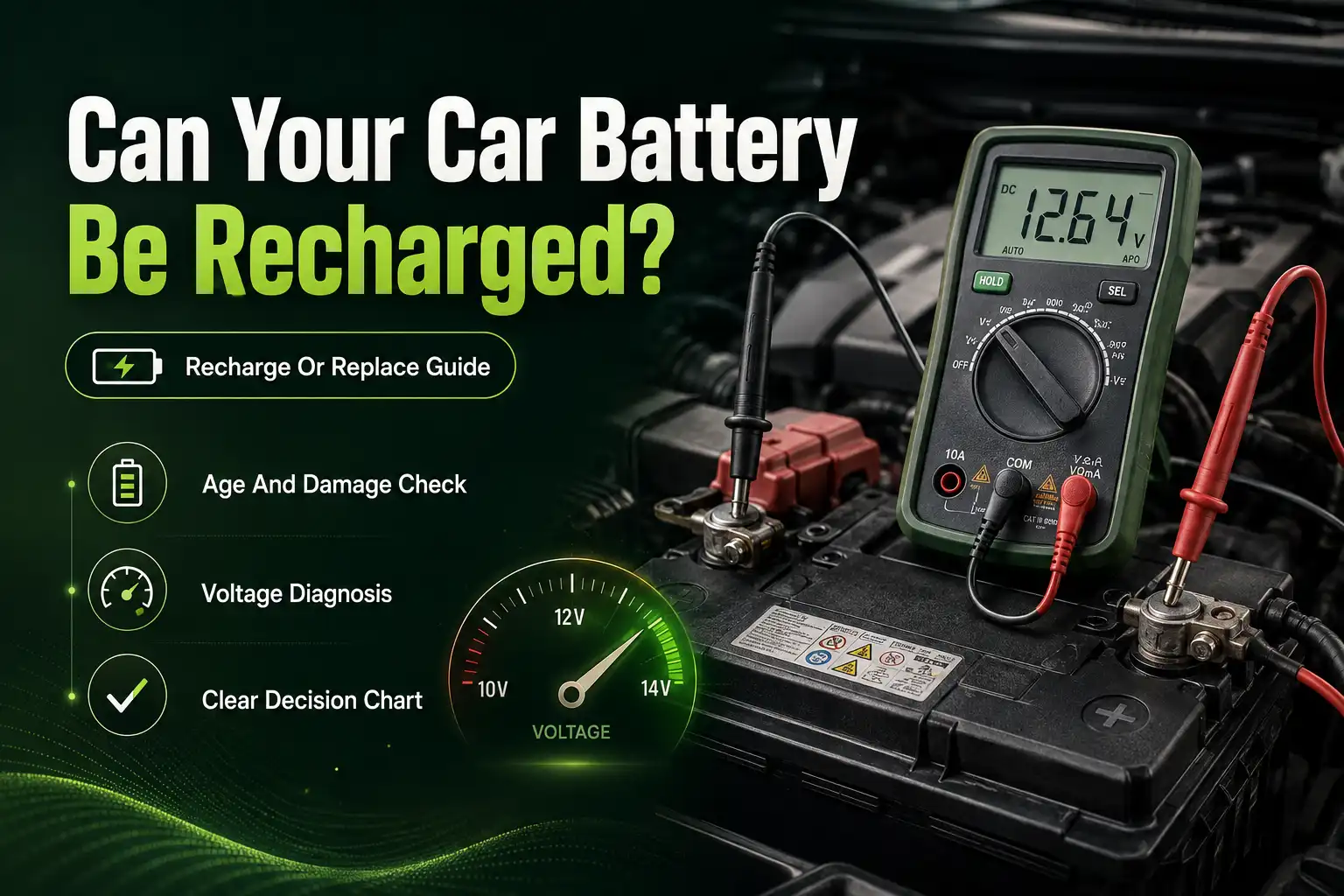
Listen Free for 30 DaysTest the resting voltage. With the engine off for at least an hour, a multimeter reading of 12.6 to 12.7V means a full charge. Readings between 12.0V and 12.4V mean the battery is discharged but likely recoverable. Anything consistently near 11.8V or below suggests deep discharge or possible internal damage. A battery voltage reference guide notes that a reading under 12.2V corresponds to roughly a 50 percent state of charge and calls for immediate charging to help prevent sulfation damage from setting in.
Charge it fully, then re-check the next day. If the voltage holds steady after a full charge and the battery starts the car normally, it was simply discharged. If the voltage drops back down within a day or two without any new drain on it, that points to a battery that can’t hold a charge anymore. This single test is often the clearest signal you’ll get without a professional load test.
Many auto parts stores also offer free battery testing with a load tester, which applies a heavy load while measuring voltage response. This gives a more definitive answer than a resting voltage reading alone and is worth doing if you’re still unsure after the checks above.
Common Recharging Misconceptions
- “A jump-start fully recharges the battery.” False. A jump-start only gives enough power to start the engine. The battery still needs a full charge cycle, either from a longer drive or a charger, to actually recover.
- “Idling the engine charges the battery quickly.” False. An idling engine produces far less alternator output than driving at normal speed, so it takes much longer to meaningfully recharge a weak battery, and idling alone often isn’t enough to fully restore one.
- “If it’s not charging, just leave it on the charger longer.” False past a certain point. A battery with hardened sulfation or internal cell damage won’t accept a full charge no matter how long it stays connected, and leaving it on a charger indefinitely doesn’t fix the underlying issue.
How To Actually Recharge It
Once you’ve confirmed recharging is worth attempting, there are two standard methods: connecting a dedicated battery charger, or jump-starting the car and then driving it to let the alternator finish the job. Both work, but they suit different situations depending on whether the car is drivable and how much time you have.
Our full guide to charging a car battery walks through the charger method step by step, including safety precautions and charge settings. This is generally the more reliable option when you have access to an outlet and aren’t in a rush.
If you’re relying on driving instead of a charger, our guide on how long to idle a car to charge the battery explains why idling alone usually isn’t enough and how much actual driving time you need to bring a weak battery back up properly.
Recharge Or Replace Quick Decision Chart
| Situation | Recharge Or Replace | Why |
|---|---|---|
| Lights left on overnight, battery under 3 years old | Recharge | Isolated, one-time drain on a young battery |
| Voltage holds after charging, no repeat failures | Recharge | Battery is accepting and retaining charge normally |
| 5 or more years old, died more than once recently | Replace | Age and repeat failures point to declining capacity |
| Cracked case, bulging, or leaking | Replace | Physical damage is a safety risk, not just a charge issue |
| Voltage drops again within a day or two after charging | Replace | Sign the battery can no longer hold a charge |
Car Battery Recharging FAQ
How many times can a car battery be recharged?
A healthy car battery goes through hundreds of charge cycles over its typical 3 to 5 year lifespan as the alternator tops it off during normal driving. There’s no fixed cycle limit for a one-time full recharge, but repeated deep discharges shorten a battery’s overall life faster than shallow, routine ones, since each deep discharge adds a bit more sulfation than a quick top-off would.
Can a completely dead battery be brought back?
Sometimes, if “dead” means deeply discharged rather than internally damaged. A battery reading near 0V or with a cracked case is unlikely to recover, but one that simply drained fully from an electrical drain can often still be recharged if it’s caught in time, before hardened sulfation has a chance to set in.
Does driving charge a battery faster than a charger?
A dedicated charger is generally more reliable for a full recharge, since it delivers a steady, controlled current regardless of engine speed. Driving works too, but the alternator’s output varies with RPM and electrical load, so it can take longer to fully restore a weak battery, particularly in stop-and-go city driving.
Audible Premium Plus — Annual Membership
12 audiobook credits up front, plus the full Audible catalogue.
See Annual PlansIs it safe to recharge an old battery?
Charging an older battery is generally safe as long as there’s no visible damage, but don’t expect the same results as charging a newer one. An aging battery may accept a charge and still fail to hold it for long, which is a sign to start planning for replacement rather than repeat charging, especially heading into cold weather when batteries are pushed hardest.
How do I know if charging worked?
Check the resting voltage a few hours after charging and again the next day. If it stays in the 12.6 to 12.7V range and the car starts normally, the charge worked. If the voltage has already dropped noticeably by the next check, the battery likely needs replacing rather than another charge cycle.
Most car batteries can be recharged, but age, discharge depth, and physical condition decide whether it’s actually worth the effort. Run through the checks above before spending an evening on a charger, and if your battery lands in the replace category, our best car battery for the money guide can help you choose a solid replacement without overspending.