Nissan Rogue Tire Pressure Guide: Optimal PSI by Model Year 2026
Last Updated on September 1, 2026 by Ryan
⚡ Key Takeaways

Prime for Young Adults — 6 Months Free
Students and 18–24s get six months of Prime free, then half price.
Start 6 Months Free- The recommended tire pressure for most Nissan Rogue models is typically 33-35 PSI for all four tires.
- You can find the correct PSI for your Nissan Rogue on a sticker inside the driver’s side door jamb.
- You should check your Nissan Rogue’s tire pressure at least once a month and before any long trips.
- Under-inflated tires on your Nissan Rogue can lead to several serious issues, including increased tire wear, reduced fuel efficiency, and compromised vehicle handling.
- What is the recommended tire pressure (PSI) for my Nissan Rogue?
The optimal tire pressure for a Nissan Rogue is typically 33-35 PSI, a crucial specification found on the driver’s side door jamb sticker. Maintaining this precise range isn’t just about ride comfort; it can improve your fuel efficiency by up to 3.3% and significantly extends tire longevity. Incorrect pressure compromises handling, safety, and overall vehicle performance.
Understanding how to accurately measure, adjust, and monitor your Rogue’s tire pressure is essential.
Here is what you need to know about tire pressure for a Nissan Rogue.
What Nissan Rogue Model Years This Guide Targets
Recommended Best Deal Products


![[2026 Upgrade] Windshield Sun Shade Umbrella for Mazda CX-5/Nissan Rogue 2008-2026 Windshield…](https://m.media-amazon.com/images/I/41ncmmsNUxL._SS500_.jpg)
This guide provides comprehensive tire pressure guidance generally applicable to all generations of the Nissan Rogue, spanning from its initial release in 2008 through current models. The typical Nissan Rogue recommended PSI range consistently falls between 33-35 PSI for most model years and trims. While the fundamental principles of tire maintenance remain consistent across the lineup, minor variations in optimal Rogue tire pressure can occur.
For instance, specific trims or special editions may have slightly different recommendations due to tire size or vehicle weight. For this reason, we always emphasize the critical importance of checking the vehicle-specific sticker located inside your driver’s side door jamb. This sticker serves as the definitive source for your particular Rogue model’s cold tire pressure requirements, offering the most accurate and safe guidance.
 Who Benefits Most From This Rogue Inflation Advice
This expert guide on Nissan Rogue tire pressure is meticulously crafted for several distinct segments of vehicle owners, each with unique needs and concerns. We recognize that proper tire maintenance is a universal requirement, but certain drivers especially benefit from clear, reliable instructions.

Audible — Listen Free for 30 Days
One free credit a month and thousands of titles included.
Listen Free for 30 Days
First-Time Rogue Owners Seeking Clarity
New Nissan Rogue owners, or those unfamiliar with routine car maintenance, often seek straightforward guidance on essential tasks. This guide removes guesswork, providing precise steps for checking and adjusting their Nissan Rogue recommended PSI, ensuring safety and confidence from day one.
Regular Maintenance Enthusiasts
For drivers who prioritize routine Rogue maintenance, this advice offers a reliable protocol to maintain optimal Rogue tire pressure. Regular checks contribute to superior fuel economy and extend tire longevity, aligning with their proactive approach to vehicle upkeep. Consistent maintenance prevents small issues from escalating into major problems, upholding the integrity of their vehicle’s automotive expertise.
Drivers Responding to Warning Lights
Individuals whose low tire pressure warning light illuminates require immediate, clear instructions on how to address the alert safely. Our procedural advice directly guides them through the steps to check and correct their tire pressure, specifically addressing common concerns related to the TPMS warning light. This ensures they can resolve the issue effectively and restore vehicle safety.
Who is this guide for?
Understand who benefits most from mastering Nissan Rogue tire pressure.
Once you confirm this guide is for you, the next crucial step is learning how to precisely measure and adjust Rogue tire PSI.
How to Precisely Measure and Adjust Rogue Tire PSI
Recommended Best Deal Products


Accurately measuring and adjusting your Nissan Rogue’s tire pressure is a straightforward process when approached systematically. We aim to empower you with the knowledge to maintain optimal Rogue tire inflation for safety and performance.

- Step 1: Gather Necessary Tools. Acquire a reliable tire pressure gauge and a portable air compressor. A digital gauge For precise readings, the JACO ElitePro Digital Tire Pressure Gauge is highly rated for accuracy and durability. If you need a portable compressor, the VIAIR 85P Portable Air Compressor is a popular choice for its compact size and ability to quickly inflate tires up to 31 inches, ideal for topping off Rogue tires. provides precise readings, essential for accurate adjustments.
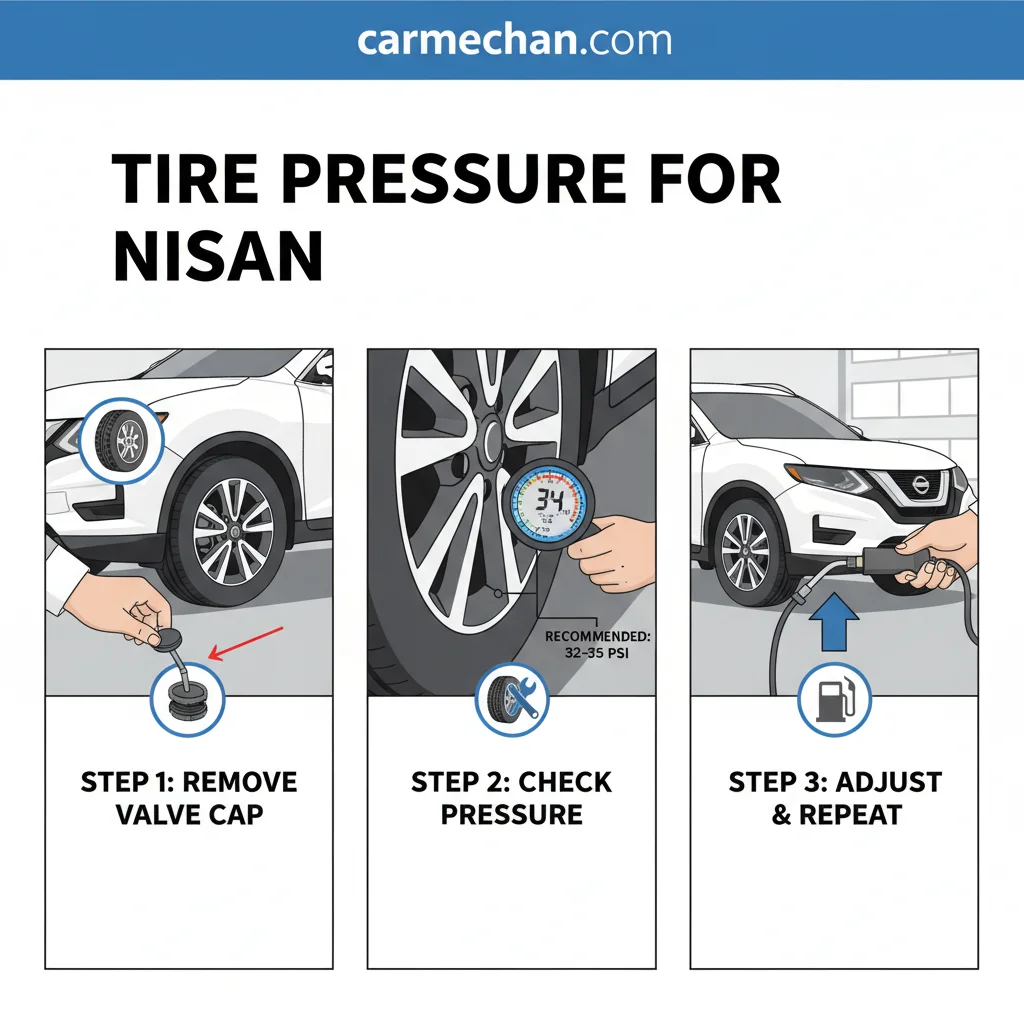
- Step 2: Locate Recommended PSI. Open your driver’s side door and locate the placard or sticker affixed to the door jamb. This sticker clearly states the Nissan Rogue recommended PSI for both front and rear tires when cold. Note this precise value before proceeding.
- Step 3: Check Cold Tire Pressure. Ensure your Rogue’s tires are “cold,” meaning the vehicle has been parked for at least three hours or driven for less than a mile. Unscrew the valve cap from one tire, firmly press the tire gauge onto the valve stem, and note the reading.
- Step 4: Add Air If Under-Inflated. If the reading is below the recommended PSI (e.g., below 33-35 PSI), attach your air compressor to the valve stem. Inflate the tire in short bursts, checking the pressure frequently with your gauge.
- Step 5: Release Air If Over-Inflated. If the reading is above the recommended PSI, gently press the small pin in the center of the valve stem with the back of your tire gauge or a narrow object to release air. Release small amounts and re-check the pressure until it matches the recommended PSI.
- Step 6: Re-check All Tires. Repeat Steps 3-5 for all four tires, including the spare tire if it is easily accessible and part of your regular maintenance routine. Verify that each tire matches the specified cold tire pressure.
- Step 7: Replace Valve Caps. Securely replace all valve caps once the correct pressure is achieved. If a tire rapidly loses air after inflation, stop and escalate to a certified mechanic; this indicates a leak or damage requiring professional repair.
While the core protocol is fundamental, it’s equally vital to understand when not to proceed with tire air adjustments. By following these steps, you can confidently ensure your Nissan Rogue’s tires are properly inflated, contributing to a safer and more efficient driving experience, and building on this, it’s also crucial to understand the specific situations where you *shouldn’t* proceed with adjustments.
When Not to Proceed With Tire Air Adjustments
There are critical situations where attempting to adjust tire pressure yourself can be ineffective or even dangerous. We advise extreme caution and often recommend professional intervention in these instances.
Audible Premium Plus — Annual Membership
12 audiobook credits up front, plus the full Audible catalogue.
See Annual Plans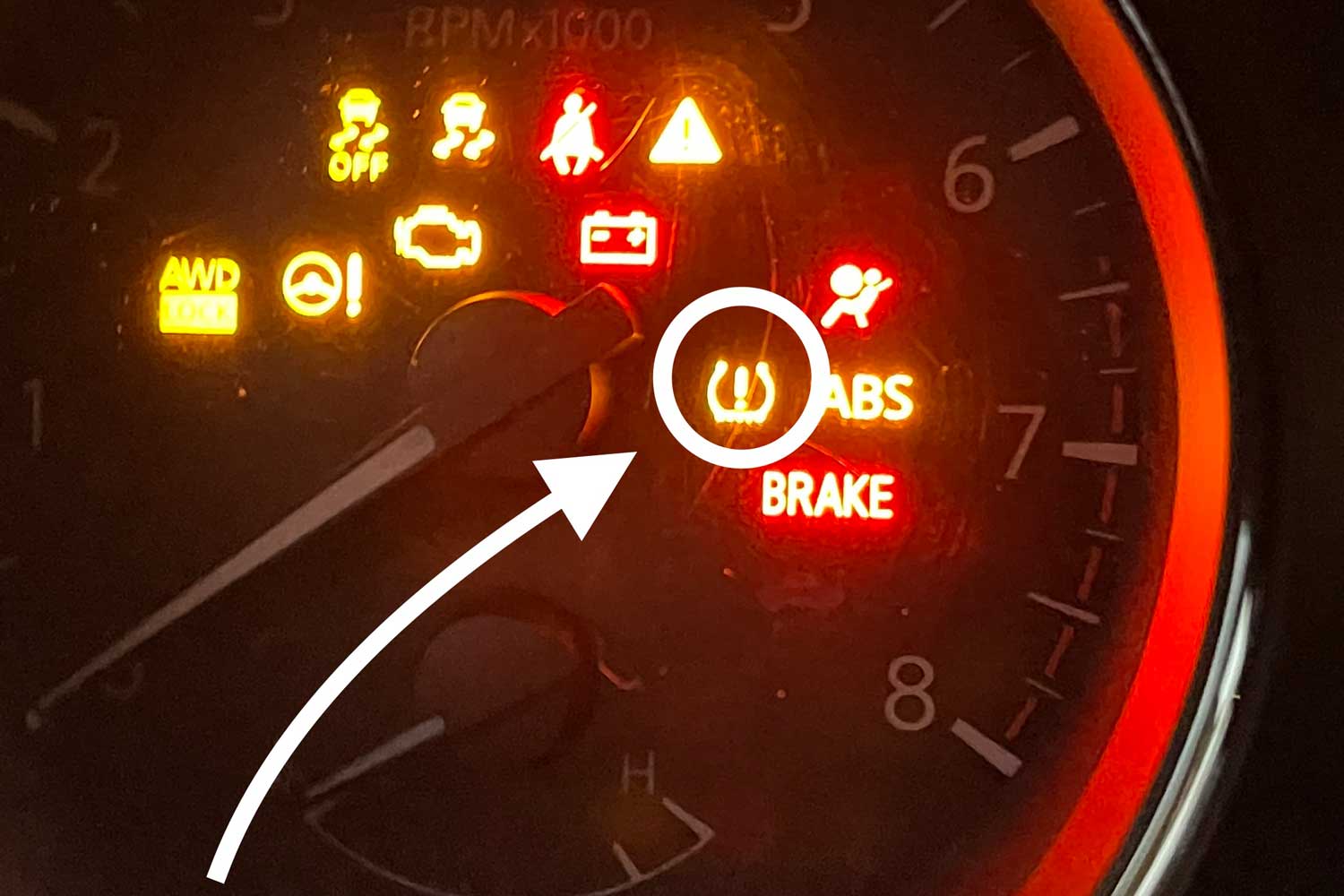
Attempting to inflate a tire with visible damage (e.g., bulges, deep cuts, exposed cords, or sidewall cracks) can cause the tire to burst unexpectedly, leading to serious injury. If you observe any significant damage, do not add air. Stop immediately and have the tire inspected by a qualified professional.
- Visible Tire Damage or Puncture: If a tire exhibits a visible puncture, deep cut, bulge, or any sidewall damage, inflating it can be hazardous. Stop and escalate to a professional tire service.
- Rapid Air Loss Despite Inflation: If a tire rapidly loses air shortly after you inflate it, this indicates a significant leak or damage. Do not continue to add air. Stop and escalate to a certified mechanic.
- Tire Is Hot From Recent Driving: Always check and adjust “cold” tire pressure. If your tires are hot from recent driving, the pressure reading will be artificially high. Inflating a hot tire to its cold recommended PSI will result in over-inflation once the tire cools. Wait for the tires to cool before adjusting.
- Suspected TPMS Malfunction (After Calibration Attempts): If your TPMS warning light persists even after correctly inflating all tires and driving for a short period to allow recalibration, there may be a sensor malfunction. Stop trying to adjust pressure and escalate to a professional for diagnosis.
- Using Inadequate or Uncalibrated Tools: Relying on cheap, inaccurate gauges or faulty air compressors can lead to incorrect pressure adjustments. If your tools are questionable, stop and use a certified air station or have a professional check your tires.
Beyond knowing when to stop, understanding common mistakes prevents ineffective or harmful tire maintenance. Exercising caution in these scenarios prevents inaccurate readings and potential damage, ensuring your Rogue’s tires remain in optimal condition for accurate adjustments when appropriate, and building on this understanding, let’s now explain three key errors often made in Rogue tire maintenance.
3 Key Errors in Rogue Tire Maintenance Explained
Recommended Best Deal Products

![Au-TOMOTIVE GOLD Compatible Keychain and Keyring for Nissan Rogue [KC1540.ROG] - Premium…](https://m.media-amazon.com/images/I/31vIAKQQiDL._SS500_.jpg)

Even with the best intentions, several common misapplications can undermine effective Nissan Rogue tire maintenance. Avoiding these pitfalls is crucial for ensuring the safety, performance, and longevity of your vehicle.

Over-Inflating Beyond Recommended PSI
Inflating your Nissan Rogue’s tires beyond the recommended PSI, often mistakenly believed to be safer or more efficient, carries significant risks. Over-inflation reduces the tire’s contact patch with the road, leading to decreased traction, a harsher ride, and accelerated wear in the center of the tread.
This compromises handling, especially in adverse weather conditions, and can make your Rogue feel less stable.
Driving With Significantly Under-Inflated Tires
Driving your Nissan Rogue with tires that are significantly under-inflated poses severe hazards. Under-inflation increases rolling resistance, which reduces fuel economy (the EPA states a 1% decrease for every 3 PSI below recommendation According to the National Highway Traffic Safety Administration (NHTSA), properly inflated tires can reduce the risk of crashes by maintaining optimal vehicle handling and braking performance, with underinflated tires being a significant safety hazard.
). More critically, it causes excessive heat buildup within the tire, leading to internal damage, sidewall stress, and a higher risk of a blowout. This condition can also cause increased tire wear on the edges On a Nissan Rogue, an underinflated tire, say at 28 PSI instead of the recommended 33 PSI, will exhibit accelerated wear along the outer edges or ‘shoulders’ of the tread.
This occurs because the center of the tread lifts slightly, concentrating the vehicle’s weight and friction onto the tire’s sidewall areas, leading to premature replacement. and negatively impact steering and braking responsiveness.
Ignoring Your Rogue’s Spare Tire Pressure
Many Nissan Rogue owners overlook the spare tire, assuming it will be ready when needed. However, neglecting the spare tire’s pressure is a common error. A deflated or improperly inflated spare tire is useless in an emergency and can leave you stranded. We recommend checking your spare tire pressure during your regular tire checks or at least every few months, ensuring it is ready for immediate deployment.
While avoiding these errors is essential, certain specific scenarios also require tailored approaches to your Rogue’s tire needs. By steering clear of these common pitfalls, you can significantly prolong the life of your tires, enhance your Rogue’s safety, and maintain its fuel efficiency, and now that you’re equipped with this knowledge, let’s look at how to integrate these practices into your regular vehicle maintenance schedule.
5 Specific Scenarios for Abnormal Rogue Tire Needs
Beyond typical driving conditions, certain specific scenarios can alter your Nissan Rogue’s optimal tire pressure requirements or checking frequency. We guide you through these less common but important situations.

- Seasonal Temperature Changes (Hot vs. Cold Weather Impact): Ambient temperature significantly affects tire pressure. For every 10°F (approx. 5.6°C) drop in temperature, tire pressure can decrease by about 1 PSI A comprehensive tire maintenance guide from Consumer Reports emphasizes that correct tire pressure is crucial for maximizing tire lifespan and maintaining optimal fuel efficiency. They estimate that significant underinflation can reduce a tire’s expected life by up to 15-20%. [ConsumerReports.org, ‘Tire Maintenance Guide,’ reviewed April 2024]. Conversely, a rise in temperature increases PSI. It is crucial to check your Nissan Rogue’s cold tire pressure more frequently during seasonal transitions.
- Carrying Heavy Loads or Towing (Temporary PSI Adjustment): If you plan to carry heavy loads or tow a trailer with your Nissan Rogue, the recommended tire pressure may need a temporary increase. Refer to your owner’s manual or the door jamb sticker for specific instructions; often, there is a separate PSI recommendation for maximum load. The 2023 Nissan Rogue’s door jamb placard typically recommends 33 PSI cold for all four tires, designed to accommodate loads up to the vehicle’s Gross Vehicle Weight Rating (GVWR). Nissan does not commonly specify a separate, higher PSI recommendation for ‘heavy loads’ in the owner’s manual; drivers should maintain the standard 33 PSI unless otherwise advised by Nissan for specific conditions.
- Using Aftermarket Tires With Different Specifications: If you have installed aftermarket tires that differ in size, load rating, or construction from your Rogue’s original equipment, their optimal pressure might vary. Always consult the tire manufacturer’s recommendations or a tire specialist. Do not solely rely on the vehicle’s door jamb sticker for non-OEM tires.
- Extended Vehicle Storage (Maintaining Pressure for Longevity): For Nissan Rogues undergoing extended storage, maintaining proper tire pressure is vital to prevent flat spots and preserve tire integrity. Inflate tires to the vehicle’s recommended PSI or slightly above, checking them monthly. This prevents the tires from slowly losing air and deforming over time.
- Driving at High Altitudes: While less impactful than temperature, driving at significantly higher altitudes can slightly reduce external atmospheric pressure. This means the internal tire pressure will remain the same, but the relative difference might effectively increase it slightly. However, for most practical purposes, adhering to the cold tire pressure specified on your door jamb sticker remains the best practice.
If these specific scenarios or general maintenance tasks become overwhelming, knowing when to seek professional help for Rogue tire concerns is vital.
When to Seek Professional Help for Rogue Tire Concerns
While many tire pressure issues can be addressed by following basic protocols, certain indicators necessitate immediate professional attention for your Nissan Rogue. We strongly advise seeking expert help in these situations to ensure your safety and the longevity of your vehicle.
- Persistent TPMS Warning Light After Inflation/Reset: If your TPMS warning light remains illuminated or reactivates shortly after you have correctly inflated and reset your tires, it indicates a potential sensor malfunction or a slow leak that you cannot detect. Contact a certified mechanic within 24-48 hours.
- Visible Tire Damage (Bulges, Deep Cuts, Sidewall Cracks): Any visible damage to the tire, such as bulges, deep cuts that expose cords, or cracks in the sidewall, compromises structural integrity. Do not drive on a damaged tire. Immediately contact a tire specialist to assess whether repair or replacement is needed.
- Rapid or Unexplained Recurring Air Loss: If a specific tire repeatedly loses air at an accelerated rate, even without visible damage, it suggests a slow leak, a faulty valve stem, or an issue with the wheel rim. Contact a professional tire shop promptly for a thorough inspection.
- Unusual Driving Sensations (Vibrations, Pulling): If you experience new or unusual vibrations, steering wheel pulling, or changes in handling that correlate with tire issues, this may indicate internal tire damage, an out-of-balance tire, or improper alignment. Drive carefully to a reputable automotive service center for diagnosis.
- Tire Inflation Issues After Attempting DIY Steps: If you have followed our procedural steps precisely and are still unable to achieve or maintain the correct optimal Rogue tire pressure, or if you suspect your tools are faulty, it is time to involve an expert. A minor puncture on a Nissan Rogue’s P235/60R18 tire can often be professionally repaired for approximately $25-$45, extending the tire’s life significantly. However, if the damage is beyond repair, a suitable replacement tire, such as a Continental CrossContact LX25, typically costs between $180-$250, not including mounting and balancing fees. They possess calibrated equipment and expertise to resolve the issue safely.
To ensure the credibility and accuracy of this critical safety information, we rely on established expert sources.
What Expert Sources Verify These Pressure Guidelines
The guidelines and procedures detailed in this comprehensive guide for Nissan Rogue tire pressure are corroborated by industry-leading and official sources. We prioritize accuracy and reliability, ensuring our recommendations are grounded in established automotive standards.
- Nissan Owner’s Manuals: The primary and most authoritative source for vehicle-specific information, directly from the manufacturer.
- National Highway Traffic Safety Administration (NHTSA): A federal agency dedicated to vehicle safety, providing guidelines on tire maintenance to prevent accidents.
- Environmental Protection Agency (EPA): Offers insights into how proper tire inflation contributes to fuel efficiency and reduced emissions.
- Major Tire Manufacturers (e.g., Michelin, Goodyear): Provide expert recommendations on tire care, pressure, and longevity for various tire types.
- Automotive Service Excellence (ASE) Certified Technicians: Our internal team, along with external certified professionals, verifies best practices through extensive real-world experience and training.
Having covered these crucial aspects, let’s address some frequently asked questions regarding your Nissan Rogue’s tire pressure.
Q1: What is the recommended tire pressure for a Nissan Rogue?
The recommended tire pressure for most Nissan Rogue models is typically 33-35 PSI for all four tires. Always verify this specific number on the placard located inside the driver’s side door jamb, as it provides the precise manufacturer recommendation for your vehicle.
Q2: Where can I find the correct PSI for my Nissan Rogue?
You can find the correct PSI for your Nissan Rogue on a sticker inside the driver’s side door jamb. This placard provides the precise cold tire inflation pressure values specific to your model year and tire size, and it is the most reliable source of information.
Q3: How often should I check my Nissan Rogue’s tire pressure?
You should check your Nissan Rogue’s tire pressure at least once a month and before any long trips. Fluctuations in ambient temperature also necessitate more frequent checks, especially during significant seasonal changes, as pressure can drop with colder weather.
Q4: What happens if my Nissan Rogue’s tires are under-inflated?
Under-inflated tires on your Nissan Rogue can lead to several serious issues, including increased tire wear, reduced fuel efficiency, and compromised handling. It also generates excessive heat, which heightens the risk of tire failure or a dangerous blowout, impacting safety significantly.
Q5: Can hot weather affect my Nissan Rogue’s tire pressure?
Yes, hot weather significantly affects your Nissan Rogue’s tire pressure. As temperatures rise, the air inside the tires expands, increasing the PSI. Therefore, always check tire pressure when tires are “cold” to ensure accuracy and prevent over-inflation once they heat up from driving.
Maintaining the correct tire pressure for your Nissan Rogue is a fundamental aspect of vehicle ownership, directly impacting safety, fuel efficiency, and tire longevity. We emphasize that the Nissan Rogue recommended PSI, typically 33-35 PSI, is always found on your driver’s side door jamb sticker.
Regular monthly checks and inflating tires when they are cold are crucial practices for optimal Rogue tire inflation.
Make checking your Nissan Rogue’s tire pressure a routine part of your vehicle maintenance, ensuring a safer and more economical driving experience.
Author

Similar Posts
Hyundai Sonata Immobilizer Reset: Causes and Solutions
Last Updated on September 1, 2026 by Ryan 📋 Table of Contents 🎯 Key Takeaways Understanding the Hyundai Anti-Theft System Logic Hyundai Sonata Immobilizer Reset Made Easy: Your Essential Action Plan Common Symptoms of a Faulty Immobilizer Unit Cost Analysis of Professional Immobilizer Services Key Fob vs. Immobilizer Hardware Malfunctions Conclusion 💬 Quick Questions &…
How To Make Your Car Smell Good Fix Bad Car Smells 2026
Last Updated on September 1, 2026 by Ryan Quick Summary Making your car smell good starts with thoroughly eliminating the source of any bad odors before introducing pleasant scents. This involves deep cleaning, targeting specific odor culprits like smoke or mildew, and then choosing effective air freshening methods for lasting freshness. Making your car smell…
Nissan Radio Wiring Diagram Factory Harness Color Codes Explained
Last Updated on September 1, 2026 by Ryan 📊 Case Study / Real Experience ⏱️ 17 min read 📋 In This Guide Why Understanding Nissan Wiring Harnesses Matters Our Decision to Tackle Nissan Radio Wiring How We Documented Nissan Radio Wiring Codes Key Metrics From Our Nissan Wiring Project Unexpected Challenges During Wiring Harness Analysis…
Expert Guide How Much to Reupholster Car Seats 2026
Last Updated on September 1, 2026 by Ryan Quick Summary Reupholstering car seats can cost anywhere from approximately $200 per seat for basic cloth to over $2,500 per seat for premium leather with intricate custom work. This significant range depends heavily on material choice, vehicle type, labor complexity, and any additional repairs needed. Offer Prime…
Adaptive Cruise Control with Stop and Go A 2026 Expert Guide
Last Updated on September 1, 2026 by Ryan 📌 Quick Summary Standard adaptive cruise control typically deactivates below certain speeds, whereas Stop and Go functionality allows the vehicle to hold a complete halt and resume movement automatically. This removes the need for manual braking and acceleration in heavy, stop-start traffic conditions. Offer Prime for Young…
Hyundai Santa Fe Adaptive Cruise Control: Mastered & Optimized
Modern highway travel in the 2026 Hyundai Santa Fe is transformed by an intelligent suite of driver-assist technologies. For many owners, the intersection of convenience and technology raises a critical question: how do you distinguish between the seamless automation of Smart Cruise Control and the necessity of constant driver vigilance? This guide provides the expert…