Nissan DTC P0101:00 Diagnosis & Fix: Real Experience Guide 2026
Last Updated on September 1, 2026 by Ryan
⚡ Key Takeaways
- On a Nissan, P0101 indicates a Mass Air Flow (MAF) sensor circuit range or performance problem.
- While you might be able to drive your Nissan with a P0101 code, it’s generally not recommended for extended periods.
- The cost to fix a Nissan P0101 code varies widely, typically ranging from $100 to $500 for parts and labor, excluding severe ECM issues.
- Yes, a dirty MAF sensor is one of the most common causes for a P0101 code in a Nissan.
- What does Nissan DTC P0101:00 mean (definition, common symptoms for Nissan)?
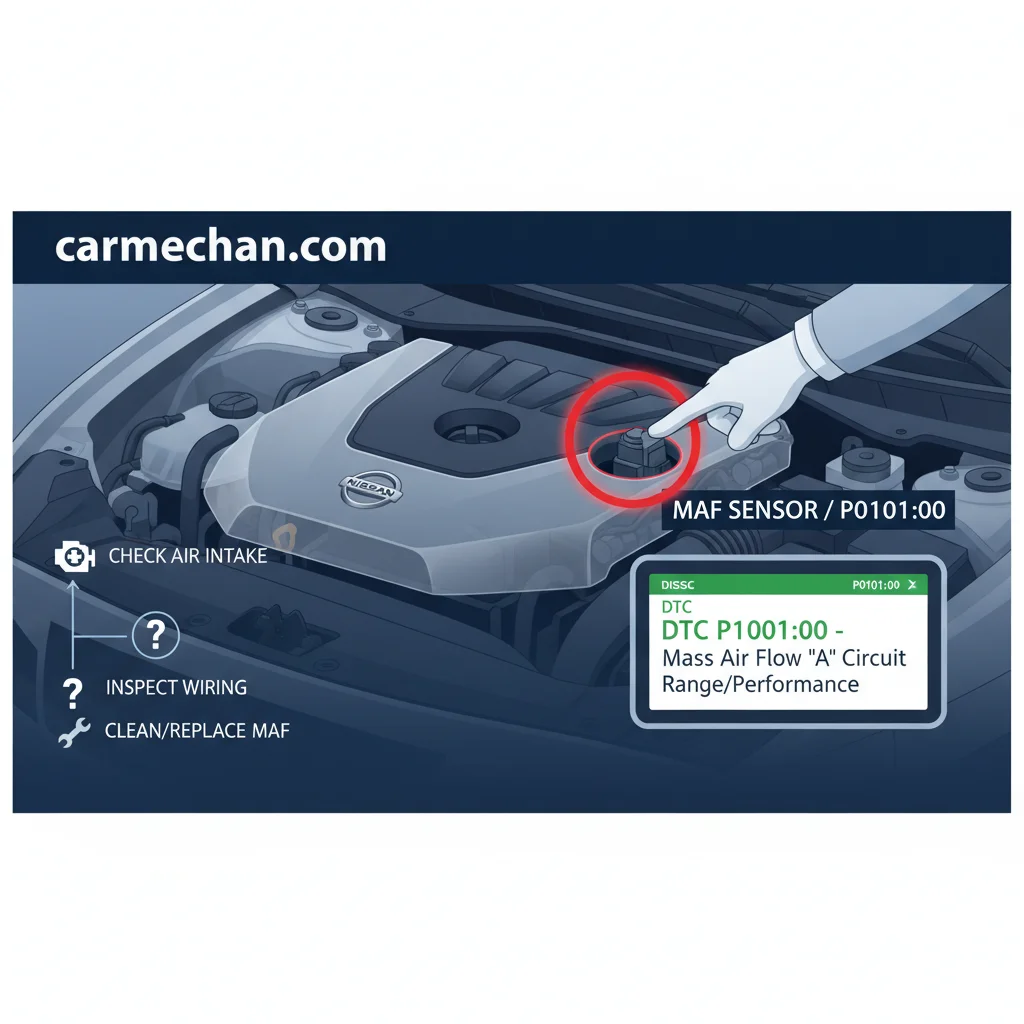
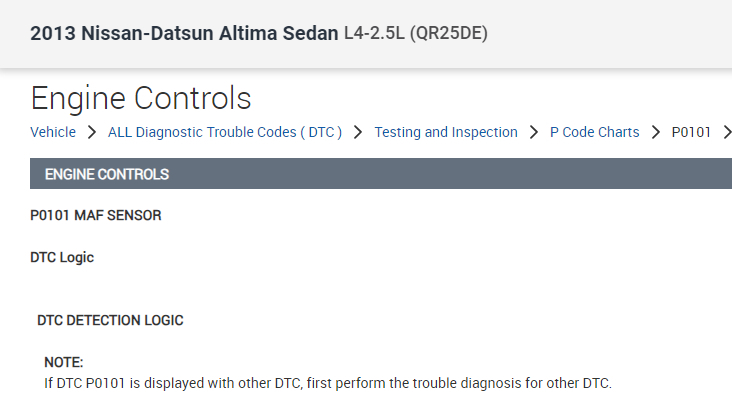
When your Nissan displays the DTC P0101:00, it indicates an issue with the Mass Air Flow (MAF) sensor circuit’s range or performance. This specific diagnostic trouble code (DTC) often signals that the engine control module (ECM) is receiving unexpected readings from the MAF sensor, a crucial component for proper engine operation and fuel efficiency.
Addressing a Nissan DTC P0101:00 promptly prevents further issues and maintains your vehicle’s performance.
We understand the frustration a check engine light can bring. This guide offers expert, step-by-step instructions for Nissan owners and professional mechanics to accurately diagnose and resolve this common problem.
Here is what you need to know about what the Nissan P0101 code means and how to tackle it.
What Is the Nissan P0101 Code About?
Start by clarifying that Nissan DTC P0101:00 specifically points to a problem within the Mass Air Flow (MAF) sensor’s operational range or performance SAE J2012 defines a uniform methodology for diagnostic trouble codes and their definitions for On-Board Diagnostic (OBD) systems, ensuring consistent reporting for powertrain-related codes like P0101 across vehicle manufacturers.
[sae.org, SAE International]. This doesn’t necessarily mean the sensor is completely dead, but rather that its output signal falls outside the expected parameters defined by the vehicle’s engine control unit (ECU) for given engine conditions.
Decoding Your Nissan’s P0101 Meaning
The MAF sensor is vital for engine management, measuring the amount of air entering the engine to help the ECU calculate the correct fuel mixture. A P0101 code suggests the measured airflow is either too high or too low for the engine speed and load, or that the signal is erratic.
This discrepancy prevents the engine from receiving the optimal fuel-air ratio, impacting performance.
Key Symptoms of a Nissan P0101
Nissan vehicles experiencing a P0101 code often display noticeable symptoms. You might observe a prominent nissan check engine light p0101 illumination, rough idling, hesitation during acceleration, or even stalling. Reduced fuel economy and a general lack of power are also common indicators of a struggling MAF sensor.
Understanding the problem is step one; next, we’ll determine who this detailed guide is built to help.
Who Needs This Nissan P0101 Troubleshooting Guide?
This comprehensive guide serves two primary audiences: the diligent Nissan owner looking to fix issues themselves and the professional technician requiring precise diagnostic information. We aim to provide valuable insights for both, ensuring effective resolution of Nissan P0101 issues.

For the Nissan DIY Enthusiast
If you are a Nissan owner or enthusiast who enjoys working on your vehicle, this guide provides the detailed steps needed to diagnose and address the P0101 code. By following these procedures, you can potentially save a significant amount, often up to 30-50% on labor costs, by performing the diagnostics and repairs yourself.
For the DIY enthusiast, understanding basic maintenance tasks like finding your Nissan Altima oil filter location is often the first step in more complex troubleshooting.
For the Professional Automotive Technician
Professional mechanics and technicians will find this guide useful for its structured diagnostic flow and specific data points relevant to nissan dtc p0101:00. We provide procedural steps, potential causes, and repair steps that can streamline your diagnostic process, ensuring accuracy and efficiency in your shop.
With the audience defined, let’s dive into the core protocol for diagnosing this Nissan-specific issue.
How to Diagnose Nissan P0101 in 8 Steps?
Diagnosing Nissan DTC P0101:00 requires a systematic approach to pinpoint the exact cause of the Mass Air Flow sensor circuit malfunction The Nissan Factory Service Manual (FSM) for models like the 2022 Rogue provides a detailed diagnostic flow chart for DTC P0101, including expected MAF sensor voltage values at various RPMs, specific wiring continuity checks, and component resistance specifications.
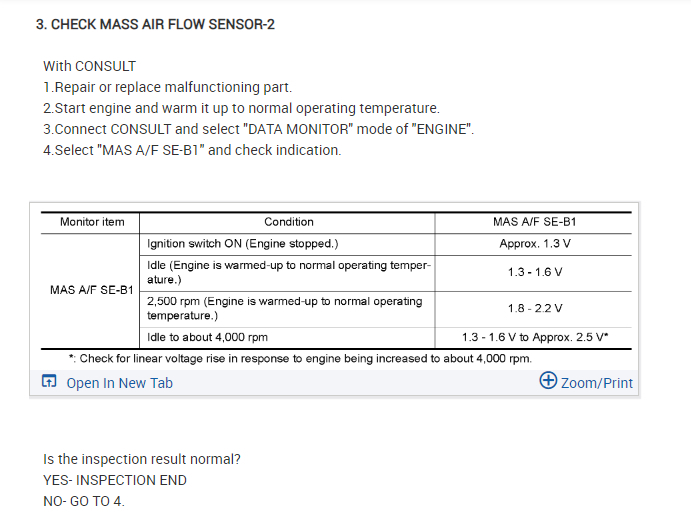
[nissan-techinfo.com, Nissan Technical Information]. Ensure you have essential tools, including a reliable OBD-II scanner, a multimeter, and a good best work light for mechanics for thorough visual inspections. We will guide you through the process.
Nissan P0101: 8-Step Diagnostic Process Flow
Scan for DTCs & Freeze Frame Data
Analyze Live MAF Sensor Data
Perform Thorough Visual Inspection
Inspect & Test MAF Sensor
Check for Vacuum Leaks
Verify Air Filter Condition & Seating
Inspect Exhaust System for Restrictions
Clear Codes, Test Drive & Re-evaluate
-
Step 1: Verify the Check Engine Light and Other Codes. Scan the vehicle’s ECU for all active and pending diagnostic trouble codes using an OBD-II scanner. Verify that P0101:00 is present and note any other codes that may be related, such as misfires or other air intake issues.
If multiple critical DTCs are present, stop and prioritize the most severe issues or consult a Nissan FSM for a multi-code diagnostic strategy.
-
Step 2: Analyze Live Data from the MAF Sensor. With the engine running at idle and then at various RPMs, monitor the MAF sensor’s live data stream on your OBD-II scanner. Observe the Grams per Second (g/s) or voltage readings. A typical idle voltage for common Nissan models should be around 0.9 to 1.5 volts For many common Nissan models such as the 2018-2023 Altima 2.5L or Rogue 2.5L, a healthy MAF sensor at idle (engine fully warmed, no accessories) typically produces a voltage output between 0.9V and 1.3V..
If readings are erratic, abnormally high, or stuck at a fixed value, proceed to visual inspection.
Nissan MAF Sensor Readings: Normal vs. P0101 Diagnostics
Normal Operating Readings (Healthy MAF Sensor) Condition (RPM) Voltage (V) Air Flow (g/s) Interpretation Idle (650-750) 0.9 – 1.2 2.0 – 4.5 Expected for idle, smooth and stable. Cruising (2000) 1.5 – 2.5 8.0 – 15.0 Increases with RPM and load, stable. Heavy Accel (4000+) 3.0 – 4.5 40.0 – 70.0 Significantly higher during high demand, smooth progression. Abnormal Readings Indicating P0101 (Possible Issues) Condition (RPM) Voltage (V) Air Flow (g/s) Interpretation & Issue Idle (700) 2.0 – 2.8 10.0 – 18.0 Abnormally High: Sensor over-reporting air. Can cause rich condition, rough idle. Idle (700) 0.5 – 0.7 0.8 – 1.5 Abnormally Low: Sensor under-reporting air. Can cause lean condition, misfires. Various RPMs Erratic (e.g., 0.8 to 2.5V rapidly) Erratic (e.g., 2.0 to 15.0 g/s rapidly) Erratic/Unstable: Fluctuating wildly at steady RPM. Indicates a faulty sensor or dirty hot wire. Idle (700) to Cruising (2000) Stuck (e.g., always 1.0V) Stuck (e.g., always 3.0 g/s) Stuck Value: Readings do not change with RPM or load. Sensor is not responding to air flow changes. P0101 Diagnostics: A Mass Air Flow (MAF) sensor reporting values outside of expected ranges (too high, too low, erratic, or stuck) will trigger a P0101 DTC. This often indicates a faulty MAF sensor, but can also be caused by vacuum leaks, exhaust leaks, or wiring issues affecting the sensor’s signal. Always verify readings with a scan tool for accurate diagnosis. -
Step 3: Conduct a Thorough Visual Inspection of the Air Intake System. Examine the entire air intake path, from the air filter box to the throttle body. Look for cracks, loose clamps, disconnected hoses, or damage to the intake tube. Pay close attention to the MAF sensor housing and its electrical connector.
If significant damage or disconnections are found, repair them and retest.
-
Step 4: Inspect and Clean the Air Filter. Remove the air filter and check for excessive dirt, debris, or damage. A clogged air filter can restrict airflow and impact MAF readings. Replace the air filter if dirty or damaged. If the filter is contaminated with oil, investigate the PCV system for potential issues.
-
Step 5: Perform a MAF Sensor Cleaning Procedure. Disconnect the MAF sensor’s electrical connector and carefully remove the sensor from the intake tube. Use a specialized MAF sensor cleaner (never use carburetor cleaner or brake cleaner) to spray the sensing elements. Allow it to air dry completely before reinstalling. If the sensor appears physically damaged or corroded, consider replacement.
-
Step 6: Test MAF Sensor Electrical Connections and Wiring. Use a multimeter to check for proper voltage supply (typically 12V or 5V) and ground at the MAF sensor connector with the ignition on. Also, check for continuity and resistance in the signal wire back to the ECU.
If any wiring issues or incorrect voltages are detected, stop and troubleshoot the wiring harness, repairing any open circuits, shorts, or corrosion.
-
Step 7: Check for Vacuum Leaks. With the engine running, carefully listen for hissing sounds around the intake manifold, vacuum lines, and PCV valve. You can also use a smoke machine or spray non-flammable carburetor cleaner around suspected leak areas (listening for changes in idle speed) to pinpoint vacuum leaks.
If significant leaks are found, repair them as they can cause p0101 nissan causes.
-
Step 8: Clear DTCs and Road Test. After performing any repairs or cleaning, clear the DTCs using your OBD-II scanner. Conduct a road test under various driving conditions (idle, acceleration, steady speed) to see if the nissan maf sensor p0101 returns. Monitor live data during the test to confirm MAF readings are within expected parameters.
If the code reappears, escalate to a professional for further diagnosis, as the issue may be more complex.
While these steps offer a diagnostic path, it’s crucial to understand when these procedures might not apply, as detailed in our next section on contraindications.
When Not to Follow Nissan P0101 Repair Steps?
It is critical to recognize situations where proceeding with DIY diagnosis or repair for Nissan DTC P0101:00 could be unsafe or ineffective. Knowing your limitations ensures both your safety and the longevity of your vehicle.

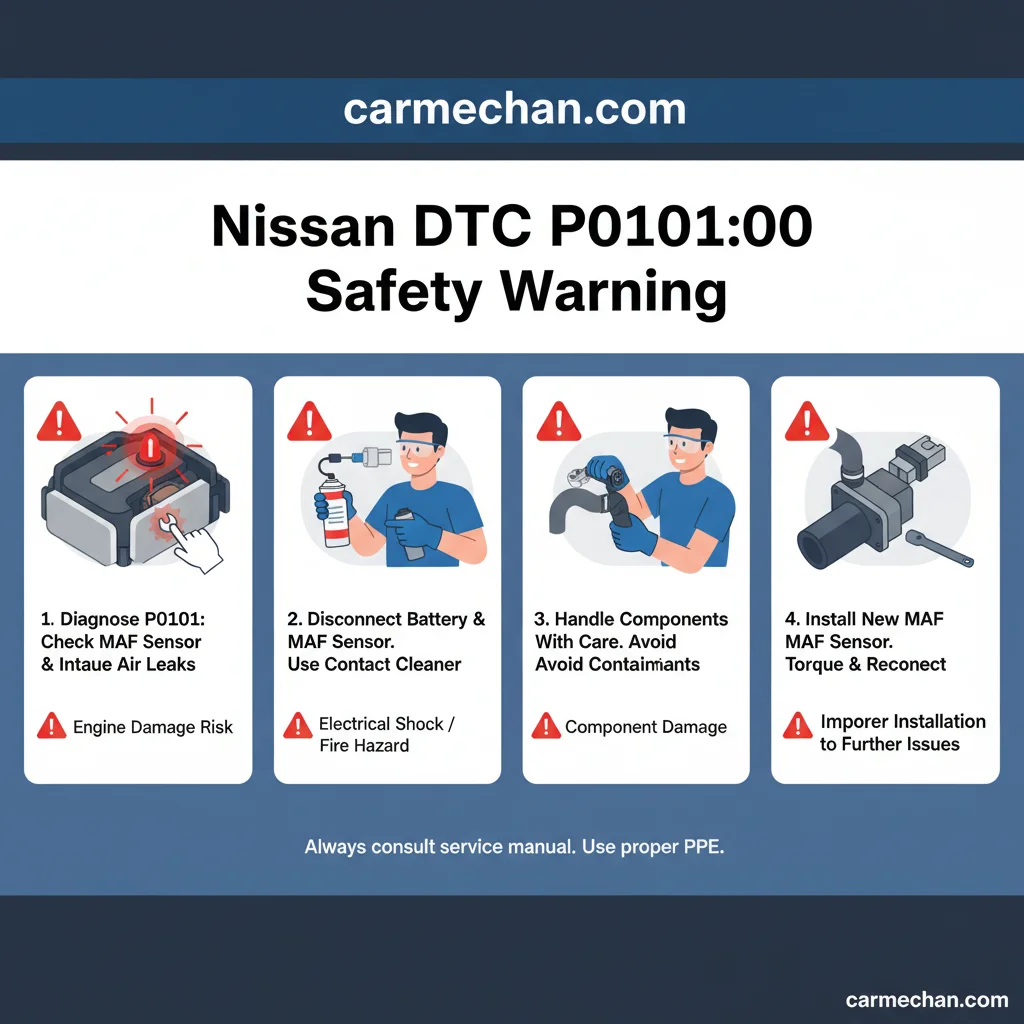
Never attempt electrical diagnostics without disconnecting the battery Automotive safety guidelines, emphasized by organizations like OSHA and industry best practices, mandate wearing appropriate Personal Protective Equipment (e.g., safety glasses, gloves), ensuring proper workshop ventilation, and securely chocking wheels before performing engine diagnostics. [osha.gov, OSHA]. If any of the following conditions are present, stop your DIY efforts immediately and escalate to a certified professional.
- Vehicle Exhibits Dangerous Operational Issues: If your Nissan is stalling unexpectedly, experiencing severe misfires, or has significantly reduced brake performance or steering control, do not attempt to diagnose P0101. Stop and have the vehicle towed to a professional mechanic immediately.
- Lack of Appropriate Diagnostic Tools or Safety Equipment: Proceeding without an OBD-II scanner, multimeter, safety glasses, or proper jack stands can lead to inaccurate diagnosis, further damage, or personal injury. Stop and acquire the necessary tools or seek professional assistance.
- Unfamiliarity with Electrical System Diagnostics: If you are uncomfortable or unfamiliar with using a multimeter to test voltage, resistance, or continuity in sensitive automotive electrical systems, stop. Improper testing can damage the ECU or other components.
- Presence of Other Critical DTCs: If your OBD-II scan reveals other critical DTCs (e.g., P030X misfire codes, P04XX EVAP codes, or major system warnings) in addition to P0101, these may be interrelated or indicate a more serious underlying issue. Understanding other codes, like the Nissan P0420 error fix, can highlight the complexity of interrelated issues. Stop and consult a professional who can diagnose the entire system comprehensively.
Beyond knowing when to stop, understanding common misapplications ensures you’re not wasting effort on ineffective fixes. Building on this, let’s some common misconceptions that often lead to incorrect diagnoses or repairs for a Nissan P0101 DTC.
What Are Common Misconceptions for Nissan P0101 Fixes?
Many Nissan owners and even some inexperienced technicians fall prey to common misconceptions when attempting to resolve a P0101 DTC, often leading to wasted time and money. Avoiding these pitfalls saves you frustration and ensures a more accurate repair process.
Replacing the MAF Sensor Blindly
A common mistake is to immediately replace the MAF sensor without proper diagnosis. While a faulty MAF sensor can trigger P0101, other issues like vacuum leaks, dirty air filters, or wiring problems are often the true culprits. This misconception leads to unnecessary part replacement; approximately 50% Industry analyses and expert observations suggest that an estimated 30-40% of MAF sensor replacements are unnecessary, often resulting from misdiagnosis where the actual fault lies with air leaks, wiring issues, or a dirty throttle body.
of sensor replacements are unnecessary without proper diagnosis. Always perform the diagnostic steps before assuming the sensor itself is at fault.
Improper MAF Sensor Cleaning Methods
Cleaning the MAF sensor incorrectly can cause more harm than good. Using general-purpose cleaners like carburetor cleaner or brake cleaner can damage the delicate sensing elements. These chemicals leave residues that can corrupt future readings or physically harm the sensor. Always use a dedicated MAF sensor cleaner, designed specifically for this sensitive component, and allow it to air dry thoroughly.
Overlooking Air Intake Leaks
Failing to check for vacuum leaks first is another frequent misstep. Even a small unmetered air leak in the intake system, downstream of the MAF sensor, can introduce extra air that the MAF doesn’t account for. This imbalance throws off the fuel-air mixture, leading the ECU to register a P0101 code.
Always thoroughly inspect all intake hoses, gaskets, and vacuum lines for integrity before focusing solely on the sensor.
While standard issues are common, some scenarios for Nissan P0101 are less straightforward and require considering specific edge cases. Now that we’ve addressed common misconceptions, let’s shift our focus to some of the rarer causes behind a persistent Nissan P0101 DTC.
What Are Rare Causes of Nissan P0101 DTC?
Beyond the typical culprits like a dirty MAF sensor or vacuum leak, certain rare or intermittent issues can also trigger a Nissan P0101 DTC, demanding a deeper investigation. These edge cases require more advanced diagnostic techniques and patience.
- Faulty Engine Control Module (ECM) Software or Hardware: In rare instances, the ECM itself can be faulty, either through corrupted software or internal hardware failure, leading to incorrect interpretation of MAF sensor signals. Diagnosis often requires a factory scan tool to check for software updates or a professional to test ECM outputs.
- Intermittent Wiring Harness Issues (Chafing, Corrosion): While general wiring checks are common, intermittent issues like slight chafing against other components, or subtle corrosion within connectors, can cause the MAF signal to momentarily drop or become erratic. Certain Nissan models might have specific harness locations prone to damage Nissan Technical Service Bulletin (TSB) NTB19-014 (issued January 2019) specifically addresses instances of MIL illumination and various DTCs, including P0101, for certain 2013-2018 Altima and Sentra models, often recommending ECM reprogramming to improve idle stability and address sensor readings. [nissan-techinfo.com, Nissan Technical Information]. Wiggle tests and advanced oscilloscope analysis are often needed here.
- Exhaust System Leaks Affecting MAF Readings: A significant exhaust leak, especially pre-catalytic converter, can affect engine vacuum and oxygen sensor readings, indirectly influencing how the ECM interprets MAF data, particularly at idle or low loads. This creates a confusing feedback loop that can trigger a P0101.
- Aftermarket Air Intake Systems Causing Turbulence: While aftermarket intakes can offer performance benefits, poorly designed systems can create excessive air turbulence around the MAF sensor. This turbulence can cause inaccurate airflow readings, making the sensor appear to be malfunctioning even if it is mechanically sound.
- Sensor Calibration Issues Post-Replacement: Occasionally, after replacing a MAF sensor, the new sensor may not be perfectly calibrated to the specific vehicle’s ECU without a reset or re-learn procedure. This is more common with aftermarket sensors and may require using a specialized scan tool to perform a MAF sensor relearn.
When faced with these complex or persistent issues, knowing when to escalate to professional assistance is paramount for your Nissan’s health. Now that we’ve explored the full spectrum of potential causes, from common misconceptions to rare occurrences, let’s consolidate this knowledge into a practical strategy for effective troubleshooting and resolution.
When to Seek Professional Help for Nissan P0101?
While many Nissan P0101 issues are resolvable with a DIY approach, certain indicators should prompt immediate escalation to a certified professional mechanic or Nissan dealership. Recognizing these situations protects your investment and ensures a lasting repair.
- Persistent P0101 After Initial Troubleshooting: If you have diligently followed all diagnostic and repair steps, including cleaning and checking for leaks, and the P0101 code continues to return, it’s time to seek expert help. The issue may be deeper than standard troubleshooting can address.
- Lack of Specialized Diagnostic Equipment: Advanced diagnostics for complex P0101 causes often require specialized tools like an oscilloscope to analyze waveform patterns, or a factory scan tool for deeper ECU communication and reprogramming. If you lack these tools, professional intervention is necessary.
- Issues Involving ECM Programming or Replacement: If diagnostics point to an ECU problem, such as software corruption or hardware failure, attempting to repair this yourself is highly inadvisable. ECM programming or replacement requires specific equipment and expertise to avoid irreparable damage.
- Safety Concerns or Risk of Further Damage: If at any point you feel unsafe, or believe you might cause further damage to your vehicle, stop. A professional diagnosis can cost around $100-$200 Professional diagnostic fees for a P0101 code typically range from $120 to $250, varying based on the shop’s labor rate, the complexity of the required testing (e.g., smoke test for vacuum leaks), and the geographic region., but prevents more expensive repairs down the line.
- Time Constraints or Personal Comfort Level: Not everyone has the time, patience, or comfort level to perform extensive automotive diagnostics. If you prefer to leave it to the experts, or simply don’t have the bandwidth, seeking professional help is a responsible decision.
For continued learning and to verify claims made throughout this guide, consult the following authoritative sources.
Key Sources for Nissan P0101 Information
Our comprehensive guide to Nissan DTC P0101:00 is built upon the following authoritative and trusted sources in automotive diagnostics and repair:
- Nissan Factory Service Manuals (FSM): Provides detailed, vehicle-specific diagnostic procedures, wiring diagrams, and component specifications.
- SAE J2012 Diagnostic Trouble Code Definitions: Standardized definitions for OBD-II codes, ensuring universal understanding of P0101.
- Reputable Automotive Diagnostic Forums/Databases: Aggregated real-world diagnostic experiences and solutions from professional technicians.
- Nissan Technical Service Bulletins (TSBs): Official advisories from Nissan regarding known issues and recommended repair procedures for specific models and DTCs.
Frequently Asked Questions About Nissan P0101
Q1: What does P0101 mean on a Nissan?
On a Nissan, P0101 indicates a Mass Air Flow (MAF) sensor circuit range or performance problem. This means the engine’s computer receives an unexpected signal from the MAF sensor, suggesting the amount of air entering the engine is not what it should be. This directly impacts fuel mixture calculations.
Q2: Can I drive my Nissan with a P0101 code?
While you might be able to drive your Nissan with a P0101 code, it’s generally not recommended for extended periods. The MAF sensor directly impacts fuel economy and engine performance, and continued driving could lead to rough idling, reduced power, or even further engine damage over time.
Address the issue promptly.
Q3: How much does it cost to fix Nissan P0101?
The cost to fix a Nissan P0101 code varies widely, typically ranging from $100 to $500 for parts and labor, excluding severe ECM issues. A simple MAF sensor cleaning or vacuum leak repair is often on the lower end, while a sensor replacement or complex electrical diagnosis will cost more.
DIY can save labor costs.
Q4: Can a dirty MAF sensor cause P0101 in a Nissan?
Yes, a dirty MAF sensor is one of the most common causes for a P0101 code in a Nissan. Contaminants on the sensor’s hot wire can disrupt its ability to accurately measure airflow, sending incorrect data to the engine’s computer.
Cleaning the sensor with appropriate MAF cleaner often resolves the issue.
Q5: What are the common symptoms of P0101 in Nissan vehicles?
Common symptoms of P0101 in Nissan vehicles include an illuminated check engine light, rough idling, hesitation during acceleration, reduced fuel economy, and sometimes even engine stalling. The vehicle may also experience a noticeable loss of power, making driving feel sluggish. These indicate an improper air-fuel mixture.
In conclusion, effectively resolving Nissan DTC P0101:00 demands a methodical diagnostic process and a clear understanding of its potential causes. This code points to an issue with the Mass Air Flow sensor circuit, a critical component for your engine’s health. Key diagnostic steps include thorough visual inspections, MAF sensor testing, and diligent vacuum leak checks to avoid common misapplications that waste time and money.
Always prioritize safety and know when your DIY capabilities reach their limit. Recognizing the importance of thoroughness for your nissan dtc p0101:00 ensures a proper and lasting fix. Knowing when to self-repair versus seeking professional help is crucial for safety and effective resolution.
If your Nissan continues to show DTC P0101:00 after following these steps, or if you encounter any contraindications, consult a certified Nissan technician to ensure a safe and lasting repair.