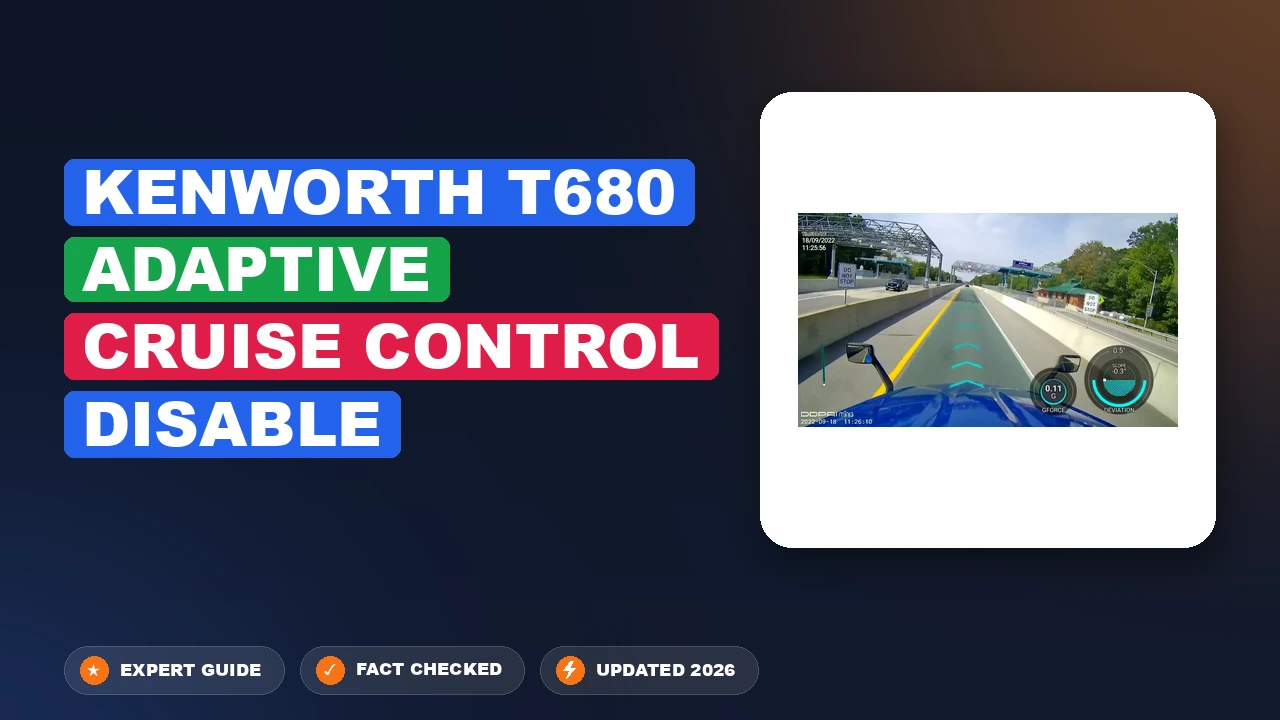
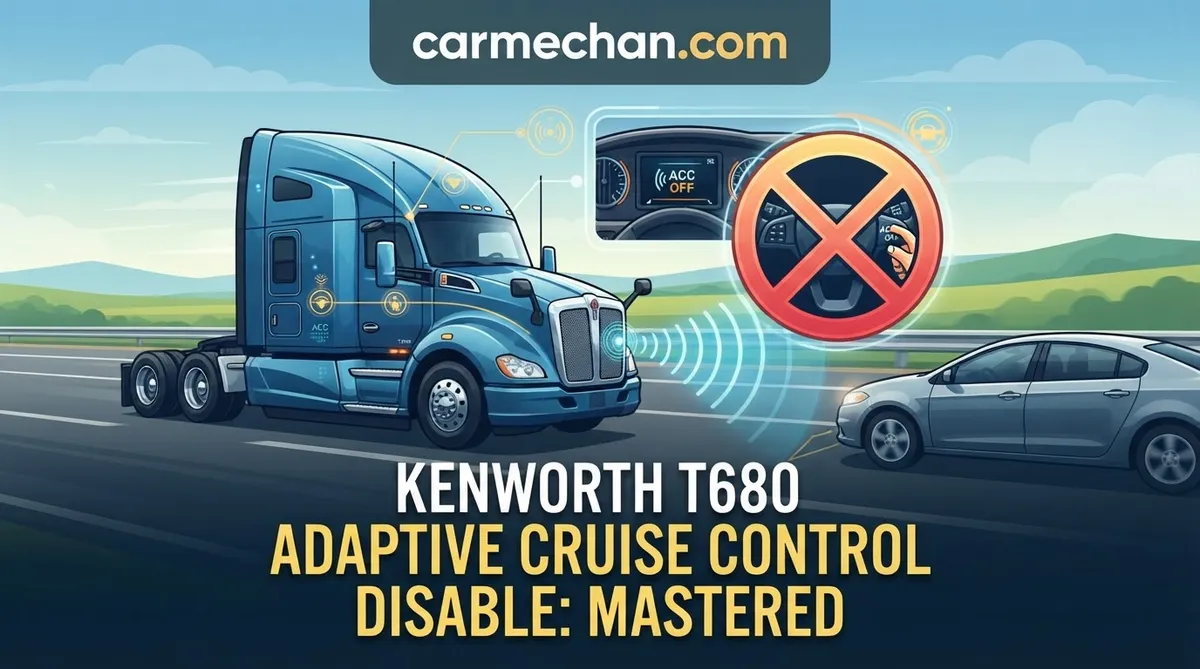
Kenworth T680 Adaptive Cruise Control Disable: Mastered
Is your Kenworth T680’s adaptive cruise control causing more stress than safety on the highway? Many professional operators find that the system’s aggressive intervention, frequent false-positive braking, and rigid speed management hinder efficiency rather than help it. While the desire to reclaim full manual control is understandable, the architecture of modern collision mitigation systems makes this task complex. This guide provides the reality of system modification, why software locks exist, and the safe, professional path to managing your truck’s cruise settings.

Understanding Kenworth T680 Adaptive Cruise Control Disable Challenges
Recommended Best Deal Products


📤 Share Image
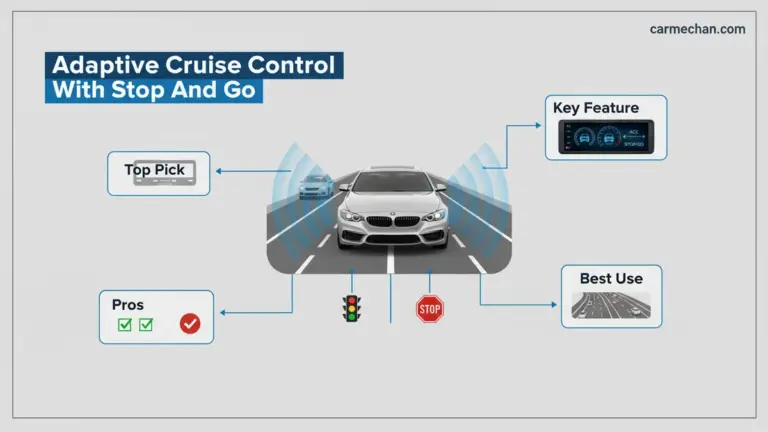
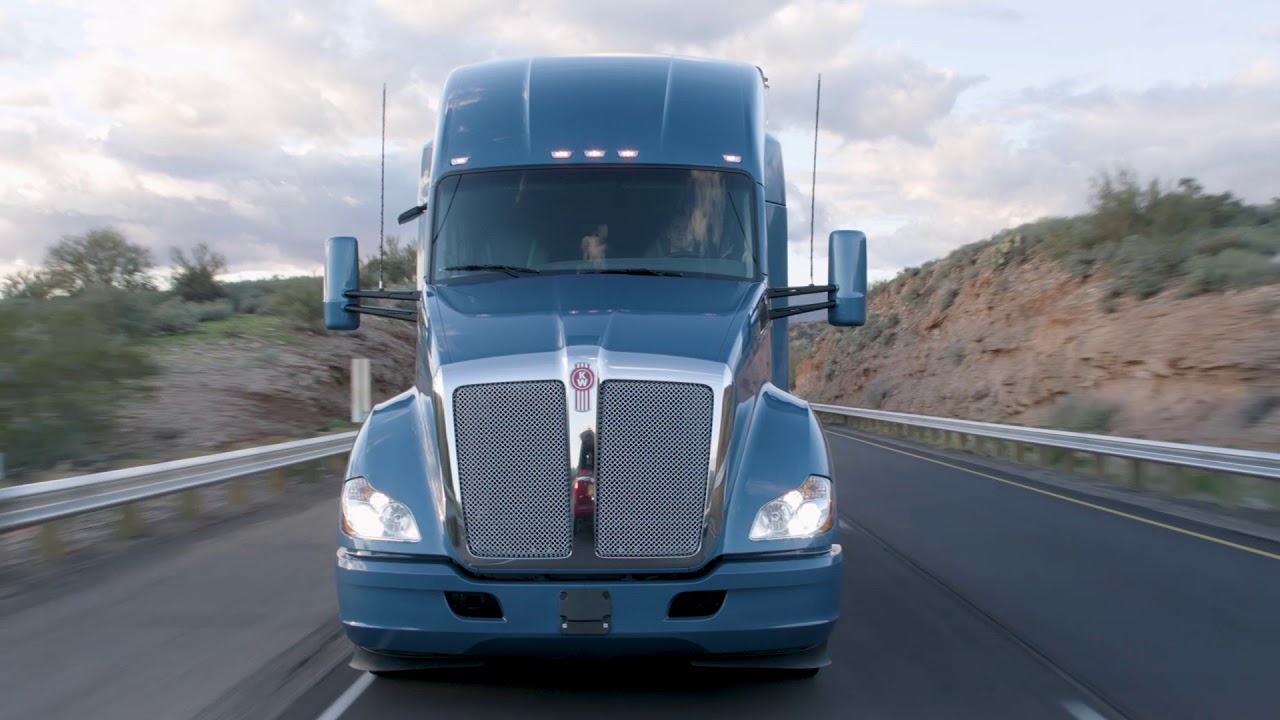
The Kenworth T680 utilizes advanced collision mitigation technology, primarily the Bendix Wingman Fusion system, to improve road safety. Designed as an “always-on” feature, the system integrates a forward-facing radar sensor with camera data to maintain safe following distances. Because these systems are mandated by safety standards and fleet insurance requirements to reduce rear-end collisions, they are engineered to be tamper-resistant.

Why Collision Mitigation Systems Are Always-On
Manufacturers intentionally omit a simple “off” switch for the collision mitigation system to ensure drivers cannot accidentally disable a critical safety feature. The system acts as a watchdog, standing between human reaction time and the reality of highway traffic flow. For fleets, this is a non-negotiable insurance requirement; for owner-operators, it is often hard-coded into the truck’s software architecture to maintain federal compliance regarding electronic braking and stability systems.
Common Causes of False Positive Braking
The radar sensor mounted in the front bumper is highly sensitive. Environmental factors—such as heavy rain, snow buildup on the sensor face, or road debris—can trigger a “sensor occlusion” fault. When the radar cannot “see” clearly, it may interpret stationary objects or road signs as hazards, leading to unwarranted automated braking. This sensitivity is often what drives the search for a way to disable the system, as drivers seek to avoid the fatigue caused by these false interventions.

The Legal Implications of Bypassing Safety Tech
Modifying or disabling safety-integrated systems carries significant legal and professional risks. If a collision occurs while safety systems have been tampered with or intentionally disabled, the liability rests entirely on the operator or the fleet. Furthermore, such modifications are often detectable by electronic data logging systems, potentially invalidating insurance claims and violating DOT safety mandates.
Navigating Kenworth T680 Adaptive Cruise Control Disable Procedures
📋
Procedures for Interacting with System Parameters
Recommended Best Deal Products


Determine if your vehicle is “Fleet-Locked.” Many T680s are managed via centralized software, meaning even a dealer may be restricted from changing settings without authorization from the fleet manager.
The only reliable way to adjust system sensitivity is through the PACCAR Electronic Service Analyst (ESA). This proprietary tool communicates with the Engine Control Module (ECM) to safely recalibrate, rather than delete, system parameters.
Why Third-Party Scanners Fail to Modify ECM Parameters
Generic OBDII scanners are designed for reading codes, not reprogramming safety-critical ECM functions. The communication protocols used by the Bendix Wingman Fusion system are encrypted and proprietary. Attempting to force a “disable” command through an unauthorized scanner often results in an ECM communication error or a permanent fault code that can only be cleared by a dealership.
Requesting Authorized Parameter Changes at the Dealership
If you find the system too aggressive, schedule an appointment with a trusted Kenworth service center. Ask if the collision mitigation sensitivity can be adjusted to a lower setting. While they likely cannot turn it off entirely, they may be able to recalibrate the following distance threshold or steering intervention settings within the manufacturer’s permitted safety range.

Audible — Listen Free for 30 Days
One free credit a month and thousands of titles included.
Listen Free for 30 DaysTroubleshooting Kenworth T680 Adaptive Cruise Control Faults
Drivers often attempt to disable the radar sensor physically by covering it with tape or plates. This is a dangerous practice. The vehicle’s computer constantly monitors the sensor’s health; a blocked or “blind” sensor triggers an immediate failure alert, effectively disabling the entire cruise control system and potentially forcing the vehicle into a restricted performance mode (Limp Mode).
Interpreting Instrument Cluster Warning Lights
When the sensor encounters an obstruction, the instrument cluster will display a “Radar Blocked” or “Collision Mitigation System Fault” message. At this point, the cruise control feature will usually be locked out entirely. Ignoring these lights is not a workaround; it is a signal that your safety systems are currently non-functional, which can create a serious safety liability.
Proper Maintenance of Front-Bumper Sensors
To reduce the incidence of false alarms, maintain the cleanliness of the front radar sensor. In winter months, remove ice and slush accumulation regularly. Use only mild soap and water for cleaning; avoid harsh chemicals or high-pressure sprays that could scratch the sensor lens or dislodge its precise alignment.
Never attempt to physically disconnect the radar module. The vehicle’s architecture is highly integrated; missing hardware will trigger a persistent dash fault, disable standard cruise control entirely, and may be flagged during a roadside inspection.
Comparing Kenworth T680 Adaptive Cruise Control Disable Options
Recommended Best Deal Products


The following comparison illustrates why professional configuration is the only reliable path for drivers seeking improved cruise performance.
By The Numbers
Reported Success of Dealer Recalibration
Warranty Impact of Physical Tampering
Standard vs. Adaptive Cruise: Performance Differences
Standard cruise maintains a set speed regardless of traffic, whereas adaptive cruise introduces variable speed control based on object proximity. While adaptive cruise feels restrictive in heavy traffic, its ability to mitigate high-speed rear-end incidents is statistically proven. For professional drivers, the best approach is to embrace the system’s “Following Distance” setting to the minimum allowable level via a technician, which provides the most “manual” feel while retaining the safety backing of the radar.
The Cost of Unauthorized Modification
The cost of unauthorized modification goes beyond just potential fines. Attempting to bypass the ECM’s safety logic can lead to a damaged Control Module, which costs thousands to replace. When you account for the loss of warranty coverage and the potential for increased insurance premiums, professional adjustment is the only economically sound decision.
If you operate in hilly or unpredictable terrain, discuss “Look Ahead” cruise parameters with your technician. Some T680 models can be tuned to allow slightly more speed variation to take advantage of momentum, which may make the adaptive system feel less intrusive.
Maintaining Reliable Performance in Your Kenworth T680
Adaptive cruise control is an integral part of your Kenworth T680’s safety architecture and cannot be safely or effectively disabled via simple dashboard switches or DIY methods. Attempts to bypass this system through physical obstruction or unauthorized software tampering usually result in vehicle faults and a loss of cruise control functionality entirely.
Audible Premium Plus — Annual Membership
12 audiobook credits up front, plus the full Audible catalogue.
See Annual PlansThe only trusted, professional route is to consult with an authorized Kenworth technician. By utilizing PACCAR ESA diagnostics, they can assess your vehicle’s specific parameters to determine if the system sensitivity can be optimized to better suit your driving style. Prioritize your warranty, legal compliance, and the long-term health of your vehicle by working within the established service framework rather than risking unauthorized modifications.
Kenworth t680 Adaptive Cruise Control Disable: Frequently Asked Questions
Can I disable ACC through the dash menu?
No. The Kenworth T680 does not feature a ‘Disable’ button for the Adaptive Cruise Control system within the Driver Information Display. This system is a core component of the truck’s collision mitigation architecture. Allowing a driver to fully disable safety-critical systems would violate safety regulations and OEM design standards, meaning access is restricted to authorized service personnel only.
Why does my truck brake automatically when passing?
This phenomenon, often called ‘phantom braking,’ usually occurs when the radar sensor identifies a stationary object or a slower vehicle in an adjacent lane as a collision threat. This can be caused by the radar beam reflecting off metal signs, bridges, or misaligned sensor brackets. Ensuring the radar cover is free of debris and having a professional check the sensor alignment usually corrects this behavior.
Will pulling the fuse disable ACC?
Pulling the fuse for the Bendix system is strongly discouraged. Because the radar is integrated with the Engine Control Module (ECM) and the ABS system, removing power to the sensor will immediately throw multiple critical fault codes, potentially place the engine into a derated limp mode, and disable all safety systems, including the Electronic Stability Program (ESP) and collision mitigation warnings.
Can I switch from Adaptive to Standard Cruise Control?
On many current T680 models, you can switch between ‘Adaptive’ and ‘Standard’ cruise modes through the steering wheel control menu, provided your specific firmware supports it. However, this is not a permanent ‘disable’ function. The system will revert to default settings upon the next ignition cycle. Consult your owner’s manual for your specific truck’s interface configuration for this toggling capability.
How often should the radar system be recalibrated?
The radar system should be recalibrated whenever there is a collision involving the front bumper, if the radar bracket has been impacted, or if the system consistently shows alignment fault codes. A professional recalibration uses specialized diagnostic software to align the radar with the vehicle’s lane tracking, ensuring it accurately detects objects in your path without triggering false-positive emergency braking events.