Expert Guide How Many Control Arms Does a Car Have 2026
Last Updated on September 1, 2026 by Ryan
A car’s control arm count varies significantly based on its suspension design, but generally, a modern vehicle with independent suspension can have anywhere from 2 to 4 control arms per wheel. This number directly impacts ride comfort, handling, and overall vehicle performance.
The question ‘how many control arms does a car have’ doesn’t have a single, universal answer because vehicle suspension designs vary significantly. Generally, a modern vehicle with independent suspension can have anywhere from 2 to 4 control arms per wheel. This number directly impacts ride comfort, handling, and overall vehicle performance.
The precise count depends on whether you are looking at the front or rear suspension, and the specific type of suspension system employed.
Some simpler systems might have fewer, while more advanced setups, such as multi-link suspensions, will incorporate more. Their fundamental role is to connect the wheel hub to the vehicle’s chassis, controlling wheel movement and maintaining alignment. This variability in control arm numbers directly correlates with their vital role in vehicle dynamics, a topic worth exploring further.
Key Takeaways


- Control arm count varies by suspension type.
- Independent suspension often uses multiple arms.
- Solid axle systems have fewer control arms.
- Upper and lower arms are common designs.
- More arms can mean better handling and ride.
What Primary Function Do Control Arms Serve?


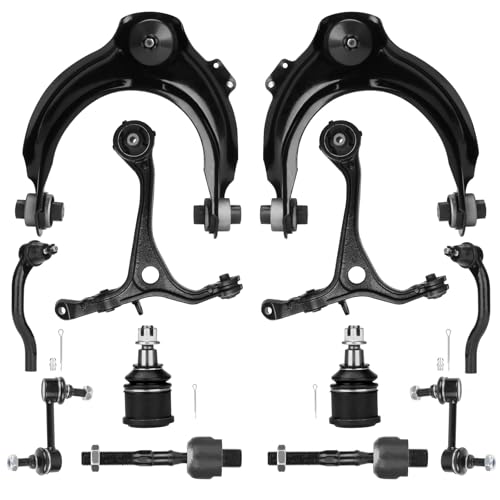
Beyond just counting them, understanding what control arms do is crucial. These components are a cornerstone of your vehicle’s suspension system. Their primary function ensures your wheels stay connected to the car’s body while allowing for necessary movement over varying road surfaces.
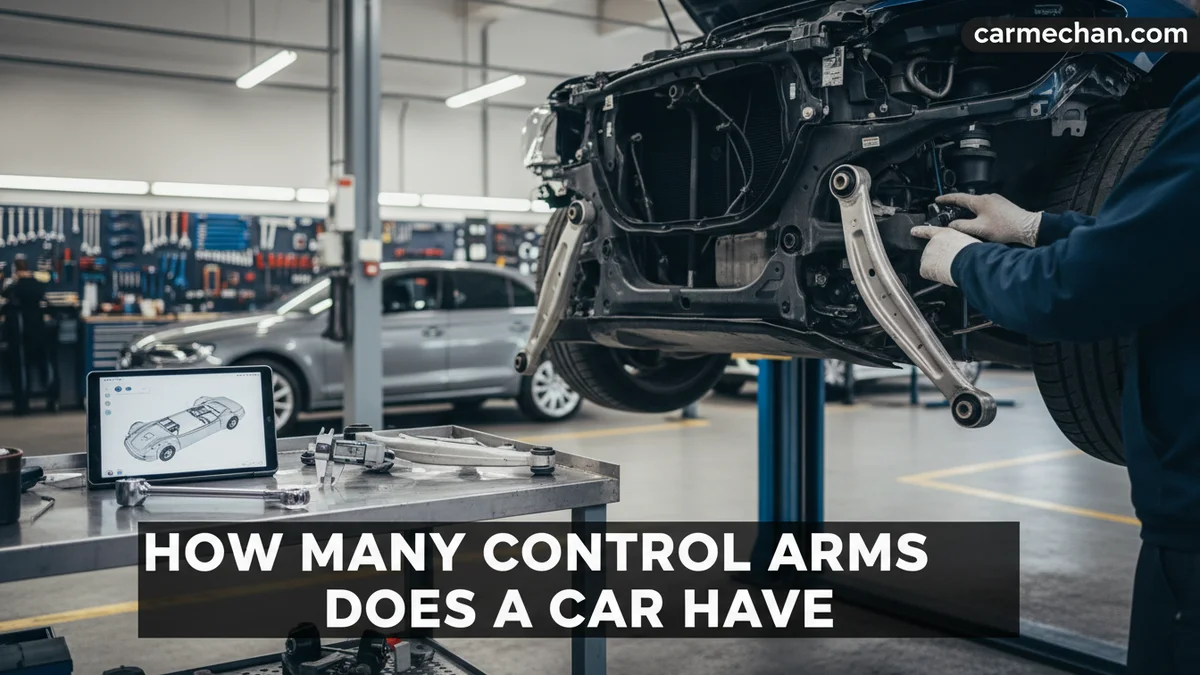
Linking Wheels to Chassis
Control arms effectively form the structural links between the wheel assembly and the vehicle’s chassis. They anchor the wheel at specific points, transmitting forces from the road into the suspension system. This connection is vital for maintaining control and stability.
Without properly functioning control arms, the wheels would not be securely attached, leading to dangerous instability. They are crucial for transmitting braking and acceleration forces, as well as absorbing road impacts.
Allowing Vertical Movement
A key role of control arms is to facilitate the vertical movement of the wheels. As your car encounters bumps or dips, the wheels need to move up and down independently of the chassis. Control arms, often with flexible bushings at their pivot points, allow this essential articulation.
This vertical travel is what enables your suspension to absorb shocks and provide a smooth, comfortable ride. Without this movement, every bump would directly translate to the vehicle body, severely impacting comfort and potentially damaging components. Understanding basic suspension system mechanics helps clarify this dynamic.
Maintaining Wheel Alignment
Perhaps one of the most critical functions of control arms is to maintain precise wheel alignment. They dictate the camber, caster, and toe angles of the wheels. These angles are essential for proper tire contact with the road, affecting everything from steering response to tire wear.
Proper alignment is vital for safe and predictable handling. When control arms or their bushings wear out, these angles can shift, leading to poor handling, uneven tire wear, and a compromised driving experience. A well-aligned vehicle performs better and is safer.
Given their essential function, the specific number and configuration of these arms are tailored to the type of suspension system a vehicle employs.
How Many Control Arms Are on Each Wheel?
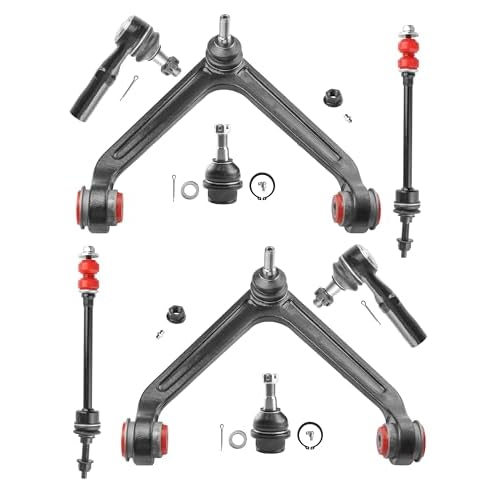


The actual number of control arms present on a vehicle varies significantly depending on whether you’re looking at the front or rear suspension, and the specific design. Engineers select these configurations to optimize for ride comfort, handling, and cost efficiency in various vehicle segments for 2026 models.
Front Suspension Counts
For front suspensions, two primary designs dictate control arm counts. MacPherson strut suspensions, very common in front-wheel-drive cars, typically use a single lower control arm per wheel. This arm manages longitudinal and lateral wheel movement, while the strut handles vertical movement and acts as the steering pivot.
Double wishbone (or A-arm) suspensions, often found in performance cars and many trucks, utilize two control arms per wheel: an upper and a lower arm. This setup offers superior control over wheel geometry and allows for finer tuning of handling characteristics. For example, a might feature a double wishbone front suspension, providing enhanced precision.
Rear Suspension Counts
Rear suspensions also exhibit diverse configurations. Many modern cars feature multi-link independent rear suspensions, which can employ anywhere from three to five individual links (often considered a type of control arm) per wheel. This complex arrangement provides excellent ride quality and precise wheel control, especially beneficial in dynamic driving situations.
Some luxury sedans for 2026, for instance, are expected to continue this trend to maximize comfort and handling.
Vehicles with a solid axle rear suspension, common in trucks and some older or less expensive cars, might not have traditional control arms connecting directly to the wheel hub. Instead, they often use trailing arms or leaf springs to position the axle, which itself contains the wheels.
In these cases, the number of distinct “control arms” is significantly lower or even zero at the wheel itself.
Varying Vehicle Designs
The choice of suspension design and corresponding control arm count is a critical engineering decision based on a vehicle’s intended purpose. A high-performance sports car prioritizes precise handling, leading to multi-link or double-wishbone setups with more control arms. Conversely, an economy car might opt for simpler MacPherson struts and a torsion beam rear axle to reduce costs and complexity, resulting in fewer control arms overall.
Even within similar vehicle types, manufacturers may vary their approaches. For example, some SUVs might use independent suspension all around, while others might retain a solid axle at the rear for towing capabilities. These design choices directly influence the vehicle’s driving dynamics. Emerging automotive engineering trends in 2026 continue to refine these component choices.
Understanding these numbers also requires familiarity with the different forms these crucial suspension components can take.
5 Common Types of Control Arms Explained
Beyond just their quantity, control arms themselves come in various shapes and configurations, each serving specific design goals. These variations are engineered to optimize wheel movement, stability, and vehicle performance across diverse driving conditions.
Upper Control Arms
Upper control arms are positioned above the wheel hub assembly. In double wishbone suspensions, they are typically shorter than their lower counterparts. This length difference helps achieve favorable camber changes as the suspension compresses and extends, which improves tire contact patch during cornering.
Their primary role is to control the top of the wheel’s movement, working in tandem with the lower arm. They are generally subject to less direct impact stress compared to lower arms.
Lower Control Arms
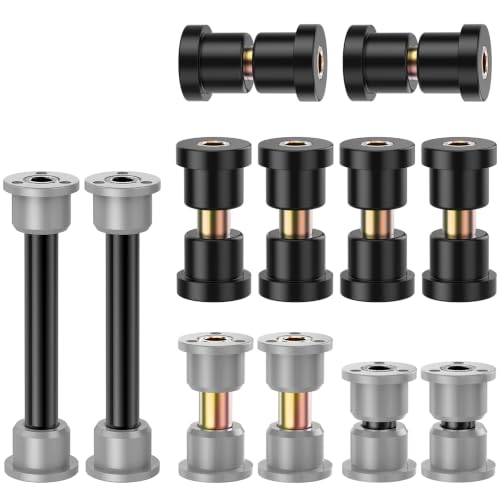
The lower control arm sits below the wheel hub. It is often longer and more than the upper arm because it typically bears a greater portion of the vehicle’s weight and withstands more direct road impacts. This arm also plays a critical role in defining the suspension’s roll center and stability.
In many MacPherson strut systems, the lower control arm is the sole control arm, handling both longitudinal and lateral forces that position the wheel. Its durability is paramount for safe operation.
A-Arm Designs
A-arms, also known as wishbones, are named for their distinctive “A” or “V” shape. They are triangular structures with two pivot points at the chassis and one at the wheel assembly (usually via a ball joint). This design provides excellent lateral stability and precise control over wheel motion.
Commonly found in double wishbone setups, both upper and lower control arms can be A-arm designs. Their geometry allows engineers to carefully tune camber and caster angles for optimal handling performance. The advantages of double wishbone suspensions are well-documented.
L-Arm Variations
L-arms are a simplified version of the A-arm, resembling the letter “L” or sometimes a slightly curved shape. They typically have two attachment points to the chassis and one to the wheel assembly, similar to an A-arm but with a more compact design. This often saves space and reduces manufacturing costs.
They are frequently used as lower control arms in MacPherson strut systems, providing a solid connection while being less complex than a full A-arm. Their design effectively manages forces while allowing for necessary suspension travel.
Multi-Link Components
Multi-link suspensions utilize multiple individual links, each acting as a small control arm, to connect the wheel hub to the chassis. These links can be straight rods or slightly curved, and their precise arrangement allows for highly sophisticated control over wheel geometry through the entire range of suspension travel.
This advanced setup offers superior ride comfort, improved handling, and reduced body roll. Each link contributes to defining specific motion characteristics, making it a highly tunable system. Modern performance vehicles often feature sophisticated multi-link rear suspensions.
The choice among these various control arm types directly influences how a car feels on the road, impacting its ride quality and handling characteristics.
How Control Arm Design Impacts Ride Quality?
The engineering behind control arm design goes far beyond simple geometry; it’s a critical factor in how your vehicle drives. The type and number of control arms directly influence a car’s handling, comfort, and overall performance, shaping the driving experience for 2026 models and beyond.
Handling Characteristics
Control arm design fundamentally dictates a vehicle’s handling. Systems with multiple control arms, such as double wishbone or multi-link setups, offer engineers finer control over wheel kinematics. This means they can precisely manage how the wheel moves relative to the vehicle body during cornering, braking, and acceleration.
This precision allows for optimized camber gain, keeping the tire’s contact patch stable and maximizing grip. As a result, cars with these advanced systems often exhibit sharper steering response, reduced body roll, and superior cornering capabilities, making them a favorite for performance-oriented vehicles. Advanced suspension geometry is key to a responsive vehicle.
Comfort and Stability
Beyond agility, control arm design significantly impacts ride comfort and stability. Well-designed multi-link systems can better isolate road imperfections, allowing for smoother absorption of bumps and reduced harshness transmitted to the cabin. The ability to separate different forces with multiple links helps achieve this.
Additionally, effective control arm geometry ensures the wheels maintain optimal alignment even during suspension travel. This contributes to directional stability, preventing the vehicle from wandering and providing a more relaxed and predictable ride over varying road conditions. Good stability also enhances passenger safety and reduces driver fatigue.
Performance Applications
In high-performance and racing applications, control arms are meticulously designed and often constructed from lightweight, high-strength materials like forged aluminum. The exact positioning and length of each arm are calculated to achieve specific performance goals, such as maximizing downforce or minimizing weight transfer.
Adjustable control arms are also common in these scenarios, allowing mechanics to fine-tune suspension settings for different tracks or driving styles. This level of customization highlights the critical role control arms play in extracting every ounce of performance from a vehicle. Their role in racing suspension tuning cannot be overstated.
Understanding these performance implications also makes it clearer why proper maintenance and timely inspection of your control arms are so important.
When to Inspect Your Control Arm Bushings?
Because control arms are so critical to your car’s suspension, knowing when to inspect them for wear is essential for safety and performance. The bushings and ball joints, which connect the control arm to other components, are typically the first parts to show signs of wear. Proactive checks can prevent more extensive damage and maintain vehicle integrity.
Identifying Warning Sounds
One of the most common indicators of worn control arm bushings or ball joints is unusual noise. You might hear a clunking, popping, or squeaking sound, particularly when driving over bumps, potholes, or rough roads. These noises often originate from loose components or deteriorated rubber bushings that are no longer providing proper cushioning.
A persistent squeak, especially at low speeds or when turning, can also point to a dry or failing ball joint. Addressing these sounds promptly is crucial, as they indicate a compromised suspension component. Decoding common car noises can help you identify these issues early.
Recognizing Steering Issues
Worn control arms or their associated components can profoundly affect your steering. You might notice a feeling of looseness or excessive play in the steering wheel. The car could also pull to one side, even on a flat road, or feel vague and unresponsive when you try to steer.
Another symptom is a vibration felt through the steering wheel, particularly at higher speeds. These issues stem from the wheels not being held firmly in their correct geometric positions. Ignoring these signs can lead to dangerous driving conditions and loss of vehicle control.
Observing Tire Wear Patterns
Uneven or accelerated tire wear is a significant sign that your control arms or alignment are compromised. If the inner or outer edge of your tires is wearing down much faster than the rest, it indicates an issue with camber or toe angles, which are controlled by the suspension geometry. This is a tell-tale sign that needs immediate attention.
Feathering (where tire tread blocks are worn smooth on one side and sharp on the other) can also suggest alignment problems often caused by worn control arm bushings. Regular tire rotations and visual inspections for wear patterns can help you spot these issues early. General automotive maintenance guidelines recommend checking suspension components annually or every 10,000 to 15,000 miles .
These practical considerations highlight the control arm’s pivotal role, leading us to address some frequently asked questions about this crucial component.
5 Common Questions About Car Control Arms
Do All Cars Have Control Arms?
No, not all cars have traditional control arms in every suspension setup. Vehicles with solid axle suspensions, for instance, might use leaf springs or trailing arms instead of distinct control arms for wheel positioning. However, most modern cars with independent suspension systems do utilize them for precise wheel control.
What Is the Difference Between Upper and Lower Control Arms?
Upper control arms are positioned above the wheel hub, while lower control arms are below it. The lower arm typically carries more load and is often longer, providing a wider pivot point. Both work in conjunction to allow vertical wheel movement while maintaining proper alignment and connection to the chassis.
Can I Drive With a Bad Control Arm?
Driving with a bad control arm is highly risky and not recommended. A failing control arm compromises steering stability, wheel alignment, and braking performance, leading to unpredictable handling and potential loss of control. It can also cause accelerated wear on other suspension and tire components, posing a significant safety hazard.
How Long Do Control Arms Usually Last?
Control arms themselves are sturdy and can last the lifetime of the vehicle. However, their bushings and ball joints are wear items. These components typically last between 50,000 to 100,000 miles, depending on driving conditions, vehicle type, and manufacturer quality. Regular inspections help identify wear early.
Is Replacing a Control Arm Difficult?
Replacing a control arm can be challenging for a novice, often requiring specialized tools and experience with suspension components. It involves safely lifting the vehicle, disconnecting various parts, and potentially dealing with seized bolts. Incorrect installation can lead to alignment issues or unsafe driving, so professional installation is highly recommended.
Maximizing Your Vehicle’s Suspension Longevity
Understanding how many control arms does a car have, along with their function and maintenance needs, is fundamental for any car owner or enthusiast. These often-overlooked components are vital for your vehicle’s safety, performance, and overall driving enjoyment. From the precise handling of a multi-link setup to the robustness of a single lower control arm, each design serves a specific purpose in the intricate dance of modern automotive engineering.
We encourage you to pay attention to your car’s suspension, listening for unusual noises and observing handling characteristics. Proactive inspection and timely replacement of worn components, especially the bushings and ball joints, will preserve your vehicle’s ride quality and extend its lifespan well into 2026 and beyond.
Regular professional check-ups ensure these critical components are always in optimal condition, securing your investment and enhancing your driving experience.