Buick Envision Years to Avoid: Reliability Guide for Buyers 2026
Last Updated on September 1, 2026 by Ryan
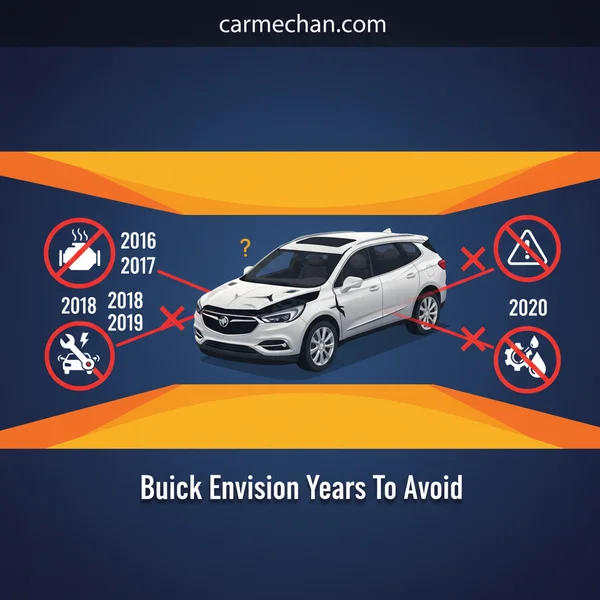
When considering a used Buick Envision, the first-generation models, particularly 2016-2018, are often cited for more frequent reliability concerns. These years commonly experience significant issues with the 6-speed automatic transmission and various electrical system malfunctions, making a thorough pre-purchase inspection crucial for potential buyers.
🎯 Key Takeaways



- Prioritize scrutiny for 2016-2018 Envision models.
- Inspect 6-speed automatic transmission thoroughly.
- Verify infotainment and electrical system functionality.
- Newer 2020+ models show improved reliability.
- Always get a professional pre-purchase inspection.
If you’re considering a used Buick Envision, pay close attention to the 2016-2018 model years. These early first-generation models are statistically more prone to specific, recurring mechanical and electrical issues that can lead to costly repairs and frustration. Understanding these particular years and their associated problems is crucial. It helps you make an informed purchase, potentially saving you from significant headaches down the road. Our guide cuts through the noise to highlight exactly what to watch out for.
This deep dive isn’t about general maintenance or features; it’s a laser-focused look at documented problem areas. We’ll pinpoint the exact model years to approach with caution and detail the specific issues that often plague them. Your goal is a reliable SUV, and ours is to arm you with the knowledge to make that a reality, bypassing common pitfalls.
Identifying Problematic Buick Envision Model Years



The Primary Concern: First-Generation Models (2016-2018)
The most significant reliability red flags for the Buick Envision unequivocally point to the first few model years: 2016, 2017, and 2018. These represent the initial launch of the Envision in North America. Like many first-generation vehicles, they often reveal design flaws or component weaknesses under real-world use. While subsequent model years (2019 onwards, and especially the redesigned 2021+) show improved reliability trends, the initial run carries a notable burden of owner complaints and documented issues.
During this period, owners frequently report a confluence of issues, ranging from significant powertrain concerns to frustrating electrical glitches. It’s not just isolated incidents; the patterns of complaints across various owner forums and official reliability databases highlight systemic problems. Choosing an Envision from this particular three-year window significantly increases your likelihood of encountering common, expensive repairs. This isn’t to say every single unit from these years is flawed, but the prevalence of specific issues is notably higher compared to later iterations.
The manufacturing and component sourcing during these launch years seem to be at the root of many issues. Vehicles produced early in a model cycle often serve as real-world test beds, exposing weaknesses that didn’t appear in pre-production testing. Consumer reports and NHTSA complaints consistently show spikes for these early models, particularly concerning the powertrain and infotainment systems, indicating more than just typical wear and tear. These are not merely minor nuisances; many reported issues for the 2016-2018 Envision directly impact driveability, safety, or require extensive, costly dealership intervention. If you’re evaluating a used Envision, the VIN for any model year within 2016-2018 should prompt extra scrutiny and a thorough pre-purchase inspection focused on these known weak points. Understanding which specific problems characterize these years is your next critical step.
Common Reliability Issues Across Envision Generations


Specific Problems Plaguing Early Envisions (2016-2018)
For the 2016-2018 Buick Envision, several specific and recurring problems stand out, impacting both driving experience and your wallet. These are not isolated incidents but patterns of failure recognized across numerous owner reports and, in some cases, by General Motors itself:
- 6-Speed Automatic Transmission Shudder:
- Description: One of the most widespread and concerning issues is a persistent shudder from the 6-speed automatic transmission. This problem is frequently reported in models equipped with both the 2.5L and 2.0L turbo engines.
- Symptoms: Owners describe a noticeable vibration or ‘shudder’ during light acceleration, often felt between 30-50 mph, or when shifting into higher gears.
- Cause/Impact: This is often attributed to torque converter issues or contaminated transmission fluid from the factory, leading to premature wear. General Motors has issued Technical Service Bulletins (TSBs) related to this, often recommending a triple flush of the transmission fluid with a specific new formulation (Dexron-HP) or, in severe cases, torque converter replacement. The prevalence of this shudder is high, often requiring significant intervention. It’s a severe problem impacting driving comfort and long-term transmission health, and can be a very costly repair if not covered by warranty.
- Infotainment System Freezing/Malfunctions:
- Description: The IntelliLink infotainment system in the 2016-2018 models is another frequent source of frustration.
- Symptoms: Users commonly experience the screen freezing, becoming unresponsive to touch, randomly restarting, or losing connectivity with Bluetooth devices and Apple CarPlay/Android Auto.
- Cause/Impact: These issues are typically software-related, but often require hardware replacement (the head unit) if software updates alone fail to resolve the problem. While less critical for safety, the constant freezing is a widespread, severe annoyance. It significantly degrades the modern driving experience that relies heavily on digital interfaces and can be expensive to fix out of warranty.
- Premature Brake Wear & Noise:
- Description: Numerous owners of the early Envision models report unusually rapid brake wear and excessive noise.
- Symptoms: You might hear squealing, grinding, or feel vibrations during braking, often occurring at much lower mileages than expected (e.g., 20,000-30,000 miles for pads and rotors).
- Cause/Impact: While not officially linked to a specific design flaw by GM in all cases, the prevalence suggests an undersized brake component or rotor quality issue for the vehicle’s weight. This translates to frequent, costly brake jobs for owners, directly impacting safety if neglected, and leading to higher running costs.
- HVAC System Failures (Blower Motor/Actuators):
- Description: Some 2016-2018 Envisions experience issues with the Heating, Ventilation, and Air Conditioning (HVAC) system.
- Symptoms: Common complaints include the blower motor failing entirely, or blend door actuators sticking, leading to inconsistent temperature control or air not blowing from certain vents.
- Cause/Impact: These are typically component failures, which can be annoying and uncomfortable, requiring diagnosis and replacement of specific parts. These failures are common enough to be noted and significantly impact cabin comfort, requiring professional repair.
Evaluating Envision Reliability: What to Look For Before Buying
Key Areas to Inspect
Beyond just the year, a used Envision’s individual condition is crucial. Pay close attention to the powertrain. For early models (2016-2018), listen carefully for any clunking, slipping, or delayed shifts from the transmission during a test drive. These are red flags. Also, check for engine noises like excessive ticking, knocking, or a persistent whine, which could indicate deeper issues.
Don’t overlook the electrical system and infotainment. Test every button, knob, and screen function. Ensure the climate control works consistently, and that the navigation or Apple CarPlay/Android Auto connectivity is stable. Minor glitches can be annoying, but frequent system freezes or non-responsive screens can point to a larger problem.
- Transmission: Smooth shifts, no hesitation or jerking.
- Engine: Consistent idle, no unusual noises or vibrations.
- Infotainment: Responsive touchscreen, all features working.
- Climate Control: Consistent heating and cooling across all vents.
Leveraging Vehicle History Reports
A comprehensive vehicle history report, such as CARFAX or AutoCheck, is your best friend. It provides a transparent look into a car’s past. Look specifically for consistent service records – evidence that the previous owner kept up with maintenance. Pay close attention to accident history; even minor fender benders can sometimes lead to lingering issues. Crucially, check if all recall campaigns have been completed. Buick issued several recalls for various Envision components, and addressing these is vital for long-term reliability.
Even with a clean report, always budget for a pre-purchase inspection (PPI) by an independent mechanic. They can uncover hidden problems that even a history report might miss, giving you peace of mind.
Comparing Envision Reliability: Best vs. Worst Years
Years to Approach with Caution
Based on owner feedback and reliability data, the first few years of the Buick Envision’s production in North America, specifically 2016, 2017, and 2018, require the most scrutiny. These models faced a higher incidence of reported issues, primarily centered around the automatic transmission. Owners frequently cited harsh shifts, hesitation, or complete transmission failures, leading to costly repairs.
Beyond the powertrain, these early models also experienced more complaints related to their infotainment systems, climate control glitches, and general electrical eccentricities. While not every early Envision will be a problem child, these years present a higher risk profile for potential buyers. If you’re considering one of these, a thorough inspection and detailed service history are non-negotiable.
More Reliable Envision Models
Fortunately, the Buick Envision saw significant improvements in its later model years. The 2020 Envision marked a noticeable step up in reliability, with fewer major powertrain complaints and more refined systems. However, the real sweet spot for reliability and modern features begins with the 2021 model year and onward. This period introduced the second generation of the Envision, featuring updated powertrains, a completely redesigned interior, and a more robust infotainment system. These newer models benefit from lessons learned in earlier production runs, offering a more consistent and dependable ownership experience. They also come equipped with more advanced safety features and creature comforts, making them an attractive option for those prioritizing long-term peace of mind.
Making Your Informed Decision
Navigating the used car market for a Buick Envision doesn’t have to be a gamble. By understanding which years carry higher risks, primarily the 2016-2018 models, and recognizing the improved reliability of the 2021 and newer generations, you’re already ahead of the curve. Your goal should always be to balance potential savings with the cost of future repairs and the peace of mind that comes with a dependable vehicle.
Before making any purchase, always prioritize a comprehensive vehicle history report and a pre-purchase inspection by a trusted mechanic. This diligent approach will empower you to make an informed decision, ensuring your Buick Envision provides reliable transportation for years to come. Drive confidently!
❓ Frequently Asked Questions
Which specific Buick Envision years should I consider avoiding, and why?
The 2016, 2017, and 2018 Buick Envision models are frequently cited as years to approach with caution due to common problems, particularly with the 6-speed automatic transmission experiencing shuddering or hesitation, and various electrical/infotainment system glitches that can be costly to diagnose and repair.
What are the most common mechanical problems reported in less reliable Envision years?
Owners of early Envisions (2016-2018) often report significant issues such as transmission shudder or hard shifts, premature wear of brake components, and some instances of engine oil leaks or excessive consumption, which can lead to expensive and inconvenient repairs.
Are there electrical or infotainment system issues in certain Buick Envision model years?
Yes, older Envision models, particularly those from 2016-2019, have reported problems with the IntelliLink infotainment system freezing, unresponsive touchscreens, and various sensor or electrical accessory malfunctions that can negatively impact the driving experience and require software updates or component replacement.
How does Buick Envision reliability compare between the first and second generations?
The second-generation Buick Envision (starting with the 2021 model year) generally demonstrates improved reliability and fewer widespread mechanical or electrical issues compared to the first generation (2016-2020), benefiting from updated engineering, redesigned components, and often a different powertrain lineup.
What steps should I take if considering a used Buick Envision from a potentially problematic year?
If you are considering a Buick Envision from a year with known issues, always get a comprehensive pre-purchase inspection by a trusted independent mechanic who specializes in GM vehicles. Pay close attention to transmission performance, test all electronic features, and review the vehicle’s full history report for any recurring problems, recall completions, or extensive service records.
Are there any specific recalls or TSBs (Technical Service Bulletins) I should be aware of for the Buick Envision?
Several Technical Service Bulletins (TSBs) have been issued for early Buick Envision models addressing common issues like transmission shudder (often recommending a fluid flush) and software updates for the infotainment system. While fewer mandatory recalls exist, always check the National Highway Traffic Safety Administration (NHTSA) database using the specific VIN of any vehicle you consider.