Kia Optima Years to Avoid: Engine & Transmission Warnings
Last Updated on September 1, 2026 by Ryan
When considering a used Kia Optima, it’s crucial to identify specific model years with significant reliability concerns, primarily the 2011-2016 generation. These years are frequently cited for widespread engine failures, oil consumption, and transmission problems that can lead to expensive repairs. Buyers should exercise extreme caution and consider later models for greater peace of mind.

Prime for Young Adults — 6 Months Free
Students and 18–24s get six months of Prime free, then half price.
Start 6 Months Free🎯 Key Takeaways
Recommended Best Deal Products


- Avoid Kia Optima models from 2011-2016.
- Engine failures (GDI) are common in these years.
- Watch for excessive oil consumption symptoms.
- Transmission issues affect older Optimas.
- Always get a pre-purchase inspection for used models.
If you are considering a used Kia Optima, pay very close attention to its model year. The 2011-2016 Kia Optimas, in particular, come with a significant asterisk. While stylish and often well-equipped for their price, these specific model years are plagued by serious, well-documented mechanical issues that can lead to catastrophic failures, exorbitant repair bills, and leave you stranded.
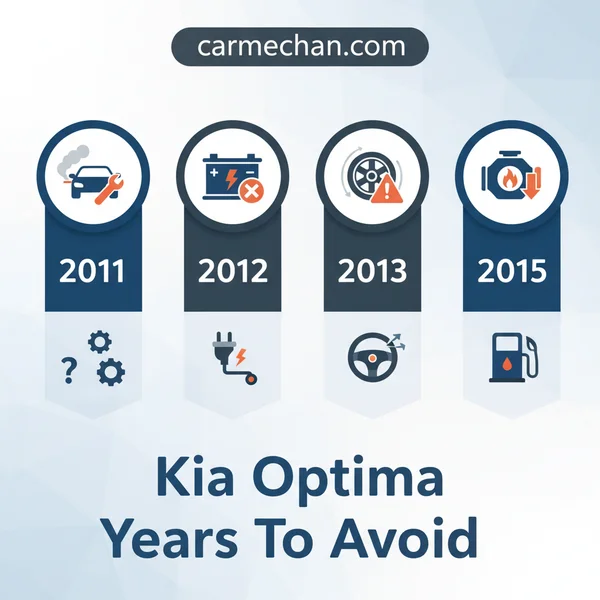
Your goal when buying a used car is reliability and peace of mind. For certain Kia Optima years, especially those equipped with the Theta II GDI engines, you risk inheriting costly problems that far outweigh any initial savings. Understanding these specific risks before you buy is crucial to avoid a potential money pit and ensure your investment is sound.
Identifying the Most Problematic Kia Optima Years
The Kia Optima’s second and third generations, primarily covering the 2011 through 2016 model years, represent the most critical period for potential buyers to avoid. During this timeframe, Kia utilized its Theta II GDI (Gasoline Direct Injection) engine in many Optima models, an engine series now infamous for widespread and severe reliability issues.
The Troubled 2011-2016 Generation
These model years are the epicenter of significant complaints and recalls. The problems are not isolated incidents but rather systemic failures recognized by both Kia and federal regulators. If an Optima from this era catches your eye, proceed with extreme caution. The primary culprits for these issues are the 2.4-liter and 2.0-liter turbocharged Theta II GDI engines. You will find thousands of complaints on NHTSA (National Highway Traffic Safety Administration) regarding sudden engine failure, excessive oil consumption, and loud engine knocking.
- 2011-2014 Kia Optima: These years are the absolute worst offenders, directly impacted by multiple engine recalls due to manufacturing defects that can lead to connecting rod bearing wear and subsequent engine seizure.
- 2015-2016 Kia Optima: While some improvements were reportedly made, these model years still frequently exhibit similar engine failures and excessive oil consumption, indicating that the core issues were not fully resolved.
These persistent issues led to multiple class-action lawsuits and large-scale recalls, highlighting the severity and widespread nature of the defects. Skipping these specific years can save you immense future headaches and financial strain.
Deep Dive into Common Engine & Transmission Failures
Recommended Best Deal Products


The issues with the problematic Kia Optima years aren’t minor inconveniences; they are fundamental mechanical failures that directly impact the car’s drivability and safety. Understanding the specifics of these problems will help you recognize the risks involved.
Catastrophic Engine Problems: Theta II GDI Engine Failure
The Theta II GDI engine is the primary reason to avoid the 2011-2016 Optimas. The most severe issue involves premature wear of the connecting rod bearings. This defect allows metal debris to circulate within the engine’s lubrication system, leading to several tell-tale symptoms and ultimately, complete engine failure.
- Symptoms: You might hear a loud, distinct knocking noise originating from the engine, especially during acceleration or startup. This knocking is often described as metallic and can worsen over time. Other signs include engine stalling, a sudden loss of power, or the check engine light illuminating with specific diagnostic trouble codes (DTCs) related to engine misfires or rod bearing issues.
- Excessive Oil Consumption: Many owners report needing to add oil frequently, sometimes every few hundred miles. This isn’t just an inconvenience; it can starve the engine of lubrication, accelerating wear and increasing the risk of failure.
- Underlying Cause: The defect stems from inadequate machining of the crankshaft during manufacturing, leaving behind metallic debris that wasn’t properly removed before assembly. This debris can damage the connecting rod bearings, leading to friction, heat, and eventual mechanical breakdown.
- Recalls & Lawsuits: Kia issued multiple recalls (e.g., NHTSA Recall 17V224000, 19V120000) for these engine issues, often offering engine replacements or repairs for affected vehicles. However, the process has been lengthy and frustrating for many owners. Class-action lawsuits have also led to settlements, providing extended warranties or reimbursements for some owners.
- Repair Costs: If your Optima’s engine fails outside of a recall or warranty, you are looking at substantial repair costs. An engine replacement can easily range from $5,000 to $10,000 or more, often exceeding the car’s market value.
Automatic Transmission Woes
While the engine issues overshadow almost everything else, the automatic transmissions in the 2011-2016 Kia Optima also present their share of problems, albeit not as universally catastrophic as the engine failures. These transmissions can develop issues that severely impact driving performance and longevity.

Audible — Listen Free for 30 Days
One free credit a month and thousands of titles included.
Listen Free for 30 Days- Common Symptoms: Owners frequently report harsh or delayed shifting, particularly between lower gears. You might experience the transmission “jerking” or “lurching” during gear changes, or a noticeable slip as the car struggles to engage the next gear. Hesitation when accelerating from a stop is another red flag. In severe cases, the transmission can go into “limp mode” or fail entirely.
- Potential Causes: These problems often stem from defective valve bodies, faulty transmission solenoids that control fluid flow, or premature wear of internal clutches and bands. In some instances, incorrect transmission fluid levels or lack of proper maintenance can exacerbate these issues, but inherent manufacturing flaws are often at play.
- Repair Costs: Addressing transmission problems can be costly. Replacing individual solenoids or the valve body might cost several hundred to a couple of thousand dollars. A full transmission rebuild or replacement, however, can quickly jump to $2,000-$4,000 or more, making it a significant repair that often approaches the vehicle’s residual value.
<h2>Recalls, Class-Action Lawsuits, and Owner Experiences</h2>

<p>The issues plaguing certain Kia Optima models are not isolated incidents reported by a few frustrated owners. They have been significant enough to trigger widespread recalls and even class-action lawsuits, highlighting the severity of the problems, especially with the Theta II GDI engines.</p>
<h3>Key Recalls to Be Aware Of</h3>
<p>Several crucial recalls directly impact the problematic Kia Optima years, primarily targeting engine reliability. These are critical indicators of manufacturing flaws and design weaknesses:</p>
<ul>
<li><strong>Engine Bearing Failure (NHTSA Recall 17V224000):</strong> This significant recall affected 2011-2014 Optimas, addressing connecting rod bearing wear in the 2.4L and 2.0L Turbo engines. The wear could lead to engine knocking and, eventually, engine seizure. This is a direct consequence of the issues we discussed.</li>
<li><strong>Fuel Pipe Leaks (NHTSA Recall 19V063000):</strong> A recall for 2011-2018 Optimas with the 2.4L GDI engine, this issue concerned fuel pipe damage, potentially leading to fuel leaks and an increased risk of fire. While not directly an engine failure, it compounds the list of concerns for these years.</li>
<li><strong>Engine Seizure Risk (NHTSA Recall 19V120000):</strong> An expansion of earlier recalls, this one covered additional 2017-2018 Optimas, again related to potential premature bearing wear and engine seizure. It shows the persistence of the problem across model years.</li>
</ul>
<p>Always check a vehicle's VIN against the NHTSA recall database to ensure all applicable recalls have been addressed.</p>
<h3>The Impact of Class-Action Lawsuits</h3>
<p>The widespread nature of these engine problems led to several class-action lawsuits against Kia (and Hyundai, given their shared engine platforms). These lawsuits primarily focused on the Theta II GDI engines, alleging defects that cause premature wear, oil consumption, and catastrophic engine failure. A significant settlement was reached, providing:</p>
<ul>
<li><strong>Extended Warranties:</strong> Many affected vehicles received lifetime limited warranties for the engine short block assembly.</li>
<li><strong>Reimbursement:</strong> Owners who paid for engine repairs out-of-pocket might be eligible for reimbursement.</li>
<li><strong>Software Updates:</ol><li>Kia also issued software updates (often called "Knock Sensor Detection System" or KSDS) designed to detect early signs of engine bearing wear and alert the driver, potentially preventing complete engine failure.</li>
</ul>
<p>While these settlements offer some recourse, they also underscore the depth of the reliability issues. Many owners have reported frustrating experiences with slow repair processes, availability of parts, and disputes over warranty coverage, adding to the importance of careful due diligence before buying.</p>
<h2>Choosing a Reliable Kia Optima: Alternatives and Buying Tips</h2>
<p>If you love the Kia Optima's style and features but are wary of the engine troubles, don't despair! You can still find a reliable model or make an informed purchase. The key is knowing which years to target and how to approach the used car buying process.</p>
<h3>Consider Newer or Older Models</h3>
<p>To steer clear of the most problematic engines, focus your search on Optima model years outside the 2011-2018 range. Here are your best bets:</p>
<ul>
<li><strong>Pre-2011 Models:</strong> Older Optimas (e.g., 2007-2010) typically used different engine designs that, while not immune to all issues, generally did not suffer from the same widespread Theta II GDI problems. They might lack some modern features but could offer greater peace of mind regarding the powertrain.</li>
<li><strong>2019 and Newer Models:</strong> By 2019, Kia had introduced updated engines and made various revisions, significantly improving reliability. The 2020 and especially the completely redesigned K5 (which replaced the Optima in 2021) are much safer bets. These later models benefit from engineering improvements and a better track record.</li>
<li><strong>Hybrid Models:</strong> The Optima Hybrid often uses a different engine variant and drivetrain, which some owners report as being more reliable than their pure gasoline counterparts in the problematic years. Research specific hybrid model years carefully.</li>
</ul>
<h3>Smart Buying Strategies for Any Used Optima</h3>
<p>Even if you opt for a generally "safe" year, prudent buying practices are essential when purchasing any used vehicle, especially a Kia Optima. These tips can help mitigate risks:</p>
<ul>
<li><strong>Professional Pre-Purchase Inspection (PPI):</strong> This is non-negotiable. Have a trusted, independent mechanic inspect the car thoroughly, paying close attention to the engine, transmission, and cooling system. A good mechanic can identify subtle issues before they become major problems.</li>
<li><strong>Review Service Records:</strong> Ask for a complete service history. Look for consistent maintenance, oil change intervals, and any records of major repairs. A well-maintained car is always a better bet.</li>
<li><strong>VIN Check:</strong> Run a comprehensive VIN check through services like Carfax or AutoCheck. This will reveal accident history, previous ownership, and, crucially, any unaddressed recalls. Confirm if engine software updates related to recalls (like KSDS) have been performed.</li>
<li><strong>Thorough Test Drive:</strong> Listen carefully during the test drive for any unusual engine noises – knocking, ticking, or excessive rattling. Pay attention to how the transmission shifts. Any hesitation, jerking, or slipping could signal trouble.</li>
</ul>
<h2>Conclusion</h2>
<p>While the Kia Optima offers appealing styling and features, the 2011-2018 model years, particularly those equipped with the 2.0L Turbo and 2.4L GDI engines, present significant reliability risks due to well-documented engine and transmission issues. These concerns are backed by numerous owner complaints, widespread recalls, and class-action lawsuits.</p>
<p>To avoid potential headaches, consider Optimas manufactured before 2011 or after 2018. Crucially, always invest in a professional pre-purchase inspection and a thorough VIN check. By doing your homework, you can confidently choose a Kia Optima that delivers on its promise of value and reliability, helping you drive with peace of mind.</p>
❓ Frequently Asked Questions
Why are the 2011-2016 Kia Optima years specifically flagged as problematic?
These model years, particularly those equipped with the 2.4L and 2.0L GDI engines, are widely reported for premature engine failures, often due to rod bearing defects and excessive oil consumption. These issues have led to extensive recalls and even class-action lawsuits, making them a high-risk purchase.
What are the typical symptoms of a failing GDI engine in a Kia Optima?
Common symptoms include a persistent knocking sound from the engine, excessive oil consumption requiring frequent top-offs, illumination of the check engine light, and in severe cases, the engine stalling or seizing completely. These often point to internal component wear or failure.
Audible Premium Plus — Annual Membership
12 audiobook credits up front, plus the full Audible catalogue.
See Annual PlansHow expensive are the repairs for the common Optima engine issues?
Engine replacement for a Kia Optima can be extremely costly, often ranging from $5,000 to $10,000 or more, depending on the engine type, labor rates, and whether a new or used engine is installed. Even significant repairs like rod bearing replacement can run into thousands of dollars.
Has Kia addressed these reliability issues through recalls or extended warranties?
Yes, Kia has issued multiple recalls, particularly for the Theta II GDI engines, and has extended warranties for certain engine components for affected vehicles. However, the scope and eligibility for these programs can vary, so it’s essential to check a specific VIN.
Are there any specific Optima trims or engine types more prone to problems?
The 2.4L GDI (Gasoline Direct Injection) and 2.0L Turbo GDI engines, prominently featured in the 2011-2016 models, are the most commonly cited for severe mechanical failures. Non-GDI engines or later generations generally exhibit better reliability.
What should a buyer do if they are considering a used Kia Optima from a potentially problematic year?
A thorough pre-purchase inspection by a trusted mechanic, specifically focusing on engine health, oil levels, and any unusual noises, is absolutely critical. Requesting service records and checking for completed recall repairs are also essential steps before making a purchase.