Are Spacers Bad For Your Car Proven Safety Risks For 2026
Last Updated on September 1, 2026 by Albert Duke
Wheel spacers can be bad for your car, introducing significant safety, mechanical, and legal risks if not properly considered and managed. Their potential to accelerate component wear, alter vehicle dynamics, and cause catastrophic failure necessitates careful evaluation before use.

Prime for Young Adults — 6 Months Free
Students and 18–24s get six months of Prime free, then half price.
Start 6 Months FreeWheel spacers can be bad for your car, introducing significant safety, mechanical, and legal risks if not properly considered and managed. Their potential to accelerate component wear, alter vehicle dynamics, and cause catastrophic failure necessitates careful evaluation before use.
- Spacers increase stress on critical components.
- Improper installation is a major failure risk.
- Hub-centric spacers are generally safer than lug-centric.
- Legal and inspection issues vary by region.
- Quality and regular maintenance are crucial for safety.
The question, “Are spacers bad for your car?” is frequently debated among vehicle enthusiasts and safety-conscious owners. Many seek to achieve a wider stance or accommodate larger tires, but often overlook the potential consequences of such modifications. While some claim benefits, we must critically examine the inherent risks.
This article provides a comprehensive, expert-informed perspective on wheel spacers for 2026. We will the specific safety, mechanical, and legal implications. Our goal is to equip you with the knowledge needed to make informed decisions about your vehicle’s modifications.
We will explore the specific safety risks associated with these modifications to provide a clear understanding.
Key Takeaways
Recommended Best Deal Products


- Spacers increase stress on critical components.
- Improper installation is a major failure risk.
- Hub-centric spacers are generally safer than lug-centric.
- Legal and inspection issues vary by region.
- Quality and regular maintenance are crucial for safety.
3 Primary Safety Risks of Wheel Spacers
When considering if spacers are bad for your car, the most critical concerns revolve around direct safety implications on the road. These devices, if misused or faulty, can lead to severe operational failures and increase accident potential. Understanding these risks is fundamental to vehicle safety.

Catastrophic Failure Risk
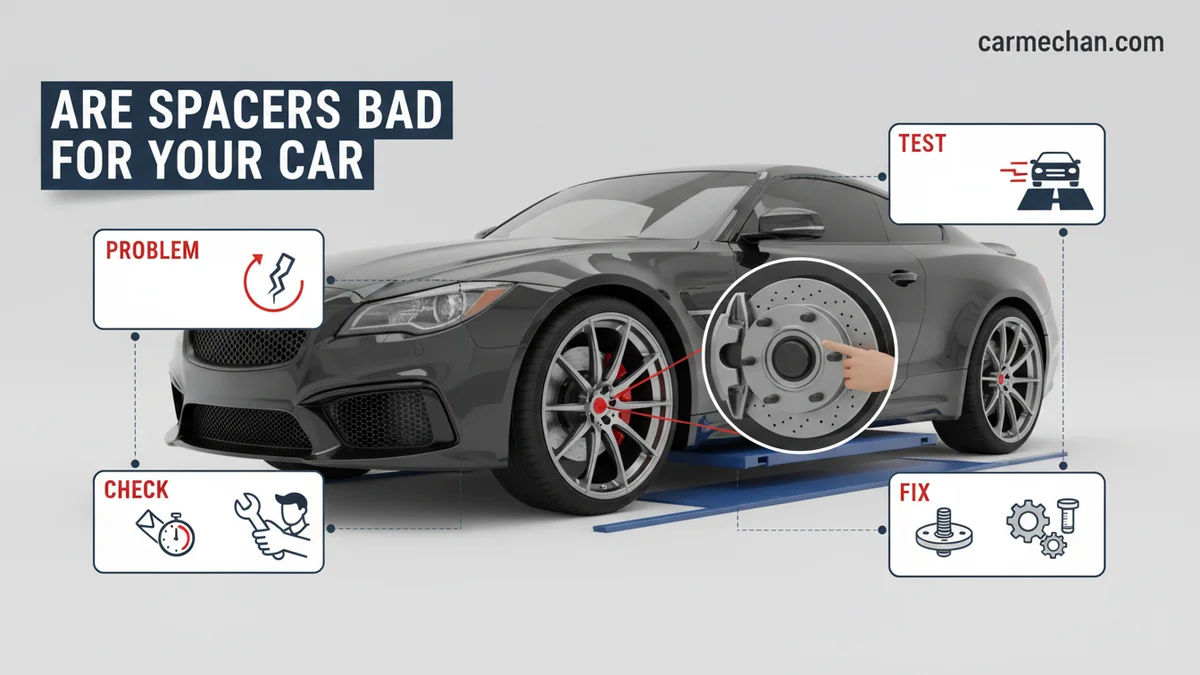
One of the most alarming dangers of wheel spacers is the potential for catastrophic failure, particularly the wheel detaching from the vehicle. This can occur due to inadequate stud engagement, stripped threads, or material fatigue in the spacer itself. A wheel separation at speed can lead to a complete loss of vehicle control, endangering occupants and other road users.
Proper torque values are crucial, but even correctly torqued fasteners can fail under increased stress.
Loss of Control Impact
Wheel spacers inherently alter a vehicle’s track width, which can significantly impact its handling and stability. While a wider stance might seem beneficial, it can change the scrub radius and introduce unwanted steering characteristics, such as bump steer or torque steer. This can reduce the driver’s ability to maintain control, especially during emergency maneuvers or at high speeds.

Audible — Listen Free for 30 Days
One free credit a month and thousands of titles included.
Listen Free for 30 DaysThe vehicle’s original suspension and steering geometry are precisely engineered for safety and predictable behavior. Modifying these parameters with spacers can disrupt that delicate balance.
Increased Accident Potential
Combining catastrophic failure risks and compromised handling capabilities directly translates to an increased potential for accidents. A vehicle that behaves unpredictably or experiences a sudden component failure is far more likely to be involved in a collision. This risk is amplified by factors such as cheap spacer quality, improper installation, or lack of regular maintenance.
Drivers might not immediately notice subtle changes in handling until a critical moment, making the danger insidious. Vehicle safety should always be the top priority for any modification. [INTERNAL LINK: Guide to safe car modifications]
Beyond the immediate dangers, wheel spacers also exert considerable force on the vehicle’s underlying mechanical systems.
Which 4 Car Components Suffer From Spacers
A significant concern for anyone asking, “Are spacers bad for your car?” is their impact on vital mechanical components that ensure smooth operation. Spacers introduce additional leverage and stress, leading to accelerated wear and potential failures in parts not designed for such forces.
Accelerated Bearing Wear
Wheel spacers increase the distance between the wheel’s centerline and the hub bearing, creating a longer lever arm. This design change significantly magnifies the load placed on the wheel bearings. Over time, this increased stress causes the bearings to wear out much faster than intended, leading to premature failure, noise, and potentially dangerous wheel wobble.
Manufacturers design bearings for specific load paths. Spacers alter these paths, pushing the bearings beyond their operational limits.
Suspension Stress Issues
The entire suspension system, including shocks, struts, ball joints, and control arms, is designed to absorb impacts and maintain tire contact with the road. Adding wheel spacers effectively changes the suspension geometry and kinematics. This can place undue stress on various suspension components, accelerating their wear and potentially leading to premature failure.
Increased leverage can overload bushings and pivot points, leading to looser steering and reduced ride quality.
Audible Premium Plus — Annual Membership
12 audiobook credits up front, plus the full Audible catalogue.
See Annual PlansWheel Stud Fatigue
Wheel studs are designed to withstand specific shear and tensile forces. When a wheel spacer is installed, especially a thinner, ‘slip-on’ type, it reduces the amount of thread engagement for the lug nuts on the existing studs. For bolt-on spacers, the spacer itself adds another set of studs, creating more points of potential failure.
The extended leverage from the wheel’s new position also increases the bending moment on the wheel studs. This can lead to metal fatigue and eventual stud breakage, a severe safety hazard.
Tire Contact Patch
While often overlooked, wheel spacers can negatively affect tire wear and performance. By pushing the wheels further out, they can alter the tire’s contact patch with the road, especially during turns or when encountering bumps. This can lead to uneven tire wear, reduced traction, and a compromised ability to put power down effectively.
The change in scrub radius can also cause tires to rub against fender liners or bodywork. This results in damage and necessitates further modifications like fender rolling. [INTERNAL LINK: Understanding tire wear patterns]
Understanding these mechanical implications also requires differentiating between the various types of spacers available and their inherent risk profiles.
Hub-Centric Versus Lug-Centric Spacers for Safety
Not all wheel spacers present the same level of risk, making the distinction between hub-centric versus lug-centric spacers critical for safety assessment. The design and quality of these components play a pivotal role in their reliability and potential for harm.

Slip-On Spacer Dangers
Slip-on spacers are typically thinner plates that fit between the hub and the wheel. Their primary danger lies in often reducing the effective thread engagement of the existing wheel studs. If the lug nuts don’t have enough threads to bite onto, they can back off or strip, leading to wheel detachment.
This design is also more prone to causing vibrations if not perfectly flat and balanced.
Many slip-on spacers are lug-centric, meaning the wheel is centered purely by the lug nuts, not the vehicle’s hub. This can make accurate wheel centering difficult and increase vibration. [INTERNAL LINK: How to identify hub-centric vs lug-centric]
Bolt-On Spacer Reliability
Bolt-on spacers, also known as adapters, bolt directly to the vehicle’s existing studs and then have their own set of studs for the wheel to attach to. These are generally considered safer than slip-on spacers because they ensure full thread engagement for both sets of fasteners.
However, they introduce an additional point of failure and add more weight to the rotating mass.
For optimal safety, bolt-on spacers should be hub-centric. This means they include a lip that precisely centers the wheel, reducing reliance on the lug nuts for centering and minimizing vibrations.
Material Quality Matters
Regardless of type, the quality of the material and manufacturing process is paramount. Cheap, low-quality spacers made from inferior alloys can be brittle, crack under stress, or corrode rapidly. Reputable manufacturers use high-grade aerospace aluminum or steel, precision-machined to exacting tolerances, which significantly reduces the risk of failure.
Always choose spacers from well-known brands that provide certifications and have a track record of safety. Investing in quality is non-negotiable when dealing with components critical to wheel retention.
While technical differences impact safety, the legality of using any type of spacer is another complex area for car owners.
Are Wheel Spacers Legal Across 50 States
Beyond mechanical and safety concerns, understanding whether wheel spacers are legal across 50 states is paramount for responsible vehicle modification. The legality of wheel spacers is not uniform, leading to a patchwork of regulations that can catch owners by surprise during inspections or after an incident.
State Law Variations
There is no federal law universally regulating wheel spacers in the United States. Instead, rules vary significantly from state to state. Some states have explicit bans or restrictions on spacers, often related to tire protrusion beyond the fender. Other states have no direct laws but may consider them an unsafe modification under general vehicle safety statutes.
Always research your specific state and local laws before installing spacers.
Inspection Failure Causes
Even if not explicitly illegal, wheel spacers can cause a vehicle to fail state-mandated safety inspections. Inspectors may flag them for various reasons, including insufficient thread engagement, altered suspension geometry, or wheels protruding beyond the fender. A failed inspection means your vehicle is not road-legal until the issue is resolved, often requiring removal of the spacers.
This can be a significant inconvenience and expense for vehicle owners.
Insurance Implications
Modifying your vehicle with wheel spacers can also have serious implications for your auto insurance policy. If your insurance company discovers unapproved modifications after an accident, they may deny your claim, argue that the modification contributed to the accident, or even void your policy. It is crucial to inform your insurer of any significant vehicle changes.
Failure to disclose modifications could leave you personally liable for damages. This applies even if the spacers were not the direct cause of an accident.
Given these inherent risks and legal complexities, it becomes essential to know how to mitigate the dangers if spacers are used, or consider safer alternatives.
How to Mitigate 4 Wheel Spacer Risks
If you are still asking ‘are spacers bad for your car?’ despite the risks, and decide to use them, knowing how to mitigate 4 wheel spacer risks is non-negotiable for your safety. While complete elimination of risk is impossible, diligent practices can reduce potential issues.
Correct Installation Practices
Improper installation is a leading cause of spacer-related failures. Always follow the manufacturer’s instructions precisely. Ensure all mating surfaces (hub, spacer, wheel) are perfectly clean and free of corrosion. Use thread locker on spacer bolts where recommended and torque all fasteners to the manufacturer’s specifications using a calibrated torque wrench. Never use impact wrenches for final tightening.
Insufficient torque or uneven tightening can cause premature component failure and dangerous vibrations.
Regular Maintenance Checks
Vehicles with wheel spacers require more frequent and thorough maintenance checks. Regularly inspect all lug nuts for proper torque, especially after the first 50-100 miles of installation and then at every tire rotation. Check for any signs of cracking, corrosion, or deformation on the spacers themselves and the wheel studs.
Listen for unusual noises like grinding or humming, which could indicate bearing wear.
High Quality Product Selection
Do not compromise on quality for cost. Always purchase hub-centric spacers from reputable, established brands known for their engineering and material quality. Avoid generic or unbranded spacers, which often lack the precision machining and materials needed for automotive applications. Quality spacers are typically made from forged aluminum or high-strength steel.
Research reviews and certifications to ensure the product meets safety standards. [INTERNAL LINK: What to look for in quality aftermarket parts]
Consider Offset Wheels
For those seeking a wider stance or specific wheel fitment without the inherent risks of spacers, investing in wheels with a lower offset is a far safer alternative. Lower offset wheels achieve the same aesthetic and functional outcome by moving the wheel’s mounting surface further outward from the hub, but without introducing an additional component or extra points of failure.
While potentially more expensive upfront, lower offset wheels integrate seamlessly with the vehicle’s design and maintain the original hub-to-wheel connection. This minimizes stress on critical components. [INTERNAL LINK: Understanding wheel offset and backspacing]
Before concluding, let’s address some frequently asked questions about wheel spacers.
Frequently Asked Questions About Wheel Spacers
Do Wheel Spacers Cause More Wear on Wheel Bearings?
Yes, wheel spacers generally increase the load on wheel bearings by moving the wheel’s centerline further from the hub. This creates a larger leverage arm, accelerating wear on the bearings and potentially shortening their lifespan, especially with thicker spacers or aggressive driving.
Are Bolt-On Spacers Safer Than Slip-On Spacers?
Bolt-on spacers are typically considered safer than slip-on spacers because they bolt to the hub, providing full thread engagement for the original studs, and then offer new studs for the wheel. However, they still introduce additional components and potential points of failure.
Can Wheel Spacers Affect Vehicle Handling and Stability?
Yes, wheel spacers can significantly affect vehicle handling and stability. By altering the track width and scrub radius, they can lead to increased bump steer, torque steer, and a less predictable feel during cornering or emergency maneuvers, potentially reducing driver control.
Are Wheel Spacers Legal Everywhere in 2026?
No, wheel spacers are not legal everywhere in 2026. Laws vary widely by state and region, with some jurisdictions having outright bans or restrictions based on tire protrusion, while others may consider them unsafe modifications during vehicle inspections. Always check local regulations.
What Are the Best Alternatives to Wheel Spacers?
The best alternatives to wheel spacers for achieving a wider stance are wheels with a lower offset. These wheels are designed to push the tire further out from the hub, providing the desired look and fitment without introducing an additional component or altering the original stud-to-wheel connection.
Final Verdict Are Car Spacers Right for Your Vehicle?
The question “are spacers bad for your car?” doesn’t have a simple yes or no answer, but leans heavily towards caution. While they can achieve a desired aesthetic or functional fitment, the potential safety risks, accelerated wear on critical components, and legal ambiguities cannot be ignored.
We’ve seen how spacers can compromise wheel bearings, suspension, and studs, potentially leading to catastrophic failure on the road by 2026.
For the safety-conscious owner, the inherent risks often outweigh the benefits. If you choose to use wheel spacers, prioritize high-quality, hub-centric designs and adhere to stringent installation and maintenance protocols. However, for true peace of mind and long-term vehicle integrity, investing in wheels with a suitable offset remains the safest and most reliable alternative.
Always prioritize your vehicle’s safety and reliability above all else.