Nissan Rogue CVT Transmission Problems What to Do Based on Your Year
Last Updated on May 5, 2026 by Ryan
If your Nissan Rogue CVT transmission is shuddering, slipping, or hesitating, the right move depends on your model year, mileage, and warranty status. Most articles tell you the Rogue CVT is bad.
That part you already know. What they skip is what you should actually do about it — and that answer is different depending on your exact situation.
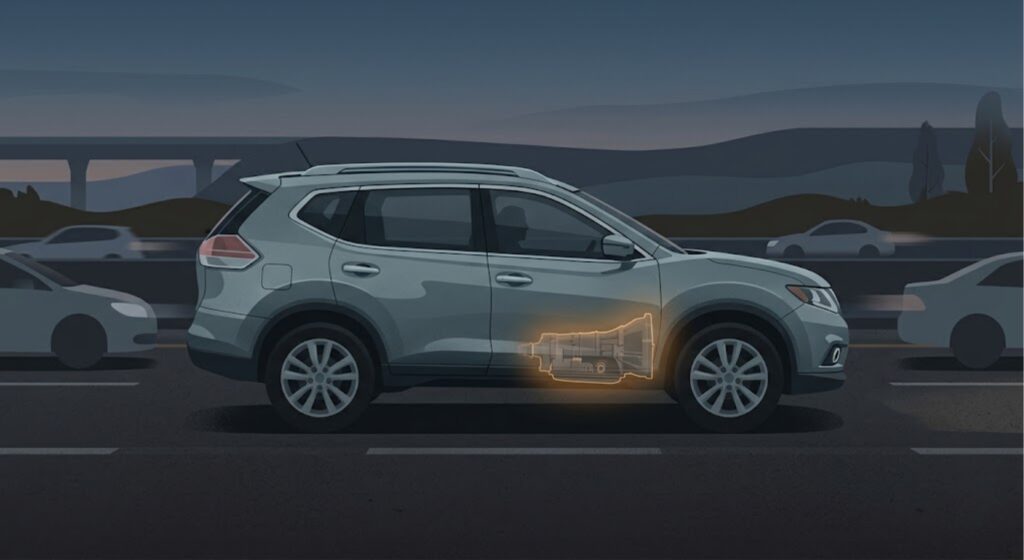
This guide maps your specific conditions to a specific action. Work through it in order.
Dealing with Nissan Rogue CVT issues? These products are what owners rely on:


As an Amazon Associate we earn from qualifying purchases.
Why the Nissan Rogue CVT Fails More Than Most Transmissions
Recommended Best Deal Products


The Nissan Rogue CVT transmission problems span nearly every generation of the vehicle, and the NHTSA complaint record confirms it. The 2013 Rogue alone has over 595 NHTSA complaints, with the vast majority tied directly to the CVT. Across model years 2008–2018, the pattern is consistent enough that Nissan eventually extended the powertrain warranty and settled a class action lawsuit over it.

The specific symptoms that signal a CVT problem — not just a generic drivetrain issue — are:
- Shudder or judder between 25–45 mph, especially during light acceleration
- Hesitation or a “rubber band” feeling when pulling away from a stop
- High engine RPMs with little or no forward movement
- Whining or grinding noise that increases with vehicle speed
- Transmission overheating warning, especially in hot weather or after highway driving
- Sudden loss of power while at highway speed, often called “limp mode.”
This is not normal wear and tear. Owner reports show Nissan CVT failures occurring at an average of around 64,000 miles in the worst-affected years — well before a transmission should fail. Nissan has acknowledged the problem through warranty extensions and a class action settlement. Before you spend a dollar, four conditions determine what your actual options are.
4 Conditions That Determine Your Correct Next Step
Your next step depends on four things — and getting this wrong means spending money you don’t need to spend.
Condition 1: Model Year The 2008–2013 first-generation Rogue carries the highest failure rate. The 2014–2018 second generation is the range officially covered by Nissan’s CVT warranty extension. The 2015 Rogue Select is also included. The 2017–2020 range saw improvement but is not fully problem-free. The 2021+ generation switched to a different engine and CVT setup with different concerns.
Condition 2: Current Mileage The critical threshold is 84,000 miles. This is the mileage ceiling on Nissan’s CVT warranty extension for covered years. Under 84K and in a covered year — you likely have a warranty path. Over 84K — you are looking at an out-of-pocket decision.
Condition 3: Symptom Severity Mild and intermittent (occasional shudder, no warning light) versus active and consistent (regular slipping, limp mode, warning lights) determines urgency and whether a fluid service can buy time.
Condition 4: Warranty or Class Action Coverage Status The 2014–2018 Rogue and 2015 Rogue Select have a confirmed powertrain warranty extension from 60 months/60,000 miles to 84 months/84,000 miles as part of the Nissan CVT class action settlement. If your vehicle falls within these years and that mileage, your repair path is fundamentally different from that of an out-of-warranty vehicle.
If you also notice electrical symptoms alongside your CVT issues — such as interior fuse failures or power accessory problems — it is worth checking for a separate root cause. Our guide on the 2017 Nissan Rogue fuse box location covers electrical fault diagnosis that can sometimes be misread as transmission symptoms.
CVT Decision Matrix — Find Your Exact Scenario
Match your year, mileage, and symptom to the recommended action
| Model Year | Mileage | Symptom | Recommended Action |
|---|---|---|---|
| 2008–2013 | Under 84K | Shudder / hesitation | Fluid check + independent diagnosis |
| 2008–2013 | Over 100K | Slipping / limp mode | Assess value vs. repair cost first |
| 2013 | Any | Any CVT symptom | Not covered by extension — independent shop |
| 2014–2018 Rogue | Under 84K & 84 months | Any CVT symptom | ✓ Free dealer warranty claim |
| 2015 Rogue Select | Under 84K & 84 months | Any CVT symptom | ✓ Free dealer warranty claim |
| 2014–2018 Rogue | Over 84K — shudder only | Mild, recent shudder | NS-3 drain-and-refill; monitor 60 days |
| 2014–2018 Rogue | Over 84K | Slipping / limp mode | Independent shop — remanufactured CVT |
| 2017–2020 | Any | Shudder at 25–45 mph | Verify VIN coverage; fluid or dealer |
| Any year | CVT repair > 65% of car value | Any | Walk away — sell, trade, or part out |
| 2021+ | Any | Any symptom | Standard factory warranty — check engine recall |
If your situation is a 2014–2018 Rogue under 84K miles with shuddering, start with the next section.
What To Do If Your Rogue CVT Is Shuddering or Slipping Under 100K Miles
Recommended Best Deal Products


If your Rogue is shuddering and still under 100,000 miles, your first call is not to a repair shop — it is to check your warranty status.
Follow this sequence before authorizing any work:
- Check your exact mileage and purchase date. For covered years (2014–2018 Rogue), the warranty extension runs 84 months from the original sale date or 84,000 miles, whichever comes first. Both the time and mileage caps apply.
- Do not authorize a full CVT fluid flush before a warranty diagnosis. A flush can mask the symptoms a dealer technician needs to document for a valid warranty claim. If symptoms are present, let the dealer diagnose the CVT first.
- If a warning light is on, limit driving distance immediately. CVT heat damage compounds rapidly once the fluid is compromised. Short trips only until diagnosis.
- If symptoms are mild and no warning light is present, get a dealer appointment within 2 weeks. Document the symptoms in writing — when they occur, at what speed, and under what driving conditions. This documentation matters if the dealer initially disputes the claim.
If your Rogue is covered by the warranty extension, the next section tells you exactly what to claim and what to do if a dealer pushes back.
What To Do If Your Rogue Is Covered by the Nissan CVT Warranty Extension
If your Rogue falls within the covered years and mileage, Nissan is required to replace your CVT at no cost to you. Here is what the coverage actually includes and how to use it.
Covered vehicles under the class action settlement:
- 2014–2018 Nissan Rogue (T32 generation)
- 2015 Nissan Rogue Select (S35 generation)
- Coverage: Powertrain warranty extended from 60 months/60,000 miles to 84 months/84,000 miles, whichever occurs first
What Nissan replaces under this extension: The warranty covers the full CVT assembly, including internal components, gaskets, seals, the CVT control valve body, torque converter, and cooler kit, where applicable. The dealer also reprograms the Transmission Control Module (TCM) as part of the replacement.
How to initiate the claim:
- Schedule a service appointment at any authorized Nissan dealer
- Tell them you are there specifically for a CVT warranty claim — use that exact phrase
- Ask the service writer to verify coverage on your VIN through Nissan’s warranty system before any work is authorized
- If the dealer says your VIN is not covered and you believe it should be, call Nissan Consumer Affairs at 1-800-647-7261 and open a case number
If you are just outside the mileage or time limit, document that symptoms began before you crossed the threshold. Written notes, dated service records, or even text messages mentioning the shudder before the limit can support a goodwill repair request through Nissan Consumer Affairs.
For background on the broader Nissan class action lawsuit and what it covered, our separate article breaks down the terms and eligible vehicles in detail.
If your Rogue is out of warranty and past 84,000 miles, the financial math changes entirely.
What To Do If Your Rogue Is Out of Warranty and Over 100K Miles
Recommended Best Deal Products

![Au-TOMOTIVE GOLD Compatible Keychain and Keyring for Nissan Rogue [KC1540.ROG] - Premium…](https://m.media-amazon.com/images/I/31vIAKQQiDL._SS500_.jpg)
Out of warranty and over 100K miles, you are facing a real financial decision — not just a repair order.
CVT replacement cost range (current estimates):
- Dealer, new OEM CVT: $4,500–$8,000 depending on year and AWD vs. FWD
- Dealer, remanufactured CVT: $3,500–$5,500 with a shorter warranty (typically 12 months/12,000 miles)
- Independent transmission specialist, remanufactured CVT: $3,000–$4,500 with a 3-year/36,000-mile warranty from reputable suppliers
The independent transmission specialist route is typically the better value for out-of-warranty vehicles. One important note: the TCM must be reprogrammed after a CVT replacement — confirm the shop can do this or will send it to a dealer for programming, before authorizing the job.
The break-even question:
If your Rogue’s current market value is less than the repair cost, the math points toward exit, not repair. Use KBB or CarGurus to get a realistic private-party value for your specific year and mileage before committing to any repair estimate.
If your vehicle is worth more than the repair cost and mileage is under 130,000 miles with no other major issues pending, a remanufactured CVT from a shop with a 3-year warranty is a viable path. You are effectively buying another 60,000–80,000 miles if the replacement holds.
Before committing to any repair, check whether a fluid service alone could buy you time.
When a CVT Fluid Change Actually Helps vs When It Does Nothing
A CVT fluid change fixes one specific scenario — and makes things worse in another.
4 Conditions That Determine Your Next Step
Identify where you stand on each before making any repair decision
2014–2018: Covered by Nissan’s CVT warranty extension
2015 Select: Also covered under extension
2019+: Improved — different action path
Over 84,000 miles: Out-of-warranty — financial decision applies
Moderate: Regular hesitation, shudder at 25–45 mph
Severe: Slipping, limp mode, warning light — needs diagnosis now
Beyond either limit: Extension expired — out-of-pocket path
IF symptoms are mild and recent (under 6 months of intermittent shudder, no warning light): A CVT fluid drain and refill using Nissan NS-3 fluid can reduce shudder temporarily. Nissan’s maintenance schedule treats the CVT as a near-sealed unit with no mandatory change interval under normal conditions for many model years, but independent mechanics and owner communities consistently report that proactive fluid changes at 30,000–60,000 mile intervals reduce shudder complaints significantly. The service costs $150–$300, depending on the shop.
IF symptoms have been consistent for more than 6 months or include slipping or limp mode, A fluid change will not reverse mechanical wear on the belt, pulleys, or valve body. Spending $200 on fluid when the CVT needs replacement is wasted money.
IF the CVT fluid is dark brown or smells burnt when checked, the damage is already done. Dark fluid is a symptom of thermal breakdown — it signals that the CVT has been running hot. A fluid change will not restore a CVT that has already overheated.
One critical warning: A complete high-pressure flush on a high-mileage CVT can dislodge debris that has settled and was not causing active problems. A drain-and-refill is the correct service method, not a flush.
Use the table below to find your exact situation and recommended action at a glance.
Nissan Rogue CVT Decision Matrix by Year, Mileage, and Symptom
CVT Fluid Change: Which Scenario Are You In?
The same service fixes one situation and wastes money in another
Fluid Can Help
Cost: $150–$300 at a shop.
Fluid Does Nothing
A fluid service here delays the inevitable by weeks, not months.
Damage Already Done
A flush here can dislodge debris and accelerate failure.
This table maps the most common Rogue CVT scenarios to the action that makes the most financial sense.
| Model Year | Mileage | Symptom | Warranty Status | Recommended Action |
|---|---|---|---|---|
| 2008–2013 | Under 84K | Shudder / hesitation | Verify VIN coverage; also check the braking system | Fluid check first; independent shop diagnosis |
| 2008–2013 | Over 100K | Slipping / limp mode | Out of warranty | Assess vehicle value vs. repair cost before authorizing |
| 2014–2018 | Under 84K months/miles | Any CVT symptom | Covered by extension | Dealer warranty claim — do not pay for this repair |
| 2014–2018 | Over 84K | Shudder only | Expired extension | Fluid drain-and-refill with NS-3 fluid; monitor 60 days |
| 2014–2018 | Over 84K | Slipping / limp mode | Out of warranty | Independent transmission specialist; remanufactured CVT |
| 2015 Rogue Select | Under 84K | Any CVT symptom | Covered by extension | Dealer warranty claim |
| 2017–2020 | Any | Shudder at 25–45 mph | Check VIN | Verify VIN coverage; braking system also check |
| 2021+ | Any | Any symptom | Factory warranty | Standard factory warranty + engine recall check |
When To Stop Repairing and Walk Away From the Rogue
There is a point where fixing the CVT costs more than the Rogue is worth — and ignoring that math is the most expensive mistake you can make.
Walk away if any of these are true:

If the CVT replacement estimate exceeds 60–70% of the vehicle’s current private-party market value, a replacement vehicle makes more financial sense than the repair.
If this were your second CVT replacement, stop before authorizing work. The underlying cause — a cooling system deficiency, consistent towing beyond capacity, or a TCM calibration issue — may not have been corrected after the first replacement. Get a root-cause inspection before spending another $3,000–$5,000.
If the vehicle is a 2013–2015 with over 120,000 miles and has pending issues beyond the CVT (brakes, suspension, electrical), the total cost-of-ownership math almost always points toward exit.
Your exit options if you decide to walk away:
- Sell as-is with full disclosure — a Rogue with a known CVT issue still has parts value and some buyers will purchase for a lower price
- Trade in at a dealer with the issue disclosed — you will get less, but it avoids private-sale liability
- Part out if the vehicle is otherwise sound — body panels, interior, and non-CVT drivetrain components have active demand
For context on how Nissan vehicles hold up across models at high mileage, our article on how many miles a Nissan Altima lasts shows where the Rogue fits in the broader Nissan reliability picture.
Frequently Asked Questions
What year Nissan Rogues have the worst CVT problems?
The 2008, 2013, and 2014–2018 model years have the highest complaint volumes for CVT problems. The 2013 Rogue has over 595 NHTSA complaints, the most of any single model year. First-generation Rogues (2008–2013) and second-generation (2014–2018) are the two groups most affected.
How much does it cost to replace a CVT in a Nissan Rogue?
\Out-of-warranty CVT replacement typically runs $3,000–$5,500 at an independent shop with a remanufactured unit, or $4,500–$8,000 at a dealer with a new OEM CVT. The wide range depends on your model year, AWD vs. FWD, and regional labor rates.
Does Nissan still cover CVT replacement under warranty?
The class action warranty extension covers 2014–2018 Rogue and 2015 Rogue Select models up to 84 months or 84,000 miles from original sale. If your vehicle is within those limits, a dealer must replace the CVT at no charge. Vehicles outside those limits are not covered under this extension.
Can a CVT fluid change fix a shuddering Nissan Rogue?
Only if symptoms are mild, recent, and no warning light is present. A drain-and-refill with Nissan NS-3 fluid can reduce early-stage shudder temporarily. It will not fix slipping, limp mode, or a CVT that has already experienced thermal damage. Do not use a high-pressure flush on a high-mileage CVT.
How long does a Nissan Rogue CVT last?
In the worst-affected years, owner-reported failure averages around 64,000 miles. In better years and with proactive fluid maintenance, many CVTs reach 120,000–150,000 miles. The 2017 and newer models have shown better durability than 2008–2016 generation vehicles.
Conclusion
Nissan Rogue CVT transmission problems are real and documented — but your correct action depends entirely on your year, mileage, and coverage status. If you own a 2014–2018 Rogue under 84,000 miles and 84 months, check your warranty status before spending a single dollar. That one step determines everything else.
If you are out of warranty, use the decision matrix to map your scenario to the most cost-effective path — fluid service, independent shop replacement, or walking away. Knowing which branch applies to your situation is the difference between a smart repair and an expensive mistake.