White Smoke When Starting Car Then Goes Away Fix Guide 2026
Last Updated on September 1, 2026 by Ryan
White smoke from your car’s exhaust when starting, then disappearing, usually indicates condensation burning off, which is normal. However, if the smoke is thick, persistent, or has a sweet smell, it could signal a serious engine issue requiring immediate attention.
White smoke when starting your car that then goes away often causes concern for drivers, but it’s crucial to understand its true meaning. Many vehicle owners, especially those new to car ownership, experience a moment of panic when they see anything other than clear exhaust. We understand your worry; nobody wants unexpected engine problems.
Fortunately, not all white exhaust smoke signals a catastrophe. This article will guide you through diagnosing the source of this smoke, distinguishing between harmless condensation and serious engine issues. By 2026, car technology continues to evolve, yet the fundamental principles of engine diagnostics remain essential for every driver.
We will explore how to differentiate harmless steam from a potential engine problem.
Key Takeaways
Recommended Best Deal Products


- Thin white smoke at startup is usually normal condensation.
- Persistent, thick white smoke indicates engine trouble.
- Coolant leaks are a primary cause of serious white smoke.
- Smell and persistence help diagnose the smoke’s origin.
- Seek professional help for persistent or sweet-smelling smoke.
3 Key Differences Between Normal Steam and Problem Smoke
Distinguishing between harmless condensation and a genuine engine problem is the first vital step. Paying close attention to the characteristics of the smoke can provide immediate clues.

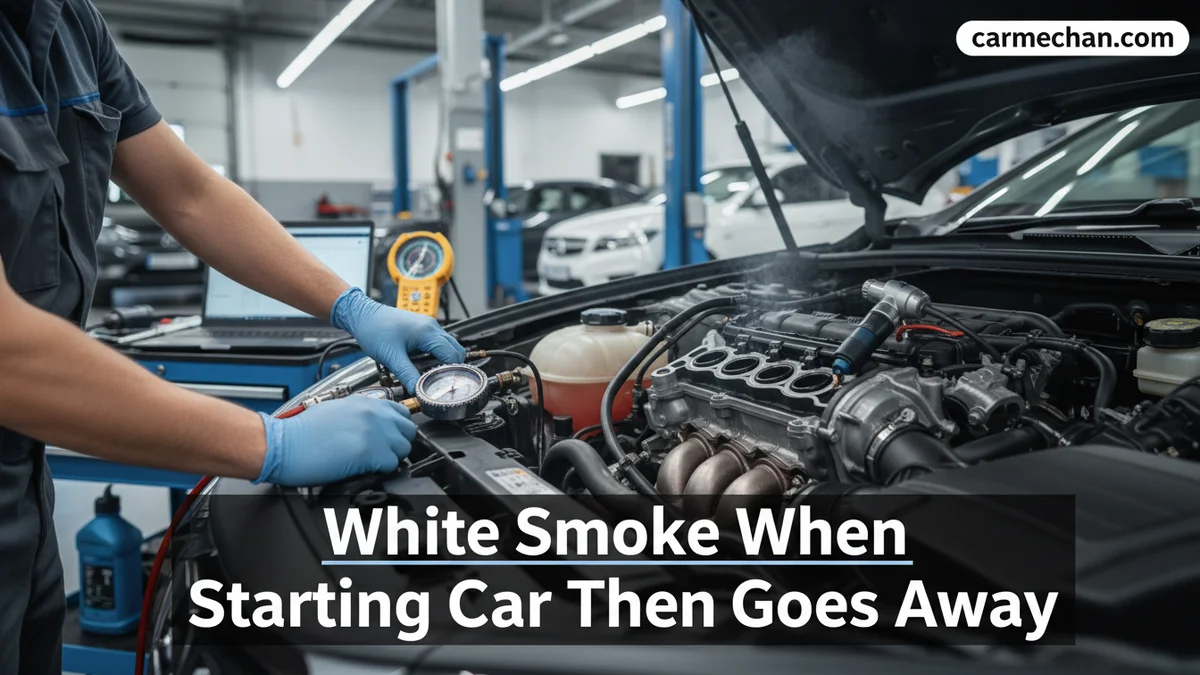
Visual Characteristics
Normal white exhaust is thin and dissipates quickly, almost like steam from a kettle. This is particularly noticeable during cold weather starts. The thin, wispy white ‘smoke’ seen on cold mornings is often just water vapor. Up to 30% of exhaust on cold days is water vapor, a common observation in the automotive industry [external_link_EPA_exhaust_data].
Conversely, problematic white smoke tends to be thicker and more persistent, lingering in the air. It might resemble a cloud and doesn’t dissipate rapidly. This thicker smoke suggests something other than water vapor is burning.
Olfactory Clues
The smell of the exhaust is a significant diagnostic indicator. Harmless condensation has no distinct odor or a very faint, natural exhaust smell. This indicates that only water vapor and combustion byproducts are being expelled.
However, if the white smoke has a sweet, maple syrup-like odor, it’s a strong sign of burning coolant. Sweet-smelling smoke is a strong indicator of burning coolant, due to the chemical properties of ethylene or propylene glycol when burned [external_link_chemical_safety_journal]. An acrid, chemical smell could point to other burning fluids or engine issues.
An oil smell might also be present if oil is inadvertently mixing into the combustion.
Persistence Factors
Normal condensation-induced white smoke disappears as the engine warms up, typically within a few minutes of driving. As the exhaust system heats, the water vapor quickly evaporates and stops being visible. This transient nature is a key indicator of a healthy engine system.
If the white smoke persists even after the engine has reached operating temperature, or if it consistently reappears after short drives, it’s a cause for concern. Persistent smoke suggests a continuous leak or problem that isn’t resolving with heat. This could indicate a serious internal engine fault.
Understanding these initial distinctions helps you decide if further investigation is needed, which brings us to the most common reasons your car might be producing white smoke at startup.
5 Most Common Reasons Your Exhaust Blows White Smoke
Recommended Best Deal Products


Several issues can lead to white smoke from your car’s exhaust, ranging from benign to severe. Pinpointing the exact cause requires careful observation and sometimes professional diagnosis. We detail the most frequent culprits below.
Simple Condensation Buildup
This is the most common and harmless reason for white smoke. When your car sits overnight, especially in colder temperatures, water vapor from the atmosphere condenses inside the exhaust system. Upon startup, the hot exhaust gases vaporize this water, creating visible steam that exits the tailpipe.
It dissipates quickly as the exhaust system heats up and dries out. This process is entirely normal and indicates a healthy engine system.
Damaged Head Gasket Leaks
A blown or compromised head gasket is a serious issue. The head gasket seals the combustion chambers and prevents engine coolant and oil from mixing. If it fails, coolant can leak into the combustion chambers. When ignited, this coolant burns, producing thick, sweet-smelling white smoke.
The smoke might be more noticeable at startup as cold engine components can widen small cracks, and then reduce as parts expand from heat, temporarily sealing the leak.
Cracked Cylinder Head Issues
Similar to a blown head gasket, a cracked cylinder head allows coolant to enter the combustion chambers or exhaust ports. Cracks often develop due to overheating or thermal stress. The burning coolant generates white smoke, often accompanied by coolant loss without any external leaks. The visibility of the smoke can vary, sometimes appearing more prominent when the engine is cold and less so when it’s hot and expanded.
Intake Manifold Gasket Breach
The intake manifold gasket seals the intake manifold to the cylinder head. On some engines, coolant also flows through the intake manifold to warm the incoming air. If this gasket fails, coolant can be drawn into the combustion chambers. This results in white smoke, particularly at startup or under certain engine loads.
The smoke may disappear once the engine is warm, as components expand and temporarily seal minor leaks, or as small amounts of coolant burn off.
Failing Turbocharger Seals
If your vehicle has a turbocharger, worn seals within the turbo can allow engine oil to leak into the exhaust side of the turbine. While burning oil typically produces blue smoke, sometimes it can appear whitish, especially if it’s a small amount mixing with exhaust gases or if it’s coolant-contaminated.
The smoke might be most visible at startup or under acceleration, gradually diminishing as the engine runs. This issue warrants prompt attention to prevent further turbo damage and potential engine problems.
Identifying the potential cause is the first step; next, we’ll explore how you can effectively diagnose the specific source of the smoke.
How to Diagnose Your Car’s White Smoke Problem in 6 Steps
Performing a systematic diagnosis can help you pinpoint the exact cause of white exhaust smoke. These steps can be performed by most drivers, ensuring safety is always your top priority.

Observe Smoke Visually
Start your car on a cold morning and carefully watch the exhaust for a few minutes. Note the color, thickness, and how quickly the smoke dissipates. If it’s thin and disappears within 5-10 minutes, especially in cold weather, it’s likely normal condensation. If it’s thick, persistent, or cloudy, you likely have an issue.
Observe any changes as the engine warms up.
Conduct a Smell Test
Carefully smell the exhaust fumes while the car is running. Avoid direct inhalation. If it smells sweet, like maple syrup or candy, this is a very strong indicator of burning coolant. A strong, acrid, or oily smell suggests other fluids are being burned. No distinct smell beyond typical exhaust fumes points toward harmless water vapor.
Check Fluid Levels
With the engine off and cooled, check your coolant reservoir level. If it’s consistently low, but you see no external leaks, coolant is likely burning internally. Also, check your engine oil dipstick. Look for a milky or frothy appearance, which indicates coolant contamination in the oil. This suggests a significant internal leak, possibly a bad head gasket.
Inspect Engine Components
Visually inspect the engine bay for any signs of leaks. Look for coolant stains around the cylinder head, intake manifold, or turbocharger connections. Check under the oil filler cap for milky residue, another sign of coolant mixing with oil. A careful inspection might reveal the source of a small external or internal leak.
Perform Compression Test
This step usually requires specialized tools and some mechanical knowledge, or a mechanic. A compression test measures the pressure within each cylinder. Uneven or low compression in one or more cylinders can indicate a blown head gasket or a cracked cylinder head, as combustion gases or fluids might be leaking past the seal.
For detailed instructions, review our guide to engine compression tests.
Consider Professional Tools
If home diagnosis is inconclusive, a mechanic can use tools like an exhaust gas analyzer to detect coolant in the exhaust stream, or a leak-down test for pinpointing cylinder leakage. They can also use a cooling system pressure tester to identify leaks that only show under pressure. These advanced diagnostics offer precise results and help prevent misdiagnosis.
Once you have a clearer picture of the issue, knowing when to take decisive action becomes critical for your car’s health and your wallet.
When to Seek Professional Help for Engine Smoke
Recommended Best Deal Products


While some white smoke can be harmless, certain symptoms demand immediate professional attention to prevent further engine damage. Ignoring critical warning signs can lead to more extensive and costly repairs.
Persistent Smoke Appearance
If the white smoke persists for more than 10-15 minutes after a cold start, or if it appears consistently regardless of engine temperature, it’s not normal condensation. This indicates a continuous issue with burning fluids, requiring a mechanic’s assessment. Our troubleshooting guide for persistent engine issues further details signs to watch for.
Sweet Smell or Discoloration
Any sweet smell accompanying the white smoke is a red flag for burning coolant. Additionally, if the white smoke has a bluish or grayish tint, it may indicate burning oil, which also needs professional diagnosis. These smells are distinct and signify a failure in an engine component.
Engine Overheating Signs
An engine that is frequently overheating, even mildly, paired with white exhaust smoke, strongly suggests a coolant leak into the combustion system. Overheating can cause irreversible damage to engine components, making immediate attention vital. Consult our comprehensive article on engine overheating causes for more information.
Rapid Fluid Level Drops
If you find yourself frequently topping off your coolant reservoir, yet see no external leaks, it’s highly probable that coolant is being consumed internally. This rapid consumption is often linked to a head gasket or cylinder head problem, necessitating a mechanic’s inspection. For tips on monitoring your car’s health, visit our engine maintenance blog.
Performance Declines
Noticeable changes in your car’s performance, such as misfires, reduced power, rough idling, or difficulty starting, when accompanied by white smoke, point to a serious internal engine problem. These symptoms suggest compromise to the engine’s core function. For more insights on engine performance, review our engine performance optimization tips.
Dashboard Warning Illumination
Any dashboard warning lights related to engine temperature, coolant levels, or “Check Engine” light, when coincident with white smoke, indicate a critical issue. These warnings are the car’s internal diagnostics signaling a problem that needs expert intervention. A professional scan tool can read these codes for precise diagnosis.
Understanding when to call a mechanic naturally leads to concerns about the financial implications, so let’s look at typical repair costs.
What Is the Average Cost to Fix White Exhaust Smoke
Repairing the cause of white exhaust smoke can range widely in cost, depending on the underlying problem and your vehicle. These figures are estimates for 2026 and can vary based on your location, vehicle make/model, and the mechanic’s labor rates.
Head Gasket Replacement Costs
This is one of the more common and costly repairs for persistent white smoke. Head gasket replacement can typically cost between $1,000 and $2,500 depending on the engine type and labor rates [external_link_RepairPal_head_gasket_cost]. Factors like engine complexity (e.g., V6 vs. inline-4) and whether cylinder head machining is needed will affect the final price.
Our analysis of head gasket repair costs from RepairPal provides further detail.
Cylinder Head Repair Expenses
If a cracked cylinder head is the culprit, repairs can be significant. Cylinder head repairs, if needed, might add another $500 to $2,000 to the total, depending on the damage [external_link_KBB_repair_estimates]. Sometimes, a full cylinder head replacement is necessary, which can push costs higher, especially for specialized or performance engines. Kelly Blue Book’s repair estimates also align with these ranges.
Turbocharger System Repairs
For vehicles with turbochargers, failing seals can lead to white smoke. Turbocharger replacement can be one of the most expensive repairs, potentially costing $1,500 to $4,000 or more [external_link_Edmunds_turbo_costs]. This cost includes the turbo unit itself and the labor involved, which can be extensive depending on its accessibility. You can find more information on turbocharger repair costs on Edmunds.
Intake Manifold Gasket Prices
This repair is generally less expensive than head gasket or cylinder head work. Replacing an intake manifold gasket is generally less costly, usually ranging from $300 to $700 [external_link_local_mechanic_quotes]. The variation depends on the engine design and how much labor is required to access the gasket. Our guide to gasket replacement offers DIY tips for minor cases.
Diagnostic Fees Variation
Before any repair, a mechanic will charge a diagnostic fee to accurately pinpoint the problem. These fees typically range from $75 to $150 [external_link_automotive_service_council]. While these might be waived if you proceed with repairs at the same shop, they cover the mechanic’s time and use of specialized diagnostic equipment.
With this comprehensive understanding of white smoke from your car’s exhaust, you’re better equipped to address any concerns you might have.
Your Next Steps for Car Exhaust Smoke
Seeing white smoke from your car’s exhaust, even if it quickly disappears, is something every driver should pay attention to. We’ve explored the crucial difference between harmless condensation and serious engine problems, emphasizing the importance of visual cues, smells, and persistence. By understanding these distinctions, you can approach the issue with informed confidence.
We’ve also outlined actionable steps for self-diagnosis, from checking fluid levels to visual inspections. safety always comes first when working with your vehicle. If your observations point to more than simple steam, or if you notice accompanying symptoms like a sweet smell, overheating, or rapid fluid loss, it’s time to consult a qualified mechanic.
Taking prompt action, especially for problems like a blown head gasket, can save you from more extensive damage and higher repair costs down the line. Use this guide to empower your decisions, ensuring your vehicle remains reliable and safe for the road ahead in 2026.
5 Important Questions About White Exhaust Smoke
Is White Smoke From Exhaust Always Bad?
No, thin, wispy white smoke that quickly disappears, especially on cold starts, is usually normal condensation or steam. This is common as the exhaust system warms up, converting water vapor into a visible mist. It only indicates an issue if it’s thick, persistent, or has a distinct smell.
How Can I Tell If It’s Steam or Coolant?
Steam is thin, odorless, and dissipates rapidly, particularly in cold weather. Coolant smoke, however, is typically thicker, more persistent, and often has a distinctive sweet, maple syrup-like smell. Check your coolant levels for unexplained drops, as this is a strong indicator of a leak.
Can a Bad PCV Valve Cause White Smoke?
Yes, in some cases, a faulty PCV (Positive Crankcase Ventilation) valve can contribute to excessive oil consumption, which might result in bluish-white smoke. While more commonly associated with blue smoke, severe oil burning can sometimes appear whitish, particularly if it’s a small amount. This issue requires proper diagnosis.
How Much Does It Cost to Fix a Blown Head Gasket?
The cost to fix a blown head gasket varies significantly but typically ranges between $1,000 and $2,500. This depends on your vehicle’s make, model, engine type, and local labor rates. The repair is labor-intensive, often requiring extensive engine disassembly and precise reassembly. Always get a detailed quote.
Should I Drive My Car If It’s Blowing White Smoke?
It depends on the type of smoke. If it’s normal steam, driving is fine. If it’s thick, persistent, or sweet-smelling, driving could lead to severe engine damage, like hydrolock or overheating, which can destroy the engine. It’s best to have it inspected by a mechanic as soon as possible.