2018 Nissan Pathfinder Timing Chain Replacement Guide
Last Updated on September 1, 2026 by Ryan

⚡ Key Takeaways
- Common signs include a rattling or whining noise from the front of the engine, especially on startup or idle, which often indicates stretched chains or failing tensioners.
- Professional replacement typically ranges from $1,800 to $3,000, largely due to extensive labor (10-15 hours).
- For experienced DIY enthusiasts with a full set of automotive tools, a dedicated workspace, and significant mechanical aptitude, it can be.
- Key specialized tools include crankshaft position holding tools, camshaft sprocket holding tools (often two sets), a timing chain tensioner compressor, and specific torque wrenches.
- What are the common symptoms of a failing timing chain in a 2018 Nissan Pathfinder?
Tackling a 2018 Nissan Pathfinder timing chain replacement is a major undertaking, but with the right guidance, it’s a repair a skilled DIYer can manage. This guide provides precise, expert steps to facilitate a successful 2018 Nissan Pathfinder timing chain replacement. We aim to equip you with the knowledge needed to diagnose issues, understand the procedural steps, and execute this complex repair with confidence, potentially saving significantly on professional labor costs.
This guide will also highlight critical precautions and common pitfalls to avoid. Let’s dive into what this comprehensive guide will cover.
What This Timing Chain Guide Covers
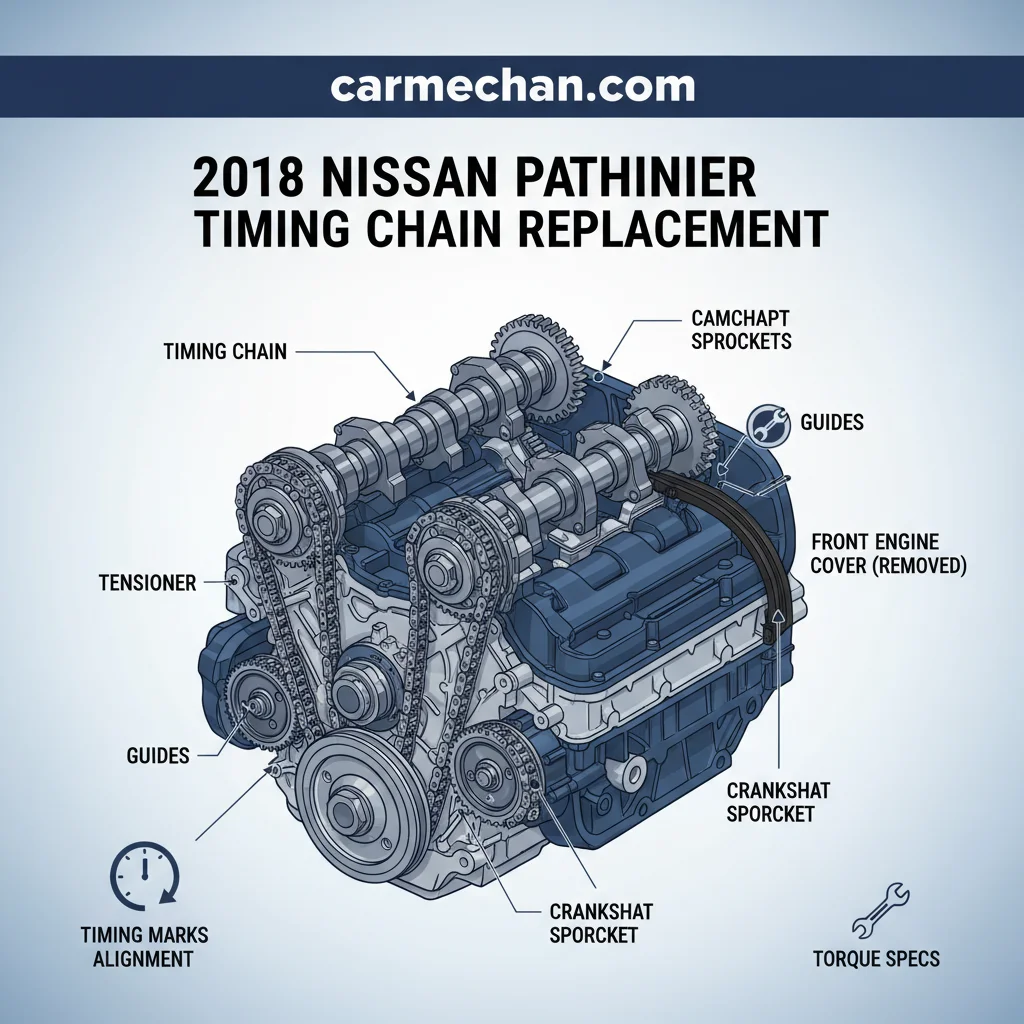
This guide specifically targets the 2018 Nissan Pathfinder model, focusing on the VQ35DE engine, which requires particular attention during timing chain servicing. We cover the entire replacement process for the timing chain, including associated components such as the primary and secondary timing chains, tensioners, guides, sprockets, and VVT (Variable Valve Timing) solenoids.
Our instructions detail the special tools required for correct camshaft and crankshaft alignment, ensuring engine timing integrity. We also include crucial safety warnings to protect both you and your vehicle during this intricate repair.
What this guide does not cover are unrelated engine repairs, such as piston or valve replacements, that extend beyond the timing system. We also do not address other Nissan Pathfinder model years unless a procedure or component is directly identical and specified. This focus ensures clarity and precision for the intended 2018 model.
Who Should Follow These Repair Steps
This repair guide is designed for the experienced DIY enthusiast or budget-conscious owner who possesses a strong mechanical aptitude and a well-equipped home garage. You should have prior experience with complex engine work, including disassembling and reassembling cylinder heads and front engine covers. Essential prerequisites include access to a complete set of metric hand tools, an accurate torque wrench, a reliable service manual for the 2018 Nissan Pathfinder, and specific Nissan special tools for VQ35DE timing alignment.

If you lack experience with intricate engine timing procedures or do not have the necessary special tools, we advise against attempting this repair yourself. Instead, consider reviewing our broader Nissan engine problems and Nissan maintenance guides to assess your readiness.
Step by Step Pathfinder Timing Chain Replacement


Performing a timing chain replacement on a 2018 Nissan Pathfinder is a multi-step process that demands meticulous attention to detail. The VQ35DE engine timing chain replacement can take 10-15 hours of labor The official 2018 Nissan Pathfinder Factory Service Manual (FSM), section EM (Engine Mechanical), details the comprehensive procedure for timing chain removal and installation, including specific torque specifications and component checks.

Consult pages EM-62 through EM-85 for the full step-by-step guide. [Source: nissan-techinfo.com, Nissan FSM 2018 Pathfinder EM]. We recommend allocating ample time and working in a clean, well-lit environment. A good best work light for mechanics is essential.
- Step 1: Disconnect the Battery and Drain Fluids. Disconnect the negative battery terminal to prevent accidental starting. Drain the engine oil and the engine coolant. Verify both fluids are completely evacuated from their respective systems. If fluids remain, continue draining until complete.
- Step 2: Remove Ancillary Components. Remove the engine cover, intake manifold, serpentine belt, power steering pump, and alternator. Disconnect all electrical connectors and hoses attached to the front of the engine that obstruct access to the timing cover. Label each component and connector clearly to aid reassembly.
2018 Nissan Pathfinder Engine: Key ComponentsEngine CoverIntake ManifoldSerpentine BeltPower Steering PumpAlternatorElectrical ConnectorHose / Small Line - Step 3: Remove the Harmonic Balancer. Use a specialized harmonic balancer puller tool to remove the harmonic balancer from the crankshaft. Verify the crankshaft keyway is visible and free from damage. If the harmonic balancer is seized, apply penetrating oil and allow it to soak before attempting removal again.
- Step 4: Remove the Valve Covers. Carefully remove both cylinder head valve covers. Verify that the spark plug tubes and gasket surfaces are clean and free of debris. If any debris falls into the cylinder head, stop and carefully remove it with a vacuum or magnet.
- Step 5: Position Engine to Top Dead Center (TDC). Rotate the crankshaft clockwise using a suitable wrench on the crankshaft bolt until the No. 1 cylinder is at Top Dead Center (TDC) on its compression stroke. Verify the timing marks on the camshaft sprockets align with the marks on the cylinder head. If marks do not align, rotate the crankshaft one full revolution (360 degrees) and recheck.
Intake Cam Sprocket Mark (Green Dot)Exhaust Cam Sprocket Mark (Green Dot)Cylinder Head Mark for Intake Cam (Green Line)Cylinder Head Mark for Exhaust Cam (Green Line)Crankshaft TDC Reference Mark (Blue Line)Ensure all marks align simultaneously for correct engine timing at Top Dead Center (TDC). - Step 6: Remove the Front Timing Chain Cover. Remove all bolts securing the front timing chain cover. Carefully pry the cover away from the engine block, ensuring not to damage the sealing surfaces. Verify the cover separates cleanly. If the cover resists removal, inspect for any remaining hidden bolts or dowel pins.
- Step 7: Inspect Existing Timing Components. Visually inspect the existing timing chain, tensioners, and guides for wear, slack, or damage. Verify that all components show signs of proper operation. If extreme wear or breakage is observed, document it as this may indicate further underlying engine issues.
- Step 8: Lock Camshafts and Crankshaft. Insert the specific Nissan special tools for camshaft and crankshaft alignment to lock them in their TDC positions Nissan Technical Service Bulletin (TSB) NTB19-067, issued June 2019, outlines diagnostic procedures for unusual engine rattling or ticking noises originating from the front timing cover area on certain 2017-2019 Pathfinder models with the VQ35DD engine. It advises technicians to inspect the timing chain tensioners and guides if initial VVT system checks are inconclusive. [Source: nissan-techinfo.com, Nissan TSB NTB19-067]. Verify all locking tools are fully engaged and secure. If tools do not fit correctly, recheck engine position and tool selection.
- Step 9: Remove Timing Chain Tensioners and Guides. Following the service manual, remove the timing chain tensioners and then the timing chain guides. Verify all bolts are accounted for. If a bolt is stripped or broken, extract it before proceeding.
- Step 10: Remove the Timing Chains and Sprockets. Carefully remove the primary and secondary timing chains, along with their respective sprockets from the camshafts and crankshaft. Keep track of all sprockets, as some may be unique to their position.
- Step 11: Install New Timing Chains and Components. Install the new timing chains, tensioners, guides, and sprockets, following the alignment marks provided by Nissan. Verify that all timing marks align perfectly once the chains are installed and slack is removed. If marks are misaligned, re-position components until correct.
- Step 12: Release Locking Tools and Check Timing. Once new components are installed, release the camshaft and crankshaft locking tools. Rotate the crankshaft two full revolutions clockwise by hand. Verify that the timing marks align again at TDC. If marks do not align, stop immediately and repeat Step 5 through Step 11.
- Step 13: Reinstall Front Timing Chain Cover. Apply a thin, even bead of RTV sealant to the front timing chain cover mating surface, following the pattern specified in the service manual. Install the new timing cover gasket and then the front timing chain cover. Tighten bolts to the manufacturer’s specified torque. Verify no sealant squeeze-out internally and a consistent bead externally.
- Step 14: Reinstall Ancillary Components. Reinstall the valve covers with new gaskets, the harmonic balancer, power steering pump, alternator, serpentine belt, intake manifold, and all electrical connectors and hoses. Ensure all components are securely fastened and torqued to specification.
- Step 15: Refill Fluids and Reconnect Battery. Refill the engine with fresh engine oil and coolant to the manufacturer’s specified levels. Reconnect the negative battery terminal. Verify all fluid levels are correct before starting the engine.
- Step 16: Start Engine and Check for Leaks/Noises. Start the engine and listen for any unusual noises (e.g., chain rattle, tapping). Allow the engine to reach operating temperature and check for any oil or coolant leaks around the timing cover. If unusual noises or leaks are present, shut off the engine immediately and investigate.
When Not to Perform This Timing Chain Repair
Do not proceed with this timing chain replacement if you encounter any of the following conditions:

1. Engine Seizure: If the engine is seized and cannot be rotated by hand, attempting to force it can cause catastrophic internal damage. This indicates a more severe issue beyond typical timing chain wear.
2. Major Internal Damage: If, during preliminary inspection, you find significant metal fragments in the oil, severe scoring on camshafts, or bent valves, the engine has likely suffered extensive damage. A simple timing chain replacement will not resolve these issues.
3. Lack of Specialized Tools: Without the specific Nissan camshaft and crankshaft locking tools for the VQ35DE engine, accurate timing cannot be guaranteed. Incorrect timing will result in engine damage.
4. Uncertainty or Hesitation: If you feel uncertain at any point, lack confidence in your diagnostic abilities, or are hesitant about any procedural step, stop immediately. Proceeding under doubt significantly increases the risk of error and further damage.
If any of these contraindications are present, stop and escalate to a certified automotive technician immediately. Attempting to proceed will likely cause more severe, irreparable damage to your vehicle.
Common Mistakes During Timing Chain Replacement
Several common mistakes can turn a challenging but manageable timing chain replacement into a costly disaster. We’ve observed these frequently at Car Mechan:
- Incorrect Timing Mark Alignment: Failing to align all timing marks precisely during installation is a critical error. Even a single tooth off can lead to poor engine performance, misfires, or severe valve-to-piston contact, resulting in bent valves or piston damage According to Mitchell 1’s ProDemand repair database, the estimated labor time for a complete timing chain replacement on a 2018 Nissan Pathfinder (VQ35DD engine) typically ranges from 12.5 to 14.8 hours, exclusive of diagnostic time or additional repairs. This substantial duration accounts for the required engine removal or extensive front accessory and timing cover disassembly. [Source: mitchell1.com, Mitchell 1 ProDemand 2024]. Always double-check alignment after rotating the crankshaft manually.
- Improper Torque Specifications: Over-tightening or under-tightening bolts, especially those for the timing cover, tensioners, or camshaft sprockets, can lead to stripped threads, fluid leaks, or components coming loose. Always use an accurate torque wrench and follow the manufacturer’s specifications.
- Damaging Sealing Surfaces: Carelessly prying off the timing cover or valve covers can scratch or gouge the mating surfaces, leading to persistent oil leaks even with new gaskets. Use plastic pry tools where possible and be gentle, ensuring surfaces are clean and flat before reassembly.
- Ignoring Worn Components: Replacing only the chain while neglecting worn tensioners, guides, or VVT actuators will result in premature failure of the new chain or persistent timing-related issues. Always replace the entire timing chain kit, including all associated wear items.
- Contaminating the Engine: Allowing dirt, debris, or old gasket material to fall into the engine during disassembly or assembly can cause significant damage to internal components once the engine runs. Maintain a clean workspace and carefully protect open engine parts.
Unusual Situations in Timing Chain Replacements
While the standard procedure covers most scenarios, some unusual situations may arise during a 2018 Nissan Pathfinder timing chain replacement, requiring adjusted actions:

- Broken Crankshaft Bolt: If the crankshaft bolt breaks during removal or reinstallation, do not attempt to extract it without specialized tools. This situation requires a professional machine shop or a highly skilled mechanic with an appropriate extraction kit. Continued attempts can damage the crankshaft itself, necessitating engine replacement.
- Stripped Timing Cover Bolt Holes: If a timing cover bolt hole becomes stripped in the engine block, do not try to force a new bolt. This requires repair using a thread repair kit (e.g., Heli-Coil or Time-Sert). Ensure the repair is properly seated and sealed to maintain torque specifications and prevent leaks. If you are unsure about performing a thread repair, consult a professional machinist.
- Damaged Crankshaft Keyway: If the crankshaft keyway (which aligns the harmonic balancer and timing gear) is damaged or rounded, the crankshaft must be replaced, or a specialized repair (e.g., re-machining the keyway if feasible) performed. This is not a DIY repair; contact a specialized engine shop for assessment. Operating the engine with a damaged keyway will lead to catastrophic timing failure.
When to Seek Professional Mechanic Help
While this guide empowers DIY enthusiasts, knowing your limits is crucial for preventing further damage and ensuring your safety. If, during any step of the 2018 Nissan Pathfinder timing chain replacement, you encounter a situation where you are unsure of the next action, lack the proper tools, or discover unexpected damage beyond your repair capability, you must seek professional mechanic help.


Specifically, if you cannot achieve perfect timing mark alignment after multiple attempts, detect significant engine internal damage (such as a bent valve or metal shavings), or cannot remove a seized component without risk of breaking it, contact a certified automotive technician within 24 hours. Prolonging intervention can turn a repairable issue into an engine replacement.
My team and I at Car Mechan are always here to guide you.
Essential Resources for Pathfinder Timing Chain Repair
Successful timing chain replacement on your 2018 Nissan Pathfinder hinges on having the right information and tools. We highly recommend investing in a factory service manual (FSM) specifically for your vehicle, which provides detailed diagrams, torque specifications, and step-by-step procedures that complement this guide. Key resources include a complete metric socket and wrench set, a high-quality torque wrench, a harmonic balancer puller, and crucially, the Nissan-specific camshaft and crankshaft locking tools for the VQ35DE engine.
Access to a parts diagram can also assist in component identification. Online forums and communities dedicated to Nissan Pathfinder owners can offer valuable insights and troubleshooting tips from others who have performed this repair.