Car Clicks Once When Trying To Start Car Clicks Once 2026
Last Updated on September 1, 2026 by Albert Duke
When your car clicks once and refuses to start, it typically points to an issue within the starting system, most commonly a weak battery, a faulty starter motor, or loose connections. Effectively diagnosing the root cause involves systematic checks of your battery, cables, and starter components.

Prime for Young Adults — 6 Months Free
Students and 18–24s get six months of Prime free, then half price.
Start 6 Months FreeWhen your car clicks once when trying to start, but fails to ignite, it signals a specific problem within your vehicle’s essential starting system. This frustrating single click often indicates a crucial electrical or mechanical hiccup preventing your engine from turning over. It can leave you feeling stranded and unsure of the next step.
You are not alone; this is a common issue many drivers face. Fortunately, most causes can be diagnosed and often resolved with clear, systematic troubleshooting. This comprehensive guide will empower you with the knowledge to identify the problem, perform immediate fixes, and understand when professional assistance is necessary.
By the end of this article, you will have a clear roadmap to address your car’s single click issue in 2026, getting you back on the road safely and efficiently.
Key Takeaways
Recommended Best Deal Products


- A single click often means low power or a bad starter.
- Always check battery terminals and charge first.
- Specific DIY fixes like jump starting can often work.
- Professional help is needed for complex electricals.
- Regular maintenance prevents future starting issues.
7 Most Common Reasons Your Car Clicks Once
When your car only makes a single click and refuses to start, several common culprits are usually at play, pointing to specific issues within the electrical and starting system.

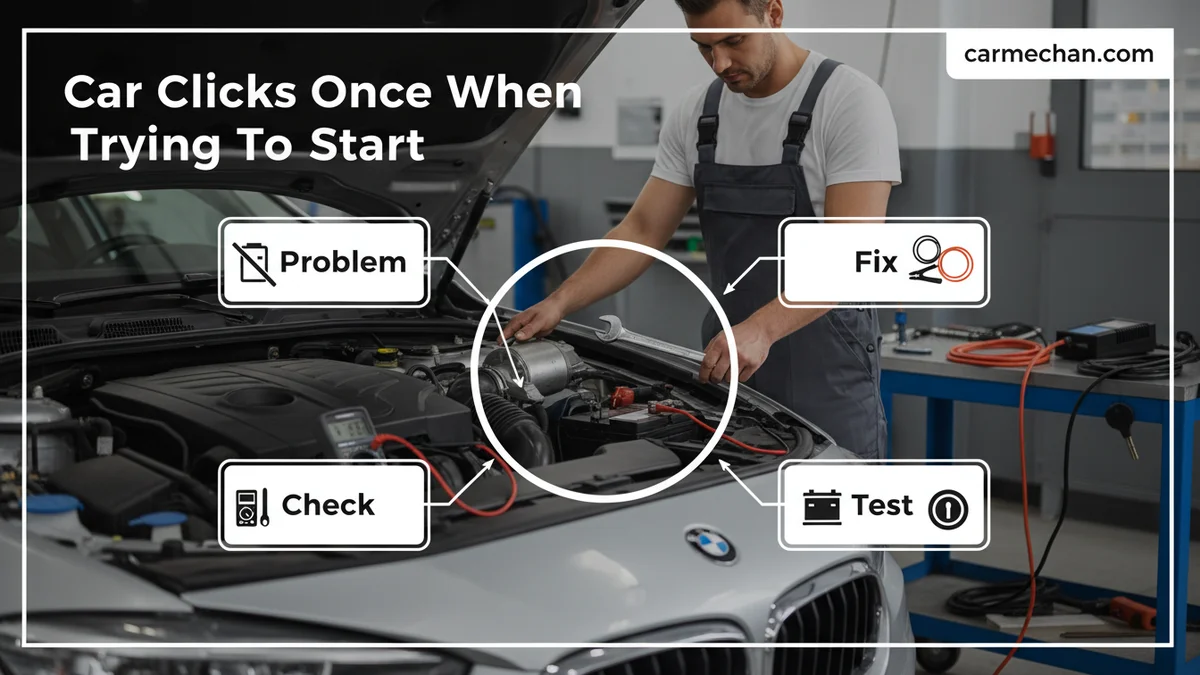
Weak Battery Power
A weak or dead battery is the most frequent cause of a car clicking once and failing to start. When your battery lacks sufficient charge, it cannot deliver the high amperage required to crank the engine. The single click you hear is often the starter solenoid attempting to engage but failing due to insufficient power.
This is common if accessories were left on or the battery is simply old.
Car batteries typically last 3-5 years.
Corroded Battery Terminals
Corrosion on your battery terminals acts as an insulator, preventing a good electrical connection between the battery and the car’s electrical system. Even a fully charged battery cannot transmit power effectively through corroded connections. This leads to a power drop at the starter, resulting in only a single click when you attempt to start your vehicle.

Audible — Listen Free for 30 Days
One free credit a month and thousands of titles included.
Listen Free for 30 DaysFailing Starter Motor
The starter motor is responsible for turning the engine to initiate combustion. If the starter motor itself is failing internally, it might receive power but be unable to complete its task. A single click can indicate the starter solenoid activating, but the motor windings or gears are faulty, preventing the engine from turning.
Stuck Starter Solenoid
The starter solenoid is an electromagnet that pushes the starter motor’s pinion gear into the flywheel and completes the circuit to spin the motor. If the solenoid is sticking or has internal electrical problems, it might only make a single click as it tries to engage but fails to send power to the starter motor.
This can happen due to wear and tear over time.
Loose Battery Cables
Loose battery cables, whether at the battery terminals or where they connect to the starter motor or ground, can interrupt the flow of electricity. A loose connection causes resistance, reducing the voltage and amperage reaching the starter. This often manifests as a single click when you try to start, as the starter receives some power but not enough to fully engage.
Faulty Ignition Switch
The ignition switch sends the signal to the starter solenoid when you turn the key. If this switch is faulty, it might not consistently send the full voltage signal. This can lead to the starter solenoid only clicking once as it receives an intermittent or weak command, insufficient to activate the starter motor completely.
Bad Neutral Safety Switch
Automatic transmission vehicles have a neutral safety switch that prevents the car from starting in any gear other than Park or Neutral. Manual transmission vehicles have a clutch safety switch that requires the clutch pedal to be fully depressed. If this safety switch malfunctions, it will cut power to the starter, resulting in a single click or no response at all, making you think the car is in the wrong gear even when it is not.
With a clear understanding of these potential causes, let’s explore how you can systematically diagnose which one is affecting your vehicle.
How to Systematically Diagnose Clicking Sounds
Diagnosing a car that clicks once requires a systematic approach to pinpoint the exact problem, moving from the simplest checks to more specific component tests.
Inspect Battery Visuals
Begin by visually inspecting your car battery. Look for any signs of physical damage, such as cracks, swelling, or leaks. Check the battery terminals for corrosion, which often appears as a white or bluish powdery substance. Ensure the battery cables are securely fastened to the terminals and are not loose or frayed.
Audible Premium Plus — Annual Membership
12 audiobook credits up front, plus the full Audible catalogue.
See Annual PlansA clean, tight connection is vital for proper power transfer.
Test Battery Voltage
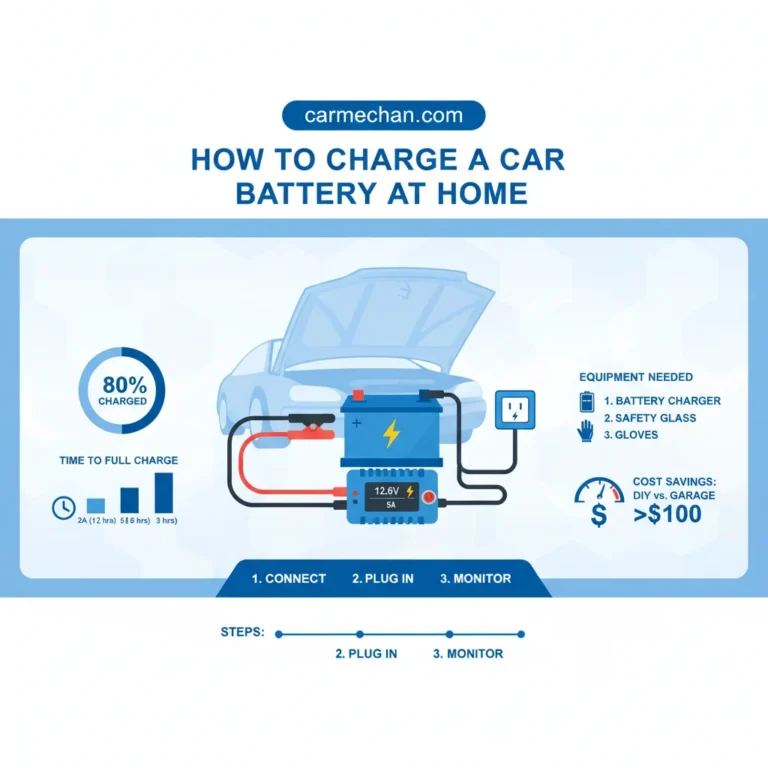
Use a multimeter to test your battery’s voltage. Set the multimeter to DC volts. Connect the red lead to the positive battery terminal and the black lead to the negative terminal. A healthy, fully charged car battery should read around 12.6 to 12.8 volts. If the reading is significantly lower (e.g., below 12.4 volts), your battery is likely undercharged or weak.
A reading below 12.0 volts indicates a discharged battery that needs charging or replacement.
Check Cable Connections
Beyond the battery terminals, trace the positive battery cable to the starter motor and the negative cable to its ground connection on the engine block or chassis. Ensure all these connections are tight and free of corrosion or damage. Loose or corroded connections anywhere in this circuit can impede power flow and cause the single click symptom.
Gently try to wiggle each connection to check for looseness.
Locate Starter Motor
The starter motor is typically a cylindrical component mounted near the engine block, often on the driver’s side or under the engine. It will have a thick positive cable from the battery and a smaller wire from the ignition switch. Knowing its location is essential for further diagnosis or potential tapping.
Consult your vehicle’s owner’s manual or an online diagram if you are unsure of its exact placement.
Test Starter Solenoid
If you suspect the starter solenoid, a simple test involves bypassing the ignition switch (use caution). With the transmission in Park/Neutral and parking brake set, locate the starter. Briefly touch a screwdriver across the two large terminals on the solenoid (the main power input and the starter motor output).
If the starter motor spins, your solenoid or ignition switch might be faulty. If there’s no response, the starter motor itself or the main power cable is likely the issue. Always wear safety glasses and gloves for this test.
Once you’ve identified the likely cause through diagnosis, it’s time to explore the quick DIY fixes that might get you back on the road.
Quick Fixes for a Car That Clicks Once
If your car clicks once and won’t start, several quick DIY fixes can often resolve the issue, especially for common problems like a dead battery or loose connections.
Successfully Jump Start
A jump start is often the quickest solution for a weak or dead battery. Position a working vehicle close enough for jumper cables to reach both batteries. Connect the red positive cable to the positive terminal of the dead battery, then to the positive terminal of the working battery.
Connect the black negative cable to the negative terminal of the working battery, then to an unpainted metal surface on the engine block of the disabled car, away from the battery. Start the working car and let it run for a few minutes before trying to start your car.
Always remove cables in reverse order after starting your car.
Clean Battery Terminals
If you see corrosion on your battery terminals, disconnect both cables (negative first, then positive). Use a wire brush or a battery terminal cleaning tool with a baking soda and water mixture to scrub away all corrosion from the terminals and cable clamps. Rinse with clean water and dry thoroughly.
Reconnect the cables tightly, positive first, then negative. This restores a clean, efficient electrical connection.
Tap Starter Motor Gently
If your starter motor is failing or the solenoid is sticking, a gentle tap can sometimes free it. Locate the starter motor. With a hammer or a wrench extension, tap the starter motor a few times firmly but not excessively hard. This can dislodge a stuck solenoid or brushes within the motor.
After tapping, try starting the car again. This is a temporary fix, indicating a need for starter replacement soon.
Wiggle Battery Cables
If your battery cables are loose, wiggling them can sometimes temporarily re-establish a connection. Gently rock the cables at the battery terminals and at the starter motor connection. This might create enough contact to allow power to flow for a single start. However, this is a clear sign that the cables need to be tightened properly with a wrench as soon as possible.
Confirm Gear Selection
For automatic transmissions, ensure your car is firmly in Park or Neutral. Sometimes, the shifter might be slightly out of position, preventing the neutral safety switch from engaging. For manual transmissions, ensure the clutch pedal is fully depressed. Wiggle the shifter or press the clutch pedal repeatedly to confirm the safety switch is engaged.
This can sometimes solve issues related to a faulty safety switch or improper engagement.
While these DIY solutions can be lifesavers, there are instances where professional intervention becomes absolutely necessary.
When to Call a Mechanic for a Single Click
Despite your best DIY efforts, some ‘single click, no start’ situations demand the expertise of a professional mechanic.
Persistent Clicking Failure
If you’ve tried jump-starting, cleaning terminals, and even tapping the starter, but your car still only produces a single click, it’s time to call for professional help. Persistent failure indicates a deeper problem beyond simple battery or connection issues. A mechanic has specialized tools to test components more thoroughly and identify hidden electrical faults.
Complex Electrical Issues
Modern vehicles have complex electrical systems. If the issue is rooted in the ignition switch itself, wiring harnesses, or the car’s computer (ECU), these problems require advanced diagnostic equipment and expertise. Attempting to fix these without proper knowledge can lead to further damage. A single click could signal issues that are not immediately obvious without professional assessment.
Starter Motor Replacement
If diagnostics confirm a failing starter motor or solenoid, replacement is typically required. While some experienced DIYers might tackle this, it often involves working in tight spaces, disconnecting numerous components, and ensuring correct wiring. A professional mechanic can perform this repair efficiently and correctly, ensuring long-term reliability.
Professional Diagnostic Tools
Mechanics use specialized diagnostic scanners and electrical testing equipment to pinpoint intermittent faults or internal component failures that are impossible to detect with basic tools. These tools can read error codes and provide live data, offering a precise diagnosis for why your car clicks once and won’t start, preventing guesswork and unnecessary part replacements.
Understand Repair Costs
The cost of repairs for a car that clicks once varies significantly based on the root cause. A starter motor replacement in 2026 can range from $300 to $800 or more, including parts and labor, depending on the vehicle model. Basic diagnostic fees for electrical issues often start around $100-$150.
Always get a detailed quote before proceeding with any significant repair.
Beyond addressing the immediate problem, proactive measures are key to preventing your car from clicking once and refusing to start in the future.
Prevent Future Car Clicking Starting Problems
Preventing your car from clicking once and failing to start again boils down to consistent maintenance and paying attention to your vehicle’s health.
Practice Battery Safety
Always prioritize safety when working with car batteries. Wear safety glasses and gloves to protect against acid splashes. Avoid creating sparks near the battery, as it can emit flammable hydrogen gas. When disconnecting, always remove the negative cable first, then the positive. When reconnecting, attach the positive first, then the negative.
This minimizes the risk of short circuits and electrical hazards.
Maintain Battery Health
Regularly check your battery’s charge, especially in extreme temperatures. If your car sits for extended periods, use a trickle charger to maintain optimal voltage. Keep battery terminals clean and free of corrosion. Replace your battery every 3-5 years, or as recommended by the manufacturer, even if it seems to be working, to avoid unexpected failures in 2026.
Regular Cable Inspections
Periodically inspect all battery cables and their connections for tightness, corrosion, and damage. Ensure the positive cable to the starter and the negative ground cable are secure. A quick visual check can prevent loose connections from causing starting issues. Tighten any loose connections immediately using the appropriate wrench sizes.
Schedule Routine Service
Adhere to your vehicle’s recommended maintenance schedule. Regular service appointments allow mechanics to identify potential issues with your starting system, including the starter motor, alternator, and ignition switch, before they become critical. Proactive checks can catch worn components or electrical faults early, preventing you from being stranded.
Understand Warning Signs
Pay attention to subtle signs that might indicate an impending starting problem. These include slower cranking, dimming headlights when trying to start, or a persistent whirring sound during ignition. Addressing these minor issues promptly can prevent a complete failure where your car clicks once and refuses to start, saving you time and potential towing costs.
As we conclude, remember that understanding and proactive maintenance are your best tools against unexpected starting problems, especially when your car clicks once when trying to start.
Frequently Asked Questions About Car Clicking Once
What Is the Most Common Cause of a Car Clicking Once and Not Starting?
The most common cause is a weak or dead battery, followed by a faulty starter motor or solenoid. Low battery voltage struggles to fully engage the starter, leading to a single, inadequate click that fails to turn the engine over.
Can I Jump Start a Car That Only Clicks Once?
Yes, you can often jump start a car that clicks once, especially if the issue is a weak battery. If the car starts after a jump, it confirms a battery-related problem that needs further investigation or replacement.
How Can I Tell If It’s My Battery or Starter Causing the Single Click?
Test the battery voltage with a multimeter. If it’s healthy (12.6V+), then the starter or its connections are more likely. If the battery is low, it’s often the culprit. Dimming lights when trying to start also point to the battery.
Is Tapping the Starter Motor a Permanent Fix?
No, tapping the starter motor is only a temporary workaround. It might dislodge a stuck component within the starter, allowing for a single start. This indicates the starter is failing and needs replacement soon.
When Should I Call a Tow Truck for a Car That Clicks Once?
If you’ve tried basic troubleshooting and quick fixes like jump-starting, and the car still only clicks once, or if you suspect a major electrical or mechanical issue you cannot resolve, it’s best to call a tow truck to get your vehicle to a mechanic.