2012 Honda Accord Starter Location: An Expert Guide For Owners
2012 Honda Accord Starter Location: An Expert Guide For Owners
Experiencing a ‘no-start’ condition with your 2012 Honda Accord can be a source of significant frustration and inconvenience. When your vehicle fails to crank, accurately identifying the source of the problem, particularly the starter motor’s location and functionality, is paramount for efficient diagnosis and repair. This authoritative guide provides an exact blueprint for locating the starter on your 2012 Honda Accord, outlines critical safety procedures, and offers insights into troubleshooting common starter-related issues, empowering you to approach repair with confidence. With over 15 years of hands-on experience in automotive diagnostics and repair, I will distill complex technical information into practical, actionable advice.

Understanding the 2012 Honda Accord Starting System and Starter Functionality
Recommended Best Deal Products

The starter motor is a crucial electromechanical component in your 2012 Honda Accord’s ignition system. Its primary function is to engage the engine’s flywheel, providing the initial rotational force necessary to initiate the combustion cycle. When you turn the ignition key or press the start button, a complex sequence of electrical events unfolds.
📤 Share Image
This system interconnectedly relies on several key components: the vehicle’s battery supplies the high current, the ignition switch sends the signal, and the starter solenoid acts as a heavy-duty relay. The solenoid simultaneously closes a high-current circuit to the starter motor and engages a pinion gear with the engine’s flywheel. This engagement spins the engine, allowing it to draw in air and fuel, compress it, and ignite it, ultimately leading to self-sustaining operation.
Identifying Symptoms of a Failing Starter
Accurately diagnosing a starter issue often begins with recognizing its distinct symptoms. Common indicators of a failing starter include:
- A single ‘click’ but no crank: This is a classic symptom, often pointing directly to a faulty starter solenoid that fails to pass current to the motor, or a seized starter motor itself.
- Grinding noise: If the starter motor engages but produces a harsh grinding sound, it suggests that the pinion gear is not properly meshing with the flywheel’s ring gear, indicating potential wear on either component.
- Slow or weak crank: While often mistaken for a battery issue, a starter motor drawing excessive current due to internal resistance can cause a sluggish crank, even with a fully charged battery.
- Complete no-crank condition: If there’s no sound or action when turning the key, and other electrical components (lights, radio) function normally, the starter or its associated wiring is a prime suspect.
It is critical to distinguish these from common battery issues. For example, a completely dead battery will typically result in no lights illuminating on the dashboard, and certainly no starter activity. Conversely, a vehicle exhibiting a single ‘click’ when the ignition is turned, but the engine does not crank, often points directly to a starter solenoid issue or a seized starter motor, assuming the battery voltage is adequate.
Factors Affecting Starter Longevity
The longevity of a starter motor in the 2012 Honda Accord, whether equipped with the K24 4-cylinder or J35 V6 engines, is influenced by several factors. Typical wear factors include the frequency of starts, environmental conditions (e.g., extreme heat or cold), and the electrical health of the charging system. Consistent short trips or frequent stop-and-go driving can accelerate wear due to the increased number of start cycles.
By The Numbers
Average Starter Lifespan (Miles)
No-Start Issues: Battery/Charging System
The average lifespan of an original equipment starter motor in a Honda Accord typically ranges from 100,000 to 150,000 miles. However, environmental factors and driving habits can significantly influence this. It’s a commonly cited statistic that approximately 70% of ‘no-start’ conditions are attributed to battery or charging system faults, making accurate diagnosis absolutely critical before condemning the starter motor itself. Misdiagnosis can lead to unnecessary expense and continued frustration.
Precisely Locating the Starter on a 2012 Honda Accord (4-Cylinder and V6 Models)
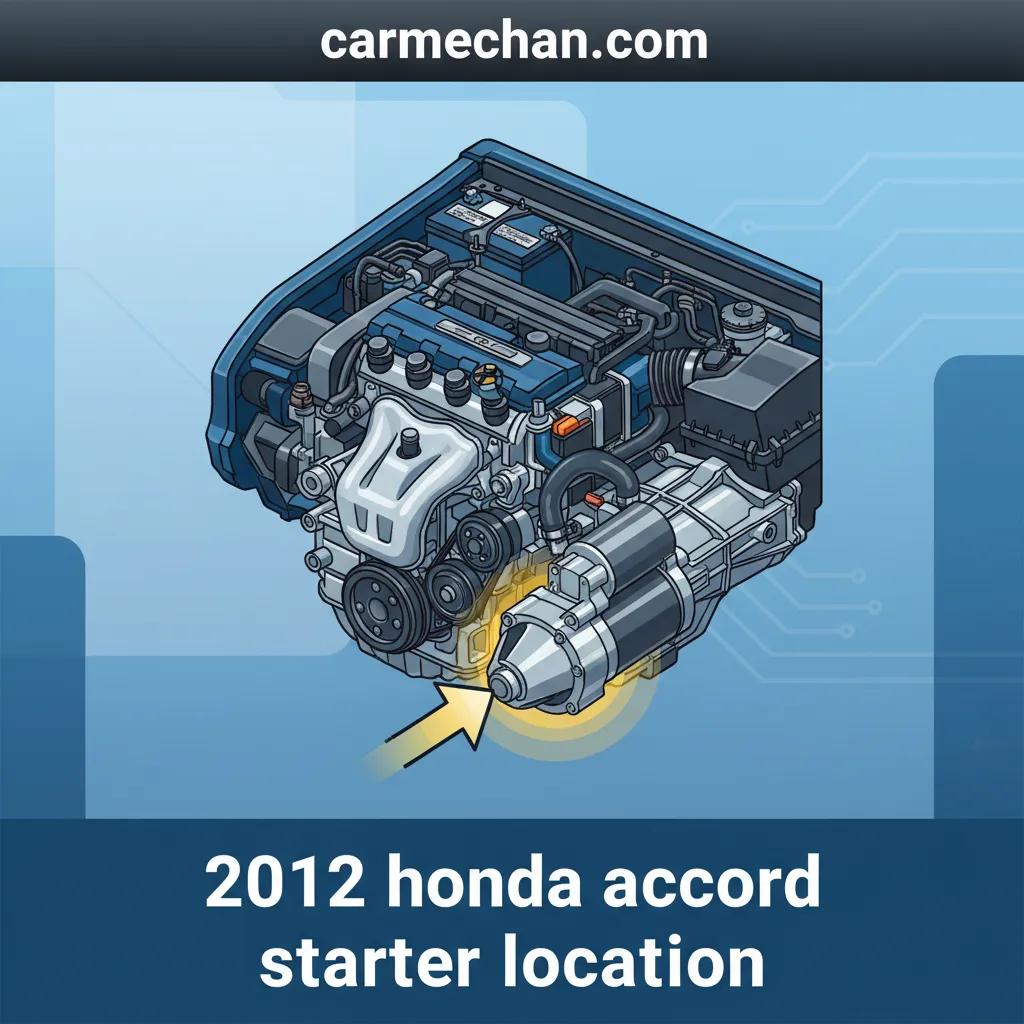
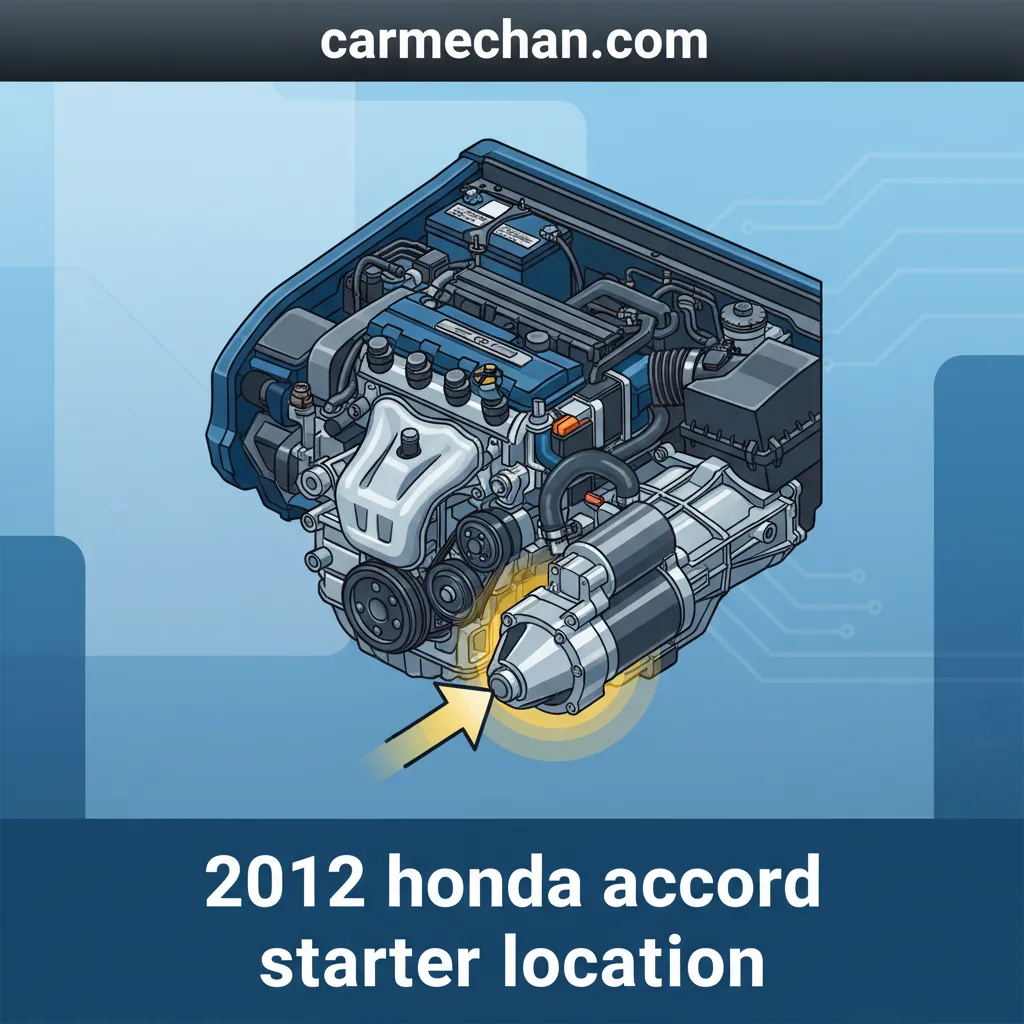
Identifying the exact location of the starter motor is the foundational step in addressing any starting issues. On both the 4-cylinder (K24Z2/Z3) and V6 (J35Z2/Z3) variants of the 2012 Honda Accord, the starter is generally situated on the transmission bell housing, specifically positioned towards the rear of the engine block on the passenger side of the vehicle. This strategic placement allows its pinion gear to directly engage the flywheel.
Visual Identification Cues and Accessibility
To visually identify the starter motor, look for a compact, cylindrical electrical component, roughly the size of a soda can, with a smaller cylindrical attachment (the solenoid) mounted on its side. It will be bolted directly to the transmission casing where it mates with the engine block. You’ll observe two primary electrical connections: a large gauge cable (the main battery feed) and a smaller wire (the solenoid trigger wire) connected to the solenoid.

Audible — Listen Free for 30 Days
One free credit a month and thousands of titles included.
Listen Free for 30 DaysThe specific location and accessibility of the starter can vary slightly between engine configurations:
- For the 4-cylinder 2012 Accord (K24 engine): The starter is notably more accessible from the top of the engine bay. It’s typically found directly beneath the air intake system. Access often requires the temporary removal of the airbox assembly, including the air filter housing and associated intake tubing, to gain a clear line of sight and working space.
- For V6 models (J35 engine): The starter is positioned similarly on the transmission bell housing, but it may be slightly more obscured. In some J35 configurations, exhaust components (such as a heat shield over the exhaust manifold) or specific intake runners might partially block direct view or access, potentially necessitating additional disconnections or removals.
Identifying key surrounding components that may obstruct visibility or require temporary removal is crucial. These commonly include parts of the air intake ducting, the battery tray, and on some models, exhaust manifold heat shields. For thorough visual confirmation in cramped engine bay conditions, particularly for the lower mounting bolt, utilizing a strong LED work light and a small inspection mirror can be invaluable. The 2012 Honda Accord utilizes a high-torque reduction gear starter, a common design for modern Honda vehicles, which is typically secured by two primary mounting bolts. The starter for both engine types is designed to be a relatively compact unit to fit within the constrained engine bay architecture, making its precise location often a tight squeeze to work around.

Essential Preparatory Procedures Before Accessing the Starter Unit
Recommended Best Deal Products


Before attempting any work on your vehicle’s electrical or mechanical systems, especially involving high-current components like the starter, adhering to strict safety protocols is paramount. These preliminary steps ensure both the technician’s safety and prevent potential damage to the vehicle’s electrical system.
Mandatory Battery Disconnection
This is the single most important safety step. To prevent electrical shorts, accidental sparks, and potential damage to sensitive electronic control units (ECUs), the vehicle’s battery must be completely disconnected. Always remove the negative terminal first, followed by the positive terminal. This sequence prevents the chance of grounding your wrench and creating a short circuit should you accidentally touch a grounded metal component while disconnecting the positive terminal. Secure the disconnected cables away from the battery terminals to prevent accidental reconnection.
Never work on the starter motor or any high-current electrical component without first disconnecting the battery. Failure to do so poses a severe risk of electrical shock, short circuits, and potential vehicle fire. Ensure the vehicle is cool to the touch before starting, as components like the exhaust manifold can retain significant heat, causing burns.
Necessary Tools and Equipment
Having the correct tools readily available streamlines the process and prevents frustration. Essential items include:
- Socket Set: Common sizes required for the 2012 Accord starter are typically 10mm, 12mm, and 14mm for battery terminals, electrical connections, and mounting bolts.
- Wrenches: Combination wrenches for tight spots where sockets cannot fit.
- Extensions and Swivel Joints: Crucial for reaching recessed or awkwardly positioned bolts, particularly the lower starter mounting bolt.
- Torque Wrench: Essential for reinstallation to ensure components are secured to manufacturer specifications.
- Personal Protective Equipment (PPE): Safety glasses and gloves are non-negotiable.
- Breaker Bar: An example of a necessary tool, especially for stubborn or corroded mounting bolts.
Vehicle Elevation and Securement
If under-vehicle access is required (which is often the case for the lower starter bolt), the vehicle must be safely elevated and secured. Instructions for safely lifting the vehicle using a jack and securing it with robust jack stands on level ground are critical. Always adhere to manufacturer-specified lift points, usually located on reinforced frame rails, to prevent chassis damage. A service lift, if available at a local repair facility, significantly enhances both safety and access.
Pre-Inspection of Surrounding Components
Before diving into the starter removal, take a moment to inspect surrounding components. Look for any pre-existing damage or wear on wiring harnesses, vacuum lines, or fluid lines that may be disturbed during starter access. Not only does this prevent accidental damage, but it also provides a baseline for reassembly. Proper torque for battery terminal connections is typically between 8-10 ft-lbs to ensure secure electrical contact without stripping, a detail often overlooked but crucial for system health.
Step-by-Step Removal and Reinstallation of the 2012 Honda Accord Starter
Replacing the starter on your 2012 Honda Accord requires a systematic approach. This detailed guide ensures that each step is executed correctly, minimizing complications and ensuring proper function upon reassembly.
Audible Premium Plus — Annual Membership
12 audiobook credits up front, plus the full Audible catalogue.
See Annual Plans
📋
Step-by-Step Guide
Recommended Best Deal Products


Ensure the vehicle is on a level surface and the engine is cool. Disconnect the negative battery terminal first, followed by the positive terminal, and secure them away from the battery posts. If necessary, safely lift the vehicle and secure it on jack stands, following Honda’s specified lift points.
Depending on your Accord’s engine (K24 or J35), systematically remove components blocking access. This typically includes the air intake tubing, airbox assembly, and possibly the battery tray or any specific brackets. Pay attention to vacuum lines or electrical connectors that might be attached to these components and carefully disconnect them.
Locate the starter motor. Using appropriate insulated tools, disconnect the main battery cable (large nut, typically 12mm or 14mm) and the solenoid trigger wire (small plug or nut, often 8mm or 10mm). Note the routing of these wires and inspect for any corrosion. Always ensure no metal tool contacts the vehicle chassis simultaneously with a live terminal.
Identify and safely remove the two primary mounting bolts that secure the starter to the transmission bell housing. These bolts are typically 14mm or 17mm. The upper bolt is generally straightforward, but the lower mounting bolt can be notoriously difficult to reach, often requiring a long extension and swivel joint. Once unbolted, carefully maneuver and extract the old starter from its position. It might be heavy, so be prepared.
Carefully position the new starter motor into its mounting location, ensuring proper alignment with the flywheel opening and the transmission casing. Start both mounting bolts by hand to avoid cross-threading, then tighten them securely. The mounting bolt torque specifications for the 2012 Honda Accord starter typically range from 33-40 ft-lbs (45-54 Nm), a critical factor for secure mounting and preventing vibration that could lead to premature failure or damage to the transmission housing.
Reconnect the electrical connections to the starter in reverse order: solenoid trigger wire first, then the main battery cable, ensuring a tight and secure connection. Reassemble all previously removed components (battery tray, airbox, intake tubes, etc.). Finally, reconnect the battery terminals, positive first, then negative.
When struggling with the lower mounting bolt, often found on the V6 models, a quality universal joint or wobble extension can be a lifesaver. Furthermore, when working with a local community of mechanics, they often share invaluable tips on specific tools or techniques that make this job more convenient and accessible. Don’t be afraid to ask for advice if you’re part of such a group!
Troubleshooting Starter-Related Issues and Local Repair Options for Your 2012 Accord
Accurately diagnosing a ‘no-start’ condition is paramount to avoid unnecessary repairs. While a failing starter is a common culprit, it’s essential to rule out other components before replacement.
Advanced Diagnostic Techniques
Utilizing a multimeter is crucial for advanced diagnostics. You can test for several conditions:
- Battery Voltage Test: Before anything else, ensure your battery holds a charge of at least 12.4V.
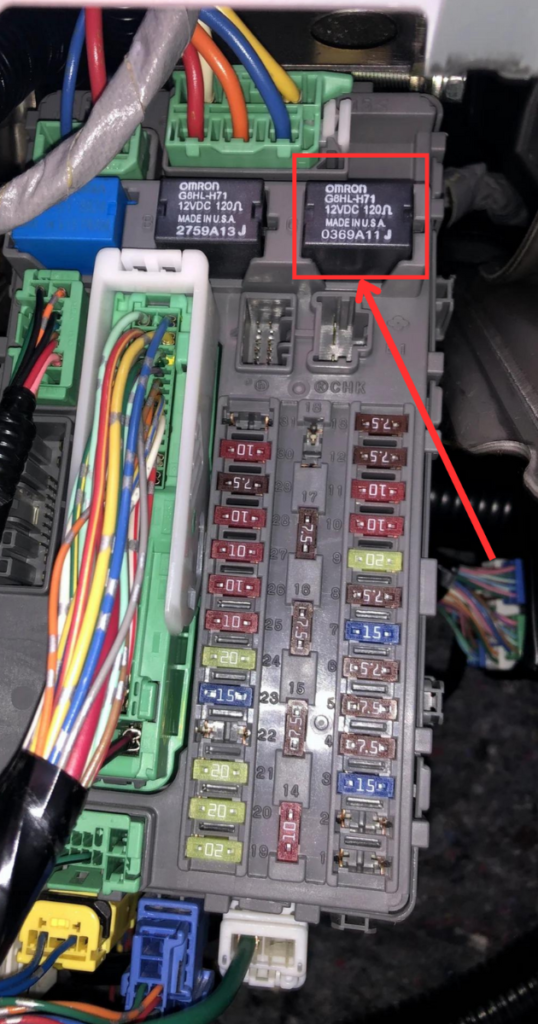
- Starter Solenoid Voltage: With the ignition in the START position, check for battery voltage at the small trigger wire on the starter solenoid. If voltage is present, the ignition switch and associated wiring are likely good.
- Main Starter Terminal Voltage: Ensure full battery voltage is continuously present at the large main power terminal on the starter.
If a multimeter shows full battery voltage at the starter’s main terminal and at the solenoid trigger wire, but you still get no click or crank when the ignition is engaged, then the solenoid or the motor itself is definitively at fault. Conversely, if voltage drops significantly at the main terminal during cranking, the battery or battery cables are suspect, not necessarily the starter.
Common Misconceptions and Alternative Issues
It’s easy to jump to conclusions when a vehicle won’t start. However, perceived ‘starter’ issues can actually stem from:
- Parasitic Draws: A slow battery drain can mimic a starter issue.
- Ignition Switch Failures: A faulty ignition switch may not send the proper signal to the starter solenoid.
- Transmission Range Sensor (Neutral Safety Switch): If this sensor is malfunctioning, the vehicle’s ECU might not allow the starter to engage, believing the car is in gear.
- Corroded Battery Cables/Grounds: High resistance in these critical pathways can prevent sufficient current from reaching the starter.
Over 90% of automotive technicians recommend testing the battery and charging system thoroughly before condemning the starter. This crucial diagnostic step prevents misdiagnosis and unnecessary expenses.
Replacement Options: New, Remanufactured, or Aftermarket?
When faced with a starter replacement, you’ll generally have three options, each with its own cost-benefit for your 2012 Accord:
Guidance on Selecting Reputable Local Service Centers
While a DIY replacement is feasible for experienced individuals, seeking professional assistance is often the best course of action. When choosing a reputable local service center in your community, consider the following:
- Certifications: Look for ASE-certified technicians, ensuring a high standard of expertise.
- Warranty: Inquire about parts and labor warranties. Many trusted local shops offer 1-3 year guarantees on replacement starters.
- Reputation: Check online reviews and ask for recommendations from your nearby friends or family.
- Transparency: A good shop will provide a detailed estimate and explain diagnostics clearly.
A 2012 Honda Accord starter replacement, including parts and labor, typically costs between $300-$600, varying based on part quality (OEM vs. aftermarket) and labor rates in a given local market. Quality service is definitely available and often more convenient than tackling the job yourself without the right tools or experience.
✅ Pros of Professional Repair
- Expert diagnosis, reducing risk of misidentifying the fault.
- Access to specialized tools and lifts, improving efficiency and safety.
- Warranty on parts and labor provides peace of mind.
- Experienced technicians ensure proper installation and torque specifications.
❌ Cons of DIY Repair
- Risk of incorrect diagnosis leading to unnecessary part replacement.
- Potential for injury or damage if safety protocols are not followed.
- Lack of specialized tools can make the job difficult or impossible.
- No warranty protection if issues arise post-installation.
Preventative Maintenance Tips
To extend your starter’s lifespan and identify early warning signs, perform regular checks on your battery and charging system. Ensure battery terminals are clean and tight, and have your battery tested annually, especially if you reside in a region with extreme temperatures. Addressing issues like excessive engine cranking (due to fuel delivery or ignition problems) can also reduce wear on your starter motor. Keep an ear out for any unusual noises during startup; early detection can prevent you from being stranded.
Regular servicing at a trusted local shop serving your nearby service area can help proactively identify and address these issues before they escalate into a complete no-start situation.
The starter on a 2012 Honda Accord is located on the transmission bell housing, passenger side, with specific access routes varying slightly between 4-cylinder and V6 models. Adhering to strict safety protocols, including battery disconnection and proper vehicle securement, is non-negotiable before any work. Accurate diagnosis of starting issues requires distinguishing starter failure from battery, alternator, or ignition system malfunctions, often through multimeter testing. Reputable local repair facilities in your community are available to provide expert service and ensure proper installation and warranty coverage for your 2012 Accord.
Should you experience starter-related issues with your 2012 Honda Accord, consult this guide for preliminary understanding, and consider seeking professional diagnostic and repair services from a certified technician in your nearby area to ensure optimal vehicle performance and long-term reliability. A well-maintained starter is key to a dependable Honda Accord.
Frequently Asked Questions
What are the most common symptoms of a failing starter in a 2012 Honda Accord?
Common symptoms include a single ‘click’ when turning the key, a grinding noise, or a complete absence of engine cranking. The dashboard lights may illuminate normally, but the engine won’t turn over. It’s crucial to differentiate these from a dead battery, which typically results in dim or non-existent dashboard lights.
Can I replace the starter myself on my 2012 Honda Accord, or should I go to a professional?
While it is possible for an experienced DIY enthusiast to replace the starter, it involves working with electrical systems, heavy components, and often confined spaces. For optimal safety and to ensure correct installation, especially when dealing with torquing specifications, professional service from a qualified technician in your community is highly recommended.
How long does a starter replacement typically take for a 2012 Honda Accord at a service center?
At a professional service center, a 2012 Honda Accord starter replacement typically takes 1.5 to 3 hours, depending on the engine type (4-cylinder generally quicker) and any unforeseen complications like corroded bolts. This estimate includes diagnostic time, parts procurement, and testing.
What is the difference between an OEM, aftermarket, and remanufactured starter?
An OEM (Original Equipment Manufacturer) starter is identical to the one installed by Honda. Aftermarket starters are new units made by third-party manufacturers. Remanufactured starters are original units that have been disassembled, cleaned, inspected, and had worn components replaced. Each offers varying price points and warranty lengths available locally.
Are there any specific tools required for accessing the 2012 Honda Accord starter?
Yes, common tools include a 10mm, 12mm, and 14mm socket and wrench set, extensions, a ratchet, a torque wrench, and potentially a breaker bar for stubborn bolts. Safety equipment such as gloves and safety glasses is also essential. Specific configurations might require airbox removal tools.