How Much Does an F-150 Weigh? Curb Weight & GVWR Explained
Last Updated on September 1, 2026 by Ryan
The weight of a Ford F-150 varies significantly, generally ranging from 4,000 to over 5,700 pounds (curb weight) depending on its configuration. Factors like cab style, bed length, engine type, and drivetrain (2WD vs. 4WD) are the primary determinants, with Gross Vehicle Weight Rating (GVWR) indicating the maximum permissible loaded weight.

Prime for Young Adults — 6 Months Free
Students and 18–24s get six months of Prime free, then half price.
Start 6 Months Free🎯 Key Takeaways
Recommended Best Deal Products


- F-150 curb weight typically ranges from 4,000 to 5,700+ lbs.
- Weight depends significantly on cab, bed, engine, and drivetrain.
- Gross Vehicle Weight Rating (GVWR) includes truck, cargo, and passengers.
- Check your specific F-150’s door jamb sticker for exact weights.
- Accurate weight is crucial for safe towing and payload calculations.
A Ford F-150’s curb weight typically ranges from about 4,000 pounds for a base 2WD Regular Cab to over 5,700 pounds for a fully equipped 4×4 SuperCrew with a larger engine or hybrid powertrain. This wide range isn’t just a minor detail; it’s a critical factor influencing everything from your truck‘s fuel economy and handling to its legal capacity for hauling and towing. Understanding your F-150’s specific weight is essential, whether you’re calculating payload, planning for towing a trailer, or simply wanting to ensure your vehicle is operating safely and efficiently.

Knowing your F-150’s weight helps you make informed decisions about its capabilities and limitations. It directly impacts what you can safely carry in the bed, how much you can tow behind it, and even the type of tires or suspension upgrades you might consider. Every feature, from the engine size to the cab style and drivetrain, contributes to the final number on the scale, making it a unique measurement for almost every configuration.
Understanding F-150 Curb Weight: Key Factors
When you look up “how much does an F-150 weigh,” you’re primarily asking about its curb weight. This figure represents the vehicle’s weight with all standard equipment, fluids (like oil, coolant, and a full tank of fuel), but without any passengers, cargo, or added accessories. Several major factors significantly influence this number, sometimes by hundreds of pounds.
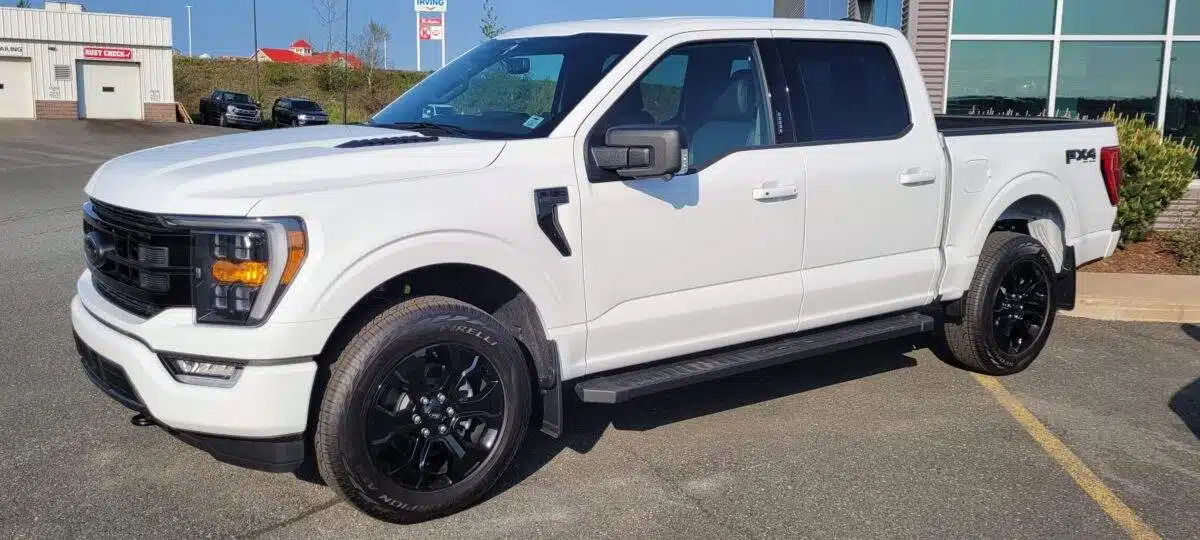
Cab Style and Bed Length
- Cab Style: This is one of the most impactful factors. A
Regular Cab (two-door) is the lightest configuration, offering the lowest curb weight. Moving up to aSuperCab (extended cab with smaller rear doors) adds seating and structural components, increasing weight. TheSuperCrew (four full-size doors) is the heaviest, providing maximum passenger space but requiring more material and structure. Each step up in cab size can add 200-500 pounds. - Bed Length: Longer beds inherently mean more material. The F-150 offers various bed lengths, typically 5.5-foot, 6.5-foot, and 8-foot options. Opting for a longer bed will add to the curb weight. For instance, a 6.5-foot bed is heavier than a 5.5-foot bed on the same cab style, as it requires a longer frame and additional sheet metal.
Engine and Drivetrain Configuration
- Engine Choice: The engine under the hood plays a substantial role. Smaller V6 engines (like the 3.3L or 2.7L EcoBoost) are generally lighter than larger V8 engines (5.0L) or the advanced PowerBoost hybrid powertrain. The PowerBoost, with its battery pack, electric motor, and associated components, typically adds the most weight among the engine options, often increasing curb weight by 300-500 pounds compared to a non-hybrid V6.
- Drivetrain (2WD vs. 4WD): This is a clear differentiator. A 4×4 (four-wheel drive) system adds significant components like a transfer case, front differential, and heavier axles compared to a 2WD (two-wheel drive) setup. Choosing 4×4 over 2WD for an otherwise identical F-150 will typically add 300 to 400 pounds to its curb weight.
Beyond these primary factors, even trim levels, wheel sizes, and optional features (like a panoramic sunroof, heavy-duty payload package, or extensive interior amenities) can subtly add to the F-150’s curb weight. However, cab style, bed length, engine, and drivetrain are the most significant determinants.
Everything You Need to Know About F-150 Weight
Recommended Best Deal Products


Understanding the weight of your Ford F-150 is crucial for safe towing, hauling, and even legal compliance. Whether you’re planning a big move, upgrading your trailer, or just curious about your truck’s true mass, this comprehensive guide will walk you through the precise steps to determine how much an F-150 weighs, taking into account its various configurations and modifications. Following these steps meticulously will ensure you have accurate data, helping you make informed decisions and avoid potential hazards.
Step 1: Understand the Different Types of F-150 Weight
What you need: A basic understanding of automotive terminology. Pen and paper or a digital note-taking device.
Instructions: Before diving into specific numbers, it’s vital to differentiate between key weight terms. The “curb weight” is the vehicle’s weight with all standard equipment, fluids (oil, coolant), and a full tank of fuel, but without passengers or cargo. “Gross Vehicle Weight Rating” (GVWR) is the maximum permissible total weight of your fully loaded truck, including the vehicle itself, passengers, cargo, and any accessories. “Gross Combined Weight Rating” (GCWR) is the maximum allowable weight of the fully loaded truck and a fully loaded trailer combined. Confusing these can lead to overloading and safety risks.
Pro Tip: Always prioritize GVWR and GCWR over curb weight when planning to haul or tow. Curb weight is merely a starting point; the ratings tell you what the truck can safely handle.

Audible — Listen Free for 30 Days
One free credit a month and thousands of titles included.
Listen Free for 30 DaysStep 2: Identify Your Specific F-150 Configuration
What you need: Your F-150’s VIN (Vehicle Identification Number), often found on the driver’s side dashboard or door jamb sticker. Your vehicle’s model year, trim level, engine type, cab style, and bed length.
Instructions: The weight of an F-150 varies significantly based on its specific build. A 2020 F-150 XL 2WD Regular Cab with a 3.3L V6 engine and a 6.5-foot bed will weigh considerably less than a 2023 F-150 Platinum 4×4 SuperCrew with a 3.5L EcoBoost engine and a 5.5-foot bed. Note down your exact specifications: model year, drivetrain (2WD or 4WD), engine displacement and type (e.g., 5.0L V8, 3.5L EcoBoost V6), cab configuration (Regular Cab, SuperCab, SuperCrew), and bed length (5.5 ft, 6.5 ft, 8 ft). The trim level (XL, XLT, Lariat, King Ranch, Platinum, Limited, Raptor) also impacts weight due to varying standard features and materials.
Pro Tip: The VIN is your most reliable source for identifying the exact factory specifications of your truck. Use online VIN decoders if you’re unsure about any details.
Step 3: Consult Your Owner’s Manual and Door Jamb Sticker
What you need: Your F-150’s owner’s manual (physical copy or digital version) and direct access to your truck’s driver’s side door jamb.
Instructions: Ford provides specific weight information for your exact vehicle in two primary locations. Open your driver’s side door and locate the sticker on the door jamb. This sticker will clearly list your vehicle’s Gross Vehicle Weight Rating (GVWR) and Gross Axle Weight Ratings (GAWR) for both front and rear axles. It also provides tire and loading information. For detailed curb weight specifications for different configurations within your model year, refer to the “Specifications” or “Capacities and Specifications” section of your owner’s manual. This manual often contains tables outlining curb weights for various engine, cab, and drivetrain combinations.
Pro Tip: The door jamb sticker provides the maximum legal weight limits for your specific truck as it left the factory. Always adhere to these numbers for safety and legal reasons.
Step 4: Utilize Ford’s Official Online Resources
What you need: An internet-enabled device. Your F-150’s model year and specifications.
Instructions: Ford’s official website is an excellent resource for detailed specifications. Navigate to Ford’s “Fleet” or “Owner” sections. Often, you can find “Payload & Towing Guides” or “Specifications” documents specific to your F-150’s model year. These guides provide comprehensive tables detailing curb weights, GVWRs, and GCWRs for every imaginable configuration. For example, a 2022 F-150 SuperCrew 4×4 with a 5.5 ft bed and a 3.5L EcoBoost engine typically has a curb weight in the range of 4,800 to 5,200 lbs, while a Regular Cab 2WD with a 3.3L V6 might be closer to 4,000 lbs. Be sure to select the correct model year and configuration filters.
Pro Tip: Always use official Ford documentation or reputable automotive review sites that cite official data. Forums can be helpful for anecdotal information but may contain outdated or inaccurate figures.
Audible Premium Plus — Annual Membership
12 audiobook credits up front, plus the full Audible catalogue.
See Annual PlansStep 5: Account for Aftermarket Modifications and Accessories
What you need: A list of all aftermarket parts, accessories, and permanent additions to your truck. Any receipts or packaging indicating their weight.
Instructions: The curb weight listed in your owner’s manual or online resources is for a stock vehicle. Any modifications you’ve made will add to this weight and reduce your available payload capacity. This includes items like heavy-duty bumpers, winches, bed liners, toolboxes, tonneau covers, lift kits, larger tires, aftermarket wheels, running boards, and even extensive sound systems. Estimate or find the specific weight of each added item and sum them up. Add this total to your truck’s base curb weight to get a more accurate current curb weight. For example, a heavy steel bumper and winch combo could easily add 150-250 lbs.
Pro Tip: Don’t forget small but numerous additions. Even a fully loaded toolbox, bed mat, or recovery gear permanently stored in the truck contributes to its total weight and reduces payload.
Step 6: Weigh Your F-150 at a Certified Scale (CAT Scale)
What you need: Your F-150 (empty, with a full tank of fuel), cash or credit card for scale fees (typically $10-15), a pen and paper. Optional: a friend to help operate the scale communication.
Instructions: For the most accurate current curb weight of your specific truck, nothing beats a visit to a certified public scale, commonly found at truck stops (look for “CAT Scales”). These scales are calibrated regularly and provide precise readings. Pull your empty F-150 (only driver, full fuel tank, no cargo or passengers) onto the scale. Follow the instructions on the intercom (usually pressing a button and communicating with the weighmaster). They will provide a printed ticket showing your vehicle’s total weight and often individual axle weights. This reading will be your actual curb weight, factoring in all modifications and standard fluids.
Pro Tip: Perform two separate weighings: one with the truck completely empty (driver only, full fuel) to establish true curb weight, and another with your typical gear and passengers to understand your “ready-to-go” weight for payload calculations.
Step 7: Calculate Available Payload and Towing Capacity
What you need: Your truck’s GVWR (from door jamb sticker), GCWR (from owner’s manual), and the actual curb weight from your scale visit or reliable sources.
Instructions: Once you have your accurate curb weight and official ratings, you can calculate your available capacities. Your “available payload” is your GVWR minus your actual curb weight. For example, if your F-150 has a GVWR of 7,050 lbs and an actual curb weight of 5,100 lbs, your available payload is 1,950 lbs (7,050 – 5,100). This is the maximum weight you can safely add to the truck (passengers, cargo, tongue weight of a trailer). Your “max towing capacity” is typically derived from your GCWR minus the curb weight of your truck, including the weight of the driver, passengers, and cargo. Remember, any weight in the truck reduces the available towing capacity.
Pro Tip: Never exceed your GVWR, GAWRs, or GCWR. Overloading can lead to suspension damage, tire blowouts, braking issues, and loss of control, not to mention potential fines.
✅ Final Checklist
- Identified your F-150’s exact model year, trim, engine, cab, and bed configuration.
- Located and reviewed the door jamb sticker for GVWR and GAWRs.
- Consulted the owner’s manual or official Ford online resources for curb weight specifications.
- Accounted for all aftermarket modifications and permanent accessories in your weight calculations.
- Obtained an actual weight reading from a certified CAT scale (if applicable).
Important Notes:
- Safety Considerations: Always prioritize safety. Overloading your F-150 can lead to catastrophic failure of tires, brakes, suspension, and chassis components, significantly increasing accident risk. Ensure proper tire pressure for the load.
- When to Seek Professional Help: If you are unsure about interpreting weight ratings, calculating capacities, or if you plan on complex towing/hauling setups, consult a reputable truck mechanic, a trailer specialist, or your Ford dealership. They can provide expert guidance and ensure your setup is safe and compliant.
- Estimated Time and Cost Range: Gathering information from manuals and online sources is free and takes approximately 30-60 minutes. Visiting a CAT scale typically costs $10-$15 per weigh-in and takes about 15-30 minutes, including travel to and from the scale.
Typical F-150 Weights by Configuration (Model Year Examples)
To give you a clearer picture, let’s look at some typical curb weight ranges for modern Ford F-150 models, specifically focusing on the 14th generation (2021-present) and the latter half of the 13th generation (2018-2020), which retained the aluminum body structure. Remember, these are general ranges, and your specific truck’s weight will be on its doorjamb sticker.

Recent Model Year F-150 Curb Weight Ranges (Approximate)
- Regular Cab, 2WD, 6.5-foot bed (lightest configurations):
- With a 3.3L V6 engine: Approximately 4,020 – 4,200 lbs.
- With a 2.7L EcoBoost V6 engine: Approximately 4,150 – 4,300 lbs.
- These are the workhorse entry points, focusing on capability without extra bulk.
- SuperCab (Extended Cab), 2WD or 4×4, 6.5-foot or 8-foot bed:
- With a 2.7L EcoBoost V6, 2WD, 6.5-foot bed: Roughly 4,500 – 4,700 lbs.
- With a 5.0L V8, 4×4, 6.5-foot bed: Generally 4,800 – 5,100 lbs.
- The SuperCab offers a balance of passenger space and a good weight profile for various tasks.
- SuperCrew (Crew Cab), 2WD or 4×4, 5.5-foot or 6.5-foot bed (most popular configurations):
- With a 2.7L EcoBoost V6, 2WD, 5.5-foot bed: Around 4,700 – 4,900 lbs. This is a common family configuration.
- With a 3.5L EcoBoost V6, 4×4, 5.5-foot bed: Typically 5,000 – 5,300 lbs. This powerful setup sees widespread use.
- With a 5.0L V8, 4×4, 6.5-foot bed: Expect weights ranging from 5,200 – 5,500 lbs. This option is popular for those needing maximum bed capacity and power.
- With a 3.5L PowerBoost Full Hybrid V6, 4×4, 5.5-foot or 6.5-foot bed: These are the heaviest F-150s, often weighing 5,500 – 5,750+ lbs, due to the added hybrid components.
As you can see, the jump from a base Regular Cab 2WD to a fully loaded SuperCrew 4×4 PowerBoost can be over 1,500 pounds. This significant difference highlights why your specific F-150’s configuration is paramount when determining its curb weight and, consequently, its practical capabilities.
<h2>Gross Vehicle Weight Rating (GVWR): What It Means</h2>

<p>While curb weight tells you how much your F-150 weighs empty, the <strong>Gross Vehicle Weight Rating (GVWR)</strong> is arguably even more critical. It’s the <em>maximum permissible total weight</em> of your fully loaded truck, including the vehicle itself, all passengers, cargo in the bed and cab, and any aftermarket accessories.</p>
<h3>Understanding the GVWR Label</h3>
<p>Every F-150 comes with a specific GVWR, determined by Ford based on its chassis, suspension, axles, and tires. You won't find one single GVWR for all F-150s, as it varies significantly with configuration (e.g., engine, cab style, bed length, 2WD vs. 4WD, heavy-duty payload package).</p>
<p>You can easily find your F-150's specific GVWR on:</p>
<ul>
<li>A sticker located on the driver's side door jamb (often called the <strong>Tire and Loading Information</strong> or <strong>Federal Certification Label</strong>).</li>
<li>Your owner's manual.</li>
<li>Ford's official towing guide for your model year.</li>
</ul>
<p><em>Practical Tip:</em> Your F-150's GVWR is a fixed limit. It's not something you can upgrade or change. It defines the safe operating parameters for your specific truck as it left the factory.</p>
<h3>Why GVWR is Crucial for Safety and Legality</h3>
<p>Exceeding your F-150's GVWR is not just frowned upon; it can be dangerous and illegal. Overloading puts excessive strain on virtually every component of your truck, leading to:</p>
<ul>
<li><strong>Reduced Braking Performance:</strong> Stopping distances significantly increase.</li>
<li><strong>Compromised Handling:</strong> The truck becomes unstable, especially around corners or bumps.</li>
<li><strong>Component Failure:</strong> Premature wear and tear on suspension, tires, brakes, and drivetrain.</li>
<li><strong>Voided Warranty:</strong> Damage caused by overloading might not be covered.</li>
<li><strong>Legal Penalties:</strong> Fines and liability in case of an accident, especially for commercial use.</li>
</ul>
<p>Always know your truck's GVWR and ensure that your total loaded weight, including passengers, cargo, and tongue weight from a trailer, remains below this critical threshold.</p>
<h2>Why F-150 Weight Matters: Practical Implications</h2>
<p>Understanding the various weight figures for your F-150 isn't just for enthusiasts; it has real-world consequences for how you use and maintain your truck. From daily driving to heavy-duty tasks, weight plays a pivotal role.</p>
<h3>Fuel Economy and Performance</h3>
<p>The basic physics are simple: more weight requires more energy to move. This directly impacts your F-150's fuel efficiency. A heavier truck, whether due to its base configuration or significant cargo, will consume more fuel.</p>
<ul>
<li><strong>Daily Driving:</strong> If you consistently carry heavy tools or gear, expect a noticeable dip in MPG compared to driving empty.</li>
<li><strong>Acceleration:</strong> A heavier F-150 will feel less responsive, taking longer to accelerate and requiring more throttle input.</li>
<li><strong>Braking:</strong> As mentioned, increased weight means longer stopping distances, impacting safety.</li>
</ul>
<p><em>Actionable Tip:</em> Regularly clear out unnecessary items from your truck's bed and cab. That heavy toolbox you only use once a month might be costing you at the pump every day.</p>
<h3>Towing, Hauling, and Vehicle Longevity</h3>
<p>For an F-150 owner, weight implications are most pronounced when it comes to its primary functions: towing and hauling. Your truck's payload capacity (GVWR minus curb weight) and towing capacity are directly tied to its specific weight ratings.</p>
<ul>
<li><strong>Payload:</strong> This is the maximum weight you can safely carry in the truck's bed and cab. Exceeding it stresses the suspension and frame.</li>
<li><strong>Towing:</strong> While related to curb weight, your F-150's maximum towing capacity is a separate, complex calculation that factors in GVWR, GCWR (Gross Combined Weight Rating – truck + trailer), and front/rear axle weight ratings.</li>
</ul>
<p>Consistently operating your F-150 near or above its weight limits will accelerate wear and tear on critical components like the engine, transmission, brakes, suspension, and tires. This can lead to costly repairs and a significantly shorter lifespan for your truck. <em>Think of it as constantly making your F-150 do more work than it's designed for; eventually, something will give.</em></p>
<h2>Conclusion</h2>
<p>Understanding how much your F-150 weighs, both empty (curb weight) and fully loaded (GVWR), is fundamental to responsible truck ownership. These numbers aren't just arbitrary figures; they are crucial indicators of your truck's capabilities and safety limits. Knowing them impacts everything from your fuel efficiency and performance to your ability to tow and haul safely without risking damage or legal issues.</p>
<p>Before your next big haul or road trip, take a moment to:</p>
<ol>
<li><strong>Check your F-150's door jamb sticker</strong> for its specific curb weight, GVWR, and payload capacity.</li>
<li><strong>Estimate the weight of your cargo and passengers</strong> to ensure you stay within those limits.</li>
</ol>
<p>Drive smart, stay safe, and get the most out of your F-150 by respecting its design capabilities!</p>
❓ Frequently Asked Questions
Recommended Best Deal Products



What are the primary factors that determine an F-150’s curb weight?
The main factors include the cab style (Regular, SuperCab, SuperCrew), bed length (5.5, 6.5, 8 feet), engine choice (V6, V8, PowerBoost), and drivetrain (2WD vs. 4WD). Each adds or subtracts weight from the base model, with SuperCrew 4×4 V8s being among the heaviest.
How does the Gross Vehicle Weight Rating (GVWR) differ from curb weight?
Curb weight is the truck’s empty weight with full fluids but no passengers or cargo. GVWR is the maximum permissible total weight of the fully loaded truck, including its curb weight, all passengers, cargo, and any permanently attached accessories. It is a critical safety limit.
Can you provide some examples of F-150 curb weights for common configurations?
A 2023 Regular Cab 2WD might start around 4,025 lbs, while a SuperCrew 4×4 with a 5.0L V8 could weigh over 5,500 lbs. A popular SuperCrew 4×4 with an EcoBoost engine typically falls in the 5,000-5,400 lb range, though these are estimates and vary by specific year and options.
How did the aluminum body affect the F-150’s weight starting in 2015?
The switch to an aluminum alloy body for the 2015 model year significantly reduced the F-150’s curb weight by several hundred pounds (typically 500-700 lbs) compared to previous steel-bodied models. This weight reduction improved fuel efficiency, acceleration, and increased payload capacity.
Besides configuration, what else can add weight to an F-150?
Optional features and accessories like larger wheels and tires, premium sound systems, panoramic sunroofs, power running boards, heavier duty suspension packages, and integrated bed liners all contribute to a higher curb weight. Even factory-installed accessories like bed covers or spray-in bed liners add mass.
Why is knowing my F-150’s exact weight and GVWR important?
Knowing these figures is crucial for safe operation, especially when towing or hauling. It helps ensure you stay within legal limits, prevents overloading the vehicle’s components, and guarantees proper handling, braking performance, and overall vehicle longevity, protecting both you and your cargo.