Does BMW Have Adaptive Cruise Control: Functionality Decoded
Modern luxury driving is defined by comfort, but how much control should you surrender to your BMW? Many owners are often confused about whether their specific model features adaptive, active, or basic cruise control systems. This guide provides the expert information needed to identify, operate, and safely rely on your BMW’s Active Cruise Control system in 2026.
Understanding How Does BMW Have Adaptive Cruise Control Functionality

📤 Share Image
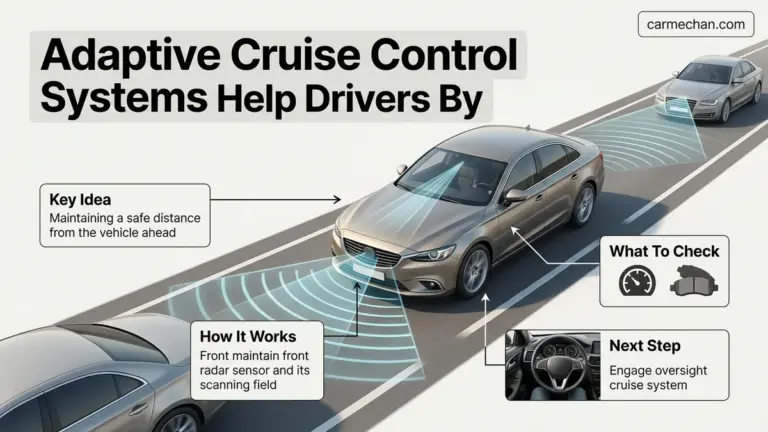
To understand if your vehicle is capable of automated distance management, one must look at the underlying architecture. BMW’s system is a multi-layered sensor suite that goes well beyond the basic speed-holding mechanisms found in older, non-adaptive vehicles.

Radar and Camera Sensor Integration
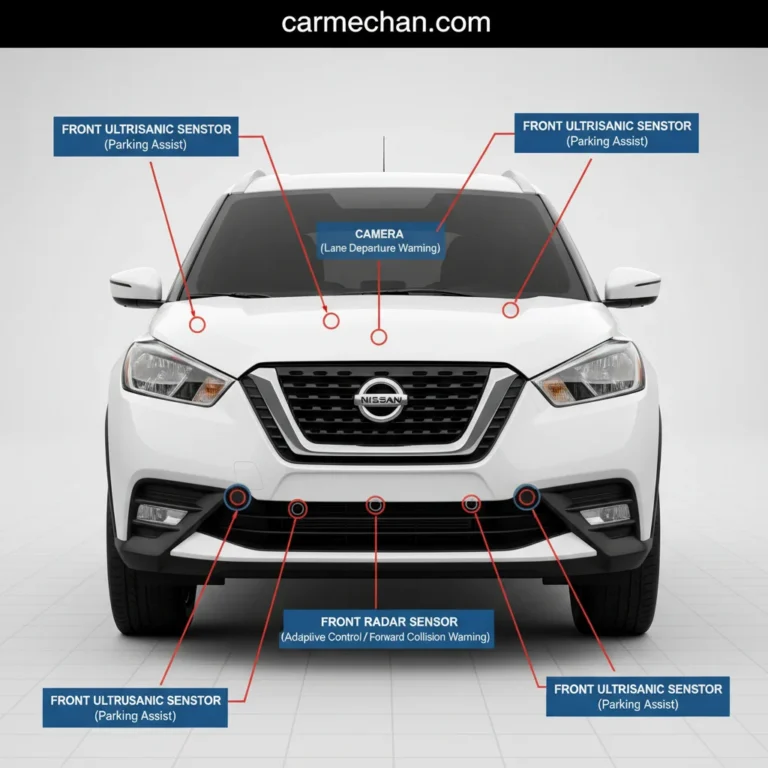
The core of the system relies on a high-precision Radar Sensor mounted in the front bumper, capable of calculating the distance and relative speed of vehicles ahead. This is supported by a Front-Facing Camera system behind the rearview mirror, which identifies lane markings and traffic signage. Together, these inputs are processed by the Electronic Control Unit (ECU) to calculate a smooth deceleration or acceleration curve that mimics professional driving habits.
Longitudinal Control Explained
Longitudinal control refers to the car’s ability to manage its own speed. Unlike traditional cruise control, which is binary (on/off), Active Cruise Control (ACC) maintains a preset following distance behind a lead vehicle. If the car in front slows down, the BMW adjusts its throttle and braking automatically. The ECU coordinates these adjustments in real-time, ensuring the transition between speeds is as refined as possible.

Standard vs. Active Systems
There is a fundamental distinction between Standard Cruise Control—which simply locks in a set speed regardless of traffic—and the Active system. The Active system provides a dynamic buffer. Research indicates that while drivers often perceive these systems as semi-autonomous, they require active driver supervision at all times to monitor for sudden environmental changes or sensor occlusion.
Does BMW Have Adaptive Cruise Control: Package and Trim Guide
Availability of this technology is not uniform. It is rarely standard equipment on entry-level models, even within high-performance engine lines.
Driving Assistant Professional Suite
To secure this feature, you generally need to look for the “Driving Assistant Professional” package. This is the top-tier driver assistance offering, which includes not just ACC but also Traffic Jam Assistant and steering/lane control.
Identifying Equipment via Steering Wheel Controls
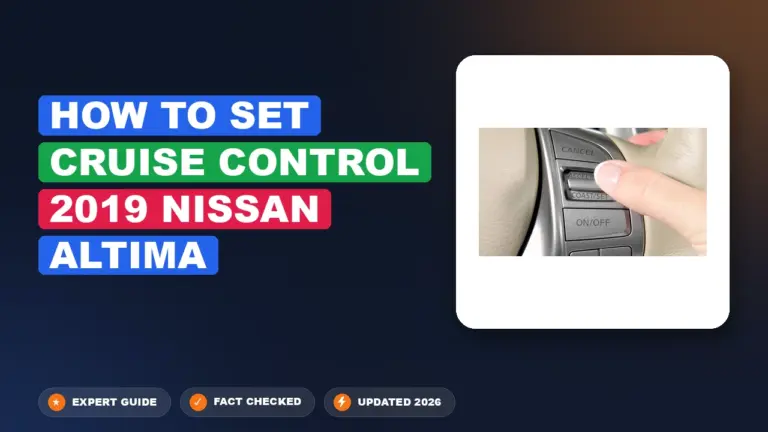
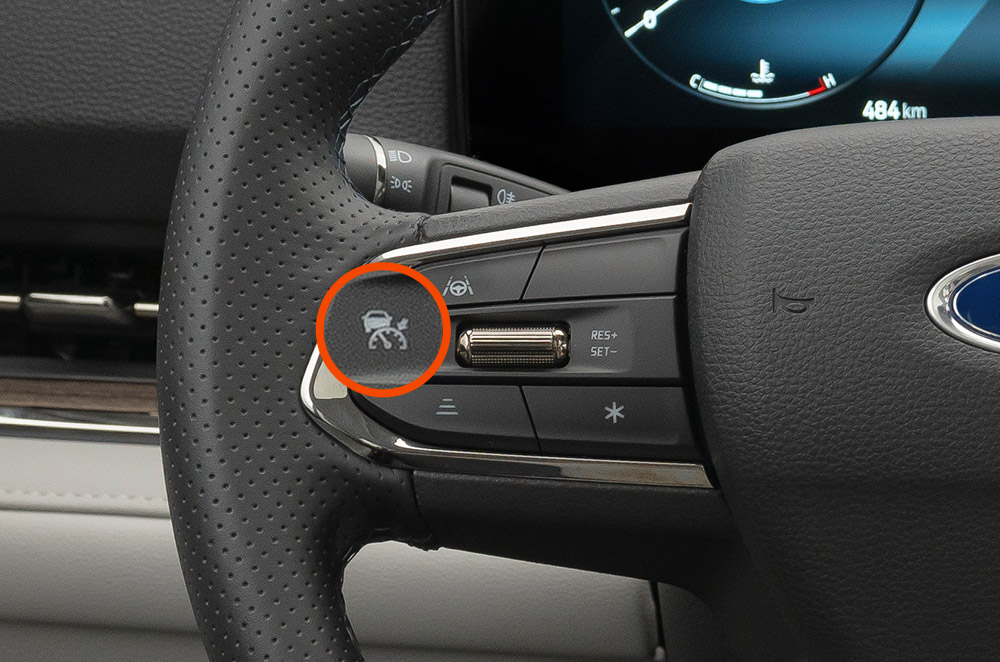
The easiest way to confirm if you possess the system is to examine your steering wheel controls. If your car has ACC, you will see buttons representing distance increments (usually iconized by car silhouettes with bars). If you only see a speedometer icon without distance adjustment toggles, you likely have standard cruise control.
How to Use Does BMW Have Adaptive Cruise Control Safely
📋
Operational Steps
Press the cruise control ‘I/O’ button on the left steering wheel spoke to activate the system.
Accelerate to your desired velocity and toggle the ‘Set’ button or ‘RES’ to engage.
Use the horizontal distance buttons to select your preferred following gap (typically four stages).
Mastering Stop & Go in Heavy Traffic
The Stop & Go functionality is a hallmark of premium BMW engineering. In heavy traffic, the vehicle will come to a complete halt if the car ahead stops. If the traffic remains stopped for more than a few seconds, you may need to tap the accelerator or resume button to instruct the car to begin moving again. This is a safety protocol to ensure the driver remains engaged.
Limitations and Risks of BMW Distance Control
While highly reliable, the system is not infallible. Understanding when the system might struggle is a hallmark of a professional, safe driver.
Active Cruise Control is a convenience system. It does not replace human judgment. It may not detect stationary objects, such as vehicles stalled in the road or debris, effectively at high speeds.
- Weather Degradation: Heavy rain, fog, or snow can obscure the Radar Sensor. The system may disable itself or provide a warning to take control when sensor visibility is compromised.
- Over-Reliance Dangers: Trusting the system to handle complex highway interchanges can lead to dangerous outcomes. Always be ready to intervene.
- Retrofitting Concerns: Can I add Active Cruise Control after purchasing the car? In almost all cases, no. The complexity of the radar hardware, the steering wheel modules, and the necessary ECU coding makes retrofitting cost-prohibitive and technically unreliable compared to factory-installed systems.
By The Numbers
Distance Settings
Stop & Go Capability
BMW Adaptive Cruise Control Versus Market Competitors
When comparing BMW’s approach to competitors, the brand emphasizes “Ultimate Driving” engagement. While Tesla’s Autopilot offers a broader semi-autonomous profile, BMW focuses on providing a system that feels like a trusted partner rather than a replacement driver.
The ergonomics of BMW’s steering wheel integration are generally considered superior to many rivals, as the driver does not need to navigate through complex touchscreen menus to adjust the following distance while cruising at highway speeds.
Final Guidance on BMW Driver Assistance Systems
Confirming your specific model’s capabilities is essential for safety and expectations. Remember these core points:
- Always verify if your vehicle has the specific steering wheel buttons labeled for distance control to confirm the presence of the system.
- Treat the system as a convenience tool, not an autonomous feature; your focus is the most critical component of the driving experience.
- Environmental conditions, particularly heavy rain and low-angle sun, can temporarily degrade the system’s performance.
For immediate, model-specific information, consult your vehicle’s digital owner’s manual via the iDrive system or the MyBMW app. These resources are the most reliable way to understand the exact feature set of your specific trim. Always maintain your attention on the road, as technology remains a secondary layer to your primary role as a driver.
Does Bmw Have Adaptive Cruise Control: Frequently Asked Questions
Does BMW include ACC as standard equipment?
Generally, no. While high-end models may include certain safety features, Active Cruise Control is typically bundled within the ‘Driving Assistant Professional’ or ‘Premium’ packages. It is rarely standard on base trims, as it requires specialized radar hardware and camera sensors that are added during the build process based on specific option selections by the original buyer.
How do I set the distance to the car in front?
Once Active Cruise Control is activated, look for the ‘distance adjustment’ buttons on the left side of your steering wheel. These are typically represented by an icon of a car with horizontal lines. Pressing these buttons allows you to cycle through the available distance intervals, which the system will maintain to ensure a reliable and comfortable buffer between you and the vehicle ahead.
What is the difference between Active Cruise Control and Driving Assistant?
Active Cruise Control focuses specifically on speed and distance management relative to the car ahead. In contrast, ‘Driving Assistant’ is an umbrella term for a suite of safety systems, including lane departure warning, frontal collision warning, and blind-spot detection. While ACC is often included within an advanced version of the Driving Assistant package, they represent different functional components of the vehicle’s electronic safety architecture.
Can I retrofit Adaptive Cruise Control to my BMW if it didn’t come with it?
Retrofitting ACC is highly complex and generally discouraged. Because the system requires specific radar sensors, camera modules, steering wheel control switches, and specialized coding within the vehicle’s ECU, the process is expensive and may affect your vehicle’s warranty. It is always more reliable and cost-effective to seek a vehicle already equipped with the factory-installed option.
Does the system work in stop-and-go traffic?
Yes, modern BMW vehicles equipped with Active Cruise Control with ‘Stop & Go’ functionality can bring the car to a complete halt and resume movement automatically. If the vehicle is stationary for a long duration, the system may require you to tap the accelerator or press the ‘Resume’ button on the steering wheel to begin moving forward again for safety reasons.