Real Guide What Does S Stand For In A Car 2026
Last Updated on September 1, 2026 by Ryan
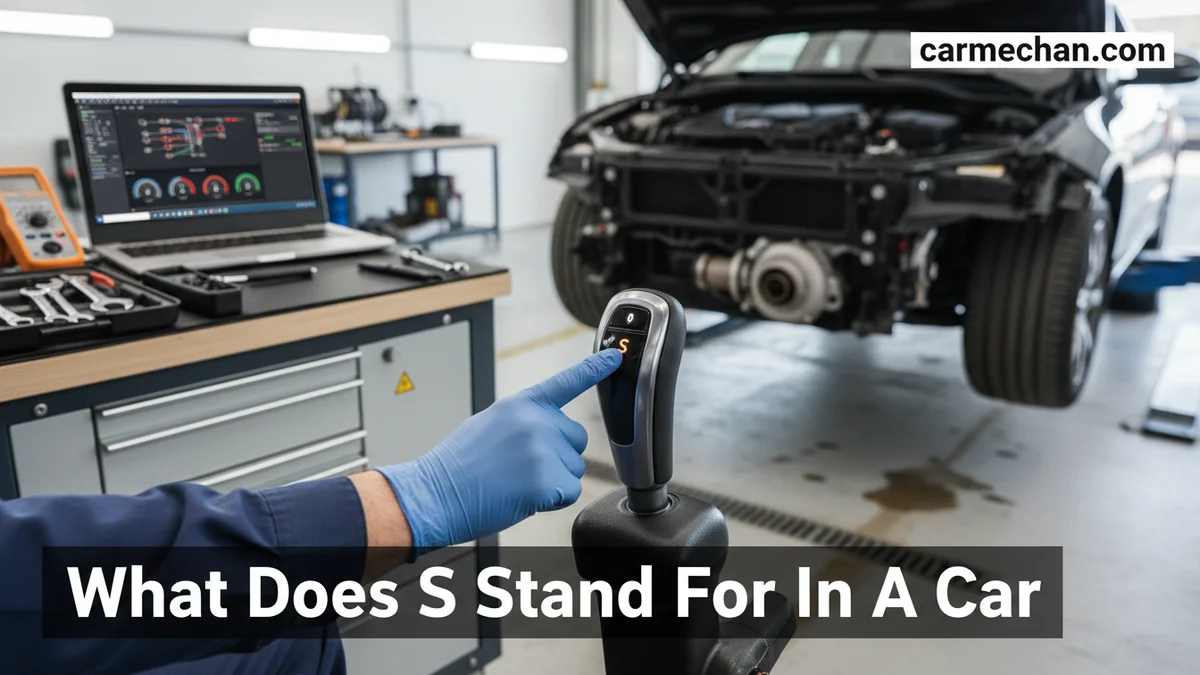
In a car, ‘S’ most commonly stands for ‘Sport Mode’, a driving setting that alters vehicle performance for a more dynamic experience. Beyond driving modes, ‘S’ can also signify a specific model or trim level, indicating enhanced features or luxury.
The question ‘what does S stand for in a car’ brings clarity to a common symbol you might see on your gear selector or even as part of a vehicle’s model name. While seemingly simple, this single letter often carries multiple meanings depending on its context within your vehicle.
From dynamic driving modes to specific model designations, ‘S’ frequently signals enhanced performance or a particular vehicle class.
Our guide will dissect the common interpretations of ‘S’ to ensure you understand its significance. We will primarily explore its role as ‘Sport Mode’ in automatic transmissions and its use in car model nomenclature. Knowing these distinctions helps you better understand your car’s capabilities and features for 2026 and beyond.
We will first explore the most common meaning: ‘Sport Mode’ in automatic cars, understanding how it truly transforms your driving experience.
Key Takeaways



- ‘S’ often indicates Sport Mode in automatic transmissions.
- Sport Mode modifies engine, transmission, and steering response.
- ‘S’ can represent performance or luxury in car model names.
- Using Sport Mode affects fuel efficiency and driving feel.
- Always consult your car’s manual for specific ‘S’ meanings.
How Does Sport Mode Transform Your Drive?


When you engage ‘Sport Mode’ in your automatic car, you are not simply pressing a button; you are initiating a series of calibrated changes designed to deliver a more dynamic driving experience. This mode alters several key aspects of your vehicle’s performance, prioritizing responsiveness and power over fuel economy.
The car’s computer system makes real-time adjustments to create a more engaging drive. This happens through modifying engine, transmission, and sometimes even steering and suspension settings. We configure these changes to give you more control and a more exhilarating feel on the road.
Sharper Engine Response
In Sport Mode, your car’s engine management system recalibrates the throttle mapping. This means that even a slight press on the accelerator pedal translates into a more immediate and aggressive engine response. You will feel a heightened sense of power and acceleration.
This sharper response is designed for quicker acceleration and more immediate power delivery, which can be particularly useful in situations requiring rapid speed adjustments. Manufacturers typically aim for a general percentage increase in engine responsiveness, often making the car feel 10-15% more eager off the line or during acceleration compared to standard drive modes .
Agile Transmission Shifting
The transmission is one of the most significantly affected components in Sport Mode. Instead of shifting into higher gears quickly for fuel efficiency, the automatic transmission holds gears longer.
This allows the engine to rev higher into its power band before shifting, providing more sustained acceleration. Downshifts also become more aggressive and occur sooner, preparing the vehicle for acceleration out of turns. Many modern systems target faster shift times, often reducing them by 20-30 milliseconds for a more direct connection to the engine’s power .
Tauter Steering Feel
Some vehicles further enhance the Sport Mode experience by adjusting the power steering system. This often results in a heavier, more direct steering feel. The increased resistance can provide better feedback from the road.
A tauter steering feel helps you perceive the road surface and tire grip more accurately. This contributes to a sense of greater control, especially during spirited driving or on winding roads.
Stiffer Suspension Settings
For cars equipped with adaptive suspension systems, Sport Mode can automatically stiffen the shock absorbers. This reduces body roll during cornering and improves stability.
A stiffer suspension allows for more precise handling and a flatter stance through turns. This enhancement significantly contributes to the car’s overall dynamic performance. Not all cars offer this, but it is a notable feature in many performance-oriented models.
Understanding these performance enhancements naturally leads to the next question: when exactly should you put these capabilities to use?
When to Engage Your Car’s Sport Mode


Engaging your car’s Sport Mode can significantly enhance your driving pleasure and control in specific scenarios, but it is not always the optimal choice. It is a tool designed for particular situations where performance takes precedence.
Knowing when to switch to ‘S’ mode can make your drive safer and more enjoyable. However, we must also consider the potential downsides, such as reduced fuel efficiency.
For Quick Overtakes
Sport Mode is exceptionally beneficial when you need to execute a quick and decisive overtake. The sharper throttle response and delayed upshifts provide immediate power. This allows your vehicle to accelerate rapidly past slower traffic.
The transmission’s readiness to downshift ensures you have power available instantly. This improves safety and confidence when merging onto highways or passing on two-lane roads.
On Winding Roads
Driving on winding roads or through mountain passes can be exhilarating with Sport Mode engaged. The car’s heightened responsiveness and improved handling characteristics make it feel more agile.
The system keeps the engine in its optimal power band, allowing for smoother transitions between acceleration and braking. This enhances control and driver engagement significantly.
During Steep Climbs
When ascending steep hills or long inclines, Sport Mode can prevent your car from constantly hunting for the right gear. By holding gears longer, it ensures consistent power delivery.
This helps maintain momentum without the transmission repeatedly shifting. It reduces strain on the powertrain and provides a more stable climbing experience, especially when fully loaded.
Understanding Fuel Use
While Sport Mode offers clear performance advantages, it comes with a trade-off: reduced fuel efficiency. The engine operating at higher RPMs and the aggressive transmission mapping consume more fuel.
You should expect your fuel economy to decrease when frequently using Sport Mode. A general estimate suggests fuel efficiency can decrease by up to 10-15% compared to normal drive mode due to the performance-oriented calibration .
Therefore, it is best reserved for situations where its benefits outweigh the increased fuel consumption.
While ‘S’ on your gear selector points to performance, the letter ‘S’ also holds different significance when it’s part of a car’s model name or trim level.
What Do S Designations Mean for Car Models?
Beyond a driving mode, the letter ‘S’ frequently appears in vehicle badging, signaling specific performance enhancements, luxury appointments, or a distinct position within a manufacturer’s lineup. These designations are brand-specific, each carrying its own unique connotation and appeal.
Understanding these distinctions helps us appreciate the diverse strategies manufacturers employ to convey vehicle characteristics. The ‘S’ often indicates a step up in either performance or prestige within a brand’s offerings.
Audi’s S Lineup
For Audi, the ‘S’ designation traditionally signifies a sportier, performance-oriented version of their standard models. Cars like the Audi S3, S4, and S5 offer enhanced engines, quattro all-wheel drive, and upgraded suspension components. They bridge the gap between their everyday cars and the ultra-high-performance ‘RS’ models.
The ‘S line’ trim, however, is distinct. It often includes cosmetic enhancements like sportier bumpers and interior styling. This offers the aesthetic appeal of an S model without the full performance upgrade .
Mercedes S Class Luxury
In contrast to Audi’s performance focus, the ‘S’ in Mercedes-Benz S-Class stands for “Sonderklasse,” meaning “special class.” This designation represents the pinnacle of luxury, technology, and sophistication within the Mercedes-Benz portfolio. The S-Class is consistently positioned as their flagship sedan.
These vehicles are renowned for their opulent interiors, cutting-edge safety features, and advanced infotainment systems. The S-Class embodies the ultimate in comfort and prestige for the brand .
Honda Civic Si Performance
Honda uses ‘Si’ to denote “Sport Injected” models, particularly within their popular Civic lineup. The Civic Si offers a more performance-tuned engine, firmer suspension, and distinct styling cues compared to standard Civic models.
This designation appeals to enthusiasts seeking a more engaging driving experience without venturing into the full-blown Type R performance category. The Civic Si provides a balance of everyday usability and sporty capability .
Other Performance Suffixes
Many other manufacturers incorporate ‘S’ into their model names or trim levels to indicate performance or special status. For example, some Volkswagen Golf models have an ‘S’ trim. This often represents a base sportier offering.
Porsche uses ‘S’ to denote a step up in power and features from their base models, such as the Carrera S. These varying uses highlight the letter’s versatility in communicating enhanced attributes across the automotive industry.
While ‘Sport Mode’ and model designations represent the most prevalent uses of ‘S’ in vehicles, it occasionally appears in other contexts that every driver should be aware of.
What Other S Indicators Mean to Drivers
Although less common, the letter ‘S’ can sometimes appear in other areas of your vehicle, from dashboard lights to digital display menus, each with its own specific meaning. These instances are less about driving modes and more about system status or functionality.
It is crucial for us as drivers to distinguish these from the more common ‘Sport Mode’ or model designations. Consulting your owner’s manual remains the best way to understand specific indicators in your car.
Stability Control Warnings
You might encounter ‘S’ as part of an indicator light related to your vehicle’s stability control system. Often, this is part of a larger acronym like ESC (Electronic Stability Control) or ESP (Electronic Stability Program). A light showing “ESC OFF” or a similar symbol with an ‘S’ can indicate the system is deactivated.
Electronic Stability Control is a critical safety feature that helps prevent skidding and loss of control by applying brakes to individual wheels and/or reducing engine power. Understanding this indicator ensures you can react appropriately to maintain vehicle safety .
Service Reminders
In some cars, particularly older models or specific brands, an ‘S’ might appear on your dashboard or in an infotainment menu to denote a “Service” reminder. This typically means your vehicle is due for routine maintenance, such as an oil change or tire rotation.
These service indicators are designed to help you keep your vehicle in optimal condition. You should always address them promptly to ensure longevity and safe operation of your car.
Infotainment System Options
Within your car’s infotainment system or digital display, ‘S’ could sometimes stand for “Settings” or “System.” This is particularly true in menus where you configure audio, navigation, or vehicle preferences.
Navigating to an ‘S’ option in your digital interface usually leads you to various customization or diagnostic tools. Familiarizing yourself with these menus can help you personalize your driving environment.
Now that we have covered the various meanings of ‘S’ in your car, let us address some frequently asked questions to solidify your understanding.
5 Common Questions About Your Car’s ‘S’
Is Sport Mode Bad for Your Car’s Engine?
No, Sport Mode is generally not bad for your car’s engine when used appropriately. It is designed to operate within the engine’s safe limits. However, prolonged aggressive driving can increase wear on components over time compared to regular driving.
Does Using Sport Mode Consume More Fuel?
Yes, typically using Sport Mode consumes more fuel. It holds gears longer and encourages higher RPMs, which increases fuel delivery to the engine. This enhances performance but reduces fuel efficiency compared to regular or Eco modes.
Can I Use Sport Mode on the Highway?
You can use Sport Mode on the highway, especially for quick acceleration during merging or overtaking. However, for sustained cruising, it might keep the engine at higher RPMs than necessary, leading to increased noise and reduced fuel economy.
What Is the Difference Between Sport Mode and Eco Mode?
Sport Mode prioritizes performance, offering sharper throttle response and later gear shifts. Eco Mode, conversely, optimizes fuel efficiency by dulling throttle response, shifting earlier, and sometimes altering climate control settings to save energy.
Should I Always Use Sport Mode for Performance Driving?
While Sport Mode enhances performance, we recommend using it judiciously for specific scenarios like spirited driving on winding roads or quick overtakes. For everyday driving, regular drive mode often provides a better balance of comfort and fuel efficiency.
Mastering Your Car’s S Features
Understanding what does ‘S’ stand for in a car significantly enhances your driving knowledge and experience. Whether it signifies the exhilarating performance of Sport Mode or the prestigious legacy of an S-Class model, this small letter carries considerable weight. We have explored its most common applications, equipping you with the insight to confidently use or interpret these features by 2026.
Always consult your vehicle’s owner’s manual for specific details related to your make and model. This ensures you have the most accurate and up-to-date information for your car. Embrace the capabilities ‘S’ offers, allowing you to tailor your driving experience to your preferences and the road conditions ahead.